
Here Are the 15 Cities That Have Done the Best (and the Worst) Since the Recession


This month marks six years since the end of the U.S. recession. In those six years, the Standard & Poors 500-stock index has climbed more than 200 percent from its lowest level andthe national unemployment rate has almost halved from apeak of 10 percent. By these measures,the overall economy seems to be doing pretty well. Butthis isn't the case for everyone. When you drill down and look at U.S. cities separately, some have fared even better while others have yet to see a recovery.
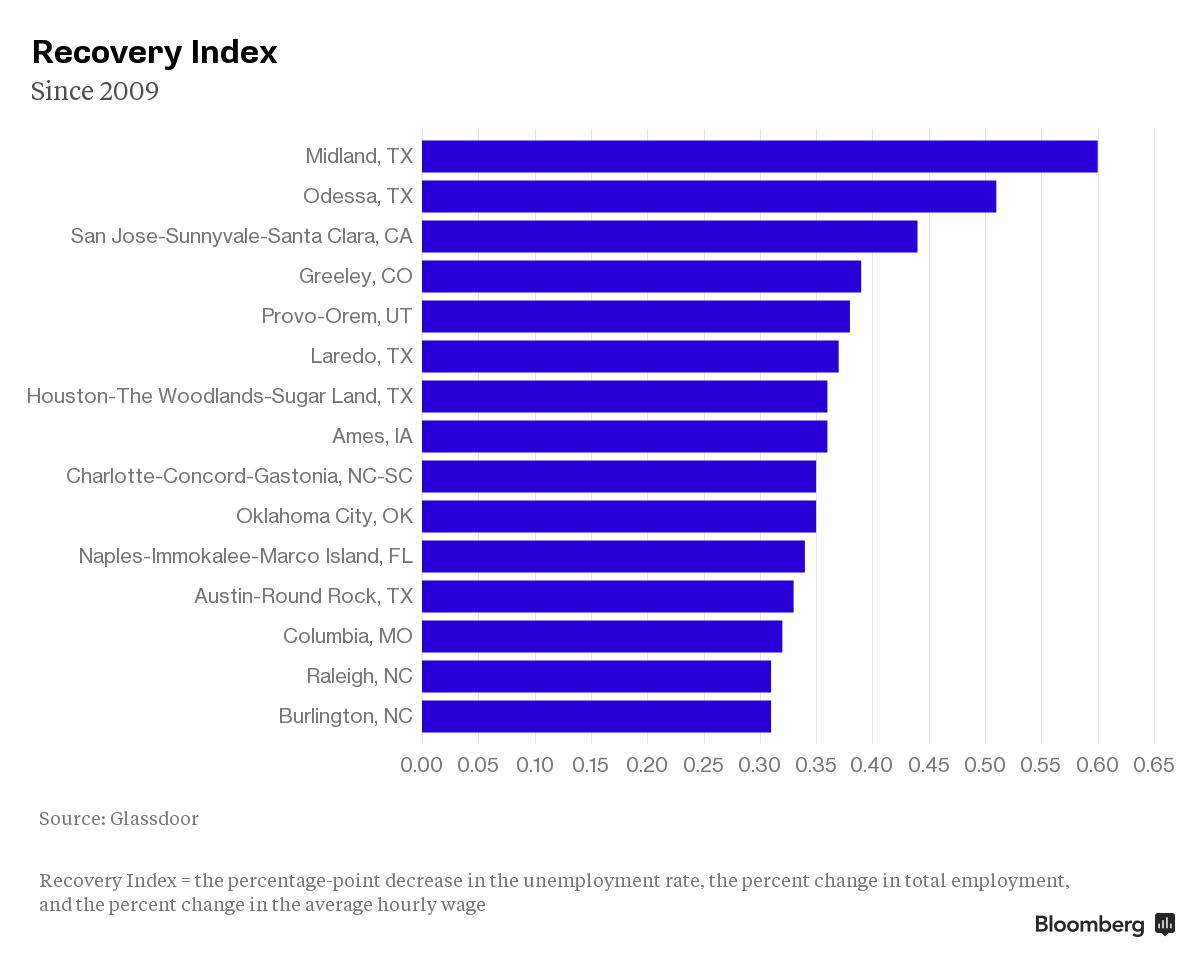
Dr. Andrew Chamberlain, senior economist at Glassdoor, crunched thenumbersto come up with a "recovery index" for U.S. cities. To do this, he looked atthree major trends: unemployment, the number of jobs, and wages . Combining allof these togethergives us Glassdoor's recovery index. It's basically the sum of the decrease in the unemployment rate plus the change in total employment and the change in average hourly wages since 2009.
The higher a metropolitan area ison the index, the betteritseconomic health, Chamberlain says. So let's take a look at the results.
First up are the 15cities at the top of the recovery index.
Five come fromTexas, which isn't necessarily surprising given the shale oil boom in the state in recent years.Least surprising of all is perhaps that No. 3 on the list is the Silicon Valley hub of San Jose .
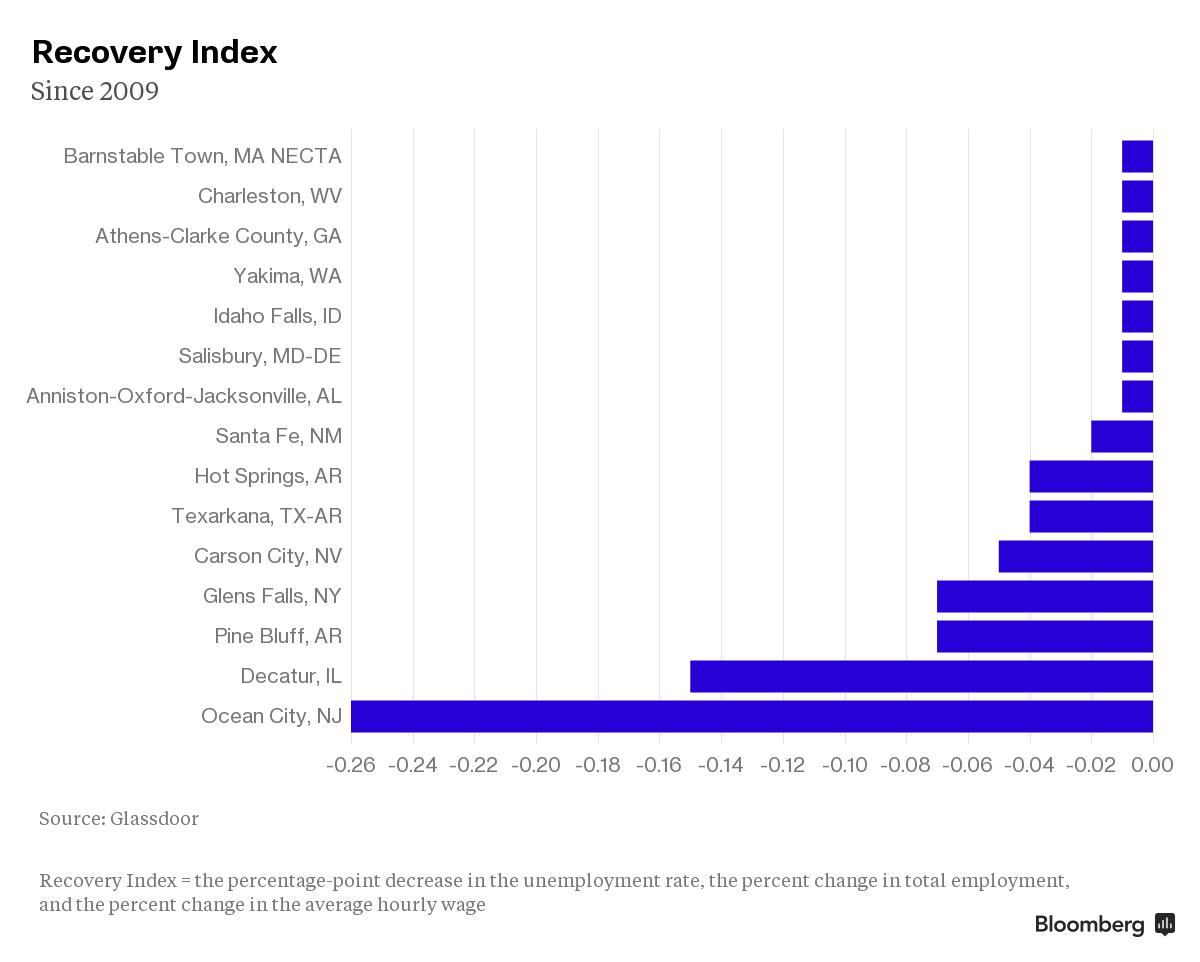
Now let's take a look at the bottom 15 on the recovery index.
The overall worst-off on the list is Ocean City, N.J. Other names in the bottom 15 include Carson City, Nev.; Santa Fe, N.M.; Decatur, Ill.; and Hot Springs, Arkansas.
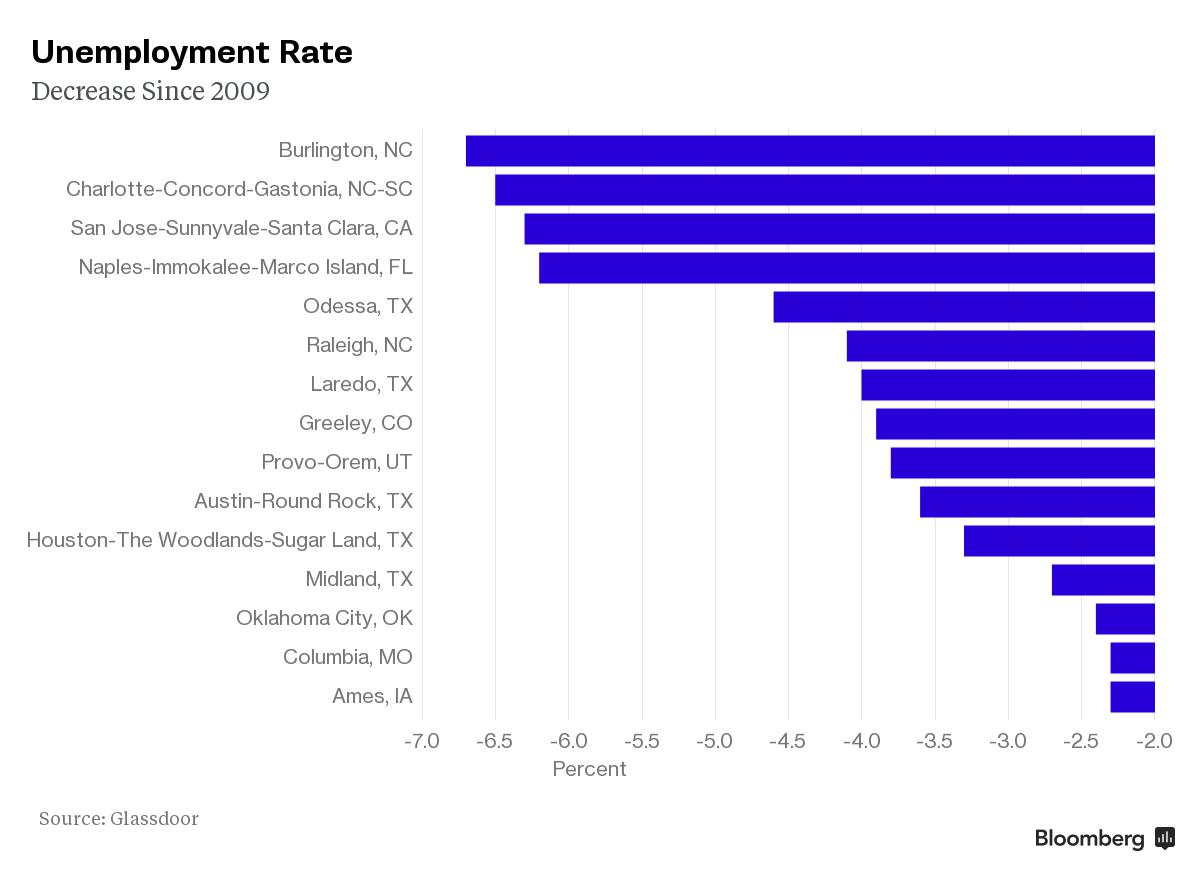
If you want to drill down into each of the three major components ofthe recovery index, take a look at some of the charts below.
The first shows the level of unemployment for the top 15 cities. Burlington, N.C. ,was in the lead with a6.7 percent drop. If you take all of the cities into account, Monroe, Mich. , saw the biggest decrease at 9.8 percent.
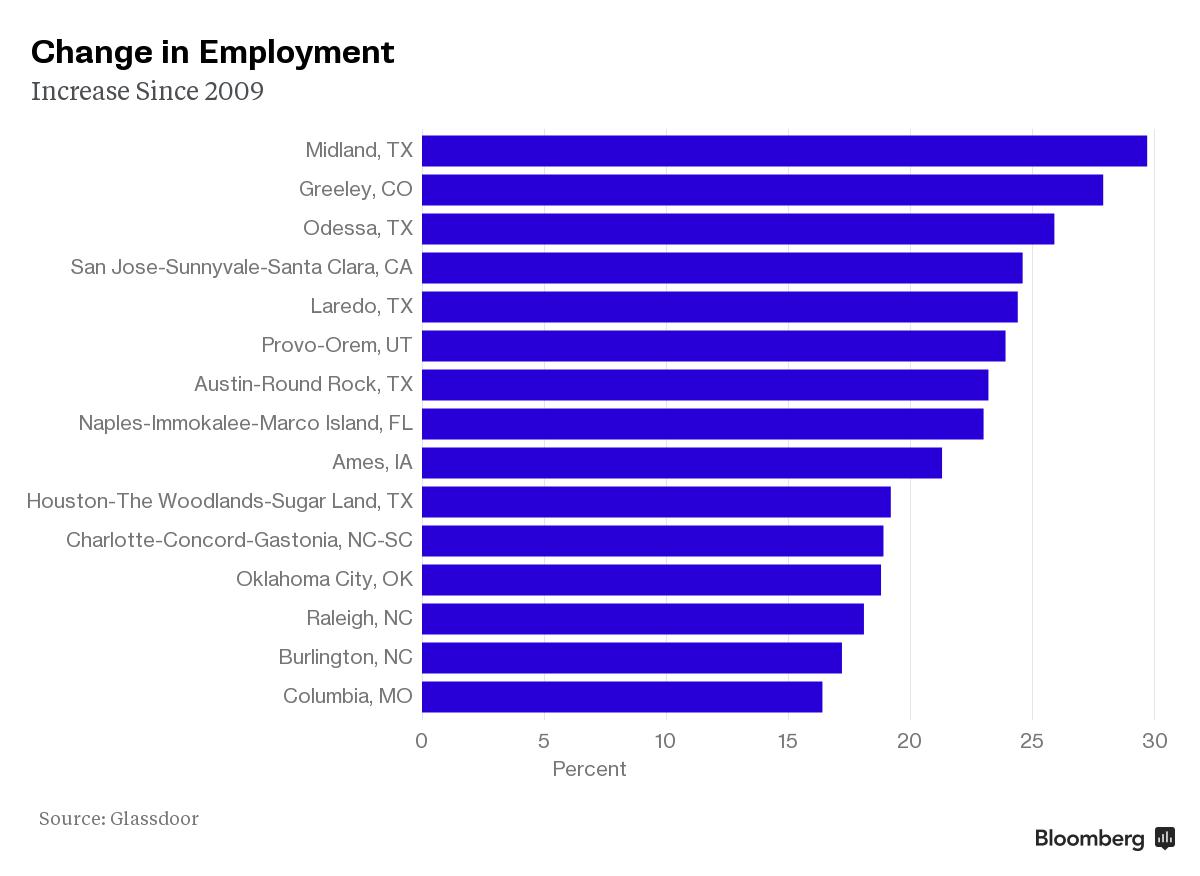
When looking at the number of jobs in the city, Midland, Texas , took the No. 1 spot in both our top 15 list and the total list with a 29.7 percent increase in the number of people employed.
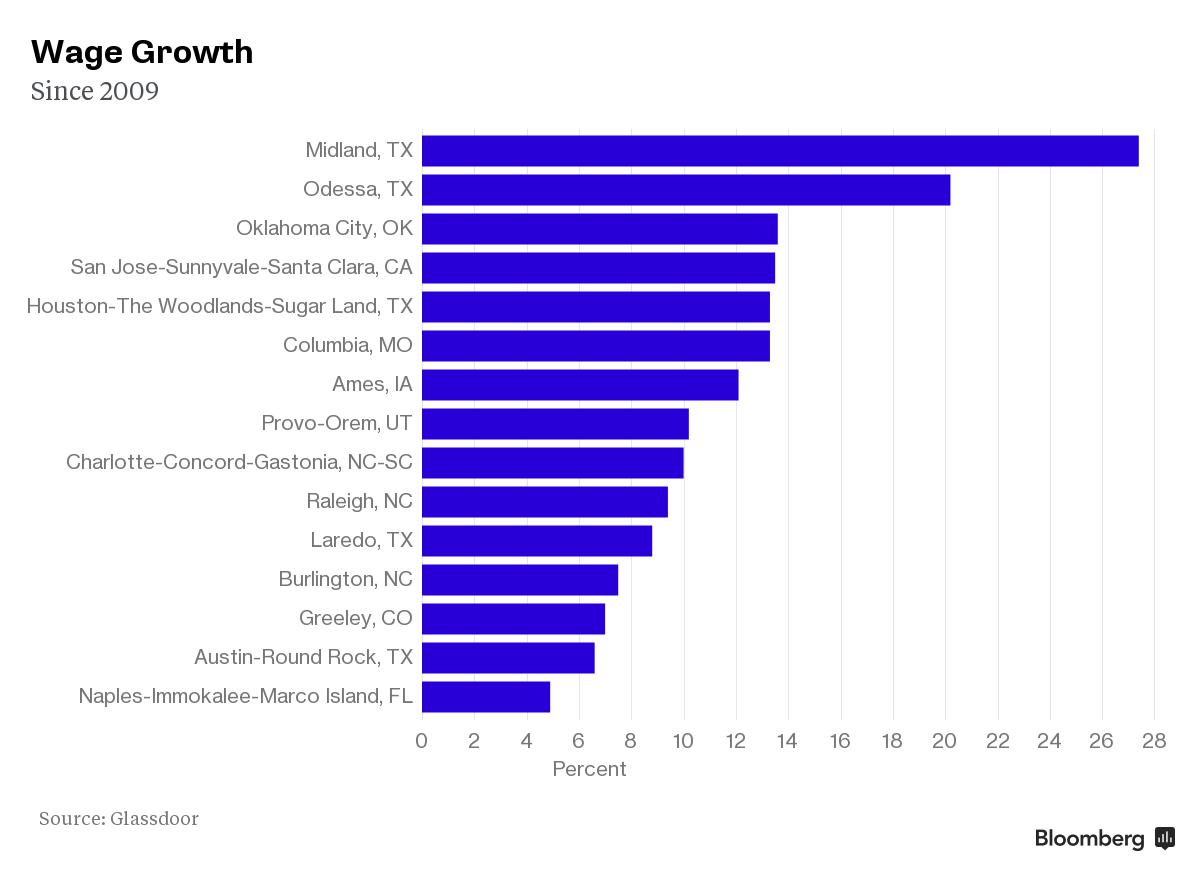
The last statistic Glassdoor looked at was the growth in average hourly wages. Midland was once again the winner in boththe top 15 and the overall list with a 27.4 percent increase.
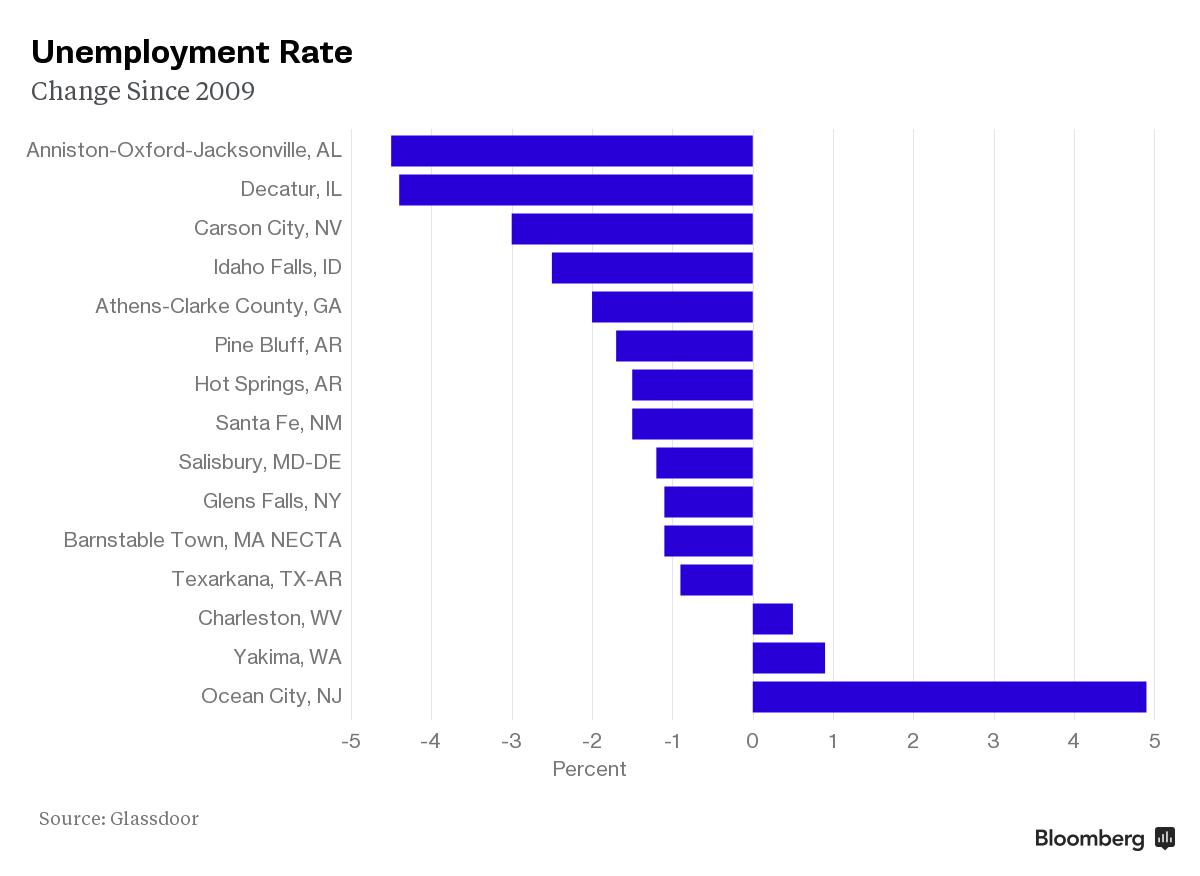
When it comes to the bottom 15 on the recovery index, three of the cities sawtheir unemployment rates actually increase since 2009.
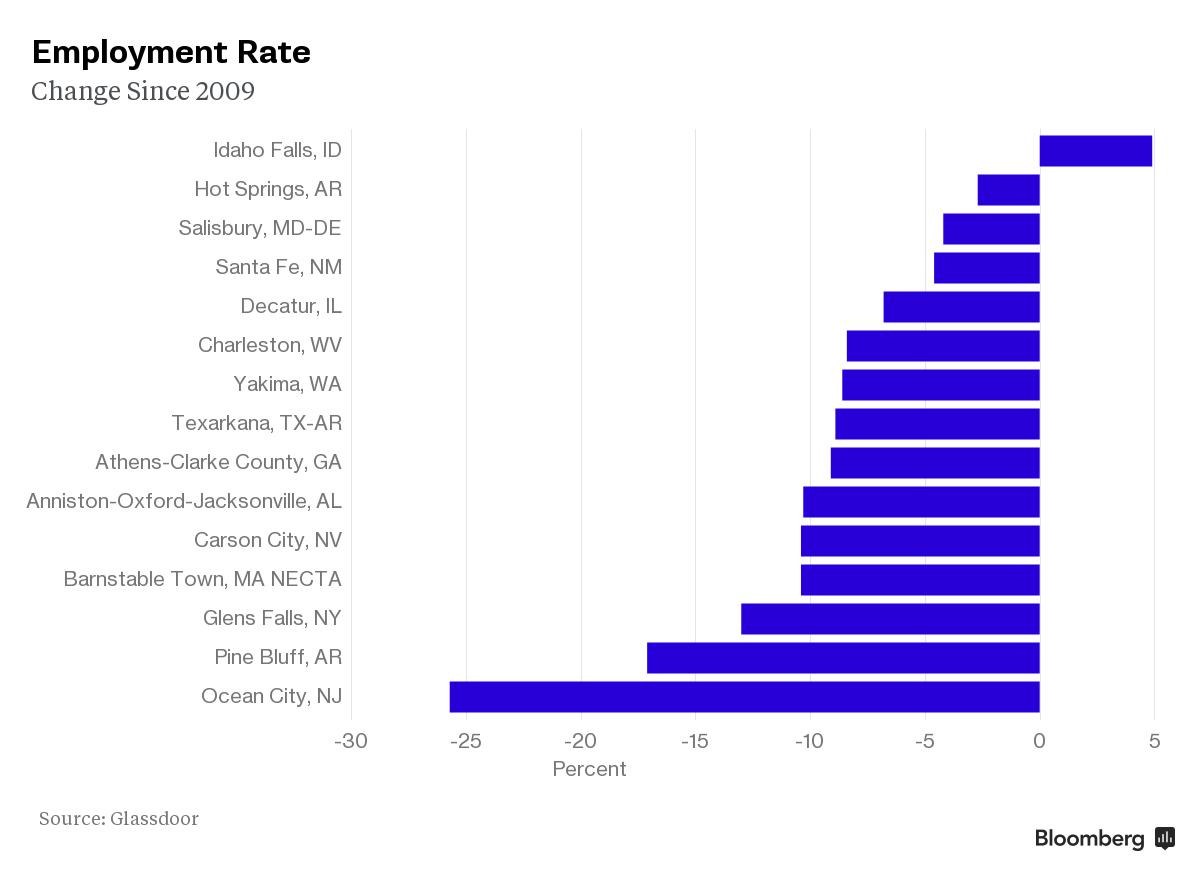
Then looking at the percentage of people employed in the city, only oneof the bottom 15 actually saw that increase, meaning 14 of them had a fewer percentage of people employed today than at the end of the recession.
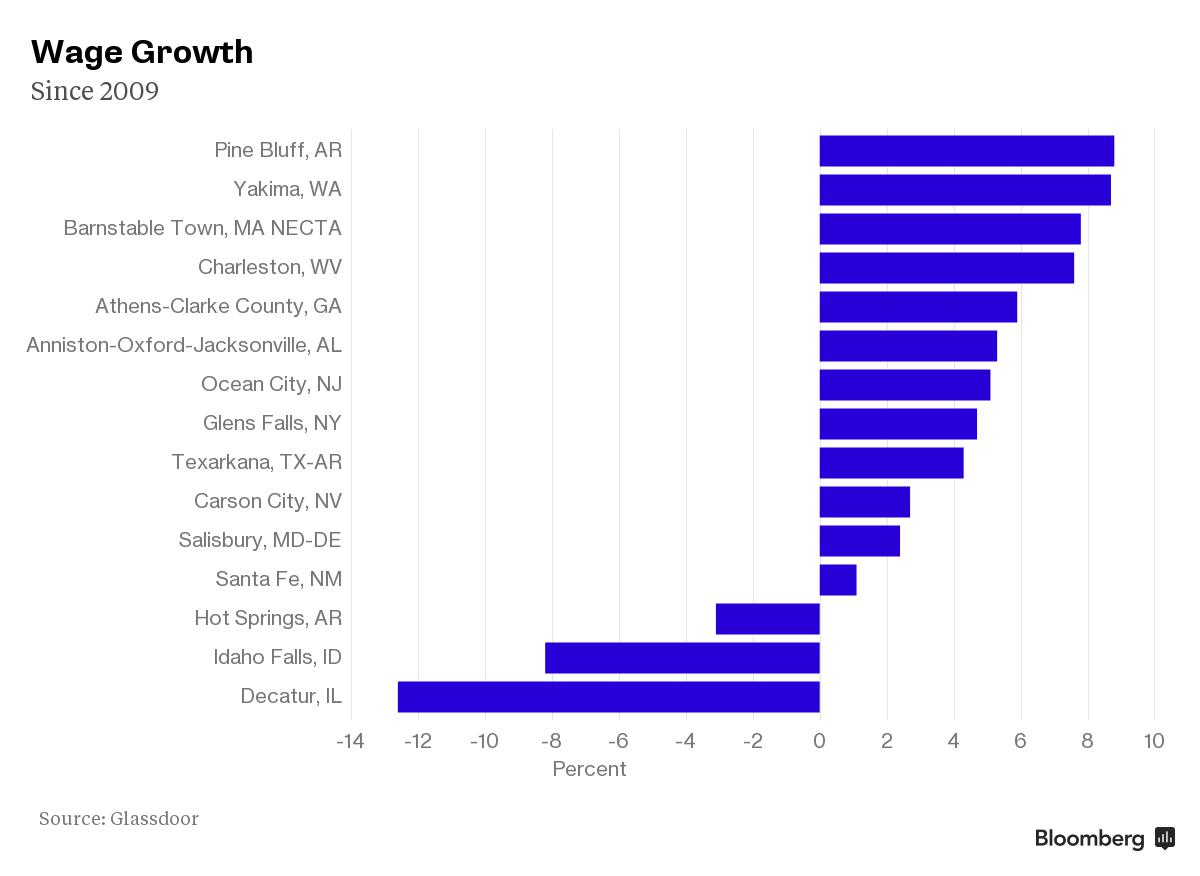
Last, there'swage growth, where three of these cities saw average hourly wages fall. Decatur, Ill. , fared the worst with a 12.6 percent decrease.
http://www.bloomberg.com/news/articles/2015-06-22/here-are-the-15-cities-that-have-done-the-best-and-the-worst-since-the-recession
Tags
Who is online
62 visitors
Interesting look at the best and the worst (in terms of cities) as far as the economic recovery goes over the past six years.
A few key economic data points for the best and the worst
I did not note any Ohio cities on the best or worst lists and found that curious as we have seen a resurgence in employment and business growth during the recovery,
It's a numbers game ... relative to other regions
Of course as in all statistics there are outside factors that affect internal numbers
Interesting data Robert.
Think you could dig up data on in what sectors jobs have been created/lost?
Not sure but I will look around a bit and see what is there - whether it will be by cities and job category is problematic
Good question though