
Donald Trump ‘Most Successful Climate Protector in the World’

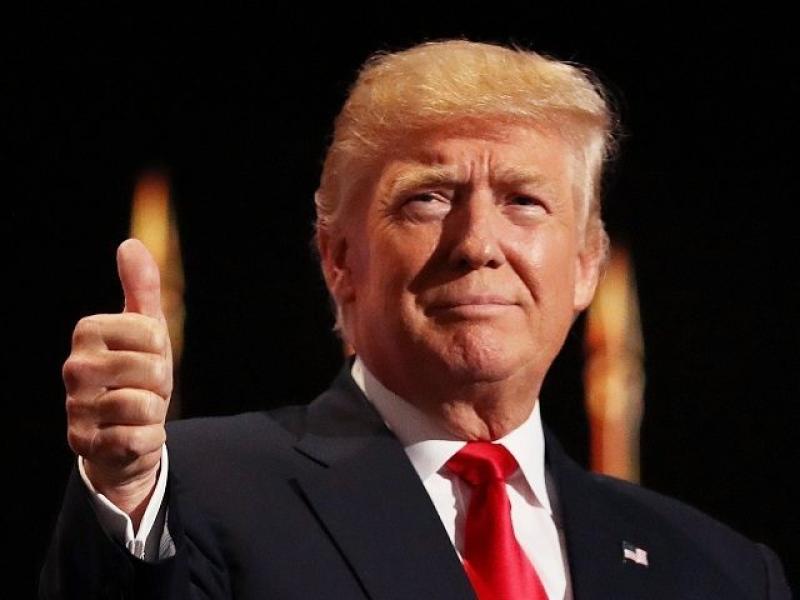
The International Energy Agency (IEA) released its “Global Energy and CO2 Status Report, 2017” on March 22, which contained the bombshell news that the “biggest drop in emissions came from the United States,” which made folks at Die Welt sit up and take notice.
Global energy-related carbon dioxide emissions increased overall by 1.4 percent in 2017, the report revealed, and in most major economies, carbon dioxide emissions increased as well.
The United States led the small pack of countries that managed to lower greenhouse gas emissions, accompanied by UK, Japan, and Mexico. According to IEA figures, the United States managed to reduce CO2 emissions in 2017 by 0.5 percent, or 25 million tons, to 4810 million tons.
President Trump has been in the climate-change doghouse ever since he announced the withdrawal of the United States from the Paris Climate Accord, something Minority Leader Rep. Nancy Pelosi (D-CA) defined as a “dishonor” to God.
As Breitbart News reported at the time, because of his decision, the president was accused of waging a “war on the environment” tantamount to genocide. Several journals and news outlets even went so far as to suggest that Mr. Trump was guilty of “environmental racism” by pulling the United States out of the climate agreement.
Essence magazine said Trump had continued “his war on people of color in America” while Blavity, a website that caters to people of color, said that Trump’s decision “will worsen environmental racism,” insisting that climate change is “inherently a black issue and not just a ‘human issue.’”
The Atlantic suggested that environmental racism is “the new Jim Crow,” referring to laws that segregated blacks and whites in their use of public schools, public places, transportation, restrooms, and restaurants.
Enter Daniel Wetzel, energy journalist for Die Welt, a self-described “liberal cosmopolitan” German newspaper.
Mr. Wetzel doffed his hat to President Trump, saying that despite being stigmatized as an enemy of the environment, he has shown himself to be quite the contrary. Wetzel contrasted the positive U.S. results with those of China, which signed on to the Paris Climate Accord. While U.S. emissions dropped, China’s grew by nearly a full percentage point in 2017.
Curiously, some of the countries that chastised the United States for dropping out of the Paris Accord performed far worse than the U.S. during 2017, with the European Union (EU) emissions rising by a stunning 46 million tons. Germany itself has not reduced its emissions for nine years in a row.
The decline in U.S. carbon emissions was due to a number of factors, the study found, including growth in the use of renewables, the liberalization of fracking with the consequent increase in clean-burning natural gas, and America’s continued high use of clean nuclear energy, which supplies about 20 percent of U.S. energy needs.
As Breitbart News reported last summer, air pollution in the U.S. is among the lowest on the planet, according to studies by the World Health Organization (WHO),
In WHO’s 2017 report on air pollution, the United States was listed as one of the countries with the cleanest air in the world, significantly cleaner than the air in Germany, Italy, Switzerland, the UK, Japan, Austria, and France. http://www.breitbart.com/big-government/2018/04/07/germanys-die-welt-proclaims-trump-successful-climate-protector-world/
Tags
Who is online
75 visitors
Dumbest, most retarded comment anyone has ever made. And it's from brietbart no less?
just add one little prefix UN
Skirting the CoC [ph]
Then add mine. This is such a bullshit opinion article by the folks who like to gaslight. Not even a good try, really, this is just so obviously pulled right out of Trump's ass and regurgitated.
So repealing laws that protect the environment, help the environment? That's the dumbest fucking thing I have ever heard of. That's as stupid as saying, "The drunker I get, the better I drive".
Is this from the 'Onion''...
REPORT: TRUMP MULLING MAJOR CUTS TO CLEAN ENERGY RESEARCH
January 31, 2018
The Washington Post reports that in its 2019 budget, the Trump administration is seeking to slash Department of Energy funding for renewable energy and energy efficiency initiatives by 72 percent.
Congress would likely oppose such steep cuts in any future budget negotiations, but the move further signals the Trump administration's avowed support of fossil-fuel industries.
News of the proposed cuts comes the day after President Trump praised “beautiful clean coal” in his State of the Union address, and several days after Trump announced steep tariffs on imported solar panels. ( Find out more about the myth of “clean coal.” )
According to Post reporters Chris Mooney and Steven Mufson , leaked budget documents reportedly show that the administration is seeking to cut funding for the Department of Energy's Office of Energy Efficiency and Renewable Energy by more than 70 percent, from an enacted 2017 budget of $2.04 billion to $575.5 million. The Post also reports that the budget suggests staffing cuts, from 680 staffers in 2017 to a proposed 450 in 2019.
“I will not comment on a budget that has not been released. However, I will suggest that anyone who questions this administration’s commitment to an all-of-the-above energy approach simply look at our record," Department of Energy spokesperson Shaylyn Hynes said in a statement. "Last year the Energy Department awarded hundreds of millions of dollars to solar and wind energy.
"Though it may not fit into the narrative of the environmental lobby and their pundits, the truth is that Secretary Perry believes that there is a role for all fuels—including renewables—in our energy mix.”
This would not be the first time that the Trump administration has attempted to slash this sort of funding. In its 2018 budget, the Trump administration sought cuts of more than two-thirds for the Office of Energy Efficiency and Renewable Energy, which Congress rejected.
EPA LOOSENS REGULATIONS ON TOXIC AIR POLLUTION
January 25, 2018
In a brief legal memo , the Trump EPA has dropped “once in, always in” (OIAI), a Clinton-era EPA policy that aimed to lock in reductions of hazardous air pollution from industrial sources.
Industry lawyers and Senate Republicans have long argued that eliminating OIAI will actually provide a stronger incentive for businesses to reduce emissions, since they can now more easily lower emissions and avoid the regulations that major pollution sources must endure.
However, environmental activists and lawyers are concerned with the abrupt change, saying that it may actually increase exposure to hazardous air pollution—especially among vulnerable populations, who live near major industrial polluters more often.
“They’re really going to be killing people,” said Hip-Hop Caucus vice president Mustafa Ali, the former environmental justice head at EPA, in an interview with Earther . “You’re going to have all types of public health problems.”
To see how OIAI worked, imagine a business that emits 11 tons of a given hazardous air pollutant (HAP) per year. Under EPA regulations, facilities that emit more than 10 tons of one HAP, or 25 tons of HAPs in total, are reclassified from area sources to major sources.
By law, major sources must retool their processes to get their emissions down to the lowest levels set by peers within the industry. These benchmarks are called the Maximum Achievable Control Technology, or MACT, standards.
By hewing to MACT standards, let's say the company's HAP emissions go down from 11 tons per year to three tons. According to OIAI, the company would have to abide by MACT standards permanently, locking in eight tons of annual emissions reductions.
Under the new EPA policy, however, the company could do just enough to reduce emissions from 11 tons to nine. By dropping below the 10-ton threshold, the company goes from being a major source to being an area source—thereby jettisoning the MACT requirement.
While going from 11 tons of emissions to nine is technically a reduction, it's actually more pollution relative to what the facility could have achieved by complying with MACT standards. This phenomenon, called “backsliding,” is what OIAI aimed to prevent.
Environmental groups are poised to sue the EPA to block the policy change.
“This is among the most dangerous actions that the Trump EPA has taken yet against public health,” said John Walke, clean air director at the Natural Resources Defense Council (NRDC), in a statement . “NRDC will fight this terrible decision to unleash toxic pollutants with every available tool.”
MOST OF NATIONAL PARKS ADVISORY BOARD RESIGNS IN PROTEST
January 15, 2018
Nine of the 12 members of the National Park System Advisory Board resigned on January 15, the Washington Post reported on January 16 , in protest of Interior Secretary Ryan Zinke's refusal to meet with them.
First chartered by Congress in 1935, the civilian group is required to contain academic experts, experienced park managers, and at least one former elected official from an area adjacent to a national park.
The board advises the National Park System, the National Park Service, and the Secretary of the Interior on a wide range of matters, and it also helps to select national historic landmarks. Its members are unpaid.
"I wasn't voted in, but I realize I represent people beyond myself," says Carolyn Finney , a University of Kentucky geographer who had served on the board since 2010. "When you slam the door in the face of me and the board, you're also slamming the door on a whole lot of other people."
In a joint letter, Finney and other departing board members expressed frustration at Secretary Zinke's refusal to meet with them.
"For the last year we have stood by waiting for the chance to meet... We understand the complexity of transition but our requests to engage have been ignored, and the matters on which we wanted to brief the new Department team are clearly not part of its agenda," wrote Tony Knowles, the board's departing chair and a former Alaska governor, in a resignation letter co-signed by Finney and seven other board members .
"I wish the National Park System and Service well and will always be dedicated to their success," Knowles's letter continued. "However, from all of the events of this past year I have a profound concern that the mission of stewardship, protection, and advancement of our National Parks has been set aside."
In May, the Washington Post reported that the Interior Department began a sweeping review of more than 200 advisory boards and other entities associated with the department. Around the same time, EPA administrator Scott Pruitt dismissed several members of the agency's Board of Scientific Counselors.
REPORT: CLIMATE CHANGE WEB SITES 'CENSORED' UNDER TRUMP
January 10, 2018
A new report finds that in the first year of the Trump administration, U.S. government websites have been systematically altered to cut mentions of climate change. However, there is no evidence of tampering with climate data.
The report, published by the nonprofit Environmental Data & Governance Initiative (EDGI) , says that several government agencies—notably the EPA—have removed or reduced their web content about climate change.
Since Trump's inauguration, the group has monitored thousands of government web pages for changes or deletions. In some instances, "climate change" is replaced with the vaguer words "sustainability" or "resiliency." In others, some climate change webpages are taken down entirely.
For instance, the Bureau of Land Management's web page on climate change was taken down between May and November 2017, the report states. The EPA's "Student's Guide to Global Climate Change" went offline sometime between February and April 2017.
"While we cannot determine the reasons for these changes from monitoring websites alone, our work reveals shifts in stated priorities and governance and an overall reduction in access to climate change information, particularly at the EPA," the group says.
EDGI emphasizes that, so far, it hasn't seen evidence of the removal or deletion of climate data sets, as some scientists and activists had feared.
(Full disclosure: the National Geographic Society has given grants to Data Refuge and the Climate Adaptation Knowledge Exchange , which are archiving U.S. climate data.)
TRUMP INTERIOR DEPARTMENT DECLARES THAT ACCIDENTAL BIRD DEATHS ARE LEGAL
December 22, 2017
Reversing Obama-era policy , the Trump administration has decreed that it will no longer consider the accidental killing of birds—from eagles colliding with wind turbines to ducks zapped on power lines—a violation of the Migratory Bird Treaty Act (MBTA).
“It reverses decades of precedent over 20 administrations,” says Sarah Greenberger , the National Audubon Society’s vice president of conservation policy. “It’s a shocking step to break with that kind of tradition, and it’s of great concern.”
The law, which turns a hundred years old in 2018, is among the United States’ oldest and widest-reaching environmental protections. Originally envisioned to save birds from overhunting, the law now safeguards more than 1,025 migratory bird species and their eggs, feathers, and nests. Illegally killing a protected bird can result in a $15,000 fine and up to six months in jail.
The law—which prohibits harming protected species "at any time, or in any manner" —had been interpreted as forbidding “incidental takes,” the accidental yet foreseeable deaths of birds from industrial activity. But the phrase itself does not appear in the law. Through the years, some U.S. courts had questioned whether the MBTA really does cover incidental takes.
In a memo published on January 10, 2017, Hilary Tompkins —the outgoing solicitor for the Obama Interior Department—found that all forms of incidental take were prohibited under the MBTA. In her memo , she cites the U.S. Fish and Wildlife Service’s longtime interpretation of the law and decades of successful prosecutions.
Tompkins also notes that Canada—the co-signer of the Migratory Bird Treaty of 1916, which sparked the MBTA—interprets it as requiring the prohibition of incidental takes.
But on February 6, the incoming Trump administration rescinded Tompkins’ guidance, pending a review. On December 22, it was replaced entirely by a memo reaching the opposite conclusion , relying in part on some U.S. courts’ skeptical rulings.
The analysis, penned by Daniel Jorjani—one of the Trump Interior Department’s highest-ranking lawyers and a former adviser to the Koch brothers —instead finds that the word “take” describes a willful, deliberate act. What’s more, he says that for industry, the threat of being prosecuted for incidental takes is an undue burden.
“Interpreting the MBTA to apply to incidental or accidental actions hangs the sword of Damocles over a host of otherwise lawful and productive actions,” Jorjani wrote in the new memo.
Conservation groups are outraged by the decision. If the MBTA no longer covers incidental take, some experts fear that industry may not invest in systems that save many birds’ lives, such as covers for oil pits, more widely spaced power lines, or camera systems that slow wind turbines when birds are present.
"The statement made by this administration basically says that the real problem...is poaching birds for feathers for ladies' hats," says Defenders of Wildlife vice president Bob Dreher , who served as associate director of the U.S. Fish and Wildlife Service under Obama. "They're turning this thing into an antique."
Energy companies, in particular, have been regularly penalized for incidental takes. After the Deepwater Horizon oil spill in 2010, the largest in U.S. history, federal officials used the MBTA to secure $100 million in fines from BP that went toward bird conservation efforts.
One 2014 study found that the spill killed anywhere from 600,000 to 800,000 birds in the Gulf of Mexico, including a third of the northern Gulf’s laughing gull population.
Renewable energy and fossil-fuel groups alike have praised the MBTA reversal. “This commonsense approach ensures that lawful activities are not held hostage to unnecessary threats of criminalization,” the National Ocean Industries Association said in a statement .
“We don’t dispute the need for energy,” says Greenberger. “It just seems so unnecessary to have taken this step.”
News of the reversal comes as National Geographic, the National Audubon Society, and the Cornell Lab of Ornithology kick off the Year of the Bird . The joint effort will explore and celebrate birds, as well as document the threats facing them.
“I think we will celebrate, but we also intend to use this partnership to remind people how much of a part of our lives birds are—and what it takes to protect them,” says Greenberger.
This entry has been updated to include comment from Bob Dreher.
TRUMP DROPS CLIMATE CHANGE FROM LIST OF NATIONAL SECURITY THREATS
December 18, 2017
President Donald Trump has announced that the United States will no longer regard climate change by name as a national security threat.
The stance marks an abrupt turn from the Obama administration, which in 2015 described climate change as “an urgent and growing threat to our national security,” given its effects on natural disasters, conflicts over food and water, and refugee crises.
In contrast, the Trump administration’s national security strategy , published Monday, discusses climate change only within the context of U.S. energy policy.
“Climate policies will continue to shape the global energy system, [and] U.S. leadership is indispensable to countering an anti-growth energy agenda that is detrimental to U.S. economic and energy security interests,” the report reads. “Given future global energy demand, much of the developing world will require fossil fuels, as well as other forms of energy, to power their economies and lift their people out of poverty.”
As National Geographic has previously reported, humans’ dramatic alteration of the global climate is not only scientific fact , but it also poses numerous security threats to the United States and the world.
Depending on the region, extreme weather events—such as droughts, wildfires, heatwaves , and torrential rains—may become more frequent and intense under climate change, posing threats to military installations and civilian communities alike. As weather patterns change, some disease-bearing creatures such as mosquitoes will enjoy longer active seasons over wider areas , exacerbating threats to public health.
In addition, rising seas threaten to cripple coastal military infrastructure, an ongoing concern at the U.S. Navy’s installation in Norfolk, Virginia . Melting ice means that the normally ice-clogged Arctic is poised to transform into a major shipping route , altering regional geopolitics. Warmer, more acidic waters will kill off many coral reefs , which supply food and income to millions. And as sea levels rise, flooding will displace coastal populations .
“We’ve seen that 700,000 refugees coming from Syria have shaken the European Union to its core . Take that number and multiply it by 100 who would be forced to leave the coasts, and that’s the kind of change we are going to unleash upon ourselves,” said David Titley , a climate scientist at Penn State University and retired U.S. Navy rear admiral, in a previous interview .
“The impacts of that on security or economics are fundamentally unknowable,” he added. “But anybody who thinks that’s not a huge risk is probably smoking something.”
Despite Trump’s change in emphasis, it’s possible that U.S. government research on climate change will continue—under an assumed name. Since Trump’s inauguration, U.S. government websites seeking to scrub “climate change” from their records have opted to swap out the phrase for the word “resilience.”
For instance, a division within the Department of Defense’s environmental research programs that had been named for climate change is now named for “resiliency.” An EPA web page devoted to “climate ready” water management now discusses “resilient water utilities.”
What does President Trump’s national security strategy say about “resilience,” then?
“Resilience includes the ability to withstand and recover rapidly from deliberate attacks, accidents, natural disasters, as well as unconventional stresses, shocks, and threats to our economy and democratic system,” the report states. “Through risk-informed investments, we will build resilient communities and infrastructure to protect and benefit future generations.”
INTERIOR DEPARTMENT PROPOSES LARGEST-EVER OIL AND GAS LEASE AUCTION
October 23, 2017
The U.S. Department of Interior has proposed auctioning off oil and gas leases for 77 million acres of federal waters within the Gulf of Mexico—the largest lease auction of its kind ever announced.
In an October 23 statement, the Interior Department says that it will auction off the oil and gas leases for all available unleased areas on the Gulf of Mexico’s outer continental shelf, in waters off the coasts of Texas, Louisiana, Mississippi, Alabama, and Florida. The auction is about a million acres larger than the most recent auction of its ilk, which occurred under the Obama administration in August 2016.
“In today’s low-price energy environment, providing the offshore industry access to the maximum amount of opportunities possible is part of our strategy to spur local and regional economic dynamism and job creation and a pillar of President Trump’s plan to make the United States energy dominant,” said Interior Secretary Ryan Zinke in a statement.
The U.S. Bureau of Ocean Energy Management estimates that the Gulf of Mexico’s outer continental shelf contains over 48 billion barrels of oil and 141 trillion cubic feet of gas that are technically recoverable. EPA estimates suggest that if these fossil fuels were burned completely, they would add the equivalent of more than 28 billion tons of carbon dioxide to the atmosphere—more than five times the United States’ total carbon footprint in 2016 .
The announcement comes days after an oil pipeline off the coast of Louisiana spilled some 672,000 gallons of oil into the Gulf of Mexico , the largest oil leak in the Gulf since the 2010 Deepwater Horizon disaster, which was more than 300 times bigger. Forecasters say that the oil, which dispersed under 5,000 feet of water, is not expected to impact the shoreline, according to an ABC report .
TRUMP EPA POISED TO SCRAP CLEAN POWER PLAN
October 9, 2017
The U.S. Environmental Protection Agency is poised to withdraw the Clean Power Plan, the lynchpin of the Obama Administration's effort to combat climate change, the New York Times reported Monday .
In a speech delivered in Hazard, Kentucky, EPA Administrator Scott Pruitt declared that he will sign a proposal on Tuesday that would eliminate the Clean Power Plan (CPP), claiming that “the war on coal is over.”
Unveiled in 2015, the Clean Power Plan mandated that the U.S. power sector's carbon emissions be cut by 32 percent from 2005 by 2030 (870 million tons of CO2), slashing the single biggest contributor to the country's overall carbon footprint.
Utility companies and 27 states sued the EPA over the rule, arguing that because the CPP encouraged a broader shift away from coal-fired power plants, the EPA had overstepped its authority under the Clean Air Act. The rule remained in legal limbo as a result.
President Trump campaigned on repealing the CPP, decrying it as an unfair burden on the coal industry and overall economy. EPA Administrator Pruitt, a longtime ally of fossil-fuel interests, advocated for the CPP's repeal when he was Oklahoma's attorney general.
A new report by the Rhodium Group , a policy research firm, finds that the U.S. power sector is now on track to reduce its 2030 emissions by 27 to 35 percent relative to 2005, in line with the CPP's initial goal. However, as the New York Times noted, that same report finds that the CPP would have required up to 21 states to cut their emissions more deeply than existing regulations call for. As a result, the CPP likely would have reduced U.S. power-sector emissions even further.
Beyond the potential climate hazards, experts and advocates have criticized the CPP's repeal on public health grounds. Not only do coal-fired power plants emit carbon dioxide, but they also emit sulfur dioxide, nitrogen oxides, and fine particulate matter—all potent respiratory irritants. The Obama Administration's EPA had estimated that the CPP would bring up to $54 billion in climate and public health benefits, avoiding 1,500 to 3,600 premature deaths and 90,000 asthma attacks in children.
The EPA under Trump has taken a different tack. In a leaked draft obtained by POLITICO , the cost-benefit analysis for repealing the CPP at times assumes that fine particulate matter (PM2.5) levels below the National Ambient Air Quality Standards pose no health hazard. There is little scientific evidence to support this claim, says George Thurston , an expert on air pollutants' health risks at the New York University School of Medicine.
“It's just as specious as saying people are at absolutely no risk of a car accident below the legal speed limit,” Thurston said in a teleconference organized by the American Lung Association.
MINING HEALTH STUDY HALTED; CLIMATE ADVISORY PANEL DISBANDED
August 22, 2017
The Trump administration has suspended a study of health risks to residents who live near mountaintop removal coal mine sites in the Appalachian Mountains. The National Academies of Sciences, Engineering, and Medicine was asked by the Interior Department’s Office of Surface Mining Reclamation and Enforcement in an August 18 letter to “cease all activities” involved in the two-year, $1 million research project while the department undertakes a review of projects costing more than $100,000. The review was prompted by “the department’s changing budget situation,” the letter said.
The academies undertook the study last year at the request of West Virginia’s state government, after researchers at the University of West Virginia and other institutions found increased risks of birth defects, cancer, and premature death, according to reporting by Ken Ward, Jr. of the Charleston, West Virginia Gazette-Mail .
President Trump proposed cutting $1.6 billion—or 12 percent—from the Interior budget in 2018. Interior Secretary Ryan Zinke told a Senate committee in June that he supports the budget cuts, which includes cutting 4,000 jobs. “This is what a balanced budget looks like,” he said.
The academies went ahead with previously planned meetings in Hazard and Lexington, Kentucky communities to hear from coal country residents.
“The National Academies believes this is an important study and we stand ready to resume it as soon as the Department of Interior review is completed,” William Kearney, the academies executive director said in a statement. The academies are private, nonprofit institutions that conduct independent analysis and provide advice on complex public policy issues related to science, technology, and medicine, the statement says. They operate under an 1863 congressional charter signed by President Lincoln.
Meanwhile, the Trump administration also disbanded a federal advisory panel for the National Climate Assessment. The 15-member group was created in 2015 to help businesses and state and local governments understand and prepare for the government’s next National Climate Assessment. That report, required by law to be issued every four years, is due in 2018. A National Oceanic and Atmospheric Administration spokeswoman said the disbanding of the advisory panel, whose charter expired August 20, will not affect completion of the National Climate Assessment.
TRUMP REVOKES FLOOD STANDARDS ACCOUNTING FOR SEA-LEVEL RISE
August 15, 2017
President Trump has signed an executive order revoking federal flood-risk standards that incorporated rising sea levels predicted by climate science.
Trump’s new executive order claims to improve federal infrastructure decisions by quickening and streamlining the environmental review process. A single sentence takes the additional step of revoking Executive Order 13690, signed by President Barack Obama on January 30, 2015.
That executive order required that federally funded projects hew to a Federal Flood Risk Management Standard, to reduce the risk of future flood damage. Specifically, the order required that floodplains had to be based on the “best-available, actionable hydrologic and hydraulic data and methods that integrate current and future changes in flooding based on climate science.”
From 1993 to 2016, global average sea level has increased by about 3.25 inches and is projected to rise one to four feet by the end of the century. Higher sea-level rise cannot be ruled out, due to incomplete data on Antarctic ice-shelf stability. Since the 1960s, tidal flooding has increased at least fivefold in several U.S. cities.
U.S. cities are predicted to see more floods in the coming years. A recent Union of Concerned Scientists report found that chronic flooding—a flood roughly every two weeks—will come to affect more than 170 U.S. coastal communities in less than 20 years and some 670 communities by 2100.
REPORT: EPA ENFORCEMENT LAGS UNDER TRUMP
August 10, 2017
A newly published report asserts that in its first six months, the EPA under the Trump administration is off to a slow start enforcing environmental laws.
The report, published by the nonprofit Environmental Integrity Project , examined lawsuits filed by the EPA from January 20 to July 31, 2017, roughly the Trump administration’s first six months in power. Over that time, the EPA has filed fewer lawsuits against companies for breaking pollution control laws than the agency had during the opening months of the Clinton, George W. Bush, and Obama administrations.
The Trump EPA also lags by other key metrics, the report finds. So far, its actions against violators have avoided 22 estimated premature deaths, and it has collected $12 million of civil penalties. In comparison, the Obama administration had avoided some 229 premature deaths and collected $36 million in penalties—and in its first six months, the EPA under George W. Bush had avoided some 618 premature deaths and had collected $30 million in penalties.
“This is the weakest start any of us has seen in at least 24 years,” says Eric Schaeffer, the executive director of the Environmental Integrity Project and the EPA’s former director of civil enforcement.
In a press call, Schaeffer and the report’s other coauthors expressed concern that the Trump EPA will not make enforcement a priority—a fear they say is only reinforced by proposed budget cuts. The Trump administration has called for a 23-percent cut to the agency’s enforcement budget and an agency-wide budget cut of 31 percent.
In a statement, EPA deputy assistant administrator Patrick Traylor emphasized that the report’s short time window can’t account for the months to years it can take to police possible violators.
“This ‘snapshot’ assertions (sic) say much more about enforcement actions commenced in the later years of the Obama administration than it does about actions taken in the beginning of the Trump administration,” he adds. “Despite this unfair report, EPA is committed to enforcing environmental laws to correct noncompliance and promote cleanup of contaminated sites.”
NOAA CANCELS RULE TO PROTECT WHALES FROM FISHING NETS
June 13, 2017
The Trump Administration this week cancelled a rule that would have helped prevent endangered whales and sea turtles from becoming entangled in fishing nets off the U.S. West Coast. Proposed in 2015, the rule would have closed the swordfish gill net fishery for up to two years if any two individual endangered whales or sea turtles were killed or seriously hurt within a two-year period. The same penalties would have applied if any combination of four bottlenose dolphins or short-finned pilot whales were injured or killed within a two-year period.
This week, however, the National Oceanic and Atmospheric Administration’s fisheries division announced that the rule is no longer necessary because other protections have reduced the number of marine mammals entangled in gill nets. “What changed is that our more detailed analysis demonstrated to us that the hard caps would likely impose significant additional cost on the fleet without much additional conservation benefit,” says Michael Milstein, a NOAA fisheries spokesman.
Entanglements were common in the 1990s. But only two gray whales have been killed or seriously injured since 2012, according to NOAA. The short-beaked dolphin is the most frequently entangled marine mammal, and the number of annual entanglements of this species has declined from 200 killed in the early 1990s to fewer than 10 injured or killed in 2015.
New net design has helped reduce casualties, NOAA says. But environmentalists say that a more likely explanation for the reduced entanglements is the significant drop in the number of fishermen working the waters. The swordfish fleet has declined by almost 90 percent since the 1990s—from 141 boats in 1990 to just 20 boats in 2016. Leatherback turtles, humpback whales, and sperm whales are still being killed in gill nets, a spokeswoman for the Center for Biological Diversity told the Los Angeles Times.
TRUMP BUDGET PROPOSES STEEP CUTS FOR THE ENVIRONMENT
May 23, 2017
President Trump’s 2018 budget, sent to Congress Tuesday, calls for massive cuts in scientific research and in a slew of environmental programs that protect air and water. The proposed budget, titled “ A New Foundation for American Greatness ,” slashes the Environmental Protection Agency’s budget by 31 percent – a steeper cut than any other agency. Those cuts could translate into a $2.7 billion spending reduction and the loss of 3,200 jobs, according to an analysis by the World Resources Institute. The proposed budget eliminates major programs to restore the Great Lakes, Chesapeake Bay, and Puget Sound. It ends the EPA’s lead-risk reduction and radon detection programs and cuts funding for the Superfund cleanup program.
The budget proposal does, however, retain funding for grants and financing to states and cities for drinking water and wastewater programs. S. William Becker, executive director of the National Association of Clean Air Agencies, told the Washington Post that he “was amazed” that the final EPA budget is nearly identical to the preliminary budget released in March, despite strong opposition at the time from many members of Congress. In addition, the Interior Department would undergo a 12 percent funding cut, and the Energy Department a six percent cut.
EPA DISMISSES SCIENCE ADVISORS
May 5, 2017
The EPA dismisses several members of the Board of Scientific Counselors, an 18-member advisory board that reviews the research of EPA scientists. Some of the dismissed scientists had been assured that their three-year terms on the board would be renewed. In a May 7 story by the New York Times , critics assailed the move, casting it as a gift to business interests at the expense of science. An EPA spokesperson said the decision allowed the agency to consider a more diverse pool of applicants, including industry representatives, for the board.
In addition, the Washington Post reported on May 8 that Interior Secretary Ryan Zinke has started reviewing more than 200 advisory boards and other entities associated with the Interior Department.
EPA SCRUBS CLIMATE CHANGE WEBSITE
April 28, 2017
The EPA announces that it is reviewing its web content related to climate change. An immediate casualty of the review : the agency’s longtime website devoted to explaining climate change . (The new page , which says it’s being updated “to reflect EPA’s priorities under the leadership of President Trump and Administrator Pruitt,” prominently links to an archived version of the page.) On May 2, 2017, the EPA also purged the Spanish-language version of its climate change web page.
ORDER AIMS TO EXPAND OFFSHORE DRILLING
April 28, 2017
President Trump signs an executive order that orders a review of Obama-era bans on offshore oil and gas drilling in parts of the Arctic, Pacific, and Atlantic Oceans. The Obama policies under review include a five-year oil leasing roadmap that excluded Alaska’s Beaufort and Chukchi Seas and a December 2016 attempt to permanently ban drilling on wide swaths of Arctic and Atlantic waters . NPR reports that the order also halts the designation or expansion of National Marine Sanctuaries, unless the move includes an Interior Department estimate of the area’s “energy or mineral resource potential.” Conservation groups immediately announce their intent to defend Obama’s December 2016 effort in court.
‘SCIENCE’ SCRUBBED
March 7, 2017
The New Republic reports that the EPA’s Office of Science and Technology removed the word “science” from its mission statement , based on information provided by the Environmental Data and Governance Initiative . The updated language , which instead emphasizes "economically and technologically achievable performance standards," marks the latest change to the EPA’s website under Trump, as website updates downplay the Obama administration’s previous climate initiatives .
STREAMS REOPENED TO MINING WASTE
February 16, 2017
President Trump signs a joint resolution passed by Congress revoking the U.S. Department of the Interior’s “Stream Protection Rule.” That rule, finalized shortly before President Obama left office, placed stricter restrictions on dumping mining waste into surrounding waterways. Congressional Republicans characterized the rule as redundant and onerous. (Read “ Why Trump Can’t Make Coal Great Again .”)
Just look at all of that, looks to me like trump is trying to DIRTY the air, not clean it.
Thanks for all the legwork, Frosty, wow, Trump is an absolute NIGHTMARE as a president, from an environmental point of view. Right wingers don't care about poisoning the earth for future generations, whatever makes the most money in the here and now is all they care about.
Wow...you're on a roll today, all that cut and paste must wear you out.
All those facts must piss you off.
Nah, I don't have time to read all that fiction, and didn't .
And, this is what makes you a FOXbot, like Trump you accept whatever someone tells you instead of researching for yourself to find the facts.
Can you dispute any of it? We'll wait...
Trump sounds like the anti-Nixon. Ironic that he'll suffer the same fate.
It's pitiful (as it always is) that HA thinks he can get away with giving his Shitbag "president" credit for something that has been occurring regularly and mostly down over the past 10 years and had absolute ZERO to do with Shitbag or any Shitbag policy. Here's the EPA data:
Not the trend was flattening out even before Obama took office and then down slowly down about .5-1% per year. This data clearly shows that 2016 CO2 emissions were still above 5000 MMT CO₂ Eq. So, I don't know how the the IEA got a value of 4810 in 2017. Somebody's number is off. In any case, trying to give Shitbag credit for this would be analogous to giving him credit for the sunrise (no doubt that's on HA's to-do list).
HA can post the most ridiculous nonsense constantly, but you better be careful about criticizing him in any way, why, that may be a violation of the COC! Welcome to Newsliars... Lie With Impunity!!
Ten Thumps up, MrFrost.
<bows> Thanks!
There has been little if any warming for the last 20 years, and the sea level rise is only about a tenth of an inch a year now.
So much paranoia, panic, and hysteria by the left, so little critical thinking.
Um, huh?
1) See graph below, plenty of GLOBAL warming over the last 20 years. The last year where we had a year that was cooler than the preceding year was 1976. Pretty sure 1976 was more than 20 years ago.
2) Put some room temp water in a glass, mark the level on the side of the glass. Now heat that water to boiling and check that mark. Water now takes up more space, correct? It's a 2nd grade science experiment meant to show that things expand when heated. Like those expansion joints on bridges? Anyway. As the global temp rises, the temp in the oceans rise, which means they take up more space, which means...they rise. It really isn't a hard concept at all.
The vast majority of scientists on this planet probably know a bit more than Koch propagandists.
Numbers, opinions and whatever. The bottom line is this. The Trump 'bunch' are selling America right out from under us. Honestly, Wilbur Ross at Commerce, Perry at Energy, DeVos at Education, Carson stumbling around a building somewhere trying to find the light switch and "the pillow guy with his little cross dangling from his shirt" is at Mar a Lago right now. Pruitt is a 'hooker'---of the worst sort.
Donald Trump's success? Measured or unmeasured, it is what it isn't.
Donald Trump ‘Most Successful Climate Protector in the World’
What a pile of unmitigated bullshit, no further comments on this one.
Conservatism is a mental illness, this article proves it.
Conservatism also has no memory, honor or soul.
Speaking of the "Most X in the World", it seems that Barack and Michelle Obama are the most admired people in the US and they're in 2nd place as the most admired man and most admired woman in the world.