
Douglas Todd: Trudeau government goes silent on Syrian refugees

 S E E D E D C O N T E N T

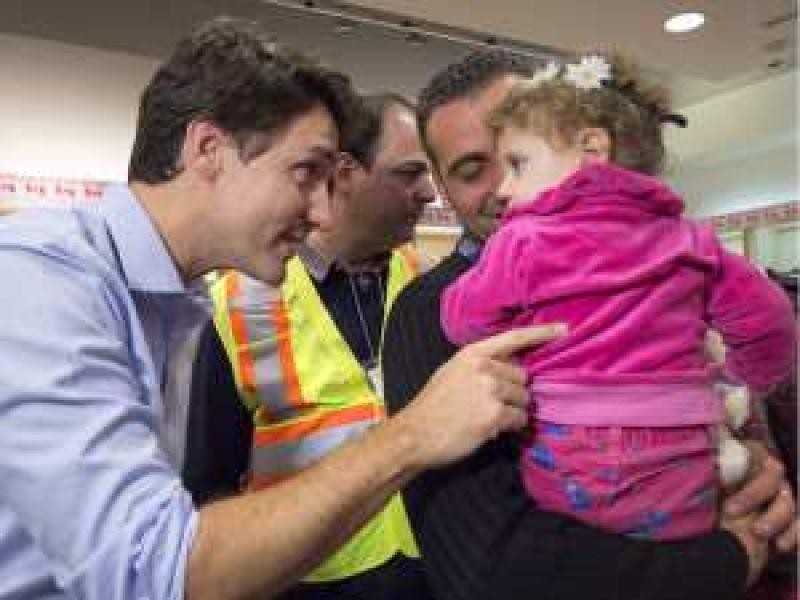
Prime Minister Justin Trudeau’s election promise to welcome 25,000 refugees from Syria was aimed at showing voters his compassion. The followup photo opportunities he arranged in 2015 with smiling Syrian refugees, such as doctors, drew international headlines.
Once in power, Trudeau’s Liberals switched the name of the Immigration Department to Immigration, Refugees and Citizenship Canada, to highlight their concern for those forced to leave chaotic home countries, especially Syria.
Given the grand gestures, you would be forgiven for believing the federal Liberals and the department responsible for refugees would be tracking the fate of the tens of the thousands of struggling Syrians that Canada has recently taken in.
But, after more than two weeks of inquiries by Postmedia, a media relations officer acknowledged the department has not produced any report in almost two years on the about 50,000 Syrian refugees now in Canada.
Canada’s auditor general is among the unamused . The Liberals had a plan to monitor whether the mostly Arabic-speaking refugees were learning English or French, working, receiving social assistance and going to school, but the government has failed to follow through, said auditor general Michael Ferguson. It is Ottawa’s responsibility, he said, to make sure Syrians refugees “integrate into Canadian society.”
The federal Liberals are not following the more transparent approach of Sweden and Germany, which took in the largest numbers of the 2.6 million mostly-Syrian asylum seekers who arrived in Europe in 2015 and 2016. The governments of those countries are providing extensive data on refugee outcomes, in addition to launching waves of job-training programs.
Immigration, Refugees and Citizenship Canada did, to be fair, release a one-year-after report on Syrian refugees in December, 2016. It was moderately helpful, since it showed half the privately sponsored refugees had jobs in Canada. But employment fell to 10 per cent among the larger cohort of “government-assisted” refugees, who are typically less educated and often illiterate.
The early Ottawa report also touched on how, after refugees’ first year in Canada, they are cut off from direct stipends from the federal government.
How have things gone for Syrian refugees in Canada in the almost two years since that lone departmental report? No one really knows. That’s unlike in Sweden and Germany, where refugee programs are increasingly thorny electoral issues.
Tags




Who is online

119 visitors