
Trump Administration Mulls a Unilateral Tax Cut for the Rich

 S E E D E D C O N T E N T

WASHINGTON — The Trump administration is considering bypassing Congress to grant a $100 billion tax cut mainly to the wealthy, a legally tenuous maneuver that would cut capital gains taxation and fulfill a long-held ambition of many investors and conservatives.
Steven Mnuchin, the Treasury secretary, said in an interview on the sidelines of the Group of 20 summit meeting in Argentina this month that his department was studying whether it could use its regulatory powers to allow Americans to account for inflation in determining capital gains tax liabilities. The Treasury Department could change the definition of “cost” for calculating capital gains, allowing taxpayers to adjust the initial value of an asset, such as a home or a share of stock, for inflation when it sells.
“If it can’t get done through a legislation process, we will look at what tools at Treasury we have to do it on our own and we’ll consider that,” Mr. Mnuchin said, emphasizing that he had not concluded whether the Treasury Department had the authority to act alone. “We are studying that internally, and we are also studying the economic costs and the impact on growth.”
Currently, capital gains taxes are determined by subtracting the original price of an asset from the price at which it was sold and taxing the difference, usually at 20 percent. If a high earner spent $100,000 on stock in 1980, then sold it for $1 million today, she would owe taxes on $900,000. But if her original purchase price was adjusted for inflation, it would be about $300,000, reducing her taxable “gain” to $700,000. That would save the investor $40,000.
The move would face a near-certain court challenge. It could also reinforce a liberal critique of Republican tax policy at a time when Republicans are struggling to sell middle-class voters on the benefits of the tax cuts that President Trump signed into law late last year.
“At a time when the deficit is out of control, wages are flat and the wealthiest are doing better than ever, to give the top 1 percent another advantage is an outrage and shows the Republicans’ true colors,” said Senator Chuck Schumer of New York, the Democratic leader. “Furthermore, Mr. Mnuchin thinks he can do it on his own, but everyone knows this must be done by legislation.”
Capital gains taxes are overwhelmingly paid by high earners, and they were untouched in the $1.5 trillion tax law that Mr. Trump signed last year. Independent analyses suggest that more than 97 percent of the benefits of indexing capital gains for inflation would go to the top 10 percent of income earners in America. Nearly two-thirds of the benefits would go to the super wealthy — the top 0.1 percent of American income earners.
Making the change by fiat would be a bold use of executive power — one that President George Bush’s administration considered and rejected in 1992 , after concluding that the Treasury Department did not have the power to make the change on its own. Larry Kudlow, the chairman of the National Economic Council, has long advocated it .
Conservative advocates for the plan say that even if it is challenged in court, it could still goose the economy by unleashing a wave of asset sales. “No matter what the courts do, you’ll get the main economic benefit the day, the month after Treasury does this,” said Ryan Ellis, a tax lobbyist in Washington and former tax policy director at Americans for Tax Reform.
Liberal tax economists see little benefit in it beyond another boon to the already rich.
“It would just be a very generous addition to the tax cuts they’ve already handed to the very wealthy,” said Alexandra Thornton, senior director of tax policy at the liberal Center for American Progress, “and it would play into the hands of their tax advisers, who would be well positioned to take advantage of the loopholes that were opened by it.”
The decades-long push to change the taxation of investment income has spurred a legal debate over the original meaning of the word “cost” in the Revenue Act of 1918, and over the authority of the Treasury Department to interpret the word in regulations.
“I think we ought to look at not penalizing Americans for inflation,” said Representative Kevin Brady of Texas, the Republican chairman of the Ways and Means Committee, who said he would like to see the Treasury Department make the change through regulation.
Mr. Bush’s Treasury Department determined that redefining “cost” by regulatory fiat would be illegal — a conclusion buttressed by the Justice Department’s Office of Legal Counsel, which found that “cost” means the price that was paid for something.
But conservatives have disputed this conclusion. Pushing Mr. Trump to make the change, Grover Norquist, the president of Americans for Tax Reform, has cited a 2002 Supreme Court decision in a case between Verizon Communications and the Federal Communications Commission that said regulators have leeway in defining “cost” to make the case that the Treasury Department can act alone.
“This would be in terms of its economic impact over the next several years, and long term, similar in size as the last tax cut,” Mr. Norquist said, suggesting that making the change would raise revenue for the government by creating new economic efficiencies and faster growth. “I think it’s going to happen and it’s going to be huge.”
He and others said last year’s tax cut would also pay for itself, but despite strong economic growth, corporate tax receipts have plunged and the deficit has soared .
According to the budget model used by the University of Pennsylvania’s Wharton School of Business , indexing capital gains to inflation would reduce government revenues by $102 billion over a decade, with 86 percent of the benefits going to the top 1 percent. A July report from the Congressional Research Service said that the additional debt incurred by indexing capital gains to inflation would most likely offset any stimulus that the smaller tax burden provided to the economy.
“It is unlikely, however, that a significant, or any, effect on economic growth would occur from a stand-alone indexing proposal,” the report said.
Michael Graetz, a tax law professor at Columbia University who worked in the Treasury Department’s tax policy office when the department determined that taxing capital gains could not be changed by regulation, said he still thought that the decision to change the law should fall to Congress.
He pointed out that the department would have to make decisions about what types of assets would be indexed and that it would essentially be picking winners and losers.
“There’s certainly no legal authority for Treasury to choose what assets to treat this way,” Mr. Graetz said.
Two law professors, Daniel J. Hemel of the University of Chicago and David Kamin of New York University, wrote in a paper last month that states, charities and other entities could sue the Treasury Department if it tried to make the change. Mr. Kamin said in an interview that the change would create opportunities for gaming the tax code, in part because other parts of the code, such as interest payments, would still be unadjusted for inflation.
A framework for a second round of tax cuts, released by the Ways and Means Committee last week, did not address taxation of capital gains. It is highly unlikely that Congress will pass another tax bill this year because of the slim Republican majority in the Senate.
Democratic senators have written to Mr. Mnuchin, urging him to stand down.
“Treasury does not have the unilateral authority to take our tax code and expose it to widespread gamesmanship,” said Senator Ron Wyden of Oregon, the top Democrat on the Finance Committee. “Indexing capital gains under this regime is a boondoggle for the rich, plain and simple.”
A Treasury Department official wrote Mr. Wyden a two-paragraph reply this month. “We appreciate your taking the time to express the thoughts outlined in the letter,” it read. “We will take them under advisement.”
By Alan Rappeport and Jim Tankersley
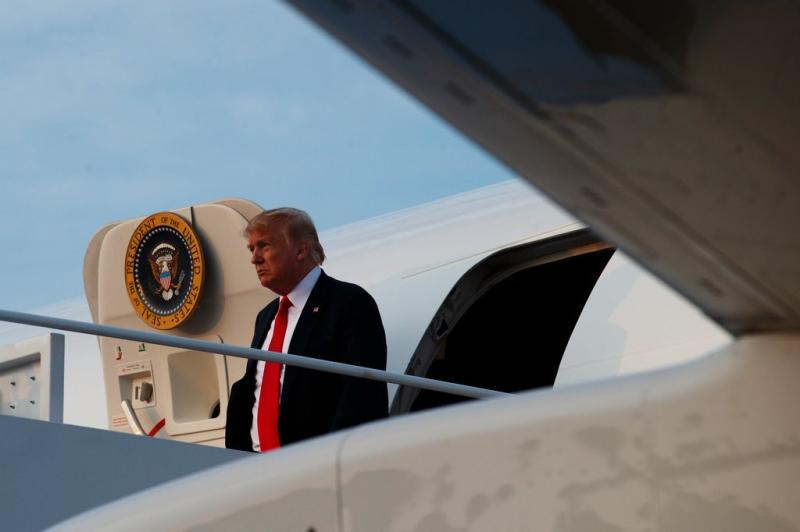
Photo: Tom Brenner for The New York Times
Tags
Who is online
162 visitors
Another tax cut for the rich. This time trump trying to bypass congress.
As much as conservatives complained that Obama tried to rule, trump is actually trying to do just that.
I'm not surprised by this move by the administration....Seems the deficit will be getting bigger if this goes through..
I was a little. I thought tax cuts would be over with. I guess the ultra wealthy didn't get all they wanted.
Sadly ender, I don't think that we've seen the last of them.
That's because they want it ALL. And they have just the man in the Whitehouse to take it away from everyone else and give it to them.
Color me so shocked.
Sometimes I think some of these people want the country to fail. One way to do it would be for the US to go into financial ruin.
I am still waiting for them to attack social safety nets when they can no longer be paid for.
That is wrong on s-o-o-o-o many levels!
The economy can grow without any improvement in worker compensation, as has happened since the Trump tax-cut-for-the-rich.
Since the tax rate for the rich was reduced, the fact that they are getting a LOT more revenue does not mean they are paying more taxes. On the contrary.
So in the real world (as opposed to your fact-free dogma-based world), federal tax revenues have collapsed. We are looking at about a trillion dollars per year in additional deficit.
I was hoping they would abolish the capital gains tax.
... all taxes!
The existence of the capital gains tax is controversial on partisan grounds. In 1995, to support the Contract with America legislative program of House Speaker Newt Gingrich , Stephen Moore and John Silvia wrote a study for the Cato Institute . In the study, they proposed halving of capital gains taxes, arguing that this move would "substantially raise tax collections and increase tax payments by the rich" and that it would increase economic growth and job creation. They wrote that the tax "is so economically inefficient...that the optimal economic policy...would be to abolish the tax entirely." [21] More recently, Moore has written that the capital gains tax constitutes double taxation. "First, most capital gains come from the sale of financial assets like stock. But publicly held companies have to pay corporate income tax....Capital gains is a second tax on that income when the stock is sold." [22]
Conservative shills are constantly preaching the manifestly absurd idea that cutting taxes will increase revenues.
Unsurprisingly... it never works out that way...
Something else to think about in this vein. There's an awful lot of wealth held by the top 1% and I'm confident that it's not just piles of cash sitting in bank vaults. Perhaps these people are stashing wealth because they don't want to lose a greater piece of it to taxes, so it just sits. Now if capital gains is changed allowing them to save more from taxes, might they not then cash out and get that wealth back into circulation? I don't know myself, but it's a question I have.
There is no "wealth tax". "Stashing" is pointless.
The ultra-rich never leave their money in a bank. The "invest" it. Since the tax-cut passed, many corporations have been buying back stock... which raises the value of each remaining outstanding share.
What has not been happening is increases in employee revenue.
Oh goody, more money for the rich and fuck the poor and middle class.
Getting rid of capitol gains tax would sure help my retirement.