
The Army's killer drones: How a secretive special ops unit decimated ISIS


 S E E D E D C O N T E N T
Yahoo News photo illustration; photos: AP, Getty Images
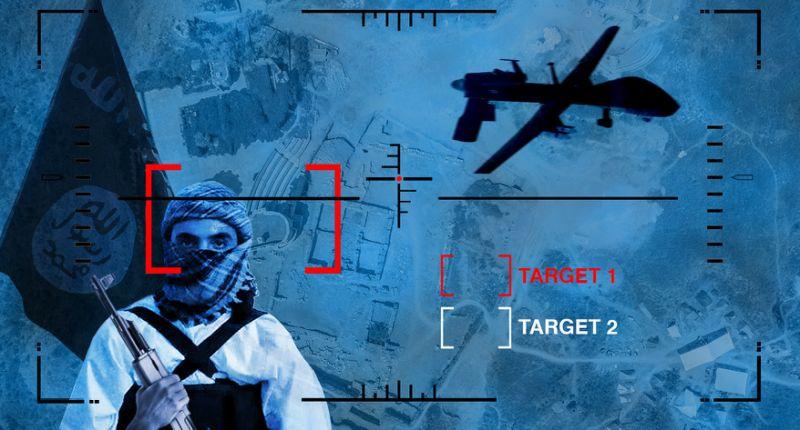
As the Islamic State’s physical caliphate shrinks to nothing after an almost five-year campaign led by U.S. special operations forces, military insiders say one small unit has killed more of the extremists than any other: the company of Gray Eagle drones in the Army’s 160th Special Operations Aviation Regiment.
Although the military has thrown a cloak of secrecy over its operations, the unit — officially called E (or “Echo”) Company of the regiment’s Second Battalion and established less than a decade ago — is increasingly being lauded in special operations and Army aviation circles.
“They are doing the most killing of anyone in the national mission force,” said a former 160th officer, referring to Joint Special Operations Command, which runs counterterrorism task forces in Afghanistan, and does battle against the Islamic State in Iraq, Syria and the Horn of Africa. “They’re out there doing the nation’s bidding in a ferocious way.”
Flying from a base in Iraq to attack targets in Syria, the drone company has launched “more than a thousand” Hellfire missiles in the last two to three years, the former 160th officer told Yahoo News. “That means to me they’ve been very busy in Syria.”
Made by General Atomics Aeronautical Systems, Inc., the same firm that produces the MQ-1 Predator, which the Air Force retired in 2018, and its successor, the MQ-9 Reaper, the MQ-1C Gray Eagle is a derivative of the Predator and falls somewhere between the two in terms of capability. Armed with up to four Hellfire missiles or a mix of other munitions, the Gray Eagle also carries a suite of surveillance gear that includes signals intelligence equipment and high-resolution cameras that can read a license plate from 15,000 feet . The basic Gray Eagle can fly for up to 25 hours, while an extended range version has a maximum endurance of 42 hours.
The future of warfare?
The future of warfare?
That was exactly my first thought as well when I saw this article.
Future wars may be fought by hordes of remotely controlled drones (and other weapons) battling each other.
Some of the Chinese drones are mind boggling. They are investing heavily in drone technology for the military.
Asymmetric warfare required a change in tactics. Done technology what the American answer when you don't have large standing armies going toe to toe.
Indeed. Who needs piloted aircraft that can be detected and shot down easier when you have a small remote controlled drone that can deliver payload just as effectively? Someday, we might see aerial dogfights between drones. Which I admit, would be cool to see.