
Lucian Truscott Threefer



Two guesses, and the first one doesn’t count: Who owns the courts?
Thomas and Alito can’t find their copies of the Constitution.
They’re doing it.
They’re going after Brown v. Board of Education on the sly.

I followed Paul Krugman over to Substack when he retired from the NY Times . There I rediscovered some sources I'd lost track of when I stopped subscriptions to the Washington Post (Bezos!) and LA Times . And I discovered Lucian Truscott.
Straightforward.
Two guesses, and the first one doesn’t count: Who owns the courts?
 NPR: Getty Images
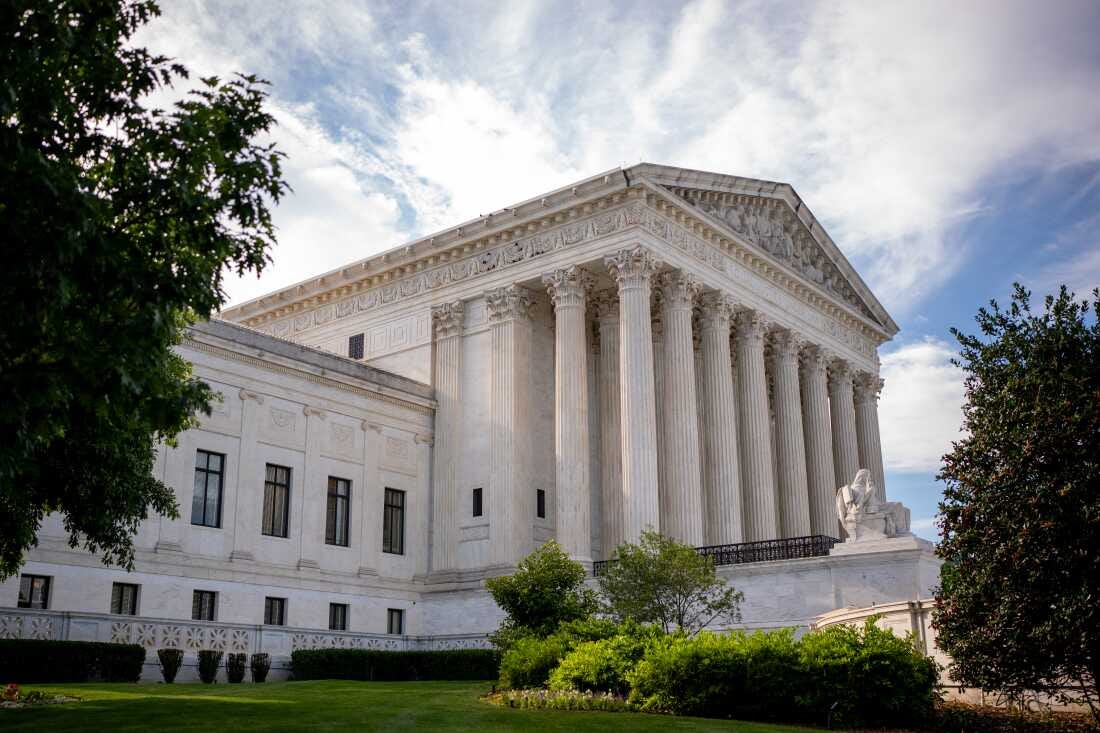
Looked at one way, the case the Supreme Court heard today was hard to follow. Nominally, we were told, it was about Trump’s ugly and incredibly stupid executive order “ending” birthright citizenship, a right that is stated in plain English in the 14 th Amendment to the Constitution. But scratch the case a little deeper, and it wasn’t about birthright citizenship at all. It was about who the law applies to in this country, who has rights under the law, and ultimately, who gets to go into court to protect those rights.
According to the Trump administration, and to conservatives generally, there is one answer to those questions: the following people. In other words, whoever they say. That is the position taken by Trump’s Solicitor General, John Sauer. The issue at stake before the court today wasn’t the Constitutional right of birthright citizenship itself, but rather, who is entitled to that right. A series of cases around the country have resulted in several federal district court judges issuing rulings, usually temporary restraining orders, blocking Trump’s executive order from taking effect. Solicitor General Sauer, speaking for Trump, wants the court to rule that individual judges should not be able issue nationwide injunctions against Trump’s executive orders. You may have read reports of right-wing media complaining that district court judges should not be able to stymie presidential power, which according to Trump and a long history of conservative thought, should basically be absolute.
Trump’s lawyers told the court that if a judge issues an injunction, it should only apply in that court’s jurisdiction. In the case of birthright citizenship, that would mean that babies born to immigrant parents in, say, New Jersey, would have their right to citizenship recognized, because a judge issued an injunction against Trump’s order. But babies born in, say, Texas, would not, if a cherry-picked judge down there refused to issue a temporary restraining order against Trump’s executive order because he found that there is a likelihood that Trump’s executive order would be found Constitutional. Lawyers arguing on behalf of migrants who have given birth in this country pointed out how unworkable a system would be with rights existing in some jurisdictions but not in others. One of the justices pointed out that if the court rules with the Trump administration, it would create a system whereby each baby born to an immigrant family seeking birthright citizenship would have to hire a lawyer and sue for that right.
Which is precisely what the Trump administration wants, and what conservatives have wanted. The conservative justices on the court have ruled, or tried to rule, for years against class action suits, which establish a group of people who have been wronged in some way and allow them to sue to reverse the wrong that has been done to them, or sue for a Constitutional right that has been either denied to them or damaged in some way. Two of the conservative justices had the gall to argue today that the answer to the problem of the nationwide injunctions was class actions, so any injunction ordered by a judge would not apply nationally, or even jurisdictionally, but only to the “class” of people affected – in this case, the babies of migrants.
Presumably, the way that would work is that the Supreme Court rules in this case that judges cannot issue nationwide injunctions, but they can issue injunctions which apply to classes of people. That would give the court the opportunity to disallow future class action lawsuits when they would be filed on behalf of the class in question, the children of migrants seeking birthright citizenship.
It's even worse than that, Justice Kagan pointed out to Sauer today. If the Supreme Court rules that judges cannot enjoin the government nationally, that means the government can continue, wherever it is not enjoined, to deny birthright citizenship to migrant babies. But once the root case, on the Constitutionality of birthright citizenship, reaches the court, if the court finds that right exists – as it has for at least 100 years – that would create a situation where all the babies denied citizenship in the meantime would have to sue individually to gain the citizenship that had been wrongfully denied to them in the first place. This is the “irreparable harm” that injunctions seek to prevent, disallowing the government from doing something it knows is illegal and which will be overruled by the court eventually, but in the meantime creating an entire world of people who have been harmed by the government’s actions along the way.
This has been a conservative dream for decades. In Shelby County v. Holder, Justice Roberts wrote the egregious decision defenestrating Article 5 of the Voting Rights Act, which protected the rights of voters in states in the Deep South, (and in some jurisdictions elsewhere) by requiring “pre-clearance” from the Department of Justice before laws were passed that changed voting requirements on classes of people – read: Black people – who had historically been denied voting rights. One of these requirements, to produce photo ID’s in order to register to vote, had been stopped by the DOJ for nearly 50 years before the Shelby case. The day after that case was decided, Alabama imposed a voter ID requirement which reduced Black voting because the state knew that a percentage of the Black population did not have drivers’ licenses, the ID required to vote. People could still sue individually to gain the right to vote, but that had to happen on a case by case basis. No longer was the right to vote protected by the Department of Justice.
The 8 th Circuit Court of Appeals ruled yesterday in a voting rights case involving a different part of the Voting Rights Act, Section 2. A different panel of the same court had already ruled in 2023 that individuals could not sue privately under Section 2 to protect their voting rights because Section 2 does not “unambiguously” confer an individual right to vote. The decision by the 8 th Circuit yesterday went even further, saying that individuals cannot use use another federal Civil Rights law called Section 1983, which allows individuals to sue state governments to protect their civil rights. Section 1983 had been used in lawsuits to protect federal Constitutional rights, including the right to vote. The 8 th Circuit ruled that Section 1983 does not specifically confer the right for individuals to sue for voting rights, so the only entity that can sue under Section 2 is the Department of Justice under the order of the Attorney General.
The chances of the Donald Trump DOJ suing under Section 2 to protect the right to vote of any individual or group of individuals is exactly zero. So there goes any chance to enforce the right to vote under Section 2 of the Voting Rights act anywhere in the seven states of the 8 th Circuit: Arkansas, Iowa, Minnesota, Missouri, Nebraska, North Dakota and South Dakota.
Do you see what they’re up to? The Republican Party and conservatives have been after the Voting Rights Act since the day it was passed in 1965 because the people whose rights it restored, largely Black people in the South, were Democrats. Republicans and conservatives know that there aren’t enough of them to win national elections, so they have two choices: either come up with policies that appeal to a larger part of the American populace and thus win their votes, or work to limit the right to vote of the people who vote against them.
We know which choice they have made.
It’s all of a piece. Republicans look at migrant babies as little Democrats. If they are citizens, when they grow up, they’re going to vote for Democrats. So, the solution to the migrant baby problem is to deny them citizenship. If they’re going to lose when Trump’s executive order reaches the Supreme Court, where it is all but certain to be found unconstitutional, then they will create a miasma of separate jurisdictional nightmares imposing as many limits as possible on migrant babies to achieve citizenship under the 14 th Amendment.
Another way to accomplish the Republican dream is to limit people’s access to the courts where they can go to have their Constitutional rights upheld. They’ve got it done with the Voting Rights Act: make it difficult for people to go to court under Section 5 and Section 2 and every other section of the Voting Rights Act to protect their rights to vote.
It’s a numbers game. It’s a numbers game when it comes to how many conservative judges Republicans can get appointed to district courts, appeals courts, and of course, the Supreme Court. Who gets to use the federal court system is a numbers game. But it’s also a question of legal representation. That’s why Trump has gone after the big law firms. He wants to intimidate them so that they won’t take the pro bono cases they have historically taken that protect people’s constitutional rights. Prestigious law firms have been involved in lawsuits that have expanded the rights of same sex people to marry, protect the right of habeas corpus, protected the rights of immigrants who were subject to Trump’s original orders against travel from Muslim countries, and protected people’s rights to vote.
Trump doesn’t want these firms doing pro bono work for others, so he has pressured them to do pro bono work for himself. Numerous law firms have banded together and signed an agreement not to cave under Trump’s pressure. But he has already gotten almost a dozen firms to commit to doing nearly a billion dollars-worth of pro bono work for the Trump administration. What that pro bono work will consist of remains to be seen, but the chilling effect on law firms is already there, and with the Trump administration attempting at every turn to limit people’s access to the courts, having excellent legal talent on your side has become more essential than ever.
So who owns the courts? Nearly every time the Supreme Court opens its doors to the public for a hearing on a case that has reached its august chambers, that question will be at least be an issue, if not the issue. The words in the Constitution are only as meaningful as their enforcement, and right now, that is a major problem.
Thomas and Alito can’t find their copies of the Constitution
In yet another serious blow to Donald Trump’s all-out assault on the rule of law, the Supreme Court ruled yesterday, 7-2, that the administration cannot deport immigrants using the Alien Enemies Act unless they are afforded due process of law. The decision is not the final ruling in the case, A.A.R.P. v. Trump , which challenges the Constitutionality of using the Alien Enemies Act to deport migrants. The decision mandated that Trump cannot deport migrants who are in the U.S. illegally merely by alleging without evidence that they are gang members, and they cannot use the Alien Enemies Act unless the court rules that it is constitutional. Which unlikely, given that the Alien Enemies Act was written to apply during times of war when the nation is under invasion by a foreign country.
The Supreme Court took the unusual step of noting that it was granting the injunction against the deportations because it recognized that the administration had previously made use of the Alien Enemies Act to wrongfully deport another individual without due process and then argued in court that “it is unable to provide for the return of an individual deported in error to a prison in El Salvador.”
The court took the opportunity of this interim decision to tell the Fifth Circuit Court of Appeals, from which the case was appealed, that notifying the detainees less than 24 hours before they were to be removed from the country, without giving them any instructions about how they could exercise their right to a hearing before removal, “surely does not pass muster.”
Most of the deportation cases are coming out of the Fifth Circuit because the Trump administration has located many of the people it wants to deport in either Louisiana or Texas, two states within the Fifth Circuit’s jurisdiction, and recognizes that it by far the most conservative Court of Appeals in the country and most likely to rubber-stamp the administration’s efforts to deport people. The language in the Supreme Court opinion yesterday was a direct instruction to the Fifth Circuit that they are not to root around in legal minutia looking for a way around the due process clause of the Constitution, and any ruling by the Fifth Circuit that does not uphold due process will be overturned again by the Supreme Court. The court even went so far as to remind the Fifth Circuit, “We have long held that ‘no person shall be’ removed from the United States ‘without opportunity, at some time, to be heard.’” The word “person” as opposed to “citizen” was emphasized in that sentence, and the court went even further and used the word “alien” – from the “Alien Enemies Act” -- to remind the Fifth Circuit that “The Fifth Amendment entitles aliens to due process of law in the context of removal proceedings.’”
In a direct slap at the Trump administration, the Supreme Court made a veiled reference to the case of Abrego Garcia by including this further reminder of the purpose of the Due Process clauses of the 14 th and 5 th Amendments: “‘Procedural due process rules are meant to protect’ against ‘the mistaken or unjustified deprivation of life, liberty, or property.’” The word “mistaken” practically leaps from the page, since the Trump DOJ has admitted under oath in court that Garcia was “mistakenly” removed to El Salvador.
The decision itself is unsigned, but a dissent was signed by the two justices on the court, Clarence Thomas and Samuel Alito, who have apparently forgotten that they were appointed to rule on whether laws and actions by the government are constitutional, not to uphold whatever Donald Trump wants to do. Trump did himself no favors with the other seven justices of the court who clearly know their duty, when he wrote on Truth Social last night, after the decision was filed, “THE SUPREME COURT WON’T ALLOW US TO GET CRIMINALS OUT OF OUR COUNTRY!”
There was of course no evidence presented by Donald Trump’s administration that the Venezuelans they want to deport are criminals.
Trump followed up his initial Truth Social post with, “The Supreme Court of the United States is not allowing me to do what I was elected to do,” as if his election entitles him to violate Constitutional rights at will.
Legal commentators over the past few weeks have held that Trump and the Supreme Court are “headed for a collision.” The Supreme Court, in this decision, is reminding Donald Trump that his upcoming collision will be with the Constitution itself, and the resulting damage will be to him, not to either the court or our founding document.
They’re doing it. They’re going after Brown v. Board of Education on the sly.

These dirty, scum-sucking, bottom-feeding fuckers just never give up. On the 71 st anniversary of the ground-breaking, earth-shaking Brown v. Board of Education, which overturned the despicable Plessy v. Ferguson and outlawed so-called “separate but equal” segregation in the nation’s schools, the New York Times informed us that down in Louisiana, which fought integration until the bitter end and beyond, Republican “leaders” are pushing to end federal desegregation orders that have been on the books for more than 50 years.
They’re not going to go after Brown in the Supreme Court. That would leave fingerprints of the Republican Party way too visible on the racist push to overturn the court’s landmark desegregation case. So, they’ve decided to go after desegregation school by school, district by district, and sure to come, state by state. In Louisiana, the state’s attorney general, working with the support of the governor, is making the predictable argument – reminiscent of Justice John Roberts in his decision overturning Section 5 of the Voting Rights Act – that racism and segregation is “in the past” and the court orders that were necessary in Louisiana and every other state in the Deep South to force school districts to desegregate, are no longer necessary.
The head of the newly-defenestrated Civil Rights Division of the Department of Justice, Harmeet Dhillon, is right there with them. “It is 2025,” Ms. Dhillon imperiously told the Times. “I haven’t heard a recent claim that there is government mandated segregation happening in 2025 in a school district.”
Segregation doesn’t have to be mandated anymore, because states and local school districts have come up with so many scams to make de facto segregation a reality. The rise of charter schools has led to increasing segregation in states which have allowed them. And of course there is the legacy of the fight against integration in the south which continues to infect school systems. After court orders – yes, the ones they want overturned today – mandated that school districts integrate in southern states, they came up with a system of all-white “academies.” White parents sent their kids to the academies, which could be segregated by race because they were private, while black families were left to send their children to the public schools, which, shedding white students, became either entirely segregated or nearly so.
Let’s take a moment to have a look at the system Brown v. Board of Education sought to end. In the south, white children were sent to all-white schools with new sets of textbooks every two or three years. The school buildings were new, and if they were older, pre-war buildings, they were well maintained and well-supplied with music rooms, labs for chemistry and biology classes, auditoriums where school plays could be presented and graduations held, well-equipped playgrounds, music rooms, and all the facilities normally associated with K-12 education. In all-Black schools, children used the cast-off schoolbooks of the white children who had been given new ones. Many Black schools had no auditorium, no recreational facilities, no playgrounds, no labs, and were located in rundown buildings with leaking roofs and unrepaired bathrooms.
In some school districts in states such as Virginia and Mississippi, where opposition to integration was strongest, white children were taken to school on publicly funded school buses. Black children walked or were driven by parents, if the parents even had cars.
The only thing accurate about “separate but equal” was the “separate” part. Southern states made no effort to educate their Black populations in the same manner they educated whites.
That’s what Brown v. Board of Education sought to end when it was passed in 1954. Ten years later, when I went to high school in Northern Virginia, we could look out the windows of our well-supplied and well-equipped school on Route 1 in Alexandria, Virginia, and watch buses filled with Black children go past our high school on their way to an all-Black high school that was more than 10 miles away down Route 1. The school I went to, Mount Vernon, was integrated only because the children of military families from Fort Belvoir went there and the federal government had forced the Fairfax County school district to take the children of Black soldiers. In fact, throughout the years I was educated largely in southern states, the schools I went to were integrated, but only because they were located on federal property on Army posts after President Truman had integrated the U.S. military in 1948.
It wasn’t until 1971 that schools in Northern Virginia were sufficiently integrated that they gained the approval of the federal courts which had ordered their desegregation and had been overseeing its enforcement.
School districts in the deep South and in cities in the north continued to resist integration, using housing patterns, which were still largely segregated by race – often by banks “red-lining” neighborhoods – to justify the placement of overwhelming numbers of Black children in schools located in all-Black or nearly all-Black neighborhoods. For a time, court orders mandated busing children between neighborhoods, and sometimes between school districts, in an attempt to better integrate schools that were de facto segregated by housing patterns, but opposition to busing and mass-protests ended that attempt during the 1970’s and 1980’s.
The attorney general of Louisiana justifies the attempt to lift court-ordered supervision of school districts that had been segregated because of the cost of “reams” of paperwork that had to be submitted to the courts reporting on “the number of Advanced Placement classes at each school to the racial makeup of athletic clubs,” according to the Times.
The reason those reports have been and are necessary is because the school districts which have to file them had engaged in discriminatory practices affecting school clubs and the placement of AP classes, which tended not to be in schools that were largely Black. The solution to the paperwork is to abide by the court orders.
But that is not what the state of Louisiana wants. The governor and the attorney general want the court orders lifted, and once they are gone, if schools continue to discriminate between the races, “you file a new lawsuit for a new problem.” If that sounds familiar, it is because we heard it just this past week. The Trump administration took its campaign to weaken the ability of judges to issue court orders to the Supreme Court last week when they attempted to convince the court that judges should not be permitted to issue court orders that affect wide parts of the country or the country as a whole. The solution, Trump’s solicitor general told the Supreme Court, is if there is a continuing problem affecting new people outside of the jurisdiction of limited court orders, they can file new lawsuits.
So, it’s all of a piece: the Trump administration wants to load up the federal court system by forcing people to file individual lawsuits if and when their rights are violated, instead of having a class action or a general stay or restraining order protect them. To top it off, they want to hamstring the system of federal mandates from the courts that have overseen desegregation by doing away with court orders and forcing a situation where new problems have to be addressed one at a time, lawsuit by lawsuit.
See how easy it is to deal with Supreme Court cases you don’t like? You weaken the hand of federal judges, you allow states to lift federal mandates they oppose, and then you force people to go to the expense and trouble to file new lawsuits to correct the problems which had been solved by the court’s decisions conservatives didn’t like to begin with.
Neat system, isn’t it? Brown v. Board of Education doesn’t get overturned and remains in the history books as one of this nation’s great accomplishments. Meanwhile, the little rats and suck-asses from the Heritage Foundation and Trump’s Department of Justice run around undercutting every federal program and court decision they don’t agree with.
One day, our children and their children will look back at this time and ask this simple question: Why did they abandon so much that worked and was good for everyone, in exchange for so much that was destructive and worked only for the few?
I hope history will eventually have a better answer for them than I do.
Whatever
Tags
Who is online
150 visitors
[✘]