
This Hawk Figured Out Traffic Signals to Ambush Its Prey

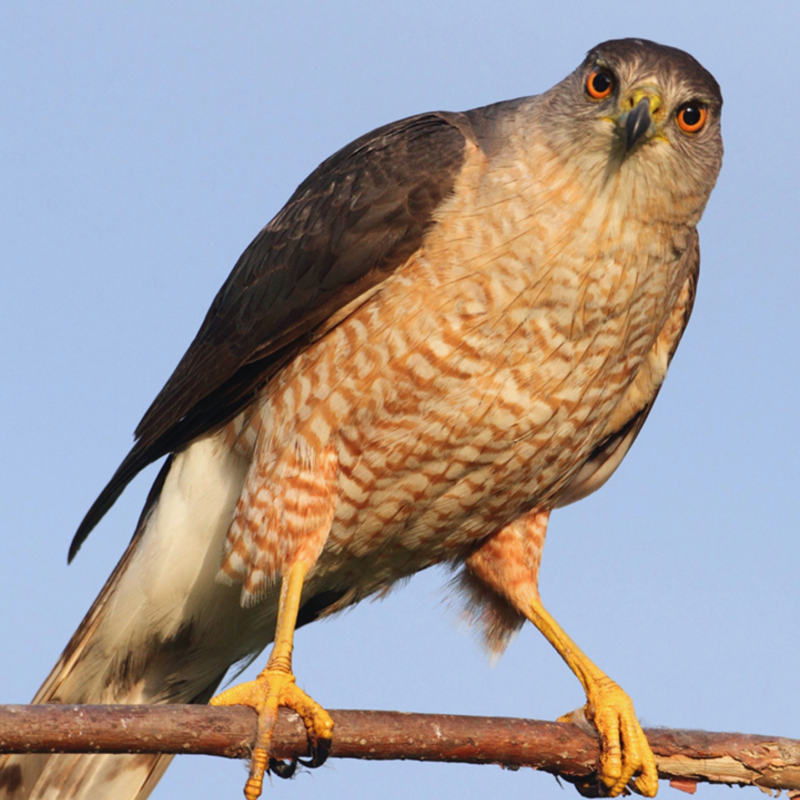

A street-smart bird used crosswalk signals to sneak up on unsuspecting birds, a study finds.

I'm more and more convinced that many animals are intelligent... but in ways that humans are not intelligent enough to recognize... 
There are links in the seed.
 S E E D E D C O N T E N T
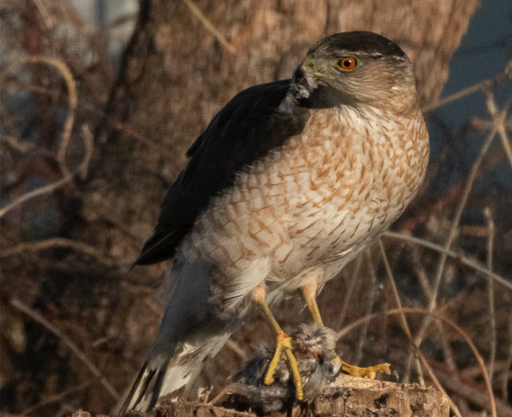
The story starts with Vladimir Dinets, a zoologist at the University of Tennessee, Knoxville, and the study's author, and an intersection in West Orange, New Jersey, near his home. As a zoologist, he had long been interested in animals' perspective on and understanding of urban environments—and in birds' relationship with cars, in particular. Scientists have previously observed ravens patrol American highways waiting for roadkill and songbirds using cars to hide from predators.
Dinets was on the lookout for these interesting interactions when a young Cooper's hawk migrated into his neighborhood and started doing something brilliant.
The intersection wasn't particularly busy, even during rush hour, Dinets wrote in a guest editorial for Frontiers in Ethology . But sometimes, a pedestrian would cross the street, causing cars to pile up all the way to a small, bushy tree down the block. The pedestrian "walk" signal would also make a sound that indicated it was time to walk.
One morning, Dinets saw the hawk emerge from the tree, fly very low above the line of cars, cross the street between the cars, and then dive to get something near one of the houses.
Then the same thing happened again. And again.
It turns out that the family that lived in that house near the bushy tree liked to have dinner in their front yard. In response, birds—like sparrows and doves—would flock there to claim the leftover crumbs.
That made for easy pickings for the hawk, who would swoop down into the yard to catch said sparrows and doves. But, curiously, the hawk only did this when cars were lined up along the block all the way to the tree.
Dinets eventually figured out that the line of cars provided cover for the hawk, and that the hawk had learned to recognize the sound of the pedestrian "walk" signal. As soon as a pedestrian pressed the button, the hawk would fly from wherever it had been hanging out and into the small, bushy tree. It would then wait for cars to pile up before using the line of cars as cover to sneak up on its prey.
The hawk had, apparently, learned to use the pedestrian signal as a cue to start heading over to the house crowded with defenseless birds, according to Dinets.
"That meant that the hawk understood the connection between the sound and the eventual car queue length," Dinets explained. The hawk also apparently had a good mental map of the neighborhood.
The hawk (or what Dinets thinks was the same hawk) returned the next year and used the same strategy to hunt. Eventually, though, the family moved away and the signal stopped working, so Dinets hasn't seen any super smart hawks hunting near his home since.
Life is tough for birds in cities—they have to avoid windows, weave through cars, and deal with noise. But this study shows at least one way that they've adapted to urban living.
"I think my observations show that Cooper's hawks manage to survive and thrive there, at least in part, by being very smart," Dinets wrote.
Whatever

Tags
Who is online
88 visitors
I'd love to have a corvid buddy...
When I lived in the Yukon ravens used to swoop down during red lights into the back of pickup trucks, grab onto a bag of groceries and as the truck pulled away fly off to the side of the road to get their feed on
Ravens are s-o-o-o cool!
I've seen them do that when I lived at Eielson
Operant conditioning in full view - figured out how to avoid the punishment and get the reward desired though careful observtion.
Ever see a mockingbird chase a squirrel into incoming traffic?