
Killing America's Univerities - Twofer from Daniel W. Drezner and Paul Krugman



I don't care about the "why" -- I care about the "what."
Blocking foreign students is an act of self-destruction — and self-betrayal

Can anyone explain why it is in America's interest to close universities that bring in foreign money (improving the balance of payments) and spread America's "soft power all around the world?
Are we forced to conclude that this is just our mad king having a tantrum?
The Trump Administration Is Trying to Kill American Higher Education
I don't care about the "why" -- I care about the "what."
by Daniel W. Drezner
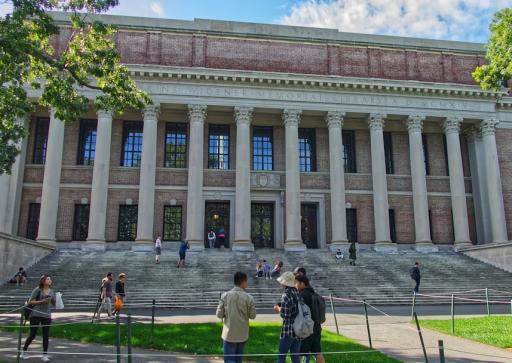
Impressively, the situation on this front has gotten even worse in the last 24 hours.
On Tuesday the Trump administration moved to end all remaining federal contracts — amounting to $100 million — with Harvard University. The New York Times ’ Stephanie Saul writes quite the set of paragraphs putting this into context:
The additional planned cuts, outlined in a draft of the letter obtained by The New York Times, represented what an administration official called a complete severance of the government’s longstanding business relationship with Harvard.
The letter is the latest example of the Trump administration’s determination to bring Harvard — arguably the country’s most elite and culturally dominant university — to its knees, by undermining its financial health and global influence. Since last month, the administration has frozen about $3.2 billion in grants and contracts with Harvard. And it has tried to halt the university’s ability to enroll international students….
The university has about 6,800 international students, making up 27 percent of its total enrollment. Harvard’s president, Alan M. Garber, characterized the cancellation of its ability to enroll international students as a potentially devastating blow.
“We condemn this unlawful and unwarranted action,” Dr. Garber wrote in a statement last week, adding that it “imperils the futures of thousands of students and scholars across Harvard and serves as a warning to countless others at colleges and universities throughout the country who have come to America to pursue their education and fulfill their dreams.”
If this seems like an exaggeration, consider the complete set of federal actions taken against Harvard that the New York Times ’ Michael C. Bender has compiled. It’s an extraordinary list of punitive actions given that the Trump administration has been in office for just a little over a third of a year.
Now, as a professor at the Fletcher School , a direct competitor of Harvard’s Kennedy School of Government , readers might wonder if I think there might be some competitive advantage that might be gained from Harvard’s misfortune. And the answer to this is “not really, no,” for two reasons.
The first is raw politics: Harvard is the most prestigious university in the United States. It has the deepest pockets. If the Trump administration can force Harvard to acquiesce to its demands, that capitulation will make it that much harder for other universities to protect academic freedom.
The second is that while Harvard might be receiving the brunt of the administration’s malignant attention, Trump’s team is taking other actions that will harm most U.S. universities. According to Politico’s Nahal Toosi :
The Trump administration is weighing requiring all foreign students applying to study in the United States to undergo social media vetting — a significant expansion of previous such efforts, according to a cable obtained by POLITICO.
In preparation for such required vetting, the administration is ordering U.S. Embassies and consular sections to pause scheduling new interviews for such student visa applicants, according to the cable, dated Tuesday and signed by Secretary of State Marco Rubio.
If the administration carries out the plan, it could severely slow down student visa processing. It also could hurt many universities who rely heavily on foreign students to boost their financial coffers.
“Effective immediately, in preparation for an expansion of required social media screening and vetting, consular sections should not add any additional student or exchange visitor (F, M, and J) visa appointment capacity until further guidance is issued septel, which we anticipate in the coming days,” the cable states. (“Septel” is State Department shorthand for “separate telegram.”)….
The news was met with frustration in much of the higher education community. 1
Frustration is an understatement. This administration seems bound and determined to force U.S. students to pay higher tuition, because it keeps stripping away alternative sources of revenue. Between slashing federal research funding to record-low levels, raising the transaction costs of accepting foreign grants, and this freezing the visa processing of foreign students, the Trump administration is disincentivizing scientific research and forcing universities to rely increasingly on the tuition payments of domestic college students.
The end result will be a poorer, less dynamic economy and a less vibrant society. I wish the Atlantic ’s Adam Serwer was being hyperbolic in this paragraph - but he isn’t:
These various initiatives and policy changes are often regarded as discrete problems, but they comprise a unified assault. The Trump administration has launched a comprehensive attack on knowledge itself, a war against culture, history, and science. If this assault is successful, it will undermine Americans’ ability to comprehend the world around us. Like the inquisitors of old, who persecuted Galileo for daring to notice that the sun did not, in fact, revolve around the Earth, they believe that truth-seeking imperils their hold on power.
Why are they doing it? Serwer attributes it to politics: “by destroying knowledge, Trumpists seek to make the country more amenable to their political domination, and to prevent meaningful democratic checks on their behavior.” I could proffer a variety of other ideological or political responses. 2 As of now , however, such rationales are besides the point. The only thing I know for sure is that it’s not for the reasons proffered by the administration. Harvard’s president Garber made that point on NPR’s Morning Edition yesterday:
What is perplexing is the measures that they have taken to address these that don't even hit the same people that they believe are causing the problems. Why cut off research funding? Sure, it hurts Harvard, but it hurts the country because after all, the research funding is not a gift. The research funding is given to universities and other research institutions to carry out work – research work – that the federal government designates as high-priority work. It is work that they want done. They are paying to have that work conducted. Shutting off that work does not help the country, even as it punishes Harvard, and it is hard to see the link between that and, say, antisemitism….
And it is not only about Harvard. And I think that's important to keep in mind. The kinds of changes that the administration has begun and is contemplating, which include deep cuts to the National Institutes of Health and to the National Science Foundation, will affect all research universities and will have a real impact on the ability of the United States to remain at the forefront of science and technology.
Speaking at Princeton University , Federal Reserve Chairman Jay Powell said earlier this week that, “We lead the world in so many ways, including in scientific innovation and economic dynamism. Our great universities are the envy of the world and a crucial national asset.”
The Trump administration seems bound and determined to piss that all away in an act of political vengeance. The entire country will suffer as a result.
America Turns Its Back on the World
Blocking foreign students is an act of self-destruction — and self-betrayal
by Paul Krugman

So it was that at one point I found myself visiting Texas Tech in Lubbock. Yes, it seemed pretty remote to someone who has spent almost his whole life in the Northeast Corridor, but as usual the overall experience was very positive. And it was also surprisingly cosmopolitan: there were students from many nations. I just checked the numbers, and currently 30 percent of Texas Tech’s graduate students are international.
So it is all across America. Our nation’s ability to attract foreigners to study here is one of our great strengths. Or maybe I should say was one of our strengths.
According to Politico , a cable from Marco Rubio, the secretary of state, has directed U.S. embassies and consulates to halt all processing of visa applications from foreigners hoping to study in the United States. This is reportedly a temporary measure in preparation for a new system in which would-be students will be screened on the basis of their social media history. And you can be sure that the criteria for denying entry will go far beyond, you know, advocating terrorism. Probably asking “Why was Trump talking to West Point grads about trophy wives?” will be grounds for rejection.
This completely insane policy move is presumably a temper tantrum in response to a court’s rejection of the administration’s attempt to prevent Harvard from admitting foreign students, which was in turn a temper tantrum in response to Harvard’s rejection of demands from Trumpists that they be allowed to dictate the university’s hiring and curriculum.
The courts will probably reject this policy move, too, but I worry that Rubio and co. can put enough sand in the gears of the visa process to bring the entry of international students to a near halt. And even if they can’t, the clear message to students that they aren’t welcome (and may be arrested once here) will have an immensely chilling effect.
It’s hard to overstate the self-destructiveness of this move, and the war on higher education in general. This is madness even in purely economic terms.
We don’t often think of education as a major U.S. export, but it is. International students typically pay full tuition and require little or no financial aid. Here’s “education-related travel,” basically international students, compared with some other major U.S. exports:

Source: Bureau of Labor Statistics
And because international students typically pay full freight, while domestic students often don’t, foreign students help support higher education financially. That’s a big deal. My sense is that most people have no idea how important higher education is as a source of jobs, many of them middle-class. Here’s a comparison of employment in “Universities, colleges and professional schools” with employment in some politically prominent sectors:

Source: Bureau of Labor Statistics
Apparently, Making America Great Again means destroying one of our most successful industries.
But wait, there’s more.
International students make up an especially large proportion of graduate students. And if you know anything about higher education, you know that grad students do a lot more than study. More often than not, they participate in research — some of it financed by the government, some of it sponsored by foundations, these days often sponsored by businesses. There are good reasons America’s clusters of high-tech innovation, from Silicon Valley to Greater Boston , are often centered around great research universities. And ambitious international students, sometimes bringing new perspectives, are part of what keeps these research universities great.
Last but not least, international students often get something important from the experience of studying in America that goes beyond what they learn in classrooms and labs. They learn what it means to live in an open society, and bring that knowledge home. We talk about “soft power,” which is very real. But this actually goes beyond that. Educating students from abroad helps to disseminate fundamental American values around the world.
Of course, the people now running things do not themselves accept what people like me consider fundamental American values. They may insist that they’re pro-American, but what they mean by “America” is a land of bigotry where your identity is determined by blood and soil, a land of closed borders and closed minds.
And they must be resisted to save the America I believe in.
Can anyone explain why it is in America's interest to colse universities thatC
Tags
Who is online
84 visitors