
How China Became the World's Largest Debt Collector

 S E E D E D C O N T E N T

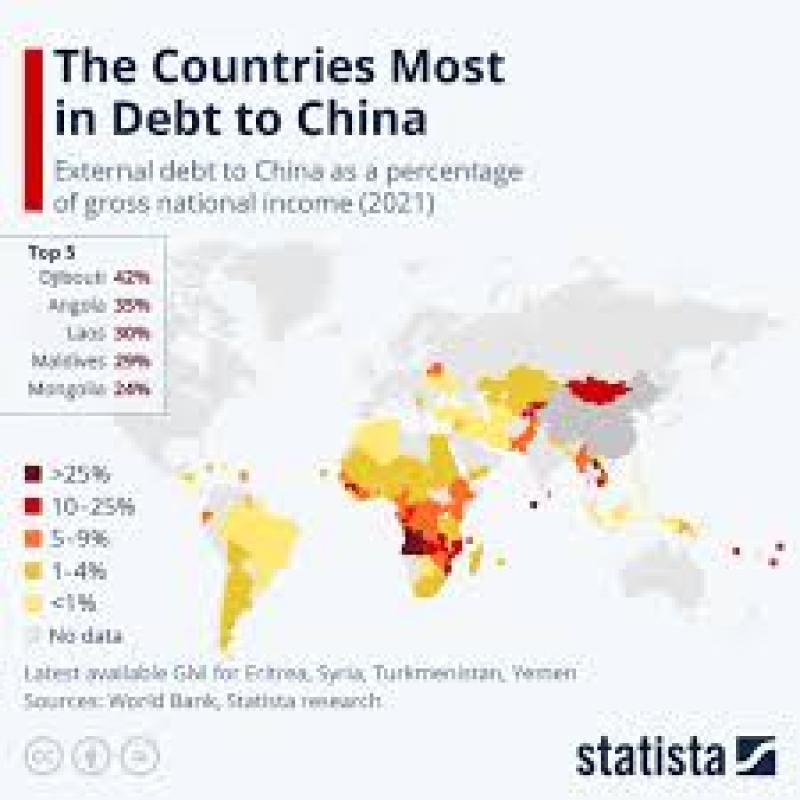
hina was the leading financier for developing nations throughout the 2010s, channeling over $1 trillion into infrastructure projects under President Xi Jinping 's Belt and Road Initiative (BRI).
Yet as lending has tapered off and grace periods on many loans have expired, China has emerged as the world's largest official creditor, according to a new report from the Lowy Institute, an Australian foreign policy think tank.
Why It Matters
The BRI, signed on to by approximately 150 countries, has funded thousands of projects worldwide.
Some low-income nations took on more debt than they could repay, in some cases leading to Chinese state-owned enterprises taking control of strategic infrastructure—such as in 2017 when China Merchants Port Holdings famously gained control Sri Lanka's Hambantota Port on a 99-year lease.
Critics, including the United States government, have accused China of "debt-trap diplomacy," or leveraging these debts to gain control over critical infrastructure. China has consistently denied these allegations, saying its overseas lending is conducted on mutually beneficial terms.
Newsweek reached out to the Chinese Foreign Ministry by email with a request for comment.
What To Know
In the 2020s, Chinese bilateral lending has declined in both size and scope, influenced by a domestic property sector crisis and slowing economic growth. This reduction coincides with the end of 3- to 5-year grace periods on many loans issued during the height of Chinese lending in the late 2010s.
"The combination of relatively short maturities and lower concessionality compared to other bilateral and multilateral creditors meant the early 2020s was always likely to be a crunch period for developing country repayments to China," wrote Riley Duke, Lowy Institute research fellow and author of the report.
Now, debt collecting is peaking, with China expected to receive a record $35 billion in interest and principal repayments this year. Of that total, $22 billion is owed by 75 of the poorest and most vulnerable nations, Duke wrote.
"At this new baseline, China's post-pandemic lending has retreated back to levels not seen since the late 2000s and only a quarter of that during the 2010s when the Belt and Road Initiative was in full swing," Duke said.
He said that in 54 of the 120 developing countries for which the World Bank has relevant data, debt service payments to China now exceed the combined repayments owed to the Paris Club—a group of 22 Organization for Economic Cooperation and Development (OECD) countries including major lenders such as the U.S., United Kingdom and France.
"No single bilateral creditor has been responsible for such a large share of developing country debt service in the past 50 years," Duke said.
Tags
Who is online
147 visitors
"Some low-income nations took on more debt than they could repay, in some cases leading to Chinese state-owned enterprises taking control of strategic infrastructure"
Debt trap diplomacy is starting to show it's teeth. Modern day colonialism through the payday lending model.