
The White Man Who Pretended to Be Black to Get Published

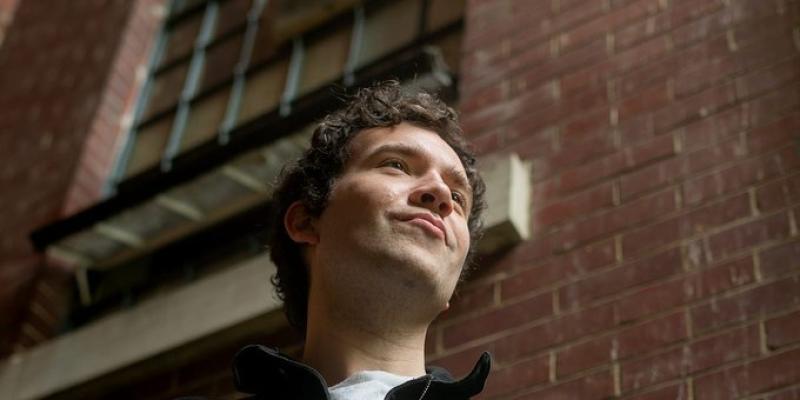

A young poet pretended to be ‘a gender-fluid member of the Nigerian diaspora,’ and wrote intentionally bad poems. He says he got 47 of them published.
 S E E D E D C O N T E N T
What you’re about to read is a poem. Its title is unmentionable, but I can tell you it was nominated for a 2025 Best of the Net Award, which is meant to bring attention to up-and-coming writers in the indie lit scene. Behold:

An excerpt of the feigned poetry. (Screenshot via JakeTheMag.com)
If you’re worried that I’m about to tell you why this poem is good, and imply you’re a bumpkin for thinking otherwise, don’t be. The poem isn’t good. It’s bad, and it’s meant to be.
The author told me so.
This poem was originally published, with a very crude title, in the online magazine Jake , under the name b.h. fein (pronouns: “it’s/complicated”). But b.h. fein does not exist. It is one of the many pen names of a straight, white Canadian man, who recently told me he’s spent the last few years inventing minority identities, then publishing terrible poems under these pseudonyms.
He has pretended, he said, to be Dirt Hogg Sauvage Respectfully , author of poems such as “non-b god or: what deity would be a TERF?,” as well as Adele Nwankwo , a “gender-fluid member of the Nigerian diaspora,” who has published dozens of comically bad poems in a wide array of indie literary magazines across the Anglosphere in the past three years, including one about a lesbian WWE-style wrestler that features lines such as:
“You wanna know how I feel after being cheated out of a victory over Pat Patriarchy at Survivor Series? I’m furious. I’m hot . Ooh, I’m so mad I could kiss a woman I don’t even like right now!”
In April, the man behind these identities came clean, writing on Substack that he’d “assumed a series of ‘attractive’ pen names” to “test the limits of the poetry industry and just how much buffoonery it was willing to permit in the present day.” He claimed he’d spent two years tricking editors into thinking that his pronouns or skin color were less “regular” than they actually are; and in that time, he said 47 of his intentionally bad poems had been published in numerous indie literary magazines.
His name, he wrote, was actually Jasper Ceylon. When I first spoke to him, a couple of months back, he laughed when I insisted that this name must be fake, too— It’s like calling yourself Jared Sri Lanka or something . He told me that, yes, it was another pseudonym, a tongue-in-cheek homage to some very distant Sri Lankan ancestry on his mother’s side. His voice was young, friendly, Canadian; he said that he is white, though his camera was off. I was talking to a profile picture of a cartoon elephant, with the name Adele Nwankwo in the corner: Ceylon told me he’d created online accounts to match all the identities he’d invented, to maintain the illusion.
Why’d he go to such lengths?
Mostly, because he was mad. Several years ago, the man calling himself “Jasper Ceylon” was trying to break out as a poet, writing under his real name—which I’ll share in due course—and he noticed that certain journals had what he described as “really weird, and quite specific requirements”:
“I just was not in the demographic they would even consider accepting in some cases. They were openly advocating on their websites for the voices of the disenfranchised and all of this stuff. I’m like, Wow, it would probably be a lot easier to get in if I had some sort of connection to one of these identities .”
Ceylon is far from the first person to argue that English-language publishing is overrun with what my colleague Coleman Hughes calls “the new racism”—that is, instead of giving everyone equal opportunities, regardless of the color of their skin, editors actively perceive certain races as worthier than others. (This view of the publishing industry has been disputed .) Nor is he the first person who’s attempted to expose it.
In 2015, Michael Derrick Hudson, a middle-aged white librarian in Indiana, saw his poem “The Bees, the Flowers, Jesus, Ancient Tigers, Poseidon, Adam and Eve” rejected by publishers 40 times . This inspired him to try submitting it under the pen name Yi-Fen Chou. After that, his poem was promptly published and included in that year’s annual Best American Poetry anthology. When he was found out, Hudson was accused of “yellowface.”
Yellowface is also the name of R.F. Kuang’s award-winning satirical 2023 novel , which follows a white plagiarist who steals the work, and Asian identity, of a Chinese author whose book she is editing. (Many reviewers noted the parallels between Kuang’s novel and Hudson’s story, although there’s no evidence the latter plagiarized.)
According to Ceylon, this preference for minority voices disadvantages those who society sees as most privileged—namely, white men. Statistics are hard to come by, but anecdotes are plentiful. As novelist Joyce Carol Oates tweeted in 2022 :
“A friend who is a literary agent told me that he cannot even get editors to read first novels by young white male writers, no matter how good; they are just not interested. this is heartbreaking for writers who may, in fact, be brilliant, & critical of their own ‘privilege.’ ”
Now, three years later, we have a president who has declared that DEI mandates are over and white men deserve civil rights protections , but it’s much harder to change an industry, and a culture, than it is to change the occupant of the White House. For now, there are still plenty of young, straight, white men who feel publishing’s obsession with identity politics has kept them boxed out—and they’re angry about it. This is the story of one of these men, whose obsessive quest to expose what he saw as the absurdities of the publishing industry quickly spiraled out of control....
“The first poem to ever get picked up was the ‘yah jah gah hah’ one,” Ceylon told me, when we first spoke. He was referring to one of two poems he published under the name Adele Nwankwo in a print edition of Tofu Ink Arts Press , a publication dedicated to “ amplifying the voices of the under-represented and marginalized .”
Ceylon was shocked that the poem—which begins with a Toni Morrison quote about “navigating a white male world” and contains lines like “ voodoo prak tik casta oyal drip drip” —was accepted. “It was very obviously nonsense,” he laughed. “Just fake bad Creole.” ( Tofu Ink Arts Press didn’t respond to a request for comment.)
Ceylon told me he was inspired by various literary hoaxes, including the 1943 Ern Malley hoax , where conservative writers James McAuley and Harold Stewart published many, many parodies of modernist poetry, to make fun of a genre they found superficial and stupid. He also mentioned the more recent so-called Grievance Studies Affair , where the academics Peter Boghossian, James Lindsay, and Helen Pluckrose published a number of bogus papers in academic journals between 2017 and 2018—including one that claimed dogs engage in rape culture, and another that included passages from Mein Kampf rewritten in modern jargon. They, like Ceylon, were trying to prove that in their intellectual sphere, you could get anything published if its politics were progressive, even if it was bad.
Tags
Who is online
281 visitors
He also mentioned the more recent so-called Grievance Studies Affair , where the academics Peter Boghossian, James Lindsay, and Helen Pluckrose published a number of bogus papers in academic journals between 2017 and 2018—including one that claimed dogs engage in rape culture, and another that included passages from Mein Kampf rewritten in modern jargon. They, like Ceylon, were trying to prove that in their intellectual sphere, you could get anything published if its politics were progressive, even if it was bad.
good stuff and shows exactly where we are in 2000's America. Race and ideology is all that matters in fields dominated by progressives.