
That EV You Just Bought Probably Has Too Much Range

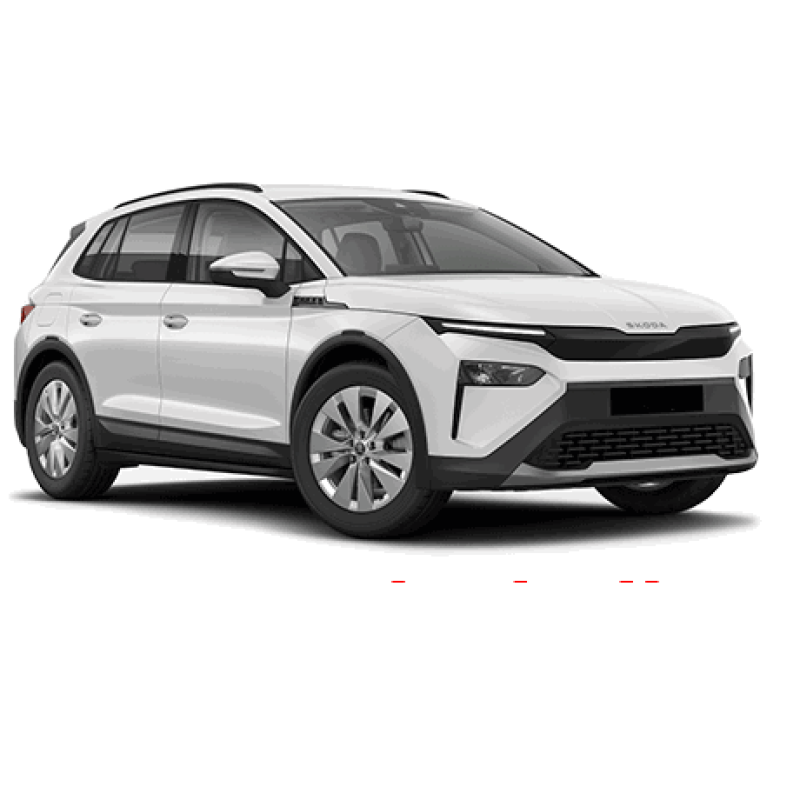

Range anxiety may be leading consumers to over-spend for long-legged EVs, says a new study

For quite a while, now, I've been saying that "range anxiety" is stupid . People keep an eye on their gas gauge, without even thinking about it. And once a decade they run out of gas, and have to call for help... and the world does not end. An EV battery needs nothing more.
We don't drive a lot - just down to the beach for a stroll every day. About fifteen kilometers. And (old age!) trips to the doctor and pharmacy add a few dozen kilometers every week. We plug into a 16A wall socket once a week, and that's it.
 S E E D E D C O N T E N T
 EV Owners Aren’t Using All That Range
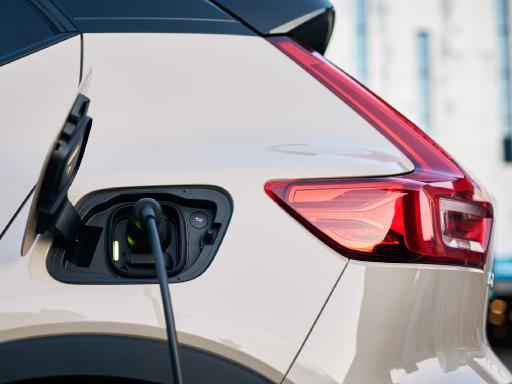
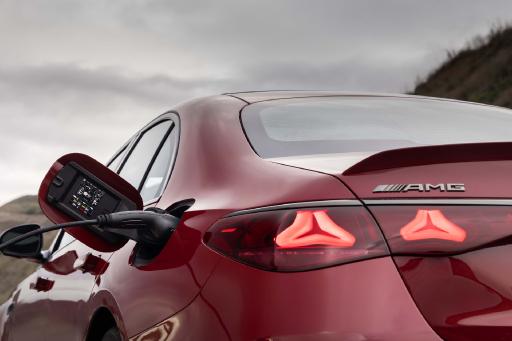
Research from a startup focused on “providing more transparency and confidence in electric car transactions,” Recurrent , shows that owners aren’t using more than 80% of their EVs’ range. You might argue that’s the point. After all, people don’t go out every day and use all 27 gallons of gas in their car. It’s silly to assume an EV owner should be going out and using all 325 miles of range in their car. All that range is nice when you need it, and provides more of a safety net than a smaller battery does. However, Recurrent argues that’s a problem on its own, as larger batteries significantly increase cost.
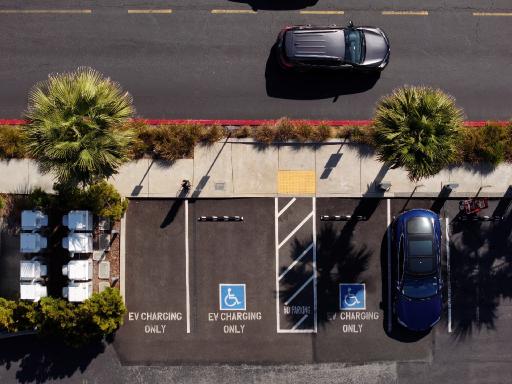
Even the most range-rich owners still leave 88%+ of their range unused most days.
There’s a few possible reasons: for one, the extra range is a sort of “safety blanket,” and owners do still cite range anxiety as their largest concern before buying an EV. That changes after the purchase happens, and another Recurrent study has shown that range anxiety declines the longer you’ve owned and driven an EV. Only 22% of owners feel they have anxiety over range after owning their EVs.
Whatever
Tags
Who is online
86 visitors
A big battery is expensive when you buy the car, and (literally) weighs on energy efficiency for all the life of the car. At purchase is when a person must think about "range". With lucidity! Paying for more range than one needs is as stupid as not buying enough.
There's still a lot more that goes into the decision than just this. If one is buying this as a second car to only be used in city for limited driving than less range can be a consideration. But if this will be the primary vehicle then I think greater range definitely must be part of the equation, especially if you live in a large spread out city. I don't know where you live, I live in Phoenix. In Phoenix, you can drive from the far northwest to the far southeast, never leave the city and it's a 100 mile one-way trip. A family with children can be driving a lot during the day for all the activities that children have. Do you like to take out of town trips? That would also bring range into the equation. I believe you also need to add in where in the country you live as it's my understanding that cold weather will impact the range of a battery. More range can become much more important up in Wisconsin or Michigan than it would in southern California.
For single people, would they want to have the expense (insurance and licensure) of the vehicle needs to also be taken into consideration. As a single person I don't have a need for a second vehicle so if I were to purchase an EV, range would definitely be a major factor for me. The current infrastructure for recharging is still lacking across country. I recently did a multi-week road trip up the west side of the Rockies, across to Wisconsin, down to Texas and back home. It was a great trip but having an EV vehicle would have definitely crimped the trip. I also like to go up to Vegas from time to time.
Now another seed you posted the other day about the new battery type recently developed in China that allows for a five minute recharge would definitely change my mind about the possibility of purchasing such a car. But we don't have that here in the US at this time. Once that becomes more mainstream, my decision making on buying an EV will change. But for now adding in the current limits on electric generation this country possesses, it just isn't feasible for me to consider.
OK, let's look at this. For your 200-mile Phoenix commute, you'd probably be wise to get a car with 250-300 miles of range, to cover unforseen extra sidetrips. You'd have to plug in overnight, but you'd have a full battery every morning.
It would cost much less than gas.
If you cannot charge at home, you'd need to take a closer look, because public charging is more expensive. It would probably still be worthwhile, but not as wildly.
But that's only for in-town trips. As I said, I do like to take road trips and being retired I have the time to do this. Getting to see parts of the country that I've not had the time to see before when I was working is a great trip and I want to see them before I'm too old to travel safely. To do as you say, this would be a second car. Add in to that now is the cost of insurance and annual license for the vehicle as well. As I'm a single person, why would I want to get a second car? I don't believe the savings in gas would cover the cost of insurance and license.
Yes, for a family with two vehicles this would work ok. The EV would be available for almost everything done within the city and as you said a nightly recharge would top off the battery for each new day. But that's for a second vehicle.
Retirement is great for road trips! We did a couple every year, until my lungs went south.
How many are you? How big a car do you want/need? How many miles do you do at a stretch? How many in a day? How fast do you drive? Put your numbers down on paper and do the research. You'll be surprised.
My wife didn't like long days, so we did two or three visits - tourist stuff - and then stopped fairly early. We took three or four days from Yuma to the East Coast. We had - still have - a little Buick Encore, excellent for a retired couple. It's now ten years old, but low mileage since it doesn't move six months of the year. We could easily do that kind of travel today in an EV.
As I said I'm single, but I do have a daughter and her daughter living with me currently. I have a newish GMC Terrain, makes it much easier getting the granddaughter in and out of her car seat in the back seat as she just turned 4.
I assume this is for when I'm on a road trip and not just running errands around town. As for how many miles at a stretch, I drive until I get tired of being behind the wheel or I see something I want to stop and go see (like that great big ball of twin, hehe). So a day on a road trip can be anywhere between 300 and 700 miles depending on how I'm feeling and what there is between stops. As for how fast, it depends on several factors such as the type of road, weather, speed limits and the view out the windows. As an example, driving I-10 thru Texas during the daytime will be at a much faster speed then I-15 up thru Utah. Let's be honest, western Texas is flat and boring while there's a lot more beauty to see in Utah.
On my recent trip, I spent 5 days up the western side of the Rockies to Wyoming, another 4 days across Wyoming, Montana, South Dakota and into Minnesota. On the return trip, it was a bit faster, around 3 days down to Texas, another day and a half to get across Texas but as it turns out it's only eight hours from El Paso to Phoenix.
I also like to go up to Vegas from time to time, that's about 280 miles one way. There are no public chargers between here and there that I'm aware of and I don't know if casino's have chargers to plug into as I've not researched it.
As it's just me, I really don't need a second car and cannot justify the additional costs of insurance and license just to say I have an EV. My driving when I'm just in town is rather little as I only have to refill my gas tank about once a month.
IMO there are good reasons to buy an EV and there are good reasons not to. Personally I believe the infrastructure still needs work and we don't have sufficient generating capabilities in this country at this time. With the coming of AI data centers the power demand is going to continue to grow. Add to that we need the better batteries and the faster recharge ability that is starting to showcase in China. So it's getting better in this country but I don't think it's there just yet because if/when I get an EV it will be my only car. But I'm hoping that my current one is really the last car I ever buy.
My RSS feed has a lot of "alternative energy" stuff. I'll be posting some more later today. There are a couple of items about range anxiety.
Rio Vista, the northwest corner of Phoenix to Foothills Paseo, the southeast corner is 58.1 miles taking the I 17 according to google maps.
The average American drives about 40 miles each day. But I'd guess that the average Montanan drives a lot more. Each potential buyer has to look at their own situation.
And with a hostile government....
You are in Phoenix proper but ignoring the surrounding cities. From the center of Sun City Grand in Surprise to the center of San Tan Valley is 86 miles. Then go to the outskirts of both cities and you get to the 100 miles.
Forgive me for not being 100% clear, when I was talking Phoenix I was talking the entire metro area.
Seems clear to me.
What's clear to me is you just want to argue. The Phoenix metro area has grown so that all the cities meet up and there is no vacant land between cities. It's all one big city now.
But if all you want to do is argue than I'll leave you to it.
The nearest major airport (MSP) to where I live is 120 miles. If we want to shop (Mall of America), eat, or sightsee then that can add another 30 to 60 miles to the trip. And if there is highway construction, detours can add miles to the trip, too. So, to pick up someone at the airport nudges up against the range limit for a lot of EVs.
Why should I shell out $30+k for a car that can't perform a simple task like a round trip to the nearest major airport?
The limited range of EVs coupled with inadequate charging infrastructure would isolate a lot of rural communities. Whatever small amount of tourism revenue they obtain would dry up. State parks would become inaccessible for a significant number of people because their EV doesn't have the range to get there. Hunting, fishing, and camping are revenue generating sports in this area that can only be reached by car. Limiting access to the radius of an EV would adversely affect that revenue.
Keep in mind that to maintain battery health a battery should not be charged past 80% and the charge should not drop below 20%. So an ev with a 300 mile range would actually only have a range of approximately 160 miles when trying to maintain proper battery health. And fast charging should not be used on a frequent basis.
That's partly true. For our "normal driving", we stick to the 20%-80% guideline (the car manages the upper limit). But if we go on a trip, we'll charge to 100% and then drop to 10%.
The guideline is for the lifetime of the battery. It isn't a strict, NEVER BREAK IT rule.
Of course it’s ok to cheat a little bit when it comes to maintaining battery health, just don’t cheat often. The same can be said for fast chargers. Once in a while is ok, all the time is not.
Exactly.