
Scientists think they’ve finally cracked the mystery of long COVID brain fog

Category: Mental Health and Wellness
Via: hallux • last year • 1 commentsBy: Kevin Jiang - The Star
 S E E D E D C O N T E N T

If you’re among the estimated one-in-five Canadians who developed long COVID symptoms after infection with COVID-19 , you might be familiar with the memory problems, focusing difficulties and a whole slew of other cognitive impairments that have become emblematic of the condition — collectively known as “brain fog.”
But despite these cognitive symptoms being present in nearly 90 per cent of long COVID cases, the biological mechanism behind why brain fog happens — and how we can treat it — has remained largely elusive. Until now.
A new paper, published in peer-reviewed journal Brain Communications , found that people living with long COVID had more significantly higher levels of a certain brain receptor than their healthy peers. The more they had, the worse their symptoms tended to get, the study suggested.
“This is really a huge breakthrough,” said Dr. Susan Kuo, a B.C.-based family doctor and member of the Canadian COVID society who is unaffiliated with the study.
Kuo believes the paper will go a long way toward validating people living with long COVID, a great many of whom have had their symptoms — especially brain fog — dismissed as psychological in nature.
“Our findings clearly demonstrate that long COVID brain fog should be recognized as a legitimate clinical condition,” said Dr. Takuya Takahashi, a professor at the Yokohama City University in Japan and senior author on the paper, in a release . Takahashi told the Star over email that his team’s results will open the door to better diagnostic and treatment options for long COVID in the future.
But first, further research is needed to clarify the exact nature of this relationship, experts said.
What causes long COVID brain fog?
In the junctions between where our brain cells connect to each other, there exist proteins called AMPA receptors (AMPARs) — molecules crucial to our learning and memory, recovery after brain injury and neuronal development.
Variations in how these receptors are distributed have been associated with neuropsychiatric disorders , from schizophrenia to autism spectrum disorder . Now, it’s been linked to long COVID-related brain fog.
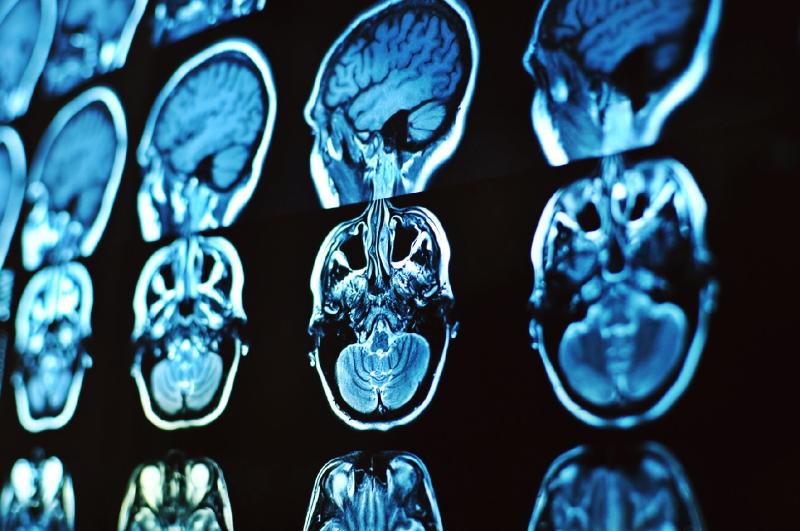
The researchers developed a new method to scan and visualize the quantity of AMPARs in the living human brain. With this technique, they imaged the brains of 30 patients with long COVID and 50 healthy individuals.
They found that people with long COVID had a significant and systemic increase in these receptors compared to healthy individuals. The more of these molecules there were, the more significant the cognitive impairment, the study said.
Higher AMPAR levels were also correlated with a rise in certain inflammatory markers, which may be of significance as inflammation has been suggested as a potential cause of long COVID-related brain fog, said Dr. Gavin Oudit, a long COVID researcher and professor of medicine at the University of Alberta unaffiliated with the study.
The authors suggest that therapeutics capable of jamming up these receptor molecules may be a potential treatment for long COVID’s cognitive symptoms. “This should be tested in future randomized controlled trials,” they wrote.
Takahashi singled out Perampanel, an antiepileptic drug, as a potential treatment option. “We will conduct the clinical trial to test the safety and the efficacy of the drug for brain fog in the near future,” he said.
But before we look into therapeutic applications, more research is needed to confirm whether more AMPAR molecules actually cause brain fog, Oudit noted. Right now, the link between AMPAR density and brain fog is a “complete association” — it’s possible more AMPARs appear as a result of brain fog, not the other way around.
Oudit added there have been other theories as to what causes long COVID’s cognitive symptoms — including the persistence of viral spike proteins in the brain . Oudit’s own lab found that long COVID symptoms in general were linked with one’s levels of a nutrient called taurine , and are currently investigating taurine as a treatment for the condition .
Can this study help doctors diagnose long COVID?
Yes, but more realistically, no, Oudit and Kuo said.
Takahashi believes his team’s method of detecting AMPARs can be a “powerful tool” when it comes to diagnosing long COVID. But Oudit noted that, in practice, this is unfeasible as the technology is “very expensive and very limited.”
That being said, Kuo noted the study may end up helping indirectly by presenting “hard evidence that brain fog and COVID have a real clinical basis.”
She said many of her clinician peers, including neurologists, do not believe that long COVID is biological in nature, instead dismissing its symptoms as being psychosomatic in nature.
“Especially brain fog, it’s such a generalized symptom that it can very easily be dismissed as psychological,” she said. “This is proving beyond a shadow of a doubt that brain fog is not just psychological.”
Tags
Who is online
86 visitors
Rest assured RFK jr. had nill to do with this article.