
What RFK Jr.’s Unproven Autism Treatment Could Mean for Autistic Patients and Their Families

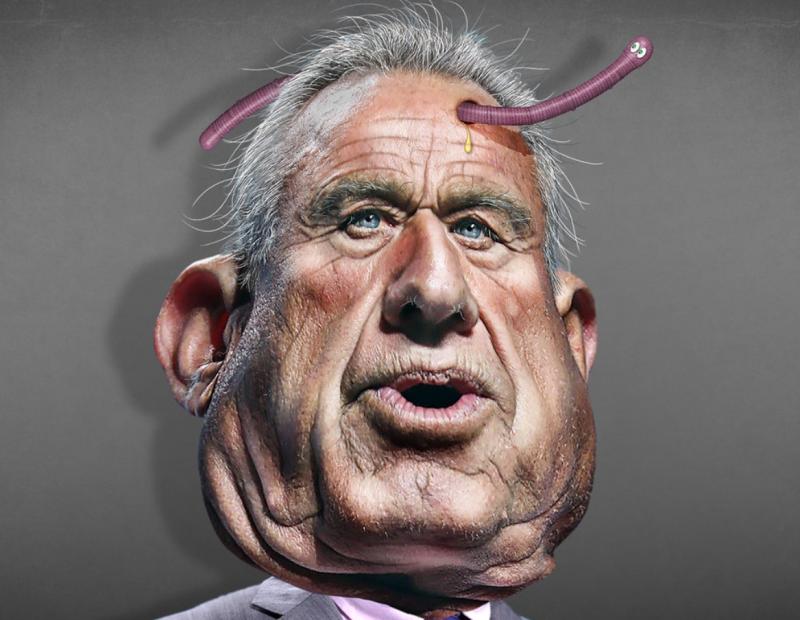

RFK Jr. has stated leucovorin will help "large numbers of children who suffer from autism."
Many experts are skeptical about that.

this week in stupid: February 7 edition
Donny posts it, MAGA toasts it, and so much more...
Jeff Tiedrich
Josh Hawley Somehow Under Impression That It's Netflix's Job To Help Him Raise Bigoted Children
Hawley spent his time at an antitrust hearing whining about LGBTQ+ characters.
Robyn Pennacchia
Saturday Report 2/7/26 — Surprise Surprise?! TrumpRX is a fake. Read the fine print...
The Best of the Rest of the News and Opinion
Thom Hartmann
208. The Fifth Circuit Jumps the Immigration Detention Shark
Late Friday, two of the nation's most right-wing circuit judges adopted an odious legal claim that district court judges from across the country (and ideological spectrum) have overwhelmingly rejected
Steve Vladeck
How To Fight Outrage Fatigue
What to do when the bad guys flood the zone.
Garry Kasparov
Man charged with assaulting students at protest
Yuma is Trumpland - Donald beat Kamala 60%-40%. If high school students are demonstrating here......
Yuma Sun staff report
February 6, 2026
Late last night, President Donald J. Trump’s social media account posted a video full of debunked claims about the 2020 presidential election that included an image of former president Barack Obama and former first lady Michelle Obama with their heads attached to the bodies of apes.
Heather Cox Richardson
Afraid for my country
Trump’s racist post shows the whole world who he really is, and it is a threat to our national security.
Lucian K. Truscott IV
This Week in Democracy – Week 55: Trump's Racism Isn't Distraction. It's Policy
Zeteo's weekly round-up, documenting the growth of authoritarianism in Trump's second term.
Team Zeteo
Marsha Blackburn Demands Probe Of Justice Ketanji Brown Jackson For Crime Of 'Attended Grammys'
It's getting harder for any one GOP loon to stand out in a sea of weirdness.
Doktor Zoom
Gavin Newsom In Battle Of The Pottymouths With Louisiana Over Extraditing Abortion Provider
Git 'em Gavin.
Gary Legum
Epstein Files News: FBI Caught Lying Again, Republicans Pedo Protecting Again, Plus Epstein's 4Chan Connection
But who cares about those BORING files?
Marcie Jones
Is Greg Abbott So Out Of Touch?
No, It's The Children Who Are Wrong
Plus MAGA dude gets ass beat by high schoolers.
Doktor Zoom
Trump’s Obama Derangement Syndrome
It seems etymologically, metaphysically, geologically and ethically impossible that President Trump could reach a new low. But he has.
Maureen Dowd
 S E E D E D C O N T E N T
 Leucovorin is typically taken as oral tablets. © Josie Elias via Shutterstock
Last September, Health Secretary Robert F. Kennedy Jr. and President Donald Trump made a big announcement: The federal government had supposedly uncovered a clear link between autism and mothers taking acetaminophen (Tylenol) during their pregnancy. The proclamation was swiftly lambasted by scientists outside the administration, yet it’s only one facet of the Trump administration’s concerning new approach to autism.
That same day, RFK Jr. stated the Food and Drug Administration would soon approve a new treatment for autism, a form of folate (vitamin B9) known as leucovorin. As with the acetaminophen link, however, the evidence supporting the use of leucovorin for autism rests on shaky ground, to say the least. And many experts worry about what could happen to people with autism and their families if the drug starts to become widely taken.
“The idea of doing this for everyone—we’re going to see side effects, we’re going to see negative outcomes,” Audrey Brumback, a pediatric neurologist specializing in autism and other neurodevelopmental conditions at UT Health Austin, told Gizmodo.
A shaky case
Leucovorin (folinic acid) is a form of the vitamin folate, also known as vitamin B9. Folate has many functions, from helping the body make red blood cells to supporting the healthy development of a fetus. The latter is why doctors now advise pregnant women to take folic acid (a synthetic form of folate) supplements, since low folate levels raise the risk of children being born with neural tube birth defects. Leucovorin has historically been used to counteract the toxic side effects of certain chemotherapy drugs. But it’s also effective at treating a rare condition known as cerebral folate deficiency, or CFD.
CFD is characterized by having low folate levels in the brain but normal levels in blood (this distinction also makes it harder to detect). The low brain levels can then lead to neurological symptoms like seizures and intellectual disability, as well as trouble with speech and coordination; these symptoms usually begin to appear around the age of two.
The condition is commonly caused by defective antibodies that attack a protein called folate receptor alpha (important for transporting folate across the blood-brain barrier) but can also be tied to rare inherited genetic mutations in the FOLR1 gene, which encodes folate receptor alpha. Leucovorin can be transported through a different delivery method than folate receptor alpha, however, meaning it can raise folate levels in the brains of people with CFD. The earlier children with CFD are treated with leucovorin, the greater the chance they can avoid the developmental delays it causes, though the therapy can still help older patients.
Some of the symptoms of CFD are similar to those found in severe cases of autism, and some research has suggested people with autism are more likely to have CFD or antibodies to folate receptor alpha. Based on this early research, some scientists are genuinely hopeful about the potential of leucovorin to help children with both autism and CFD.
During the September announcement, RFK Jr. claimed leucovorin was an exciting therapy that might benefit “large numbers of children” with autism. Marty Makary, current FDA commissioner, went further, stating that leucovorin could possibly help “hundreds of thousands of kids,” which would represent a substantial portion of U.S. children diagnosed with autism (a 2016 study estimated that at least 1.5 million children in the U.S. had diagnosed autism, though it’s a figure that’s certainly risen since). And in its own announcement, HHS stated that leucovorin would become the first “FDA-recognized therapeutic for children with cerebral folate deficiency and autistic symptoms.”
Yet the actual language of the FDA decision only extends the labeling of leucovorin to treat CFD, with barely a mention of autism. And plenty of scientists and doctors in the field aren’t so optimistic about the drug’s future as an autism treatment.
“The idea of having a medicine be used off-label is not new, and that in itself is not a problem. It’s just, what are we basing this recommendation on?” Brumback said. “This is not a strong evidence base. We’re basically still at the anecdote phase.”
The research supporting leucovorin for treating autism is remarkably thin, and it’s gotten even thinner lately. Last week, the European Journal of Pediatrics retracted a trial testing leucovorin supplements in children with autism after outside scientists discovered statistical inconsistencies that cast doubt on the study’s results and conclusions (the authors stated they intended to revise and resubmit their study). The trial was one of only five such trials conducted so far, and the largest one to date, with 77 children.
These studies aside, there isn’t much substantial data supporting the basic premises underlying the therapy. Scientists aren’t certain if children with autism really are more likely to have CFD, or if CFD or its causes (antibodies to folate receptor alpha or FOLR1 mutations) can be a driver of autism. We’re also not sure whether CFD can be reliably detected through screening for antibody levels, a method used in some studies.
Autism is a complex condition that can be caused by many different things that happen early on in development, though genetic factors play a major role. So it’s possible that some children’s autism could be closely tied to CFD or its causes. But that subset, even if it exists, isn’t likely to reach into the hundreds of thousands, according to Shafali Jeste, a behavioral child neurologist.
“I will never judge because I think that parents are trying to do right by their children.”“Autism is extremely heterogeneous, and it’s a behavioral diagnosis that’s based on thousands of different causes and profiles and brain pathways. So it’s very unlikely we’re going to have one pill that just ubiquitously addresses a core symptom,” said Jeste, who is chair of pediatrics at the University of California, Los Angeles. “And so that’s why I think when medications like leucovorin get touted as this cure or treatment for the core symptoms of autism that works in all kids, it’s problematic.”
Citing the lack of robust evidence, organizations like the American Academy of Pediatrics have recommended against the routine use of leucovorin for autism. But both Jeste and Brumback have encountered families who have asked about the treatment or who are currently using it for their children. Jeste doesn’t prescribe leucovorin herself, while Brumback has stopped issuing new prescriptions since the Trump announcement. But they’re willing to talk to families about the treatment and to support those who decide to use it.
“I will never judge because I think that parents are trying to do right by their children. So it’s very appropriate to wonder about leucovorin and ask,” Jeste said. “I am very open to answering questions and being honest that we just don’t have that evidence right now.”
While leucovorin is generally well-tolerated when used for chemotherapy, it isn’t risk-free either. The AAP notes that it can cause symptoms like vomiting, diarrhea, and alopecia. And there’s at least the possibility that it could have more serious complications when used long-term for autism.
“This is a very specific population of people who are undergoing chemotherapy for cancer. And so there are side effects of taking the vitamins in high doses that we probably wouldn’t notice in that population,” Brumback said, noting that some other forms of vitamin B can cause nerve damage when taken in large doses. “For me, that’s enough to say primum non nocere [Latin for “First, do no harm”]. That’s especially true for the kids who are most severe, who can’t communicate if they’re in pain or in discomfort; having something that could potentially cause neuropathy is a nonstarter for me.”
Brumback and Jeste are also both specialists who tend to see patients with more profound autism. And they worry families prescribed leucovorin by general practitioners might be less likely to get proper follow-up and care. Some people could also turn to leucovorin supplements that are far less regulated and could be less safe to consume than the prescription version.
The future of autism treatment
One probable reason leucovorin is getting the spotlight from the Trump administration is the lack of other easily adoptable treatments for autism, particularly in the most severe cases. Since taking over HHS, RFK Jr. has promised to deliver new insights into autism while claiming that researchers haven’t done enough to find concrete answers.
Yet there actually have been genuine strides lately in developing effective behavioral interventions for autism that can improve people’s quality of life, Jeste says. Within the next 10 years, she’s even hopeful we will start to develop treatments for severe cases of autism strongly linked to specific genetic mutations.
“The one upside of this whole leucovorin conversation has been that it’s forced us as a medical and scientific community to be more rigorous in how we talk about science, how we talk about what we know, and why we may have skepticism about certain studies,” she said.
In the most likely scenario, leucovorin will follow the example of secretin , a hormone that similarly showed early promise in the 1990s but crashed to the ground when multiple clinical trials failed to validate that promise. If that’s true, then the drug could just end up being a curious footnote in the history of autism research.
That said, RFK Jr. and his allies are already setting the stage for the government to officially endorse his worst pet theories about autism. He’s refused to accept the mainstream consensus that rising rates of reported autism are largely caused by expanded diagnostic criteria and greater awareness, for instance. Last year, he ordered HHS to launch a new study examining the supposed link between vaccines and autism—a link debunked by piles of research conducted over the past several decades.
So even if the hype behind leucovorin isn’t validated and it never becomes widely used, Kennedy may still succeed in further stoking his anti-science agenda.
“I think it’s put parents in a very difficult position because they don’t know who to trust and who to listen to. We have a government saying that we as a medical community are not essentially doing right by our patients. I mean, that is a really hard message to hear,” Jeste said. “So I’m very sympathetic to the uncertainty and confusion that this has created.”
While RFK might profess to have the best interests in mind of people with autism, he seems to have antiquated ideas about the lives they lead. In April 2025, he stated that autism “destroy families” and that children with autism “will never pay taxes, they’ll never hold a job, they’ll never play baseball, they’ll never write a poem, they’ll never go out on a date.”
Of course, plenty of people with autism have and will go on to do all those things. And even for the most severe cases of autism, it’s more often the lack of support, resources, and societal understanding that causes people and their families to suffer greatly than the condition itself. People with autism deserve recognition, respect, and quality care, which includes interventions and treatments strongly supported by evidence. That’s something that Brumback hopes isn’t forgotten in all of this mess.
“To have autism is not to be pitied; it’s not to be seen as something that a family should be embarrassed about—it’s part of life,” she said. “I want that to be the message of positivity; to help people where they’re at and to just have an appreciation for human life.”
Whatever
Tags
Who is online
77 visitors
Parents trying to care for an autistic child have enough problems. They really don't need a snake-oil salesman hawking junk "science".