
USS Nimitz storms back to duty with surprise Southern Command deployment


 S E E D E D C O N T E N T
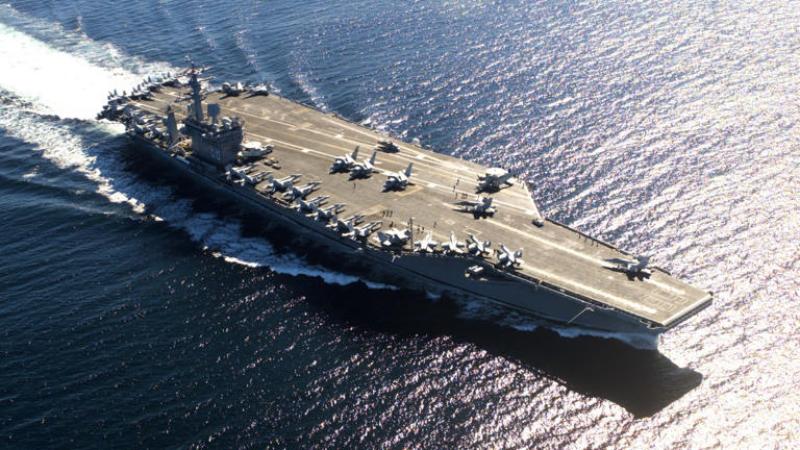
The USS Nimitz, the oldest active aircraft carrier in the U.S. Navy fleet, is heading toward an unexpected deployment with U.S. Southern Command after a turbulent stretch that saw two aircraft lost within half an hour during Pacific operations. The rapid pivot to SOUTHCOM, which covers Latin America and the Caribbean, arrives as the carrier nears the end of its service life and raises pointed questions about how the Navy manages aging warships when global demand for carrier presence shows no sign of easing.
Two Aircraft Lost in Rapid Succession
The incident that put the Nimitz back in the spotlight involved the loss of two Navy aircraft from the carrier within 30 minutes, according to U.S. Pacific Fleet statements . The back-to-back mishaps during Pacific exercises forced an immediate operational review and drew scrutiny to the material condition of a ship that has been sailing since 1975. While the Navy has not released full maintenance logs or post-incident inspection reports from the Naval Safety Center, the dual loss in such a compressed window is unusual even by the standards of carrier aviation, where risk is a constant companion.
The two mishaps did not just create a safety concern. They also triggered a broader conversation about whether legacy platforms can sustain the tempo that modern fleet commanders demand. Carrier air wings operate under tight schedules, and any disruption to flight operations cascades through training cycles, readiness ratings, and deployment timelines. When two aircraft go down in half an hour, the ripple effects extend well beyond the flight deck.
A Carrier on Its Final Cruise
The Nimitz is on its final deployment, a fact that colors every decision about where and how the ship operates. Commissioned in 1975, the carrier is the lead ship of its class and has served through decades of Cold War patrols, post-9/11 combat operations, and Pacific deterrence missions. That history carries weight, but it also means the ship’s systems, airframe support infrastructure, and hull have absorbed half a century of stress.
Nearing end-of-service status, the Nimitz represents a category of warship that the Navy is slowly retiring as newer Ford-class carriers enter the fleet. But decommissioning timelines do not always align with operational needs. The gap between retiring old carriers and fielding new ones has been a persistent headache for Navy planners, and the Nimitz’s surprise Southern Command tasking suggests the service cannot yet afford to let the ship wind down quietly.

Tags
Who is online
92 visitors
This may surprise people but by the end of WWII the US Navy had 1,200 major warships:
"The U.S. Navy grew tremendously as the United States was faced with a two-front war on the seas. It achieved notable acclaim in the Pacific Theater , where it was instrumental to the Americans' successful " island hopping " campaign. [ 4 ] The U.S. Navy fought six great battles with the Imperial Japanese Navy (IJN): the Attack on Pearl Harbor , Battle of the Coral Sea , the Battle of Midway , the Battle of the Philippine Sea , the Battle of Leyte Gulf , and the Battle of Okinawa . [ 5 ] By war's end in 1945, the United States Navy had added nearly 1,200 major combatant ships, including ninety-nine aircraft carriers, eight "fast" battleships, and ten prewar "old" battleships [ 6 ] totaling over 70% of the world's total numbers and total tonnage of naval vessels of 1,000 tons or greater. [ 7 ] [ 8 ]"
United States Navy in World War II - Wikipedia
Granted that the Navy will be that large again, currently it has a total of 232 active ships, not counting the reserve fleet with a total of 11 Aircraft Carriers. Congress wants the Navy to add two new submarines a year, but we no longer have the ship building capability to fulfill that order. We have just learned via our so called "allies" denial of air bases how important the Aircraft Carriers continue to be, yet we are stretched so thin that we are using a Carrier that was supposed to be in the process of being decommissioned.
My advice is to stop voting for democrats who keep throwing $Trillions at woke programs and let us divert some of that money to the nation's defense.