
Four astronauts are now inexorably bound for the Moon

Category: Health, Science & Technology
Via: bob-nelson • 7 months ago • 2 commentsBy: Eric Berger - Ars Technica

“I don’t think we could be more pleased.”

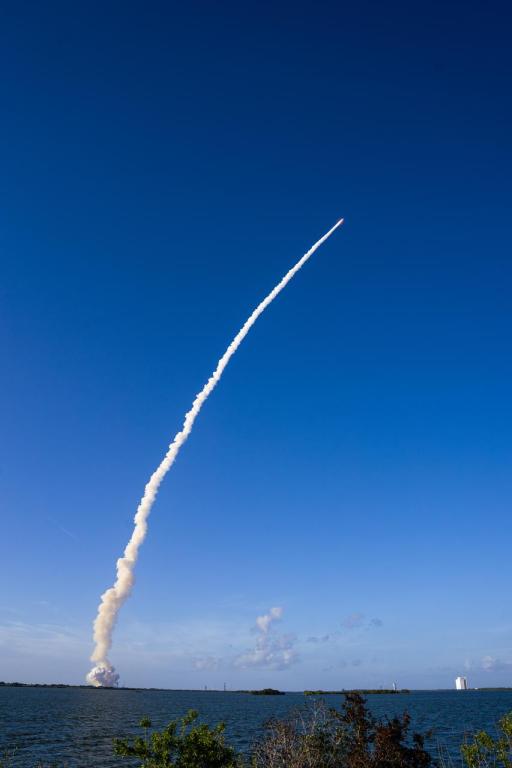
We watched the launch, of course.
I felt a sort of time-warp slippage, back to my teens. Everything was so "normal". Apollo happened yesterday.
 S E E D E D C O N T E N T
Most Americans, indeed, about three-quarters of the population around the world, have not witnessed humans leaving low-Earth orbit in their lifetimes. The last time this occurred was 1972, with the final Apollo Moon mission.
The “translunar injection” burn of Orion’s main engine occurred about one day after the successful launch of the mission on NASA’s Space Launch System rocket from Kennedy Space Center on Wednesday. This burn was the last major firing of Orion’s main engine and sets the crew on a course to fly around the Moon on Monday, slingshot back toward Earth under lunar gravity, and splash down in the Pacific Ocean on Friday, April 10.
“Things are going really well right now,” said Lori Glaze, NASA’s senior official over exploration, during a news conference on Thursday evening. “I don’t think we could be more pleased.”
First day is filled with activity
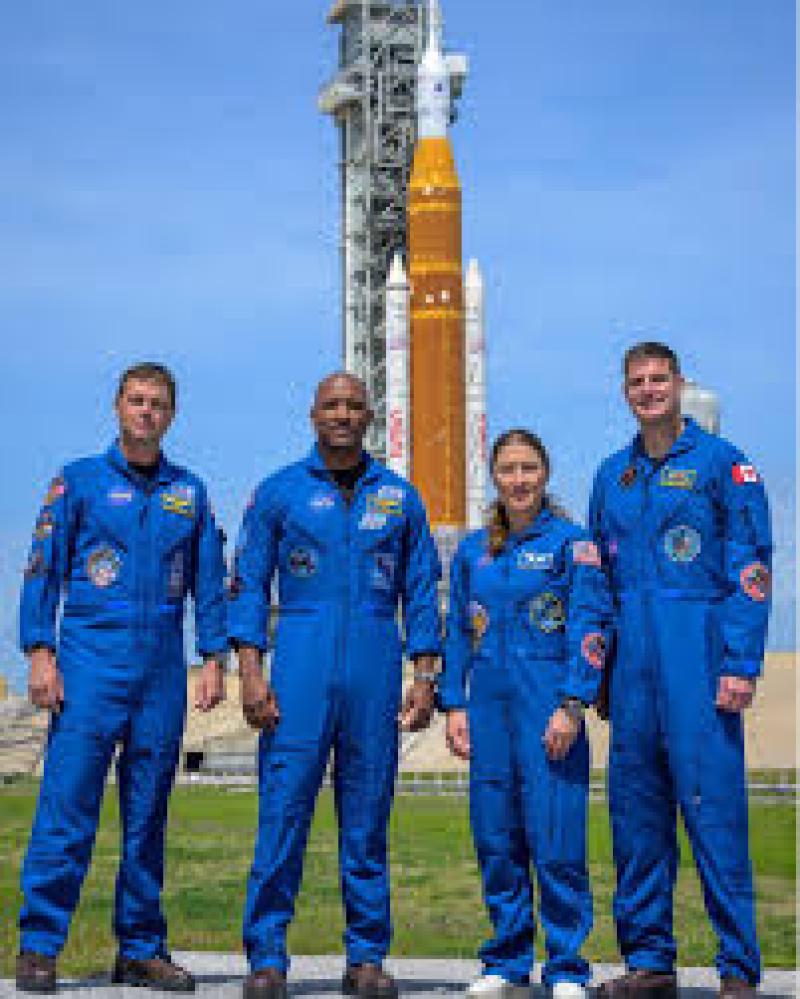
The decision to leave Earth orbit followed a busy day onboard Orion during which the four person crew—Reid Wiseman, Victor Glover, Christina Koch, and Jeremy Hansen—pushed the spacecraft’s life support and propulsion systems to ensure the vehicle was ready for a prolonged mission in deep space.
Orion’s life support functioned very well, said Howard Hu, NASA’s program manager for the Orion spacecraft. This included critical systems, such as the carbon dioxide “scrubbers” that remove the exhaled gas from the cabin’s atmosphere, as well as water systems. There was a minor kerfuffle with Orion’s toilet during the initial checkout when it was supposed to be “wetted” with water to prime the pump. Not enough water was introduced, so the pump was non-responsive. Once more water was added, it began functioning fine.
The most significant tests involved Orion’s propulsion system, during which Pilot Victor Glover flew the vehicle through a variety of maneuvers primarily using Orion’s 24 reaction control thrusters. During this “proximity ops demonstration” Glover flew to within a few dozen feet of the rocket’s upper stage, and then went through a prescribed series of tests, such as side-to-side maneuvers, up and down, pitch, roll, yaw, and more. Glover offered frequent narration during these maneuvers and, generally, said the vehicle handled better than expected.
Building confidence for Artemis III
Hu said the Orion team had confidence in the autonomous maneuvering capabilities of the vehicle, but that adding a human into the flight loop always introduces uncertainty. He praised Glover’s flying, saying, “Victor did exactly what he needed to do, and the spacecraft responded.”
All of the vehicle’s thrusters performed as intended during the multi-hour test, with no failures, Hu confirmed.
These tests are essential for NASA to have confidence in Orion’s handling for upcoming Artemis missions. NASA now plans to launch Orion on the Artemis III mission sometime next year, and during this flight it is intended to dock with one or both of the lunar landers under development by SpaceX and Blue Origin, respectively, in low-Earth orbit. This will necessitate precise maneuvering. For lunar landing missions, beginning with Artemis IV, Orion will dock with a lunar lander that brings the crew down to the surface of the Moon and then back to Orion, which returns the crew to Earth.
After its flurry of activities on the first day in flight, Orion’s schedule will settle down a little bit now as the crew speeds outbound toward the Moon. It will make a lunar flyby on Monday, where approximately 20 percent of the far side will be lit as the crew passes nearest to the lunar surface. For now, it’s enough that they are on their way.
Whatever
Tags
Who is online
86 visitors
People are going to the Moon. That is s-o-o-o-o amazing...
Indeed. It's one bright spot in the quagmire that is our current world.