
The Future of Truth

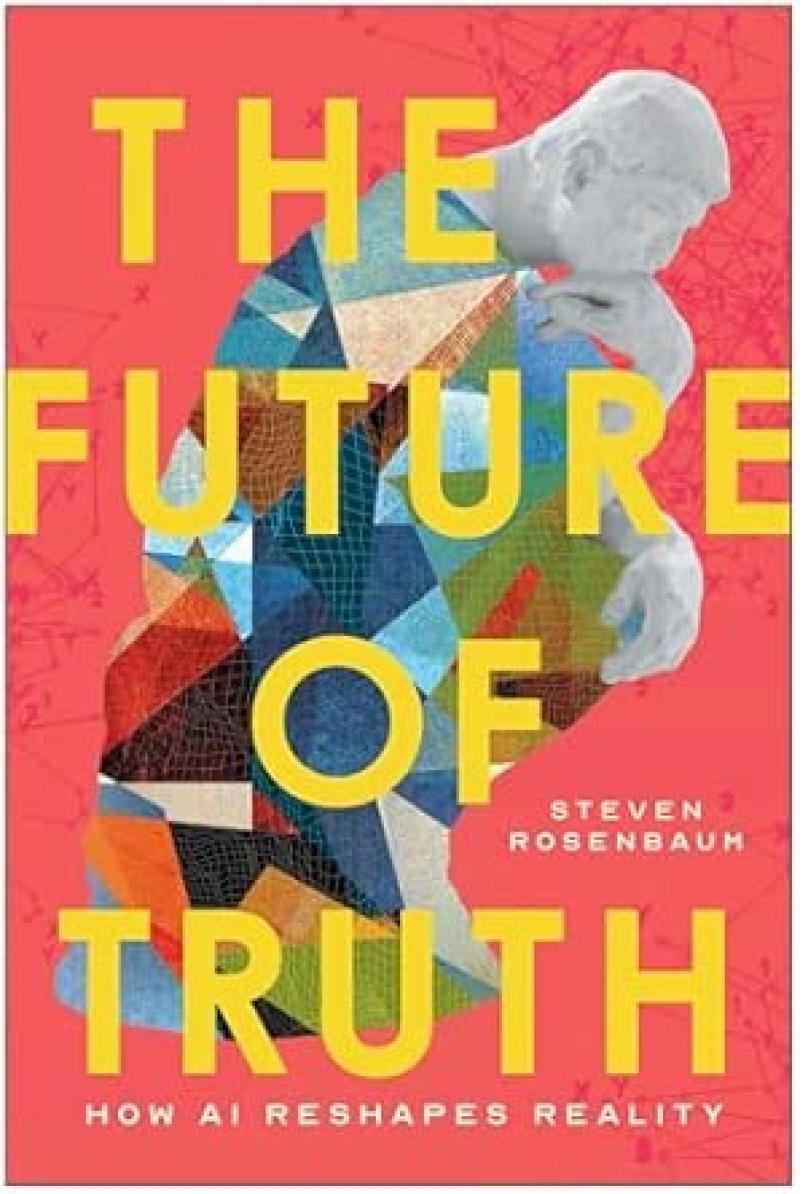

“The Future of Truth” is the title of a new book about what artificial intelligence is doing to truth. Steven Rosenbaum is the author. He made some interesting discoveries about artificial intelligence in the process of researching his book. Quotes he found via AI were found to be either completely made up or improperly attributed to the wrong people. Rosenbaum told a New York Times reporter that i t “serves as a warning about the risks of A.I.-assisted research and verification, that is why I wrote the book.”
According to our beloved Copilot:
Rosenbaum’s Warning on AI-Assisted Research and Verification
"Rosenbaum’s statement to a New York Times reporter underscores a growing concern in the research community about the reliability and integrity of AI-assisted work. By saying the book was written “to serve as a warning about the risks of A.I.-assisted research and verification,” he is framing the project as a cautionary example of how AI tools can distort or undermine scholarly processes Defector .
The context comes from recent high-profile cases where AI’s role in creative and academic work has been questioned. For example, a Commonwealth Foundation–awarded short story was later suspected of being AI-generated, sparking debate over whether AI checkers can reliably detect such use and whether the process of verification is being compromised Defector +1 . Rosenbaum’s work appears to be a direct response to these incidents, aiming to highlight the dangers of overreliance on AI for tasks that require human judgment, critical thinking, and ethical responsibility.
His warning likely addresses several key issues:
-
Verification risks : AI tools may produce convincing but factually or ethically flawed outputs, making it harder to distinguish real human work from AI-generated content.
-
Loss of accountability : When AI is involved in research or writing, it can be unclear who is responsible for the final product’s accuracy or integrity.
-
Erosion of trust : If AI-assisted work is not properly vetted, it can erode public and academic trust in the credibility of information.
In short, Rosenbaum’s book is positioned as both a critique and a preventive measure — urging readers and researchers to be vigilant about AI’s role in their work and to maintain rigorous human oversight in verification processes."
Rosenbaum told a New York Times reporter that it “serves as a warning about the risks of A.I.-assisted research and verification, that is why I wrote the book.”
The book is worth the price & time.
 Article is LOCKED by author/seeder
Who is online
86 visitors
Another warning of the dangers of Big Brother.
welcome back to a new reality ...
As the saying goes: 'There is ALWAYS a critic.' There is always some "throwback" warning that the sky is falling. . .even though they live to see the next dawn everyday. They just carry on. . . I have noticed that we no longer see people wearing posterboards in public. . .advertising the end of the world is coming. . . .
Of course, AI won't be purfect 'er—perfect (see what I did there?) Nothing ever is.
It is telling that the "usual suspects" are coming out of their front doors, standing on their lawns, and pointing fingers at those accusing them of their ERROR!
Anybody who knows how to critically think and reason will appreciate the aggregation of information and data from a variety of sources-in a snap. Maybe it is the "collective" - storehouse nature of (AI) data that is worrisome to those partisans that won't accept change that is the greater problem. The 'old ways' are fading out. . . along with 'old folks."
Keep in mind, AI data is working hard to make sense out of what humans are saying and doing through its analytics. (It won't be easy. Indeed in will be hard. As humans intentionally and willfully sabotage data for their own self-interests and agendas. . . sometimes just to prove that it can be done.
AI is here to stay. If we do not use it . . . others will use it to advance their understanding of volumes of information and data and best 'us.' Since that is the case, it would be advantageous to AI critics lining up to take it down (yes, that is what is behind all this 'griping') to stop whining and get on with making this powerful tool the best it can be.