
How Congress can make the lame-duck session a mighty one



 S E E D E D C O N T E N T
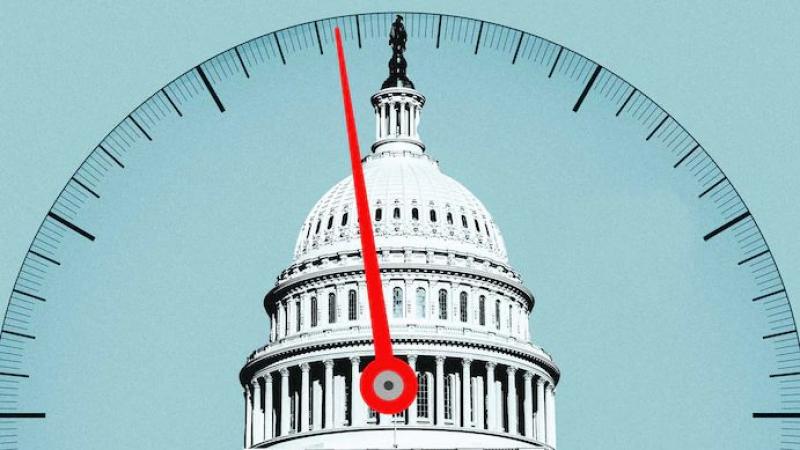
A CONGRESS that remains in office between the election and formal installation of its successor is a peculiar American phenomenon. Known as "lame ducks," because of the weakness that operating under an expiring mandate connotes, the Senate and House nevertheless retain lawmaking power between November and January. In fact, lame-duck Congresses can gain freedom of action if enough members on their way out feel they have less to lose politically - and potentially more to gain in the judgment of history - from taking tough votes. Past lame-duck Congresses have stretched their wings, passing such landmark legislation as the Civil Rights Act of 1875 and the Privacy Act of 1974.
That is how the current 117th Congress should see itself when it returns to Washington. The country faces crucial unfinished business, which the next Congress seems less likely to handle, or handle appropriately. Though its composition remains unsettled because of still-undecided races, the probability is that Republicans will narrowly control the House; therefore, divided government is likely to be back for the last two years of President Biden's term, with the GOP's right fringe holding more leverage in a House where their party has only a sliver of a majority. By contrast, the current House and Senate still include outgoing moderate and pragmatic GOP lawmakers who might be willing to work with Democrats.
Senate Majority Leader Charles E. Schumer (D-N.Y.) appears to recognize the imperative, telling his colleagues in September that they "should be prepared for an extremely, underline extremely, busy agenda in the last two months of this Congress." Here are the priorities he and other Democratic leaders should set:
1. Prevent the risk of a catastrophic default
Republicans have already signaled the intention of their hard-liners to hold the national debt limit hostage for spending cuts or other Democratic concessions. Republicans put the nation's full faith and credit in doubt this way in 2011, thwarted only by a tenuous last-minute compromise that Mr. Biden - then Barack Obama's vice president - brokered with Senate Republican leader Mitch McConnell (Ky.). The incoming GOP congressional delegation includes an extreme right faction larger - and more radical - than the one that almost crashed the economy in 2011. "A default by the U.S. government would be substantially worse than the collapse of Lehman Brothers in 2008, devastating global markets and the economy," Beth Ann Bovino, U.S. chief economist of Standard & Poor's, predicted earlier this year.
Democrats should take these risks off the table by raising the debt limit in the lame duck, by whatever means necessary. If too few Republicans are willing to help, Democrats should use the reconciliation process, which allows them to pass certain types of legislation through the Senate with a bare majority vote, to increase the debt limit substantially. This would eat up precious floor time in the final weeks before the 117th Congress goes out of business. But there could hardly be a more urgent matter than preventing the global financial instability that could result from even partial U.S. debt default.
2. Fight Russian aggression
Congress should lock in economic and military aid for Ukraine while supporters - in both parties - still dominate Capitol Hill. To Russian President Vladimir Putin's undoubted delight, U.S. aid has faced bipartisan skepticism in recent days, as some on both the Democratic left and Trumpian Republican right questioned the need to spend billions helping that country defend itself against Russia. In fact, the costs of stopping Mr. Putin's attempt to redraw the map by force are far smaller than the costs of letting him get away with it. Failing to face Kremlin aggression would encourage more of the same, and the United States has already seen how such conflict can inflict pain on average Americans.
An aid cutoff would be particularly perverse at the very moment Ukrainian forces have just pushed Russian forces out of the key city of Kherson, showing that they can make good use of U.S. weaponry. Both Mr. Biden and House Speaker Nancy Pelosi (D-Calif.) have expressed optimism that a new package - still of undetermined size - can be secured. Mr. Biden also noted Wednesday that, despite claims to the contrary, he has not provided Ukraine a blank check, rejecting weapons requests he deems imprudent. A new aid package should be as substantial, in both dollars and duration, as possible.
3. Protect democracy at home
Another overriding priority should be passing a legislative response to the Jan. 6, 2021, Capitol attack, which President Donald Trump spurred in part on the basis of his tendentious interpretation of an obscure 1887 law on procedures for counting electoral votes. That law should be amended to make clear the vice president has no authority to reject states' electoral votes, as Mr. Trump was pressuring Vice President Mike Pence to do. Before Jan. 6, Mr. Trump pressed state and local officials to overturn the votes in their jurisdictions. Reformers should empower federal courts to oversee these officials, putting a check on those who would upend the democratic process.
Mr. Trump also tried to exploit vague statutory language that gives Congress power to overturn electoral votes resulting from a "failed election" in a state or which were not "regularly given." This was doomed from the start, given the Democratic majority at the time - though an appalling 140 Republican representatives and seven senators lent their votes to the effort. This risk having been averted - but also highlighted - lawmakers must make such a procedural coup less likely, clarifying and narrowing the basis for lawmakers to object to states' electoral slates. And they should raise the minimum number of votes in Congress to initiate and approve such a move.
Sens. Susan Collins (R-Maine) and Joe Manchin III (D-W.Va.) hashed out a measure to accomplish these purposes earlier this year. The bill enjoys bipartisan support from 30 Senate co-sponsors, including Mr. McConnell. Mr. Schumer and Ms. Pelosi should expend whatever legislative time required to finalize and pass it in the lame duck.
4. Don't let a wish list get in the way of realism
Democrats have a long list of other goals: a bipartisan bill guaranteeing same-sex marriage rights; a permitting reform bill that would ease construction of clean-energy infrastructure; confirming more Biden-picked judges; action on the child tax credit.
But enough Republicans are interested in permitting reform and perhaps even the child tax credit that they could pass in some form in future Congresses. Democratic leaders should focus on objectives that are not only most necessary but also stand their best - or only - chance of passage during the lame-duck session.
If the 117th Congress devotes its final days to bolstering the nation's democracy and redoubling efforts to oppose Russian aggression, while averting unnecessary risk to the global economy, history will remember this lame duck as an especially mighty one.
Tags
Who is online
276 visitors
If the Republicans take the House majority, they intend to blackmail the president into going along with some of their plans by shutting down the government over the debt ceiling.
The Congressional leadership of the Democrats is on to their game and are ready to prevent the blackmail by acting during the lame duck session.
The democratic party controlled senate IYay!) needs to hit the ground running in the new congress, and hopefully will have help from a democratic party controlled house to thwart all the 'crap' that will be faced heading towards 2024 no matter who the republican party puts forward. There is no denying it: Their is extreme political warfare going down now and in the next two years!
Democrats hit the ground running towards and keep your eye on the voting public across the board! Get positive stuff done for your electorate and you will be a 'shoe-in' in 2024! House/Senate/Presidency 2024.
Start right now!