
New Coalition In Israel to Test Bonds of Allies



 S E E D E D C O N T E N T
New Coalition In Israel to Test Bonds of Allies: [Foreign Desk]
www-proquest-com.chipublib.idm.oclc.org /docview/2759153984
Prime Minister Benjamin Netanyahu's right-wing coalition will likely test ties with the United States and Europe, amid fears that it will undermine the country's democracy and stability.
JERUSALEM -- Israel's new government was sworn in on Thursday, returning Benjamin Netanyahu to power at the head of a right-wing and religiously conservative administration that represents a significant challenge for the country on the world stage.
Mr. Netanyahu's governing coalition will likely test Israel's ties with the United States and Europe, amid fears that his coalition partners will undermine the country's liberal democracy and its stability. Mr. Netanyahu dismissed those concerns in a speech in Parliament before a vote of confidence and the swearing-in of his ministers.
"There is a broad consensus among us about most of the challenges we face, though certainly not about all of them," he said. "I hear the constant lamentations of the opposition about 'the country being over' and 'the end of democracy.' Members of the opposition, losing in elections is not the end of democracy -- it is the essence of democracy."
The makeup of Mr. Netanyahu's government and the policies it has pledged to pursue have raised concerns about increased tensions with Palestinians, the undermining of the country's judicial independence and the rolling back of protections for the L.G.B.T.Q. community and other sectors of society.
Mr. Netanyahu's return as prime minister for a sixth time comes at a critical moment for Israel as it faces fundamental challenges: Iran's drive to acquire nuclear weapons; growing international criticism of its handling of the occupied West Bank; and a global tide of antisemitism.
The coalition has been clear in its manifesto -- hammered out in agreements with various parties as ministries were handed out -- about what it intends to do.
It has declared the Jewish people's "exclusive and inalienable right to all parts of the Land of Israel" and pledged to bolster Jewish settlement in the West Bank -- explicitly abandoning the internationally recognized formula for resolving the Israeli-Palestinian conflict based on establishing a Palestinian state alongside Israel. Peace talks have been on hiatus for years.
The new government is also pressing for an overhaul of the judiciary that Mr. Netanyahu -- currently on trial on corruption charges -- and his supporters insist will restore the proper balance between the branches of government. Critics say the move would curb the power of the independent judiciary, damaging Israel's democratic system and leaving minorities more vulnerable.
Mr. Netanyahu's past coalitions have been balanced by more moderate parties, but this time, he had to rely more heavily on far-right parties to form a government. That could complicate Israel's relations with perhaps its most important ally, the United States, and with American Jews, who have been among Israel's strongest supporters abroad.
President Biden on Thursday said in a statement that he looked forward to working with a prime minister "who has been my friend for decades, to jointly address the many challenges and opportunities facing Israel and the Middle East region, including threats from Iran."
But Mr. Biden also hinted at possible sources of tension with the new government, like L.G.B.T.Q. rights and conflicts with Palestinians. He said "the United States will continue to support the two state solution and to oppose policies that endanger its viability."
Thomas R. Nides, the U.S. ambassador to Israel, said the administration would respond to the Israeli government's actions rather than coalition deals that may not materialize.
"We've been told over and over by Prime Minister Netanyahu that he has his hands on the wheel and wants to be the prime minister of everyone," he said in an interview. "He's a very talented and very experienced prime minister. We want to work closely with him on mutual values we share, and at this point not get distracted by everyone else. So the focus is on the prime minister and the prime minister's office."
Another concern for many Jews in the United States who identify with more liberal streams of Judaism is the new government's policies on religion, which give more weight to strict Orthodox demands. Particularly distressing to many Jews outside Israel, the coalition has promised to restrict the Law of Return, which currently grants refuge and automatic citizenship to foreign Jews, their spouses and descendants who have at least one Jewish grandparent, even though they may not qualify as Jewish according to strict religious law.
"We are profoundly concerned about the intentions of this government and we are taking their promises and agenda very seriously," said Rabbi Rick Jacobs, president of the Union for Reform Judaism, the largest Jewish denomination in the United States.
The coalition partners, he said, also want to narrow who is counted as a legitimate Jew in the Jewish homeland. The "Who is a Jew" debate has surfaced before, but this time, Rabbi Jacobs said, Israelis whose extreme views excluded them from the establishment in the past hold key positions in the government.
"Israel doesn't get to decide alone," he said of Jewish identity. "In some ways, these policies are meant to push us away. But the result is that we are going to lean in harder because of the importance of the state of Israel in all our lives."
Hundreds of American rabbis have signed an open letter protesting the government proposals.
The policies of the new government could also have repercussions with Arab states, even as Israel has in recent years forged diplomatic ties with countries like the United Arab Emirates, Bahrain and Morocco.
King Abdullah II of Jordan said in an interview with CNN on Wednesday that he was "prepared to get into a conflict" if Israel tries -- as some coalition members hope -- to change the status of a Jerusalem holy site revered by Muslims and Jews, over which Jordan has custodianship. Jordan and Israel signed a peace treaty in 1994.
Mr. Netanyahu's conservative Likud party has emphasized the parts of the government's policies aimed at deepening and expanding Israel's peace and normalization deals with Arab countries, and he has spoken of Saudi Arabia as his next goal.
But other clauses of the coalition's platform talk of promoting Israeli sovereignty in the West Bank and further entrenching Jewish settlement in the heart of the land Palestinians have envisaged as their state.
Bezalel Smotrich, the ultranationalist new finance minister who ultimately wants to annex the West Bank, will also serve as a minister within the defense ministry responsible for agencies dealing with the construction of Jewish settlements and civilian life in the occupied territories. That is likely to increase tensions with Israel's allies abroad who place a premium on keeping the two-state option alive.
The Biden administration "is going to do everything possible to minimize friction and focus on areas of agreement," said Daniel B. Shapiro, a former U.S. ambassador to Israel and now a fellow at the Atlantic Council. "But friction will be impossible to completely avoid over issues related to the Palestinians, the future of two states and possibly the holy sites and the status of the Arab citizens of Israel."
European allies have so far taken a wait-and-see stance similar to the Biden administration's. Christofer Burger, the spokesman of the German Foreign Office in Berlin, said Wednesday that bilateral relations with Israel "remain unchanged."
But he noted the Israeli plan to retroactively authorize West Bank settlements built without government permission, saying, "We expect the new Israeli government to refrain from such unilateral moves that would undermine the basis of a negotiated two-state solution."
Some Israeli diplomats have taken a stand against the new government. Israel's ambassador to France, Yael German, resigned on Thursday, stating in a letter that she could "no longer continue to represent policies so radically different from all that I believe in."
And more than a hundred retired Israeli ambassadors and senior Foreign Ministry officials took the extraordinary step of signing a letter to Mr. Netanyahu this week expressing their "profound concern" at the potential harm to Israel's strategic relations.
"The letter was not politically motivated but was written out of pragmatic concern for how you prevent weakening Israel's standing in the international arena," said Jeremy Issacharoff, a signatory and former ambassador to Germany.
For many Palestinians, the hard-line government is merely exposing what they have said all along about Israel's true intentions.
"Its annexationist agenda of Jewish supremacy is now very blunt and clear," Husam Zomlot, the Palestinian ambassador to Britain, said by phone. "The two-state solution was never a Palestinian demand," he said, "but an international requirement that we have accepted. Now, publicly, this government does not endorse the idea of partition. That's the heart of it."
Israel's new national security minister, Itamar Ben-Gvir, who was convicted in the past of inciting racism and support for a terrorist group, has been given expanded powers over the police and additional forces to fight crime in Arab communities.
The coalition has also vowed to amend the current anti-discrimination law, which applies to businesses and service providers, allowing them to refuse to provide a service contrary to their religious beliefs in a way that critics say could lead to discrimination against the L.G.B.T.Q. community or others.
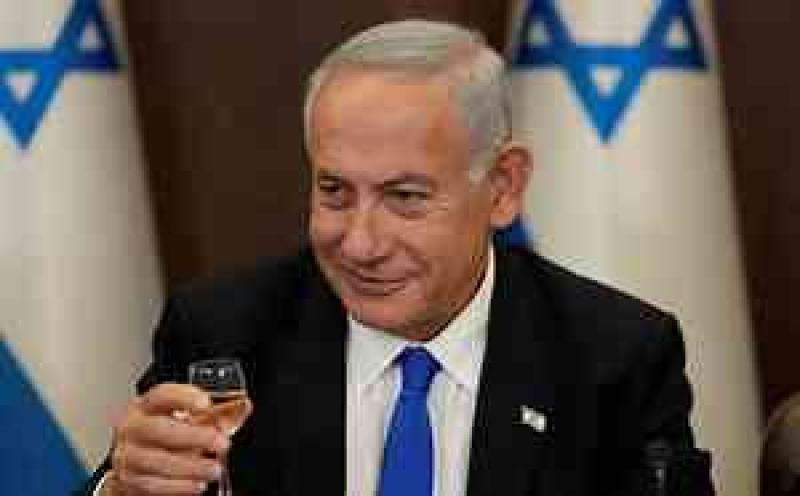
Mr. Netanyahu seemed to address that fear through Amir Ohana, a Likud member who on Thursday became the first openly gay speaker of the Parliament, and thanked his life partner and their two children from the podium during the inauguration ceremony. Mr. Netanyahu made a point of being photographed sitting next to Mr. Ohana and his family at a toast afterward.
Yet an ultraconservative, anti-gay minister has been given wide powers over some programs taught in public schools and the ultra-Orthodox parties in the coalition have secured copious funding for adults who choose full-time Torah study over work.
"This is unlike anything we have seen before," Mr. Shapiro, the former U.S. ambassador, said. "The majority of the coalition and many of its dominant members with a lot of leverage over the prime minister subscribe to a worldview that defines issues of national and Jewish identity, religion and state and democracy unlike any previous Israeli right-wing government."

Tags
Who is online
335 visitors
I heard that the person put in charge of Israel's police force is a convicted criminal who has a racist background.
The new ultra-nationalist Israeli government will make Israel more isolated internationally than it already is. And at a time when global anti-semitism is on the rise.
You heard it, huh?
The new ultra-nationalist Israeli government will make Israel more isolated internationally than it already is.
Wrong. Israel under Benjamin Netanyahu has made key agreements among its neighbors. The reason the American left hates Netanyahu is because he wants to prevent Iran from having a nuclear weapon rather than trying to contain them after they develop one as Obama and Biden want to do. Imagine how much better off the world would be if the US had taken such a stand when we alone possessed nuclear weapons?
Israel flies under the radar over the past number of years because of other world news. The ascension of the far right to total power in Israel is bound to bring new scrutiny from other countries. Netanyahu is a fanatic who is only interested in promoting his right wing agenda.
How were we going to do that? Station troops in every country on earth? America could never have monopolized nuclear weapons. That is why there was a race to be the first to create an atomic bomb.
I think many would have issues with your interpretation of terms like "far right," "fanatic" and right wing."
canary.haaretz.com /opinion/editorial/2022-11-21/ty-article-opinion/a-convicted-criminal-as-israels-super-police-chief/00000184-9b9a-d002-abad-9ffeb00e0000
A convicted criminal as Israel’s super police chief
Haaretz Editorial 4-5 minutes 11/21/2022
The independence of the government bodies charged with enforcing the law and administering justice is a pillar of democracy. Their ability to refrain from having decisions dictated by the whims and needs of politicians is fundamental to the principle of separation of powers and is critical to preserving the structure of the government of Israel.
But it now appears that Prime Minister-designate Benjamin Netanyahu has agreed to undermine that balance by enabling Itamar Ben-Gvir, his candidate for public security minister , to amend the Police Ordinance Law . The amendment will subject the police – which until now have enjoyed independence – to the Otzma Yehudit leader, who will be able to set police policies.
The amendment, which the two have agreed upon, should not be taken lightly. It means that Ben-Gvir, a dangerous right-wing extremist who has been convicted of criminal offenses, will effectively become the country’s police chief. He will be the one who decides how the police allocates its resources, how it operates in the field and, most of all, against whom.
The power that Netanyahu is putting into Ben-Gvir’s hands will subordinate the police leadership to his authority. It means that the police will become politicized to favor the extreme right. In practice, it constitutes not just a blow against the separation of powers but a serious danger to the rights of Israel’s Arab citizens. Even if the public security minister-designate wasn’t Ben-Gvir, the proposed amendment would be a threat to the rule of law; the fact that it will be in the hands of a pyromaniac like Ben-Gvir only magnifies the danger.
The amendment will grant Ben-Gvir the status of super police chief, entitled to do everything from assigning officers to specific tasks to enjoying complete control of the police budget. The risk is not only to civil rights but raises the possibility of a change in police priorities so that investigations into corruption will be pushed aside even more than they are today.
Anyone who expects the police chief, Kobi Shabtai, to resist the blow to the status and independence of his organization, is in for a disappointment. Even before Ben-Gvir assumes office, Shabtai chose to honor the minister-designate: Last week, at an event in Moshav Mishmar HaShiv’a, Shabtai stood up in Ben-Gvir’s honor, waited to shake his hand and even hugged the person who only a year earlier he had held responsible for the violence that flared up within Israel at the time of Operation Guardian of the Walls. Shabtai knows that Ben-Gvir is the one who will decide whether he gets a fourth year as police chief, so he’s ready to turn himself into the puppet of the very man who not so long ago he was warning against.
The public sees a frightening picture taking shape: Those who are supposed to be safeguarding democracy have turned into soldiers at the service of politicians. That’s what happens when those accused and convicted of crimes take control of the institutions charged with maintaining law and order.
The above article is Haaretz’s lead editorial, as published in the Hebrew and English newspapers in Israel.
Do you really want to go there?
Here's history according to Vic: The reason Truman didn't listen to MacArthur is because of the political problem with nuking China. The country was WAR WEARY. Most of America's manhood had finally returned from fighting in a World War. The simple removal of Russia & China's nuclear facilities seemed to be beyond what could be asked of the country at the time.
We are paying for it now!
Maybe the quality of its neighbors is a factor, Egypt, Libya, Hamas, Hezbollah, Syria, Lebanon leave much to be desired.
That's an editorial opinion piece from the opposition. It like you, keeps using phrases like "right wing," but really doesn't say much. And there is nothing in there about Itamar Ben-Gvir being racist.
Before you go into the usual charge of "racism," be advised that Arab and Jew are of the same race.
And MSN is also part of the opposition.
I wonder if the Israelis who accuse this man of racism are unaware of that. Probably not.
Well John, you have yet to establish that yet.
What would that agenda be, John?