
'It can be scary': how corporate America is hitting back against unions

By: the Guardian


 S E E D E D C O N T E N T
Employers are using heavy-handed tactics to prevent workers from organizing, and US labor union density is falling as a result
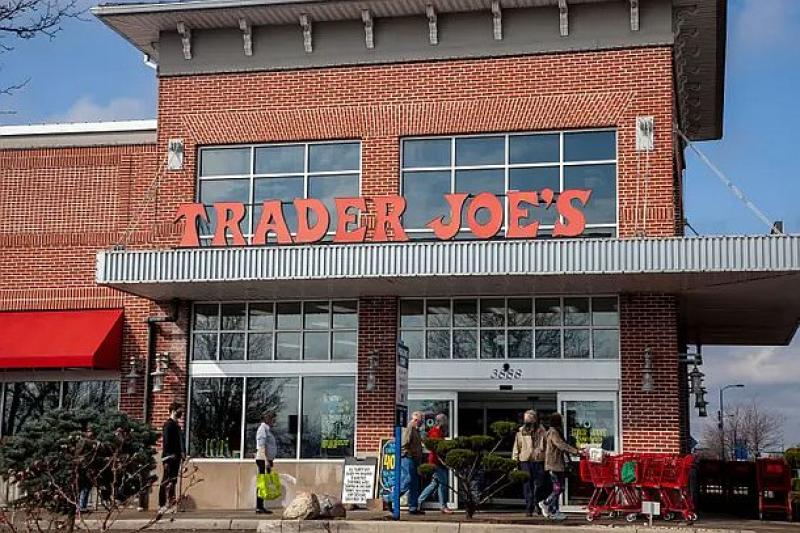
Workers at Trader Joe's have accused the company of unfair labor practices.
Connor Hovey, a worker and organizer at the Louisville store, said unionizing efforts began as other high-profile union organizing efforts such as at Louisville's Heine Brothers, a local coffee shop chain, were taking off. Like those workers, the Trader Joe's organizers sought to address issues stemming from inadequate corporate policies and safety precautions, and how workers have been treated during the Covid-19 pandemic.
But during the organizing drive Hovey claimed opposition from Trader Joe's management has been intense, resulting in workers filing several unfair labor practice charges with the National Labor Relations Board (NLRB). "The company has made it very clear that they will do whatever they can to stop this effort in its tracks," said Hovey.
This sort of intense pushback against unionization is becoming the norm in the US - and it is having an impact. The intense opposition from many major US employers to workers who are trying to unionize is a major factor in the recent decline in labor union density in the US, with the US having among the lowest union densities compared with other industrialized countries.
The decline comes even as the US labor movement experienced a surge in popular support in 2022, with a spike in union election filings, growing support for unions in polls and more work stoppages.
According to a 2022 poll conducted by Gallup, support for labor unions reached its highest point since 1965, with 71% of Americans approving of unions. Petitions filed for union elections increased by 53% in fiscal year 2022, resulting in the largest number filed since fiscal year 2016.
But despite this growth, US labor union density declined in 2022, with the share of workers represented by a labor union decreasing from 11.6% in 2021 to 11.3% in 2022, and union membership density decreasing from 10.3% in 2021 to 10.1% in 2022. The number of workers represented by unions increased by 200,000, but this was offset by a 5.3% increase in the total number of workers in the US workforce.
The number of unfair labor practice charges filed with NLRB field offices increased by 23% in fiscal year 2022, the largest single-year percentage increase in decades, revealing how widespread employer opposition is to unionization efforts.
US employers spend an estimated $340m annually on hiring union avoidance consultants to oppose unionization efforts and employers are charged with violating federal labor law in 41.5% of all union elections, according to a 2019 analysis by the Economic Policy Institute.
Labor experts have highlighted the disparity between support for labor unions and decreasing union density as revealing a need for public policy reforms to protect workers' rights to organize and enact meaningful penalties on employers for violating labor laws. They also say the NLRB needs more funding as workers face long delays for charges to be reviewed and adjudicated.
Workers have won union elections for the first time at many US locations of high-profile corporations, including Amazon, Apple, Trader Joe's, REI, Chipotle and more than 270 Starbucks stores that have unionized since December 2021.
At Starbucks, Workers United has accused the company of firing dozens of workers and shutting down stores in retaliation for union organizing, and the NLRB has issued more than 60 official complaints involving more than 1,200 labor law violations, according to the union.
Workers have organized numerous strikes at stores around the US to protest alleged retaliation against workers and delays in bargaining a first union contract. Starbucks has disputed all allegations of retaliation and disputed all NLRB complaints and rulings against the company so far.
Sarah Pappin, a shift supervisor at a Starbucks in Seattle for nine years, claimed she had experienced retaliation for being heavily involved in union organizing efforts and pushing for bargaining a first union contract.
Pappin said her store manager left at the end of 2021 to go to Buffalo, New York, as numerous store managers from around the US descended on that area to oppose unionization efforts at stores there. Pappin explained that shortly thereafter, she began getting in arguments over unionization with her store manager, who wrote her up for policy infractions such as swearing in the backroom that weren't enforced with other workers or managers.
She also received a final written warning for being late and explained the fear and anxiety that treatment has created for her.
"I definitely felt like they were trying to send a message of 'if you act like a problem, we will figure out how to fire you,'" said Pappin. "To clock into your work every single day and not know if that's gonna be the last day you work there, that's just really stressful and it's difficult as somebody who's really, really worked really hard for this company for years."
Unionizing efforts at other US household corporate names have also been fiercely contested.
Two Apple stores, one in Oklahoma City, Oklahoma, with the Communications Workers of America, and the other in Towson, Maryland, with IAM CORE, won union elections in 2022, the first two stores at Apple to ever do so. Apple is currently facing intense scrutiny from the NLRB and investors over how the company responded to these union campaigns and others in Atlanta, New York City and Columbus, Ohio.
In Columbus, Ohio, workers are still pushing to organize a union amid allegations in a complaint issued by the NLRB that Apple created a pseudo union to stop unionization efforts at the store.
An Apple store worker in Columbus explained they started getting involved in union organizing at the store in response to degrading working conditions in recent years. They claimed the store has forced workers into captive audience meetings, which included corporate videos in which company executives try to dissuade workers from unionizing.
"We've seen videos from our corporate bigwigs who have kind of slyly tried to say, 'Oh, we're here for you, we don't want to create another bridge in this relationship because we already do such a good job of being there for you,' and a lot of it is a facade to keep up a good image," the worker said.
Apple recently reached a deal with investors to audit the company's labor practices in response to how the company has responded to union organizing in line with the company's human rights policy.
"I'm incredibly hopeful that this will be done in an unbiased manner and Apple will kind of change direction instead of actively trying to dissuade organizing efforts and take a more active approach in ensuring a healthy relationship with any stores that choose to organize," said Michael Forsythe, an employee and organizer at the Apple store in Oklahoma City that won its union election in October 2022.
Forsythe explained he had not been surprised by the NLRB complaints filed against Apple for its behavior during union organizing campaigns, but he was hopeful as his store is now preparing to begin bargaining for a first union contract with Apple.
"I think organizing my store is probably the hardest thing I've ever done. It was a lot of work - six months of talking to people, campaigning, things like that, and then six weeks of some of the most intense working conditions as far as the fear that people end up having because people are just very anti-change in a lot of cases, and it can be scary," said Forsythe.
He added: "But at the end of the day, when you're gaining better working conditions for yourself, the ability to take better care of yourself and things like that, it's worth six months of a struggle in order to lay a foundation for yourself and your co-workers so everybody else can have a much better experience."

The current make-up of the SCOTUS assures a consolidated labor force will be placed on a permanent second tier status. Wealth rules. We're into our 41st year of Supply Side Economics and thus far it is working perfectly and doing exactly as it was 'bred' to do--which is diminish the Middle Class and expand the numbers and powers of the rich.
Becoming??? It’s always been that way. It’s entirely reasonable that management would resist unions. Why wouldn’t they? When was the last time a union demanded lower wages? Or that management spend less on employee benefits? Or that executives get a big raise? It makes no sense to complain about management pushing back on unionization, provided they do so within the law.
Again, it completely derails the thesis to conflate legitimate resistance to unionization (there is such a thing) with illegal union-busting.
Most people don’t feel threatened by unions (why would they?) until a strike impacts regular people. So when schools shut down, planes stop flying, or garbage piles up, then support for unions plummets.
Try getting to work on time. If you’re really breaking rules, you don’t get to blame your boss for threatening your job.
The purpose of unions is to provide workers with more power within the company they work for. Of course they will demand more for the union members. Hopefully negotiations will be fruitful for both sides.
Now is it "reasonable" that management would oppose unions? Why would that be reasonable? Reasonable would be management and workers reaching a negotiated settlement of their issues. Unless one thinks that management is never wrong, power hungry, mean, or greedy, and I dont think any of those are broadly true.
Wage theft is a pretty big issue across the country, involving billions of dollars a year. So are safety violations, refusal to pay overtime, poor working conditions etc. Why should workers not have a collective voice?
It is not "reasonable" to blanketedly oppose workers organizing.
The purpose of unions is to get themselves fat and rich off of the dues (and in many cases managing the retirement accounts) of those workers that join them.
Since most union dues are percentage based on what workers earn of course unions want their members earning as much as they can!
In my experience, it is only fruitful for the union- which comes out ahead regardless of what happens. Once they are in, they demand full worker compliance. You want to work for the company you have to join the union (Unless you are one of those evil managers or their direct underlings. Shipping & receiving clerks are the worst!).
Have you ever tried to fire an employee who was part of a union? I had the great displeasure of trying to do so. Took three tries to get an employee that physically threatened me for asking him to do his job fired. Luckily I was well enough liked by the workers under me, and had more than enough witnesses to back me up. Had no problem getting a third shift production manager (non union position of course) fired for bringing a gun into work just once. He wasn't intending on using it on anyone. Just using the machines in the shop to smooth the chamber out. Still an infraction which I was forced to report him for. One and done.
Ever been written up for a union infraction? Meaning being a non union worker doing a union job. I was several times. I collected them like trading cards. Refuse to offload a tanker, I did it myself. Don't have time to count product being received- I was sent to do it. Short staffed on a Saturday- I was sent out to pull orders and load trucks. Even was forced to work the production line once. Thankfully only once. Production line workers would rather run a machine that takes two people themselves, than get help from someone in management. Like I had a choice in the matter.
Negotiate? Who the hell thinks unions negotiate? They make demands. If those demands are not met they issue threats. If threats don't work they then call for a strike. The only ones not hurt by a strike is the union. They get strike insurance (just like the companies they strike against) for that type of thing. I thought it was hilarious when the union shop boss told me after negotiations (which thankfully I had nothing to do with) broke down and workers walked off the job. Workers were scared shitless, the union reps sure as hell weren't. Only lasted a week. You would think by the anger and hurt feelings on both sides it was a month or two. The only ones that didn't care- again the union reps. They came out ahead.
You make it sound like the early 1900's. In case you didn't notice there are still far more job openings than workers to fill them. Companies are having to pay well in order to get and retain good workers (Which is a laugh considering all of the workers that never came back from Covid living in their parents basements; and all of the illegals flooding our country that were supposed to take the jobs no one else wanted. What happened there?). Good workers don't work for companies that allow safety violations, refuse to pay overtime, provide poor working conditions, etc.
But yeah, "Power to the worker!" break out the hammer and sickle! Make those union reps rich as hell!
Using your theory of the case, when unions are strong, it is abuse of the "good" workers, but when the employers are "strong" its just the way business should be.
lol.
No John.
Both sides are bad. In case you didn't catch it. I didn't exactly appreciate my bosses forcing me to unload tankers, count freight from offloaded trucks, pull orders and load trucks, and work the production line.
I really, really didn't like collecting infraction writeups like they were trading cards. Those damn meetings get boring! Many times I was violating the same damn infraction within minutes of exiting the meeting. Guess who made me do that?
I thought I was being overly sarcastic enough that I didn't need a /S tag at the end. Guess I was wrong.
The one thing I will state is the company never forced me into unsafe working conditions. Nor anyone else there either.
I negotiated my own pay- and overtime rate. Didn't have to give a penny of it to a union that didn't give a shit about me either. (Loved busy season in the summer. They couldn't kick me out of that place if they tried with all of the money I was earning.) The company never shafted anyone on overtime pay. Trust me workers talk. Half the receiving dock wanted the head of shipping fired and me to take his place. Management damn well knew it as well.
The company was actually on my side when the worker physically threatened me multiple times- and threatened to sue the union if I was hurt on my behalf. That didn't go over well with the union reps.
One of the things I loved to see was union reps pulling up in BMW's and Mercedes to the plant in expensive suits and walk casually past the workers they represented who drove rusted out cars and pickups. If the workers were lucky they got a casual nod. Reps didn't know a damn one of them by name- except maybe the long time shop bosses that had been their for 20 or 30 plus years each. They looked and acted exactly like the company front office management. Except workers paid them; instead of getting paid.
Because the reason a person owns a business is to make money for themselves, not to make life better for their employees.
Yeah, it has to be negotiated. The owner doesn’t just happily comply with all union demands. He negotiates to do as little as possible for his employees, while they negotiate to get as much as they can. Where each party ends up has nothing to do with their charitable feelings for the other. They push only so hard as their bargaining position - and the market - will allow.
It’s not about who is right and who is wrong. Each side is out for themselves and resists the wishes of the other. This seed acts like conflict between labor and management is a new thing, and also an unreasonable thing. Neither is true.
It is if you own the company. The owner sets the conditions of employment, and therefore what he will have to spend on labor. When a union develops, he loses that power, and - inevitably - profit. So of course, he will resist unionization. You might not think that’s how the world should work, but it is reasonable.
In a perfect world labor would be 50% Union and 50% non-union. Competing for the same employees. But we don’t live in a perfect world and to be fair the playing field needs to be leveled.
Many non-union employees become a burden on society because they have little to no healthcare or retirement plans. It all costs money so non-union gains a competitive advantage by not being required to take care of those employee needs.
I’m a big proponent that at least a minimum healthcare and retirement costs be encumbered by all employers. Which in the end means the customer. A usage fee if you will to whoever is using their labor.
The fairest way to tax. At the point of usage.