
China’s suspected spy balloon is the perfect symbol of its clumsiness


Two years ago, when Biden assumed office, China believed that it was overtaking the United States technologically, intimidating it militarily, and winning the race for global respect and popularity against an exhausted, divided America. Today, in a remarkable turnaround, China is the country that veers between covid-19 lockdowns and casual sacrifice of elders, between clobbering its real estate sector and coddling it, between persecuting its entrepreneurial champions and promising to make...

 S E E D E D C O N T E N T
Opinion
China’s suspected spy balloon is the perfect symbol of its clumsiness
By Sebastian Mallaby
Contributing columnist
Updated February 4, 2023 at 3:20 p.m. EST|Published February 3, 2023 at 4:52 p.m. EST
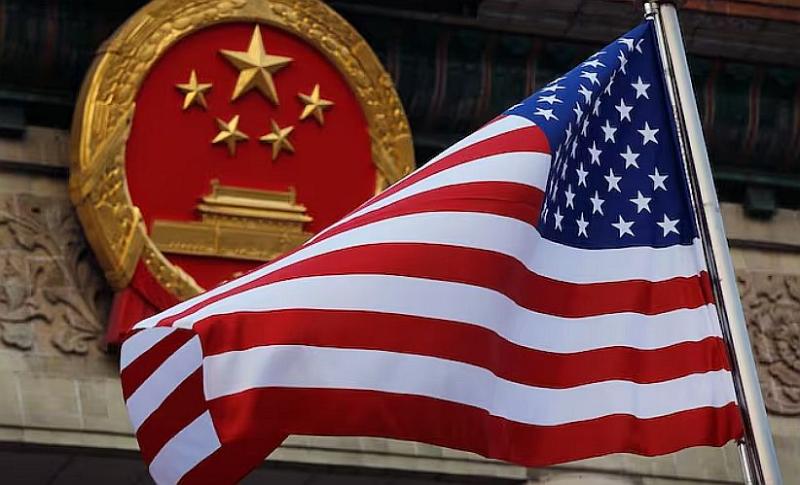
The Biden administration has recorded a flurry of foreign policy successes, including in relation to China. (Andy Wong/AP)
To understand how a balloon — at once menacing and farcically Zeppelin-retro — might become a defining image of the new cold war, consider how this alleged Chinese spy contraption captured both sides of the present moment. Before it was downed off the South Carolina coast by U.S. fighter aircraft on Saturday, the balloon was provocative enough to cause Secretary of State Antony Blinken to postpone a much-anticipated trip to Beijing. But it was also clumsy enough to symbolize China’s immense capacity to blunder — a tendency that President Biden’s team has lately exploited, to devastating effect.
Two years ago, when Biden assumed office, China believed that it was overtaking the United States technologically, intimidating it militarily, and winning the race for global respect and popularity against an exhausted, divided America. Today, in a remarkable turnaround, China is the country that veers between covid-19 lockdowns and casual sacrifice of elders, between clobbering its real estate sector and coddling it, between persecuting its entrepreneurial champions and promising to make nice.
On the foreign policy side, meanwhile, the Biden team has inflicted a series of humiliations on its chief rival.
Start with the semiconductor embargo on China, announced last October by the Commerce Department. This involved a calculated risk: If U.S. allies refused to collaborate, China would import the equipment necessary to produce its own advanced semiconductors, leaving it stronger and more self-sufficient. But on Jan. 27, the administration reportedly secured the backing of the two most important semiconductor equipment exporters, Japan and the Netherlands. China’s ability to pursue artificial intelligence and other advanced military technologies will be curbed.
Next, consider India. Four days after the semiconductor deal, national security adviser Jake Sullivan met with his Indian counterpart and announced a series of ambitious defense and technology partnerships, from quantum computing to more conventional weapons such as jet engines and artillery. The goal is to reduce India’s reliance on Russian armaments and draw it into the U.S. military-industrial complex. That, in turn, will reinforce the Quad, an Asian proto-NATO that also includes two other nations that Biden is helping to rearm, Japan and Australia.
Hot on the heels of the India deal, the White House secured a victory in the Philippines. At the end of the Cold War, the Philippines closed U.S. military bases on its territory, and a partial reopening in 2014 was derailed when Manila opted to make nice with China. But on Thursday, after assiduous prodding by the Biden team, the Philippines expanded the number of sites to which the U.S. military has access from five to nine. That will enhance the United States’ ability to respond to Chinese provocations in the South China Sea — including, in the most extreme scenario, an attack on Taiwan.
Meanwhile, the Treasury Department has also been active. Perhaps for the first time since the emerging-market debt crises of the 1990s, the department has effectively marshaled the International Monetary Fund and the World Bank to reinforce U.S. global leadership.
This opportunity has arisen from China’s odd decision to turn a diplomatic advance into the equivalent of a spy balloon that was both ineffective and embarrassingly visible. Early in his tenure, in 2013, Xi Jinping rolled out his Belt and Road Initiative, an international infrastructure splurge designed to deepen China’s economic ties in Africa and Asia. Many of these projects were financed with loans, with the result that China has rapidly become the largest official creditor to developing countries.
Initially, this looked like a genius Chinese move to win friends and influence people. Now that economic conditions have soured, free-flowing Chinese loans have created the conditions for debt crises in several emerging nations. To make matters worse, China refuses to learn from the Western experience with poor-world debt, which teaches that it’s best to soften payment terms quickly. That way, borrowers have a chance to return to growth and repay some of the money. Plus, they won’t hate you as much.
Zambia is ground zero of China’s self-defeating obstinacy. As part of the Belt and Road Initiative, the African nation’s previous and deeply corrupt government commissioned a hydropower station, two international airports, two stadiums and a railway. Chunks of money disappeared; and when covid hit the world economy, Zambia defaulted. Last year, after the election of a cleaner government, the IMF promised a rescue package on the condition that creditors take a suitable hit: The IMF wasn’t going to pump money into Zambia if the cash was going straight into the pockets of irresponsible lenders. China and its fellow creditors duly promised to renegotiate the debts. Half a year later, China has ensured that the discussions have gone nowhere.
Enter Treasury Secretary Janet L. Yellen. Spotting an opportunity to paint China as the enemy of the poor world, she flew to Zambia last month and called out Beijing as a “barrier” to resolving the debt impasse. Her visit coincided with that of Kristalina Georgieva, the IMF boss, who lectured China on the need to learn a lesson on debt management from the “mature” West. For good measure, World Bank President David Malpass appeared on Bloomberg TV to denounce China’s debt obstructionism.
The shooting down of China’s comic-book spy balloon extends China’s humiliation, and the Biden team deserves credit for pushing back against Xi and turning his aggression against him. But at the same time the administration must also remember that China remains a major power, and that the White House better find ways of working with Beijing. When Blinken eventually does visit, his job will be to combine strength with calm. The thing about cold wars is that you don’t want them to escalate.
The whole article is beyond pathetic.
Rah, rah, rah, Brandon got screwed by China again; but we are claiming victory.
The CCP got exactly what it wanted.
It proved again what a weak, pathetic, timid POS Brandon is. Either our air defense system failed to detect the spy balloon before it entered into US air space; or didn't detect it until it entered Idaho; or Brandon isn't smart enough (or has been bought by the Chinese) to send the proper message and down the spy balloon in the Pacific- or over Alaska.
The spy balloon was allowed to meander all across the continental US doing whatever it pleased. Were the signals from the spy balloon jammed by the US? We don't know. Were the sensors on the balloon distorted by US military interference in any way? We don't know. Did the US intercept any transmissions from the spy balloon? We don't know. What we do know is that it spent a couple of days over US nuclear facilities in Montana freely gathering whatever information it could.
The fact that Brandon hid the presence of the spy balloon until it was over Montana; when commercial airlines reported it to try and protect Blinken's trip to China shows were the appeaser's loyalties truly lie. The fact that Brandon allowed this balloon to ground air traffic in the US shows just how incompetent he really is. First snow storms and now CCP spy balloons. Brandon runs a very tight commerce ship!/S
Expect another CCP spy balloon real soon to probe US air defenses; and see if Brandon will grow a pair and down it.
History already suggests he will learn nothing from this failure. Or the CCP will just purchase more of Hunter's butt ugly paintings to appease "the Big Guy".
Did it go out for pizza?
China gets nothing out of this that our deluded right wingers and right wing American media dont give them.
Too soon for a victory lap. There's still another shoe to drop. The military is engaged in a recovery operation. If the balloon was spying then we'll have the evidence. Of course, if the balloon was not spying then we'll hear a litany of excuses.
That's consistent with Biden's handling of foreign relations. Biden threatens everyone and then blames scapegoats when those threats worsen the situation. Notice that the claimed successes highlighted in the seeded article consist of threats and provocations? Biden's foreign policy has consisted almost entirely of military expansion in preparation for war. Biden's foreign relation efforts have not been directed toward winning peace. And yet Biden seems rather helpless to defend the United States.