
This Is A Momentous Year In The Commemorations Of Pearl Harbor

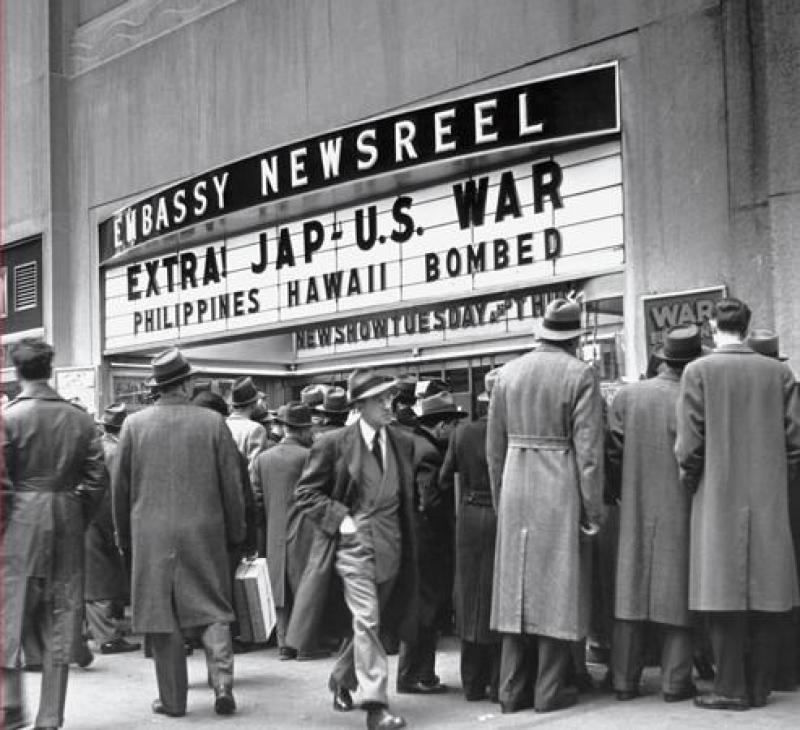
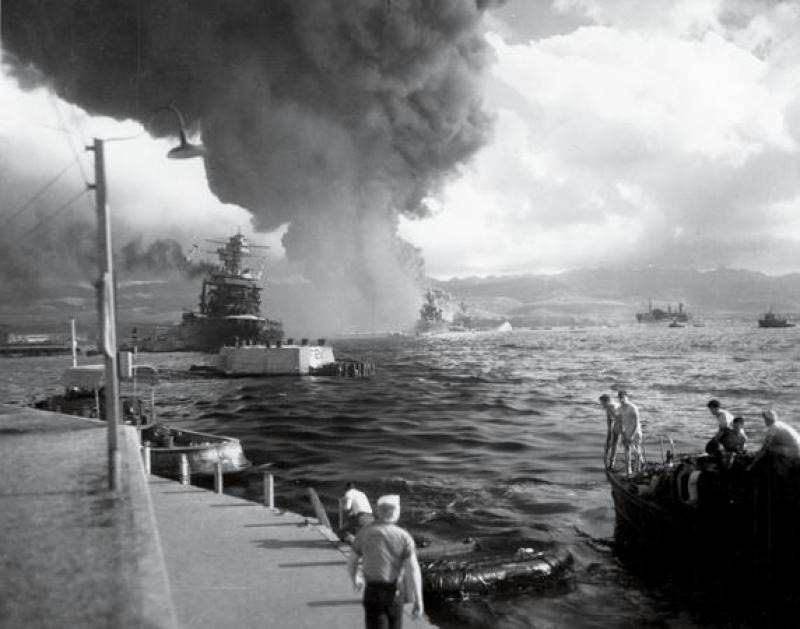
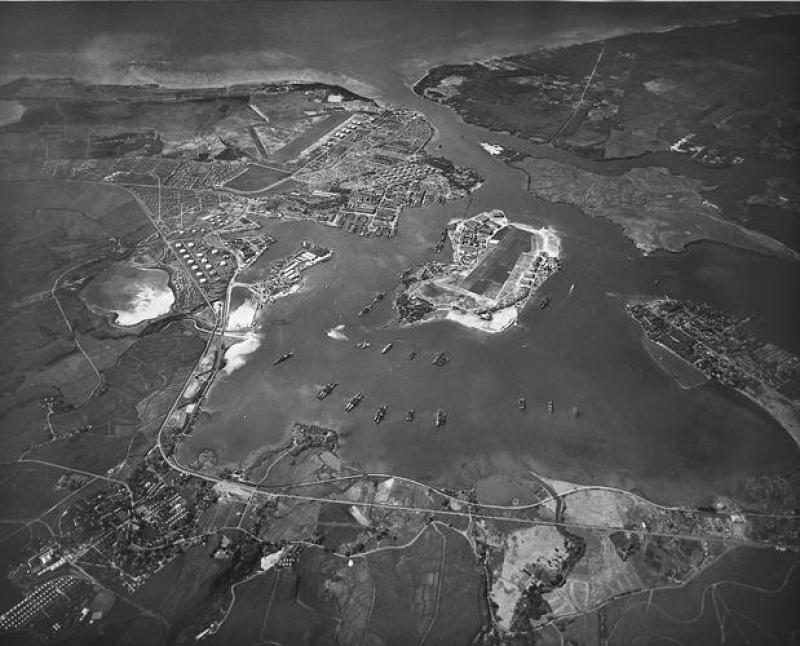
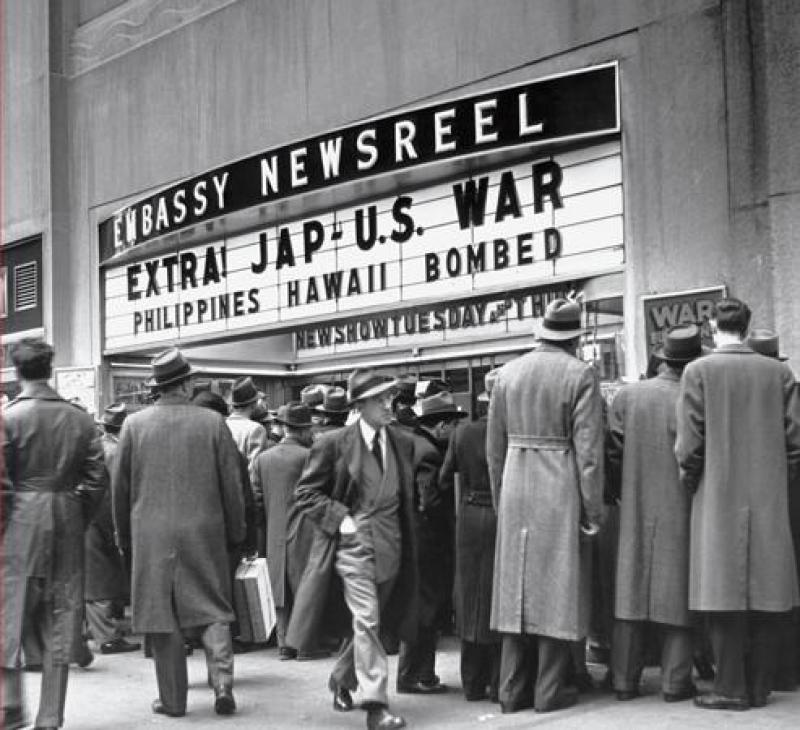
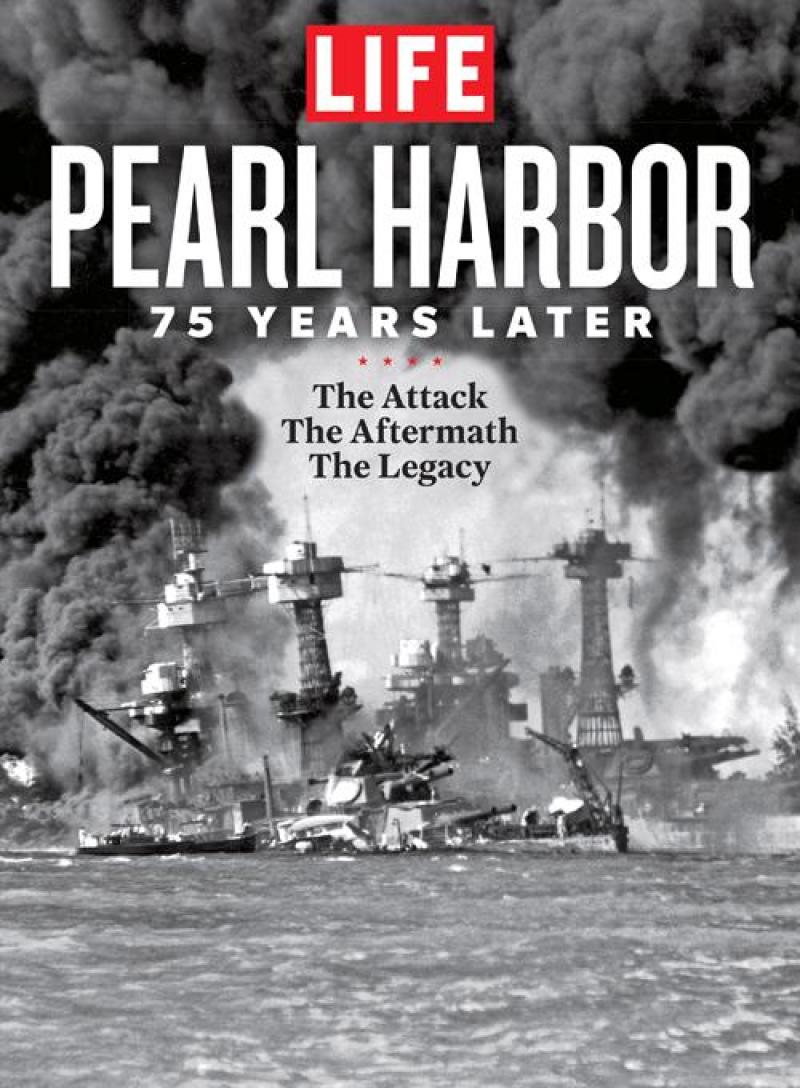
This year its 82 years since the Japanese attack on Pearl Harbor, the home base of the US Pacific Fleet. 82 doesnt seem like a big anniversary number , until we reflect on one thing - an 18 year old at Pearl Harbor, in other words the youngest one could be and have been in uniform that day, is now exactly 100 years old. There may have been a few 17 year olds who sneaked into the service in 1941, but almost all of those there on Dec 7, 1941 were at least 18.
These 100 year olds today must surely still remember that day, even if they have forgotten so much else from their lives. Soon they will all be gone.
-
03:42 Ensign R.C. McCloy, aboard the minesweeper Condor, spots a periscope in the darkness. 03:57 The Condor to the destroyer Ward: “Sighted submerged submarine on westerly course, speed 9 knots.” 06:00 The first wave of the Japanese attack takes off for Hawaii from ships anchored north of the islands. 06:45 The Ward fires depth charges and sinks the Japanese sub. 07:02 Privates Joseph Lockard and George Elliott pick up blips on radar. They are told by a superior that what they have spotted is an incoming flight of American planes.
07:49 Commander Fuchida Mitsuo issues the attack signal as his plane passes just off Lahilahi Point. Four minutes later he calls out, “Tora! Tora! Tora!”—code words confirming that the Japanese have surprised their enemy. 07:55 The raid begins at Pearl Harbor as the Raleigh, Helena, Utah and Oklahoma are struck. 07:56 There are two explosions on the Arizona. 07:58 As bombs explode on Ford Island, Lt. Comdr. Logan Ramsey sends the message, “Air raid, Pearl Harbor. This is not a drill!” 08:02
Twentyfive bombers dive toward Wheeler Field. 08:03 Machine and antiaircraft guns aboard the Cummings, California, Swan and the submarine Cachalot open fire.
08:06 A 1,763-pound missile fired by PO Kanai Noboru hits the Arizona. It demolishes the forward magazine, setting off shock waves that are felt by planes 10,000 feet above. In that instant, some 1,000 men perish. The Arizona, engulfed in flames and smoke in the late morning, would burn for two days. The explosion caused the front upper portion of the ship to collapse into the hull; thus the forward superstructure tilted 45 degrees and forward guns hovered just above the waterline.
08:08 Two bombs strike the West Virginia, whose captain, Mervyn Bennion, is mortally wounded by a piece of shrapnel. 08:10 (13:40 E.S.T.) In Washington, President Roosevelt is informed by Navy Secretary Frank Knox that there has been a sneak attack on Pearl Harbor. 08:12 The Utah capsizes. 08:14 Americans set up machine guns at Wheeler Field and fire at Japanese planes, bringing down one Zero. 08:15 Rescue workers pull men out of the burning water, where oil was incinerating. 08:25 At Schofield Barracks, Lt. Stephen Saltzman and Sgt. Lowell Klatt fire rifles at a Zero as it strafes them. The men keep shooting until the plane crashes.
08:25 Japanese planes attack Hawaiian firemen at Hickam Field, killing three. 08:30 Sailors on the Downes open fire on attacking planes. 08:35 A number of U.S. planes returning from a scouting mission, unable to land on Ford Island, head instead for Ewa Field to the west, where the Japanese have damaged or destroyed all 47 Marine planes. When one of the planes touches the ground, a Marine runs out and shouts, “For God’s sake, get into the air or they’ll strafe you too!” The plane manages to take off again. 08:35 The first wave of the attack ends. “They started coming in, and they had arms and legs shot off—a terrible mass of tissues, bones, blood,” recalls 2d Lt. Elizabeth Murphy, a nurse at Tripler General Hospital. 08:47 The destroyer Blue gets under way, with Ens. Nathan F. Asher at the helm. When two planes dive toward the ship, sailors respond with .50-caliber machine guns, downing a Japanese plane.
08:50 The battleship Nevada heads out, in part because wounded Ensign Joseph K. Taussig Jr. has managed to start the second boiler. The Japanese spot the ship leaving the harbor and determine to sink her, hoping to block the channel. 08:50 (14:20 E.S.T.) In Washington, Secretary of State Cordell Hull, well aware of what is transpiring in Hawaii, erupts when given a note from the Japanese breaking off peace talks: “I have never seen a document that was more crowded with infamous falsehoods and distortions—on a scale so huge that I never imagined until today that any government on this planet was capable of uttering them.” 08:54 The second wave of the Japanese attack, under the command of Lt. Comdr. Shimazaki Shigekazu, swarms over Pearl. Fifty-four high-level bombers and 78 dive-bombers spread out to hit ships, airfields and barracks throughout Oahu, while 36 fighters maintain air control. 09:00 A formation of Zeros strikes Bellows Field, blowing up a gasoline truck and hitting a plane from the 44th squadron. 09:05 At Wheeler Field, 27 Japanese planes attack aircraft that are parked on the ground. The Japanese also strike barracks, service buildings and a baseball field.
09:06 A bomb hits the Downes while she sits in dry dock. Another strikes Adm. Husband E. Kimmel’s flagship, the Pennsylvania, detonating guns and ammunition. 09:08 Dive-bombers attack the Raleigh; one bomb misses the ship’s aviation tanks by mere feet. 09:10 In order not to block the channel that leads out of the harbor, Lt. Comdr. J.F. Thomas beaches the wounded Nevada at Hospital Point. 09:15 Captain J.W. Bunkley, who has spent the night ashore, returns to the California. The ship has been hit numerous times and is in flames. Within an hour, Bunkley is forced to abandon his ship.
09:20 A bomb passes through the dock alongside the cruiser Honolulu. It explodes underwater, flooding part of the ship and damaging her oil tanks. 09:28 Gunners aboard the Mugford shoot down a Japanese bomber after it pulls out of its dive alongside the ship’s port bow. 09:37 A large explosion on the battleship Cassin causes her to roll over onto the Downes.
09:40 The flames on the West Virginia reach as high as the foretop. The wounded are removed from the ship. 09:43 Sailors aboard the Tern pull survivors out of the water. They will rescue 47 in all. 09:50 The Blue picks up the signal of a submarine. She maneuvers to attack and drops six depth charges. An oil slick and air bubbles rise to the surface. The ship then detects another signal from a submarine that appears to be bearing down on the St. Louis. That sub, too, is sunk by a depth charge.
10:00 The Japanese first wave returns, victorious and exultant, to its aircraft carriers north of Hawaii. 10:00 Robert Shivers, head of the FBI’s Honolulu bureau, places a guard at the Japanese consulate. Elsewhere, the wounded are being attended to; the dead are being identified by their dog tags. 10:04 A Japanese midget sub shoots two torpedoes at the St. Louis, which has made its way clear of the chan- nel. Captain George Rood has the ship change course; the torpedoes strike near the harbor’s entrance. Sailors fire at the sub when it surfaces. 10:05 Hawaii’s Governor Joseph Poindexter calls local newspapers to announce a state of emergency for the en- tire territory. 10:10 As a sense that the air attack has ended spreads throughout Oahu, ships report and mobilize—even as sailors keep watch for a third wave of planes. The Reid reports that it has suffered no damage or casualties, and gets under way.
10:20 Rumors abound. A U.S. attack group of 15 VSBs, each carrying half-ton bombs, is sent to scout 30 miles south of Pearl, as there have been reports of enemy carriers and possible landing forces. 10:30 To the west, at Japanese Imperial headquarters in Tokyo, it is announced that Japan is now at war with the United States of America. 10:36 The Wasmuth drops a depth charge, and a spread of oil and bubbles indicates a hit. 11:27 Four A-20s join the search for enemy vessels reported to the south. The feared third wave of attack never appears. 11:35 The Breese picks up the sound of a submarine and drops two depth charges. Soon after, an oil slick ap- pears, followed by debris. The Breese continues the attack by dropping four more depth charges. Destroyers in the area hurry to the scene to make certain that the sub has been destroyed.
11:42 Believing that the Japanese have used—and perhaps are still using—radio signals to home in on the area, the U.S. Army orders all local stations off the air except for special announcements. 11:46 Japanese troops are again reported to be landing on Oahu—another of many false sightings. 12:10 Pilots led by Lt. Comdr. Halstead Hopping set out for an area 200 miles north of Hawaii, searching for the Japanese.
12:21 It is reported that there are nine unidentified aircraft over Guam. The Japanese do, in fact, attack that is- land on December 7. 12:30 Honolulu police raid the Japanese embassy. They find consulate members burning coded books in a washtub. The police seize a large envelope filled with undestroyed papers. All is confusion; there is no telling what might be invaluable or incriminating. 13:00 Commander Fuchida lands aboard the Akagi. His is the last plane to return to the Japanese carriers. 13:12 The U.S. Army reports that four enemy transports are off Barbers Point to the southwest of Pearl Harbor, thus continuing the day’s stream of erroneous intelligence.
13:30 Hawaii’s territorial director of civil defense orders nighttime blackouts. Many miles to the north, signal flags are waved aboard the Japanese aircraft carrier Akagi, setting in motion the fleet’s withdrawal from the re- gion. 15:00 Officers aboard the Tennessee pick up a report that Wake Island has been attacked by as many as 30 Japa- nese bombers.
16:25 Governor Poindexter institutes martial law on all Hawaiian islands. 16:28 As search and rescue efforts continue throughout the harbor, the fire on the West Virginia is reported to be finally under control. 21:00 U.S. bombers arriving at Oahu from the aircraft carrier Enterprise, which has been on maneuvers away from Pearl Harbor, are mistaken by American ground troops for enemy planes and fired upon.
05:15 (December 8, morning) Hawaiian police erroneously report enemy parachute troops landing in Kaliki Valley. 05:17 Submarines are sighted off Diamond Head. 06:45 Police radio reports that all schools are closed and urges citizens to stay home. Cleanup begins. Many bodies are in pieces, beyond identification. They are placed in pine boxes for burial.
Tags
Who is online
70 visitors
WW2 and its immediate aftermath made the United States The most powerful nation on earth, which we have been ever since.
According to History.net there were at least 87,000 US military personnel stationed on Oahu on Dec 7, 1941.
An exact figure is not available but it seems safe to say that no more than hundreds of sailors and soldiers who were at Pearl Harbor are still alive in 2023.
=========================
Survivors of Pearl Harbor attack return to honor those who died 82 years ago (pressherald.com)
Only six months later the US defeated the IJN at the Battle of Midway, from which Japan was never able to recover from.
A man turning 18 on Pearl Harbor Day would be 100 years old today...
That's what the first sentence in the seed says.......................
Yes, that is the point. Very few remain who were were there...
Yep. It is my father's 98th birthday today and he is alive and kicking. He joined the army airforce a bit earlier than he was supposed to.
I have a feeling that very few 18-30 year olds today know anything much about WW2 as a whole, let alone much about Dec 7th. Young people have little interest in history. That is an older persons interest.
WW2 is without a doubt the most important series of events in human history. Yet it is fading into distant memory for those who dont deliberately seek out information about it.
As I was sitting down at my desk this morning, my screen shows December 7, 2023. I said out loud...it's Pearl Harbor Day. My daughter visited the Arizona Memorial there. She said it was sobering and something everyone should visit at least once
I retired from the Navy at Pearl Harbor in 1993. While there, a husband and wife team that worked for me requested to reenlist on the Pearl Harbor Memorial and invited me as a guest. I remember standing in front of the huge slab of white marble with all the names of those that lost their lives inscribed on it. I stood there in total awe and had tears in my eyes. My late wife worked at the Navy Shipyard. The building had multiple bullet holes in the outside walls that have never been filled in to this day as a reminder to current generations. She said she felt moved whenever she walked by it.
That is so cool to be re-enlisted at the PH Memorial.
Yep. My final reenlistment in the Navy took place in Christchurch, New Zealand but was not nearly as profound as being on the memorial.
Not sure but i think the youngest person i have read of that served in the US military during WW2 was Calvin Graham , USN served on the USS South Dakota , won a purple heart and a bronze star before it was found out he was only 12 years old . he later joined the Marines ( when of age ) and served in Korea . he had to fight to get his awards back after the navy took them away for being under age .
12?
Must of have been all that good corn they grow in ND...and those harsh winters
I always questioned it myself , but thinking back to the times , the nation just coming out of the depression and such , and people not really having a good diet , i still found it hard to believe that a 12 yr old could pass , even for a 17 yr old with parental permission , and if what i read was true he had his sister sign as his mom to forge the documents needed .
I believe there was even a movie made about it in the 1990s .
On December 7th, 1941 I was a year and a half old, sometime in April 1942 was the last time I saw my dad until the fall of 1946. He participated in numerous assaults in the Pacific as a Marine. Three Purple Hearts and a Silver Star later he came home as what was to become known as the ''Greatest Generation''....and he certainly was.
Perhaps the younger generations do not know of Pearl Harbor, or Tarawa, Saipan, Bastogne or D day, but in the hearts and minds of us older folks they are vivid.
Semper Fi, Dad
Your Dad is a hero
my grandfather was drafted within 3 weeks after 12/7/41, he had 4 kids and my granny didn't have a job. he's serving on a USN convoy escort in the atlantic within 3 months. a year later he gets transferred to a wyoming class battleship escorting convoys. he also serves off north africa, omaha beach and then sails to participate in iwo jima and okinawa. he was in it all the way to the end. for some reason I could never convince him to buy a german or japanese made car.
My grampap was drafted to get him "out of the way". He was a union organizer and was drafted in 42? Anyway he went to Europe. Took a motorcycle away from a Nazi
Did a little research for you , there were only 2 Wyoming class built , the Wyoming and Arkansas, one was turned into a training ship and remained as such throughout WW2 and the other saw active war service .
The Wyoming was sold for scrap in 46 , and the Arkansas was used as a target ship in operation crossroads , your grandfather would have been on the Arkansas since that was the one with war service .
As hard as the fighting was in Europe, I’ve always thought that it was brutally devastating for the Infantry in the Pacific Theatre. Proportionally, casualties were much higher and logistical support more limited.
Four years of training and deployment was a long time.
Sorry it should have read ''fall of 1945'' not 1946.
He was at Tarawa, Saipan and Okinawa plus a few smaller battles.
Still, a long, hard slog. Tarawa was the first US offense (1 Army and 1 Marine Div)on the ground in the Central Pacific where we encountered stiff resistance. A three day battle against a strong, well supplied Japanese force.
76 hours to be exact, and the costs were brutal, over half of the Marines and Sailors were killed or wounded.
All told, nearly 6,400 Japanese, Koreans and Americans died on the tiny island in 76 hours of fighting. In the aftermath of the battle, American casualties lined the beach and floated in the surf.
The photos of Tarawa (Betio) were the first that FDR allowed to be released, he wanted the American public to see what we were up against and to let the public know we were in for a long slog.
Our family is proud to be a military family. All males on both sides are expected to serve in the military there are no exceptions. Some have become lifers and others one enlistment.
I currently have 5 relatives on active duty, 4 of the 5 are lifers.
When asked why we serve a government that tried to eliminate us the answer is, ''This is our land and if the US loses we as Indians have nowhere else to go.''
Well done, today only 23% of young Americans qualified for military service without a waiver due to being overweight, using drugs or having mental and physical health problems.
It should read ''fall of 1945'' not 1946.
My dad, who passed away on December 7th, 2019, at 99, was a Navy Seabee during WWII. He was at Omaha beach on D day, and later in France ahead of Patton's army, making sure way was clear of mines.
My dad was 32 at that time and didn't serve, but one uncle fought in the botched Anzio landing, and another uncle survived the Battle of the Bulge. Neither one wanted to talk about their war experiences, and I can understand why.
devan, Greg, Dragon, Trout, Down the Middle and Doc a salute to your fathers and each person on the article that served.