
1924 The movement for Black History grows.



 S E E D E D C O N T E N T
1924
The movement for Black History grows.
On Sept. 9, 1915, Dr. Woodson formed the Association for the Study of Negro Life and History (ASNLH), an organization to promote the scientific study of Black life and history. (Today, the organization is known as the Association for the Study of African American Life and History, or ASALH.) In 1916, the association established The Journal of Negro History, the first scholarly journal that published researchers’ findings on the historical achievements of Black individuals.
Dr. Woodson believed that “If a race has no history, if it has no worthwhile tradition, it becomes a negligible factor in the thought of the world, and it stands in danger of being exterminated.” To that end, he asked his Omega Psi Fraternity brothers to join him in the work of spreading the importance of Black history. The Omega Psi Fraternity created Negro History and Literature Week in 1924. But Dr. Woodson had even greater aspirations for Negro History to become a significant part of the culture across the country.
Dr. Woodson believed deeply that a celebration of Black history would have lasting impact on future generations of leaders. As he reportedly told an audience of Hampton University students, “We are going back to that beautiful history and it is going to inspire us to greater achievements.” Determined to lead the charge to study that history, Dr. Woodson announced the first Negro History Week in February 1926.
He chose February because it was the month in which both Lincoln and Douglass were born. After Lincoln’s assasination, his birthday, on Feb. 12, had been celebrated by Black Americans and Republicans. Douglass Day, which was observed on Feb. 14, had grown in popularity since Mary Church Terrell had started it in Washington in 1897. Dr. Woodson saw Negro History Week as a way to expand the celebration of these two men and encourage Americans to study the little-known history of an entire people.
Dr. Woodson and his colleagues set an ambitious agenda for Negro History Week. They provided a K-12 teaching curriculum with photos, lesson plans and posters with important dates and biographical information. In an article published in 1932 titled “Negro History Week: The Sixth Year,” Dr. Woodson noted that some white schools were participating in the Negro History Week curriculums and that this had improved race relations. He and his colleagues also engaged the community at large with historical performances, banquets, lectures, breakfasts, beauty pageants and parades.
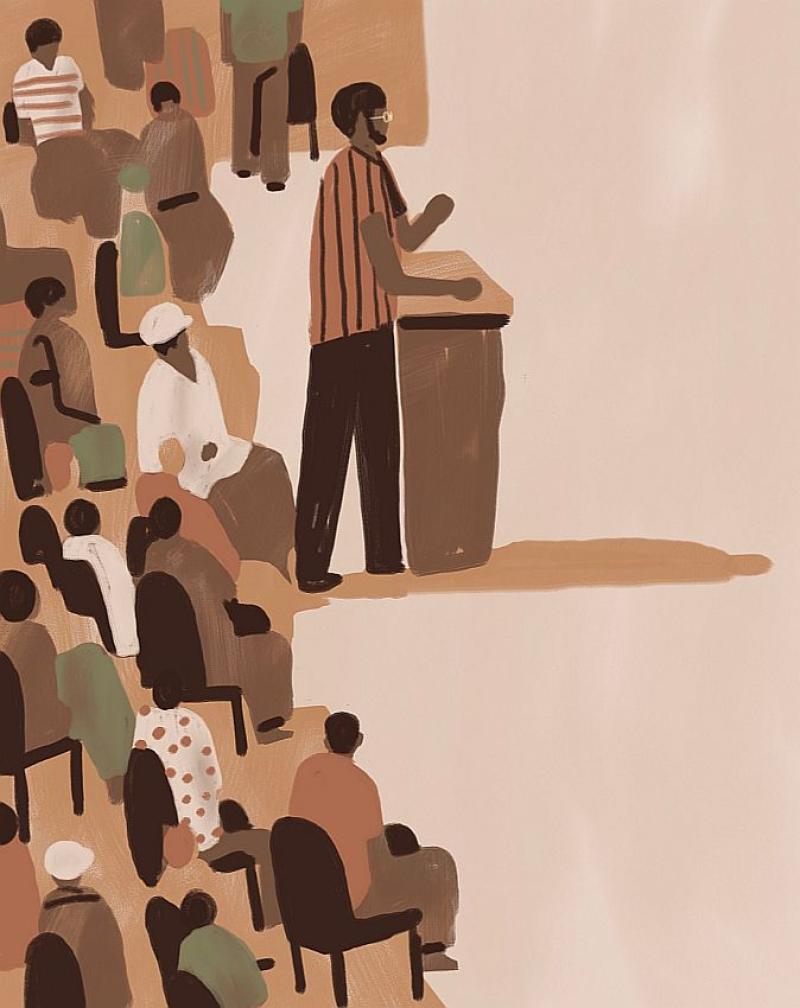
L.D. Reddick, a historian, heard “the father of Negro history” speak as a child in his hometown, Jacksonville, Fla. Everything about Dr. Woodson, he remembered, produced an effect that was “electric.” As Mr. Reddick wrote, “He handled himself well upon the platform, I thought, moving about very much like a skilled boxer: never hurried, never faltering, sparring skillfully for openings, driving his blows deftly.” Mr. Reddick, who would later collaborate with the Rev. Dr. Martin Luther King Jr. on his book about the Montgomery bus boycotts, marveled that Dr. Woodson was “easily ... the most impressive speaker that I had ever heard up to that time in my life.”
1970
After gaining in renown, Negro History Week becomes Negro History Month and then Black History Month.
Dr. Woodson lectured often in West Virginia, and citizens in that state began celebrating what they called Negro History Month in the 1940s. Dr. Woodson’s organization, the Association for the Study of Negro Life and History, formed branches across the country and Negro History Clubs began to appear in high schools. By the time Dr. Woodson died in 1950, mayors across the country supported Negro History Week.
In the 1960s, growing political consciousness among Black college students led to a push for more opportunities to study Black history. In February 1969, students and educators at Kent State University proposed the first Black History Month — and celebrated it in February 1970.
Tags
Who is online

106 visitors
Happy Black History Month everybody.
And, as usual, an extremely important day in the lives of Native Americans - that no one except Native Americans celebrate - occurred on 2 June 1924
. On June 2, 1924, Congress enacted the Indian Citizenship Act, which granted citizenship to all Native Americans born in the U.S. The right to vote, however, was governed by state law; until 1962, some states barred Native Americans from voting.
Only 500 years after "being discovered" in our own lands that we have populated for thousands of years - the "new kids on the block" decide we should be citizens in our own lands?????
But, of course - who gets snubbed and don't bitch about it????
I always support Native Americans efforts for higher visibility in this country.
i hear ya First. I’m all for celebrating heritage but not at the expense of others. Many need to spend more time celebrating what we have in common and not what we don’t. That is to say, celebrate being American instead of bitching about it.
Yes as highlighted in the SB halftime show. Nary a token white could be found in that show from what I saw. Imagine the outrage has the rolls been reversed.
I am not a fan of Usher or any of the others on that stage with the exception of Alicia Keys, but I bet they have a lot of white fans.
I like some of his stuff but that is not the point of my comment.
I turned on the TV just in time to watch Reba sing the ONE AND ONLY National Anthem. I quit watching the half time shows a long time ago, since they seemed to feature untalented people I've never heard of. Contributing factors to this decision were Micheal Jackson's crotch grabbing and his sister's wardrobe malfunction.
I have no interest or reason to be concerned about Black history.
MAGA - "When is white history month" ?
Why does Black history begin in the New World?
The Black population did not originate in the New World. And only a small fraction of the world's Black population was brought to the New World.