
There’s so much that’s crazy about the October 14 phone call transcript between Steve Witkoff and Putin apparatchik Yuri Ushakov



 S E E D E D C O N T E N T
This Guy Gets Trump
by Andrew Egger
There’s so much that’s crazy about the aforementioned Bloomberg News release of an October 14 phone call transcript between Steve Witkoff and Putin apparatchik Yuri Ushakov that it’s hard to know where to begin.
Why is Witkoff, the man tapped by Donald Trump as America’s pointman for diplomatic negotiations on a host of foreign conflicts, actively helping Russia strengthen its negotiating hand by reminding Putin what forms of flattery will land best with Trump and tipping him off when he should call the president for maximum effect? Why is Witkoff offering ministry-of-truth analysis like, “I told the president that the Russian Federation has always wanted a peace deal” in describing a war where Russia is the unequivocal and single aggressor? Why is Witkoff, a random billionaire with ties to Russian oligarchs , in this role at all? Why was Secretary of State Marco Rubio seemingly shoved out of the picture only to now regain a foothold?
But the thing I found most striking about the call was what it revealed about Witkoff’s assessment of what motivates the president. Trump, in Witkoff’s telling, has no particular asks or sticking points when it comes to this negotiation. Don’t have Putin talk about particulars on the call with Trump at all, Witkoff advises Ushakov. “Now, me to you, I know what it’s going to take to get a peace deal done: Donetsk and maybe a land swap somewhere. But I’m saying instead of talking like that, let’s talk more hopefully, because I think we’re going to get to a deal here. And I think, Yuri, the president will give me a lot of space and discretion to get to a deal.”
What does “talking more hopefully” entail? Simple: a lot of flattery about how successful Trump’s negotiation in Gaza was and how glad Russia is that he is a “man of peace.” This sort of thing, Witkoff suggests, will put Trump in a good enough mood that he’ll be happy to hand the actual sausage-making back to Witkoff himself with little additional bother. And Putin should do it, Witkoff suggests, in time to preempt a planned meeting with Zelensky, in which Trump could be flattered in Ukraine’s direction.
Ushakov appears to get the message: “I agree with you that Putin will congratulate. He will say Mr. Trump is a real peace man and so and so.”
Amazingly, this appears to be exactly what happened. Putin did time his call to preempt Zelensky’s mid-October visit and did indeed open with flattery about Trump’s deal in Gaza. Trump responded just as Witkoff seemed to believe he would: “I have just concluded my telephone conversation with President Vladimir Putin of Russia, and it was a very productive one,” he posted then on Truth Social. “President Putin congratulated me and the United States on the Great Accomplishment of Peace in the Middle East, something that, he said, has been dreamed of for centuries. I actually believe that the Success in the Middle East will help in our negotiation in attaining an end to the War with Russia/Ukraine.”
In retrospect, that moment led inexorably to the one we’re in now, with Trump—seemingly paying only half attention—blessing the peace agreement Witkoff brought him from the Russians, just as Witkoff predicted he would.
It makes you wonder whether there is any daylight at all between Witkoff’s view of what drives Trump and ours? We write all the time about Trump’s childlike solipsism—the way his assessment of other people depends entirely on how they treat him , personally. This, of course, makes Trump historically easy to manipulate, and Witkoff is in a position to wield that knowledge to world-historical effect. It’s too bad he’s decided to deploy it in the maniacal aim of bringing Putin’s war to a Putin-satisfying conclusion.

Tags
Who is online
100 visitors
So Witkoff is basically saying what everyone already knows, talk to Trump like he is a spoiled 5 year old.
A POTUS that's easy to manipulate is not a good example of a POTUS
Kushner is involved in all this mess too.
====================================================
www.cnbc.com /2025/11/22/trump-miami-meeting-russia-ukraine-proposal.html
Trump officials’ meeting with Russian in Miami spurs questions about latest Ukraine proposal
9-11 minutes 11/22/2025
Head of the Russian Direct Investment Fund and Russian special presidential envoy for economic cooperation with foreign countries, Kirill Dmitriev, talks to U.S. President Donald Trump’s special envoy Steve Witkoff during a meeting in Saint Petersburg, Russia, on April 11, 2025.
U.S. officials and lawmakers are increasingly concerned about a meeting last month in which representatives of the Trump administration met with Kirill Dmitriev, a Russian envoy who is under U.S. sanctions, to draft a plan to end the war in Ukraine, according to multiple sources familiar with the matter.
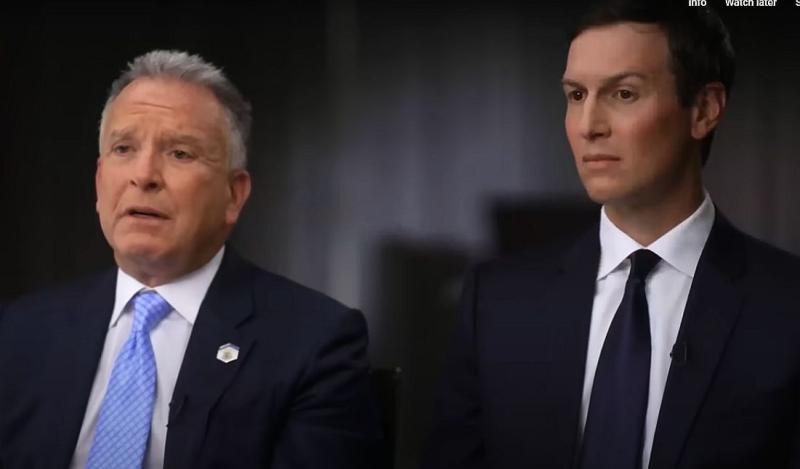
The meeting took place in Miami at the end of October and included special envoy Steve Witkoff, President Donald Trump’s son-in-law Jared Kushner and Dmitriev, who leads the Russian Direct Investment Fund (RDIF), one of Russia’s largest sovereign wealth funds.
A close ally of Russian President Vladimir Putin , Dmitriev has taken a leading role in talks with the U.S. about the war and has met with Witkoff several times this year. The Trump administration has issued a special waiver to allow his entry, one senior U.S. official told Reuters.
Dmitriev and his fund were blacklisted by the U.S. government in 2022 following Russia’s full-scale invasion of Ukraine. The sanctions effectively bar American citizens and companies from dealing with them.
The meeting resulted in a 28-point plan for ending the war, two people familiar with the situation said. The plan, which was made public earlier this week by Axios, came as a surprise to U.S. officials in various corners of the administration and has stirred confusion at embassies throughout Washington and in European capitals.
It has also prompted criticism from the Ukrainians and their allies for appearing heavily tilted toward Russian interests, with Ukrainian President Volodymyr Zelenskyy vowing on Friday that he would not betray Ukraine’s interests.
The document, which calls for major concessions from Ukraine, appears to run counter to the tougher stance the Trump administration has lately taken toward Moscow, including with sanctions on its energy sector.
It’s unclear whether Dmitriev came to the meeting in Miami with certain Russian demands and whether those were incorporated into the peace plan.
Two people familiar with the meeting said Rustem Umerov, Secretary of Ukraine’s National Security and Defense Council, was also in Miami early this week to discuss the plan with Witkoff.
One source familiar with the situation said that Witkoff told Umerov about the plan during that visit and that the United States gave the plan to Ukraine via the Turkish government on Wednesday, before directly presenting it in Kyiv on Thursday.
Umerov has described his role as “technical” and denied that he discussed the plan in substance with U.S. officials.
Dmitriev and the Ukrainian embassy in Washington did not immediately respond to a request for comment.
White House spokeswoman Karoline Leavitt said in a statement that any peace plan “must offer security guarantees and deterrence for Ukraine, Europe and Russia” and offer economic incentives to both Ukraine and Russia.
“This plan was crafted to reflect the realities of the situation, and to find the best win-win scenario, where both parties gain more than they must give,” she said.
Trump said on Friday that he expected Zelenskyy to sign onto the plan by the Thanksgiving holiday. The U.S. has warned Ukraine it could curb military assistance if it does not sign, Reuters has reported.
In an evening address on Friday night, Zelenskyy announced talks with Ukraine’s partners on steps to end the war.
“Our representatives know how to protect Ukraine’s national interests and what exactly is needed to prevent Russia from carrying out a third invasion, another blow to Ukraine,” he said.
In separate remarks on Saturday, Trump said that his proposal was not his final offer, signalling potential room for adjustments as Ukraine and its European allies stressed that the plan could serve as a foundation for negotiations but required significant changes.
The situation has sparked worries inside the administration and on Capitol Hill that Witkoff and Kushner skirted the interagency process and that the discussions with Dmitriev have resulted in a plan that favors Russian interests.
It includes demands that Russia has previously made — that Ukraine give up some of its territory in the eastern part of the country that it still controls, recognize Crimea as Russian and pledge not to join NATO.
“This so-called ‘peace plan’ has real problems, and I am highly skeptical it will achieve peace,” said Senator Roger Wicker of Mississippi, the Republican chairman of the Senate Armed Services Committee. “Ukraine should not be forced to give up its lands to one of the world’s most flagrant war criminals in Vladimir Putin .”
Concerns about Dmitriev
The administration’s discussions with Dmitriev have also worried some inside the intelligence community, one U.S. official familiar with the matter said.
Dmitriev has previously used his role at RDIF to make inroads with various Western governments and businesses, even amid American sanctions.
The CIA declined to comment about concerns within the intelligence community about Dmitriev.
During the first Trump administration, Dmitriev established contacts with the president’s team to reset relations between Washington and Moscow.
In a 2017 meeting with Erik Prince, the former CEO of Blackwater and a Trump ally, Dmitriev discussed U.S.-Russia relations, according to a Department of Justice report published by Special Counsel Robert Mueller in 2019. Mueller’s team was investigating ties between the Trump team and Russia.
In a separate meeting with a friend of Kushner’s, Dmitriev drafted a reconciliation plan to strengthen ties between the U.S. and Russia, the report says.
The Mueller team said in its report that it did not establish that the Trump campaign coordinated with the Russians to influence the 2016 election.
Dmitriev also worked directly with Kushner during the first administration. During the pandemic, Dmitriev coordinated with Kushner on the delivery of ventilators to the U.S. The ventilators were provided by RDIF and caused concern among officials at the Treasury Department that the U.S. might be violating its own sanctions, according to a senior U.S. official.
In recent years, Dmitriev has appeared on various American television stations and at events like the World Economic Forum in Davos, to promote the strengthening of trade ties between the U.S. and Russia.