
A Debate Style Analysis Of Pete Hegseth's Book "American Crusade"

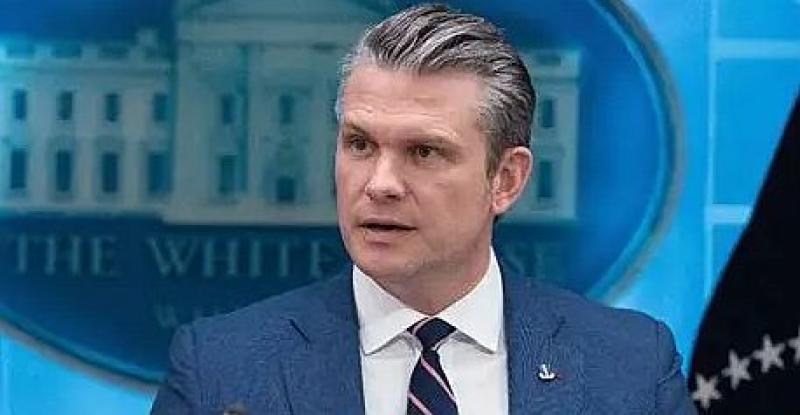

I asked Copilot A I for an analysis of Hegseth's book American Crusade, to find out the connection between Hegseth's ideas and Christian Nationalism.
Copilot asked me if I would like a debate style analysis and I said yes.
-------------------------
⚖️ Debate‑Style Analysis of American Crusade (Pete Hegseth)
The book makes a series of sweeping claims about American culture, politics, religion, and national identity. Each section below presents:
-
Hegseth’s position (as stated or implied in the book)
-
Counterarguments commonly raised by scholars, journalists, or political commentators
This mirrors how an actual debate around the book tends to unfold.
1. Is America in an existential cultural war?
Hegseth’s Claim
America is in a “360‑degree” cultural, political, and spiritual war. The Left has captured institutions and seeks to dismantle the nation’s founding values.
Counterargument
Critics argue that framing politics as a “war” escalates polarization and oversimplifies complex social changes. They say institutional shifts reflect demographic, economic, and cultural evolution—not a coordinated ideological attack.
2. Has the Left executed a “long march” through institutions?
Hegseth’s Claim
Progressives intentionally infiltrated schools, universities, media, and government over decades, reshaping American norms.
Counterargument
Opponents say this narrative treats organic cultural change as conspiracy. They argue that institutions evolve because society evolves, and that conservative voices remain influential in many sectors (e.g., business, law, religious life, and local politics).
3. Is “Americanism” the only path to national survival?
Hegseth’s Claim
He defines Americanism as a blend of patriotism, nationalism, faith, and traditional values. He argues that without it, the nation will decline.
Counterargument
Critics say this definition excludes millions of Americans who hold different religious or political beliefs. They argue that pluralism—not ideological uniformity—is the core American strength.
4. Is secularism destroying the country?
Hegseth’s Claim
America’s identity is inseparable from Christianity. Secularism has weakened the moral foundation needed for freedom.
Counterargument
Opponents argue that the U.S. was founded on religious liberty, not religious dominance. They say secular governance protects all faiths and prevents political conflict rooted in theology.
5. Are Islam and China existential threats?
Hegseth’s Claim
He portrays Islam as inherently expansionist and China as a rising authoritarian rival. He argues that globalism blinds America to these dangers.
Counterargument
Critics say the book generalizes about Islam and risks conflating extremist groups with the world’s 1.8 billion Muslims. Regarding China, critics agree it is a major geopolitical competitor but argue that cooperation and diplomacy are also essential tools.
6. Did Donald Trump revive Americanism?
Hegseth’s Claim
Trump is presented as a political disruptor who broke the old conservative mold and reignited patriotic, unapologetic nationalism.
Counterargument
Critics argue that Trump intensified polarization and weakened democratic norms. They say portraying him as a civilizational savior oversimplifies both his presidency and the broader political landscape.
7. Is the media a coordinated ideological weapon?
Hegseth’s Claim
Mainstream media is described as biased, activist, and aligned with progressive ideology.
Counterargument
Opponents argue that media bias exists across the spectrum and that the U.S. has a diverse, decentralized media environment. They say the book focuses on left‑leaning outlets while ignoring right‑leaning ones.
8. Should politics be approached as a “crusade”?
Hegseth’s Claim
He urges readers to adopt a militant, uncompromising mindset in political and cultural battles.
Counterargument
Critics warn that crusader language encourages zero‑sum thinking and reduces the possibility of democratic compromise. They argue that treating politics as warfare undermines civic trust.
🧭 What This Debate Reveals
The book’s supporters tend to see it as a wake‑up call about cultural decline and institutional capture. Its critics tend to see it as a manifesto of polarization, framing disagreement as existential conflict.
The debate ultimately centers on two competing visions of America:
-
A unified nation rooted in a specific cultural and religious identity vs.
-
A pluralistic nation defined by diversity and evolving norms
Tags
Who is online
90 visitors
How sources characterize American Crusade and its ideology
Across multiple independent outlets, Pete Hegseth’s broader political and religious messaging — including what he argues in American Crusade — is consistently described as aligned with Christian nationalist ideas. This assessment comes from journalists, scholars, and watchdog groups, not from the book’s own self‑description.
Here are the key points supported by reporting:
Hegseth uses Crusades‑era symbolism such as the Jerusalem cross and the motto Deus Vult , both of which are historically tied to militant Christian crusading and have been adopted by some extremist groups.
In American Crusade , he rails against Muslims’ “aversion to assimilation” , a framing Mother Jones notes as part of a broader pattern of religiously exclusionary politics.
He is closely connected to a denomination that explicitly advocates for Christian influence over government , which analysts identify as a core Christian nationalist goal.
His public rhetoric and policy actions (e.g., promoting prayer services in government institutions, reshaping the Chaplain Corps around a narrow theological vision) are described by experts as part of a Christian nationalist agenda .
What this means for the book itself
While American Crusade is not a policy manual, its themes — cultural struggle, religious revivalism, and the need to “reclaim” America’s identity — match the ideological framework that researchers and journalists call Christian nationalism . The book’s argument that America must return to explicitly Christian foundations is central to that classification.
Crusades, in this context is political warfare, and we have had explained to us that, LYING is an article of warfare. And yet, Christians are not supposed to be deceitful, vacuous, people whom will say 'anything' to get their way with others.
To my knowledge no previous US Secretary of Defense has been an extremist. Hegseth is an extremist.
It is so pathetic that I am 'near' speechless over it. . . and yet, none of us can AFFORD IT to not speak up and out about this! We know the dangers of zealots as told in the Bible of people: tortured, 'given' to lions, sawn in-half, drowned, and so on and forth. . . all because they would not 'bend the knee' to an expressed God's 'will' - real or imagined!
This is a seriously grave undertaking in the Department of War - and should be dealt poste-haste! The 'principle' aided in changing the name of the DOD(efense). . . a farther indicator of what he as director is prepared to do to get what he desires in his 'zeal'!
copilot
Most of the controversy around American Crusade comes from passages where Hegseth frames U.S. politics as an existential holy war, labels fellow Americans as enemies, and suggests that conflict with the Left is irreconcilable. Below is a structured list of the most widely cited controversial passages, each paraphrased to stay within copyright rules.
⚔️ 1. “Leftists” as existential enemies
Paraphrased summary: Hegseth claims that leftists have “surrounded traditional American patriots on all sides” and are trying to “kill our founders, kill our flag, and kill capitalism.” He portrays them not as political opponents but as a force bent on destroying America’s core identity.
Why it’s controversial: This framing casts millions of Americans as enemies in a zero‑sum civilizational conflict.
⚔️ 2. America locked in a permanent, unresolvable conflict
Paraphrased summary: He argues that the Left and Right have “irreconcilable differences” that cannot be resolved through normal democratic processes, implying that political coexistence is impossible.
Why it’s controversial: Scholars and commentators note that this rhetoric undermines democratic pluralism.
⚔️ 3. Calling for a “360‑degree holy war”
Paraphrased summary: Hegseth describes the need for an “American crusade” and says the country must “exorcise the leftist specter dominating education, religion, and culture — a 360‑degree holy war for the righteous cause of human freedom.”
Why it’s controversial: The language of “holy war” and “exorcism” is widely cited as Christian nationalist and militant.
⚔️ 4. Framing politics as “Americanism vs. death”
Paraphrased summary: He defines “Americanism” as a right‑wing populist worldview opposed to feminism, globalism, Marxism, and progressivism, and says that either Americanism will prevail or the nation will face “death.”
Why it’s controversial: This apocalyptic framing suggests political disagreement equals national annihilation.
⚔️ 5. Rejecting democracy as a leftist plot
Paraphrased summary: Hegseth claims that when leftists call for “democracy,” they are actually rejecting the U.S. constitutional system. He argues they “hate America” and want to seize 51% of the vote to change the Constitution.
Why it’s controversial: This passage has been criticized for delegitimizing democratic participation itself.
⚔️ 6. Endorsing partisan gerrymandering as a weapon
Paraphrased summary: He argues that Republican legislatures should draw congressional districts to advantage “pro‑freedom candidates” and explicitly says they should “screw Democrats.”
Why it’s controversial: This is cited as an endorsement of manipulating elections for partisan gain.
⚔️ 7. Implying violence may eventually be necessary
Paraphrased summary: Hegseth writes that the crusade is not “about literal swords” and “not with guns. Yet.”
Why it’s controversial: The “yet” is widely interpreted as leaving open the possibility of future political violence.
⚔️ 8. Apocalyptic “us vs. them” framing
Paraphrased summary: He tells readers that America is “under siege by the scourge of leftism,” that the situation is “very bad,” and that the fight is “us versus them, America versus the Left, good versus evil.”
Why it’s controversial: This moral absolutism is cited by critics as radicalizing and polarizing.
Why (when) is the outrage allowed? What are republicans waiting for another civil war? Do we really want that?!
Who is going to be persuaded by this garbage? We hit peak moron when Trump got elected. America is on a steep downhill ride out of this disastrous administration. Pete can run his mouth all he wants but he knows his days are numbered and his future isn’t bright.
You do read the comments here, don't you? There are some here who buy into this bullshit and insist that "lefties" are the destruction of America.
They aren’t being persuaded, they’re already there. I’m saying who is going to be lured into this way of thinking that isn’t that way already?
oh sorry. My reading comprehension is going down the toilet
I guess I could have said it more succinctly with one phrase: politics is about addition. Nobody is being drawn to this disastrous administration / party until it is wiped clean of the maga stench.
Gospel of Saint Quinton of Tarantino I presume!