
Unmoved by Trump's ticking clock, Iran forms a new reality in the Persian Gulf



 S E E D E D C O N T E N T
Unmoved by Trump's Ticking Clock, Iran Forms a New Reality in the Persian Gulf
Expanding overland transport routes alongside collecting massive fees from tankers in the Strait of Hormuz provides the Islamic Republic with more breathing room than the West expected
May 19th, 06AM May 19th, 11AM
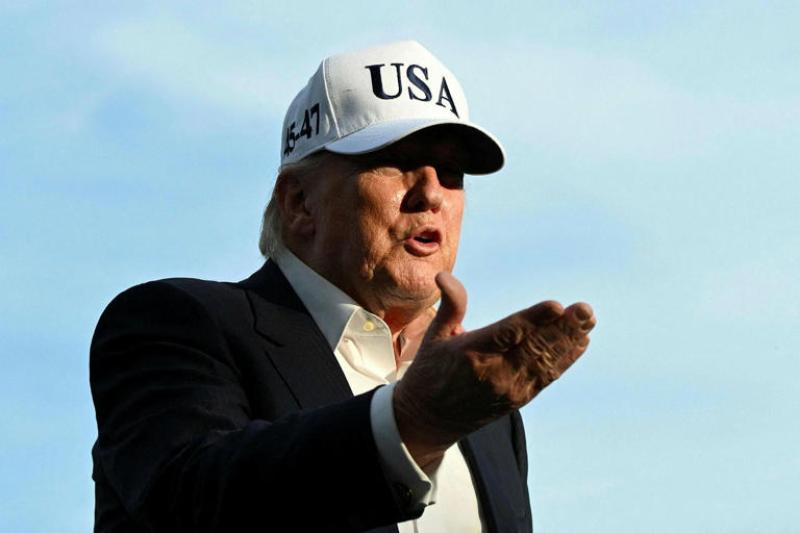
"The clock is ticking," warned U.S. President Donald Trump, "they better get moving, FAST, or there won't be anything left of them." It is hard to count the occasions when the American president had threatened Iran since the April 8 cease-fire, intended to last for a couple of weeks but clocking in at about eight weeks. On Monday, Pakistan had passed on an Iranian "amendment" to the previous proposal, rejected out of hand by Trump, and the world is once again awaiting his word.
According to sourced reporting about the offer, it does not include any new positions; rather, it apparently combines Trump's proposals with Iran's in a manner that will not split debate over the core issues into two separate chapters, but will include them all as one in the negotiations.
If that is indeed the nature of this proposal, it is intended to overcome one of the procedural obstacles that held back negotiations, namely: Iran's insistence on first discussing passage arrangements in the Strait of Hormuz, receiving promises and guarantees against any further American and Israeli attacks and securing the release of Iranian funds frozen in banks in the U.S. and around the world.
Iran has been presenting acquiescence to these clauses as precondition for any debate on the nuclear issue, including the transfer on uranium enriched to over 60 percent outside of Iran and its insistence on its right to enrich uranium to a low level, at 3.67 percent. Once the negotiations' "agenda" is agreed on, it could offer both parties a ladder to climb down on and resume direct talks in an attempt to reach gradual mutual agreements, averting a resumption of the war.
Iran had already made one important accomplishment in turning the issue of the Strait of Hormuz into a global political and economic threat that, together with its attacks on Gulf countries, have created a whip of deterrence that has so far proved efficient. From a situation in which the Strait of Hormuz and free passage in it have not even been on the agenda before the war, they have now compelled the U.S. to view Iran's control over the strait as something that can no longer be dismissed out of hand. It will require debate, agreement and, perhaps, concessions in the nuclear issue.
According to a report on Axios, quoting a senior American official, the updated Iranian proposals is unsatisfactory and includes no real change over the previous proposal. However, says the senior official, "the fact that Iran made a new counter-offer suggests the Iranians are concerned about further US military action."
But it is not just Iran that is concerned about a resumption of the war. Gulf countries are on high alert awaiting this attack that, even if it does come to pass, cannot guarantee that "total surrender" wished for by Trump. These countries are unimpressed by the data presented by CENTCOM commander, Admiral Brad Cooper, in a hearing before the Senate's Armed Forces Committee last Thursday. According to Cooper, the U.S. had destroyed some 90 percent of 8,000 sea mines available to Iran and some 75 percent of its ballistic missiles and drones stockpiles, as well as its maritime capabilities.
These countries have already learned that one missile or drone is enough to destroy a huge oil facility or to shut down gas production. Iran makes it no secret that its target board will be as wide as the projected American attack. Water desalination plants that provide 90 percent of the Gulf countries' water supply, nuclear power plants like the one that came under attack in the United Arab Emirates, power plants and other civilians infrastructure – are all part of Iran's "legitimate" target bank that Iran says it will not hesitate to attack. And this is not the only concern.
When Trump says that the time factor is decisive, he means mainly the reality that has been taking shape in the Persian Gulf, creating cracks in the siege he had laid on Iran. By last weekend, over thirty ships have passed through the Strait of Hormuz, mostly Chinese. Four of those were carrying some two million barrels Iraqi crude oil, as well as tanked of liquid natural gas, from Qatar to Pakistan. Compared with the 120 vessels that used to pass through the strait every day in normal times, this is still just a trickle, far from enough to replace the maritime route; however, it bears noticing that the US government is in no rush to block this loophole and confront ships that sail under the flag of China.
Meanwhile, Iran had announced it was negotiating with Oman on formulating a joint protocol for the passage of ships and that "more countries have been negotiating with Iran on agreements to allow their ships passage" in compliance with the conditions set by Iran, that include fees for "special services." On Saturday, the chairman of Iran's Commission on National Security, Ebrahim Azizi, tweeted that Iran is preparing a professional protocol for the administration of passage in the Strait of Hormuz, the details of which were to be disclosed shortly.
In late April, Pakistan – the mediator between the U.S. and Iran – had announced its opening of six land crossings, where some 3,000 containers stranded in the port of Karachi were to pass, while last week an Iranian delegation was in Pakistan, negotiating the extension of ties between the Iranian port of Chabahar and the Pakistani port of Gwadar, in a manner that will allow Iran to at least partially bypass the U.S. maritime siege on the Persian Gulf.
This route, if fully opened, could make Pakistan a marketing center for Iranian goods, resulting in it becoming the destination for most of the non-oil trade from the UAE which, until the war, was Iran's second biggest trade partner. Gulf countries have yet to break the siege and, as far as is known, they have not been negotiating passage with Iran – but time is not standing still with them, either.
The map of land transportation routes available to Iran reveals a multitude of existing alternatives, as well as others that could develop – such as the northwestern corridor, linking India to the Caucasus and Russia via Iran; the freight train route between Xian in China and Iran, with the frequency of trains already up from once a week to three or four times a week; transportation routes linking Iran to Caspian Sea countries; the railway line between Iran and Turkey, which has been suffering until now from technical and bureaucratic difficulties, could also develop into a major alternative route, while it is as yet unclear what is to become of the agreement signed late last year to construct a cutting-edge, fast railway line between the two countries at a cost of $1.6 billion.
This land route connects Iran with countries such as Russia and China, both of which are not committed to American-led sanctions, as well as to countries that comply with the sanctions only partially, such as Pakistan, Turkey and Caspian Sea countries. These routes cannot yet replace the sea route, through which Iran has been selling over one and a half million barrels of oil per day, mostly to China and at significantly lower than market prices, but they allowed the Iranian economy to go on functioning even under the heavy regimen of sanctions.
Unconfirmed reports have it that Iran has been charging up to $2 million for every tanker that is "allowed" to pass through the Strait of Hormuz, about one dollar for every barrel of oil. This means that it is enough for Iran to charge such fees from 40 tankers a day in order to compensate Iran for the loss of about half its oil revenues, even without exporting a single barrel.
This loss of revenue is a significant share, but is not crucial. According to an Emirate Policy Center report early this year, projected oil revenues accounted for just 15 percent of the Iranian budget, while other revenue was planned to come from taxes (about 50 percent), the sale of state bonds and the withdrawal of funds from the National Development Fund, the recipient of surplus oil revenues, about which there is no confirmed data.
It follows that the U.S. intelligence assessment that Iran has "financing surplus" that could last it three or dour months, is not necessarily an accurate reflection of the real situation, and Iran may not only have bigger financial reserves, but also the capabilities to import and export goods by land that could further enrich its coffers, allowing it longer breathing space than projected by Western estimates.
Tags
Who is online
135 visitors
Still think we are "winning" ?
It's like when you paint yourself into a corner and then realize as it dries that you don't like the color.