
╌>

1.1 Trillion

  
Via:  John Russell  •  5 months ago  •  57 comments


1.1 Trillion
 

Leave a comment to auto-join group NEWSMucks

NEWSMucks


S E E D E D   C O N T E N T


$1.1 trillion
Forbes estimates that Musk is now worth $1.1 trillion as of just before noon eastern Friday, up from $982 billion on Thursday, when SpaceX priced its IPO at $135 share. The IPO pricing boosted Musk’s fortune by $188 billion yesterday, according to Forbes’ calculations.

Tags

jrGroupDiscuss - desc
[]
 
JohnRussell
Professor Principal
1  seeder  JohnRussell    5 months ago

is it time to tax wealth yet ?


Sean Treacy
Professor Principal
1.1  Sean Treacy  replied to  JohnRussell @1    5 months ago

How much tax revenue do you think Elon Musk has generated for the US?


JohnRussell
Professor Principal
1.1.1  seeder  JohnRussell  replied to  Sean Treacy @1.1    5 months ago
boosted Musk’s fortune by $188 billion yesterday

what tax rate do you think he should pay on that ?


Sean Treacy
Professor Principal
1.1.2  Sean Treacy  replied to  JohnRussell @1.1.1    5 months ago

I have no problem with boosting income tax rates on income. 

Wealth taxes are a terrible idea.


JohnRussell
Professor Principal
1.1.3  seeder  JohnRussell  replied to  Sean Treacy @1.1.2    5 months ago

will musk report this 188 billion as income? 


Dismayed Patriot
Professor Quiet
1.1.4  Dismayed Patriot  replied to  JohnRussell @1.1.3    5 months ago
will musk report this 188 billion as income? 

Of course not! Why would he when he has bottom feeding Trump sycophants delusionally thinking he's 'one of them' so they are defending any and all grifting done by conservatives. They believe the system has ripped them off long enough, so they're going to make sure the trillionaire who gave them a wink and a nod doesn't have to pay taxes like the rest of America and the Godless liberals they've been manipulated to hate. Fucking gullible idiots.


Drakkonis
Professor Participates
1.1.5  Drakkonis  replied to  JohnRussell @1.1.3    5 months ago

Stock is not income unless sold or dividends are paid on it. If those things occur, then it is not a question of "should he?" He will have to pay taxes on it. 


Drakkonis
Professor Participates
1.1.6  Drakkonis  replied to  Dismayed Patriot @1.1.4    5 months ago
Of course not!

Agreed. Because it is not income. 


JohnRussell
Professor Principal
1.1.7  seeder  JohnRussell  replied to  Dismayed Patriot @1.1.4    5 months ago

There are Americans that are enthralled by Musk's trillion. They think that with the breaks they could be some part of that.  This mindset has done more to bolster income inequality than any other factor.  Everyone sees themselves as rich in their dreams, and are loathe to tax people they consider role models. 


Ozzwald
Professor Quiet
1.1.8  Ozzwald  replied to  Drakkonis @1.1.5    5 months ago
He will have to pay taxes on it. 

Or utilize one of the many tax loopholes to avoid paying.  Most of those loopholes are designed for the ultra wealthy.

AI Overview
The super-rich minimize tax liabilities by earning their wealth through asset appreciation rather than traditional W-2 salaries . They predominantly use the "Buy, Borrow, Die" strategy: accumulating appreciating assets (stocks or real estate), borrowing cash against those assets at low interest rates, and passing the assets to heirs with a "stepped-up" basis. [ 1 , 2 , 3 , 4 , 5 ]
The primary strategies and mechanisms include:
  • Buy, Borrow, Die: This core strategy involves three steps. First, billionaires buy high-value, appreciating assets. Second, instead of selling these assets (which triggers a capital gains tax), they use their investment portfolios as collateral to take out low-interest, tax-free loans for their living expenses. Finally, when they pass away, the unrealized capital gains on these assets are completely wiped out under current tax laws, and heirs receive the assets at their stepped-up value without ever paying income tax on the historical gains . [ 1 , 2 , 3 , 4 ]
  • Low "Salary" and Wealth Creation: Many prominent tech founders and CEOs take remarkably low taxable base salaries (often under $100,000), meaning they pay minimal income and payroll taxes on their actual labor. Instead, their wealth is tied up in corporate equity where taxes are only due when the stock is sold. [ 1 , 2 , 3 , 4 , 5 ]
  • Offshore Havens & Tax Shelters: The wealthy often leverage multinational corporate structures and offshore trusts in jurisdictions with little to no taxation (such as Monaco or the Cayman Islands) to shift profits and shelter income from domestic revenue agencies. [ 1 , 2 , 3 , 4 , 5 ]
  • Trusts and Estate Planning: Complex trust instruments and "Family Limited Partnerships" allow the ultra-wealthy to transfer assets to future generations, effectively dodging steep gift and estate taxes. [ 1 , 2 ]
  • Real Estate Depreciation & Loopholes: Real estate investors utilize vehicles like 1031 Exchanges to defer taxes on property sales indefinitely, and use "depreciation" rules to offset their active income from other sources


Drakkonis
Professor Participates
1.1.9  Drakkonis  replied to  Ozzwald @1.1.8    5 months ago
Or utilize one of the many tax loopholes to avoid paying.  Most of those loopholes are designed for the ultra wealthy.

Then all that is necessary is for Congress to eliminate those loopholes. They don't. Doesn't that make them the problem? 


JohnRussell
Professor Principal
1.1.10  seeder  JohnRussell  replied to  Ozzwald @1.1.8    5 months ago
instead of selling these assets (which triggers a capital gains tax), they use their investment portfolios as collateral to take out low-interest, tax-free loans for their living expenses.

the interest they pay on the loans they use as living expenses are less than the interest they get on their investments.  quite a racket. 


Drakkonis
Professor Participates
1.1.11  Drakkonis  replied to  JohnRussell @1.1.7    5 months ago
This mindset has done more to bolster income inequality than any other factor.

What do you consider income equality? 

Everyone sees themselves as rich in their dreams, and are loathe to tax people they consider role models. 

Or, more likely, they see your view of how things should be as simply stealing from people just because they are rich. 


JohnRussell
Professor Principal
1.1.12  seeder  JohnRussell  replied to  Drakkonis @1.1.11    5 months ago
Or, more likely, they see your view of how things should be as simply stealing from people just because they are rich. 

I know you at least glanced at this , , because you responded to it.  Who is stealing from who ? 


Drakkonis
Professor Participates
1.1.13  Drakkonis  replied to  JohnRussell @1.1.12    5 months ago

I know you at least glanced at this, 1.1.11 , because you responded to it. Why not answer the question submitted there? 


TᵢG
Professor Principal
1.1.15  TᵢG  replied to  Drakkonis @1.1.9    5 months ago

Congress is at the core of many problems right now.   Our system has been corrupted to a point where I see no recovery.


CB
Professor Guide
1.1.16  CB  replied to  Drakkonis @1.1.11    5 months ago

Hey! Can we just buy a clue already? We had better hope for the best from a trillionaire, because bad people with that kind of wealth accumulation can 'own' quite a lot of people and influence quite a bit more. Now then, everything is cool. . . until it is not. . .and people (not just one man), people that are evil with that kind of power can make people disappear 'mysteriously' and that is probably already happening. And if one man can set the precedent, the 'door' to it is now open - if only narrowly for others to pass through.


Thomas
Professor Guide
1.1.17  Thomas  replied to  TᵢG @1.1.15    5 months ago

As dark as it is, I can see the way to recovery, given the upcoming elections. We have been at places just as dark, where the forces of tyranny and fascism (albeit by different names) were just as strong if not stronger. Do not lose hope my friend. We shall overcome.


Ozzwald
Professor Quiet
1.1.18  Ozzwald  replied to  Drakkonis @1.1.9    5 months ago
Then all that is necessary is for Congress to eliminate those loopholes. They don't. Doesn't that make them the problem?

Congress created those loopholes and use them for themselves.


CB
Professor Guide
1.1.19  CB  replied to  Thomas @1.1.17    5 months ago

"We Shall Overcome" —"Some day." . . . you know, somebody wrote a song about it! ;)



bugsy
Professor Participates
1.2  bugsy  replied to  JohnRussell @1    5 months ago

Elon Musk has probably paid more in income tax than every American has since the start of the income tax. 

Remember, 50 percent of taxpayers do not pay any taxes. 


JohnRussell
Professor Principal
1.2.1  seeder  JohnRussell  replied to  bugsy @1.2    5 months ago

Musk got 188 billion dollars richer today.  Is that income or outgo? 


Drakkonis
Professor Participates
1.2.2  Drakkonis  replied to  JohnRussell @1.2.1    5 months ago
Musk got 188 billion dollars richer today.  Is that income or outgo? 

Not how stocks work. Worth is not the same as income. 


JohnRussell
Professor Principal
1.2.3  seeder  JohnRussell  replied to  Drakkonis @1.2.2    5 months ago

He has 188 billion he didnt have yesterday.  How is that not income?   I dont agree with the games the ultra rich play. 


Drakkonis
Professor Participates
1.2.4  Drakkonis  replied to  JohnRussell @1.2.3    5 months ago
He has 188 billion he didnt have yesterday.  How is that not income?

Because stock is not income. It's worth fluctuates, sometimes widely, from day to day, month to month, year to year. If people were taxed simply on the arbitrary value of stock at any given moment, few, if anyone would own them and the ability to do business would be negatively impacted. Ultimately, tax revenue would be negatively impacted in the long run. 


Drakkonis
Professor Participates
1.2.5  Drakkonis  replied to  JohnRussell @1.2.3    5 months ago
He has 188 billion he didnt have yesterday.  How is that not income?

Let me make it a bit more clear. If simply owning stock causes one to pay taxes, you will immediately kill every single 401K anyone owns. The very reason people invest in them will be eliminated. What would you put in their place so that people will have retirement nest eggs? 


JohnRussell
Professor Principal
1.2.6  seeder  JohnRussell  replied to  Drakkonis @1.2.5    5 months ago

How about we let Musk shield as much of his wealth from taxes as the average 401k owner does. Not as a percentage, as a dollar figure. 


TᵢG
Professor Principal
1.2.7  TᵢG  replied to  JohnRussell @1.2.1    5 months ago

His net worth on paper grew.   It is not income until he realizes it by selling shares (capital gain).


TᵢG
Professor Principal
1.2.8  TᵢG  replied to  JohnRussell @1.2.6    5 months ago

One of the long-standing, known problems with capitalism is the cumulative advantage of concentrated capital.  The momentum (the ability to massively leverage) is key to enabling the uber-rich to get richer and creates the massive economic gap we see today.

A logically easy mitigation is to tax capital gains at an increasing rate.   This would only affect the uber-rich — those whose wealth is at such a level that they can effect inordinate control over society.   This is more complicated to do in reality since one can leverage wealth to produce working capital and avoid taxation.   So this is a solution in principle, not a simple solution.

The good of capitalism is the opportunity and the encouragement for individuals to take high risks for high rewards and push the envelope.   But like anything, when one hits the extreme, what was good in moderation manifests as bad.

A fundamental flaw here is who controls this revenue?   If it simply goes in as normal revenue then the corrupt / incompetent politicians in D.C. will divert / waste it.   It could be used, by law, to pay down the national debt.   Seems perfect except that the corrupt / incompetent politicians in DC will just use that to borrow more money.

Problems everywhere one looks.


Drakkonis
Professor Participates
1.2.9  Drakkonis  replied to  JohnRussell @1.2.6    5 months ago
How about we let Musk shield as much of his wealth from taxes as the average 401k owner does. Not as a percentage, as a dollar figure.

I don't understand what you are suggesting. Can you explain it further? 


JohnRussell
Professor Principal
1.2.10  seeder  JohnRussell  replied to  TᵢG @1.2.7    5 months ago

i KNOW WHAT THE RULES ARE. tHEY BLOW. 


TᵢG
Professor Principal
1.2.11  TᵢG  replied to  JohnRussell @1.2.10    5 months ago

Are you looking for a massive tax based on a high level of wealth? 


bugsy
Professor Participates
1.2.12  bugsy  replied to  JohnRussell @1.2.3    5 months ago
I dont agree with the games the ultra rich play.

Then become one of them and stop complaining about them. 


JohnRussell
Professor Principal
1.2.13  seeder  JohnRussell  replied to  bugsy @1.2.12    5 months ago

You are the dupe they have been looking for. 


JohnRussell
Professor Principal
1.2.14  seeder  JohnRussell  replied to  TᵢG @1.2.11    5 months ago
taxes are only due when the stock is sold.

is a scam. 


TᵢG
Professor Principal
1.2.15  TᵢG  replied to  JohnRussell @1.2.14    5 months ago

I disagree.   Stocks can vary considerably.    So exacting taxes when the stocks are high and refunding when they drop below purchase price would be a nightmare.   In particular, imagine having to pay a huge tax simply because stocks went high.   To pay the tax one might have to liquidate investments.   Not a good system.

And if this applies to everyone, think of the impact on retirement savings, education savings, etc.

While I appreciate your sentiment, I think the solution (if one exists) would have to be based on realized income, not wealth 'on paper'.


JohnRussell
Professor Principal
1.2.16  seeder  JohnRussell  replied to  TᵢG @1.2.15    5 months ago

So they continue to get away with robbery. 


JohnRussell
Professor Principal
1.2.17  seeder  JohnRussell  replied to  TᵢG @1.2.15    5 months ago
Buy, Borrow, Die: This core strategy involves three steps. First, billionaires buy high-value, appreciating assets. Second, instead of selling these assets (which triggers a capital gains tax), they use their investment portfolios as collateral to take out low-interest, tax-free loans for their living expenses. Finally, when they pass away, the unrealized capital gains on these assets are completely wiped out under current tax laws, and heirs receive the assets at their stepped-up value without ever paying income tax on the historical gains .
What is this 'buy, borrow, die' strategy that everyone keeps talking about — and that billionaires like Jeff Bezos deny?


Mark in Wyoming
Professor Silent
1.2.18  Mark in Wyoming   replied to  JohnRussell @1.2.17    5 months ago
Buy, Borrow, Die

missed another one john , the Rockefeller cascade , how really rich families stay rich and dont have to involve banks like the rest of the people .

All thats needed is to have enough money , in the family , to become ones own bank.


TᵢG
Professor Principal
1.2.19  TᵢG  replied to  JohnRussell @1.2.17    5 months ago

Exactly, one of many workarounds.   That is why this is such a big problem.


TᵢG
Professor Principal
1.2.20  TᵢG  replied to  JohnRussell @1.2.16    5 months ago

They continue to be able to enrich themselves and grow increasingly more powerful compared to the vast majority.


devangelical
Professor Principal
1.3  devangelical  replied to  JohnRussell @1    5 months ago

this is just another grift, because he knows what is coming for him as soon as trump disappears ...


Hal A. Lujah
Professor Participates
2  Hal A. Lujah    5 months ago

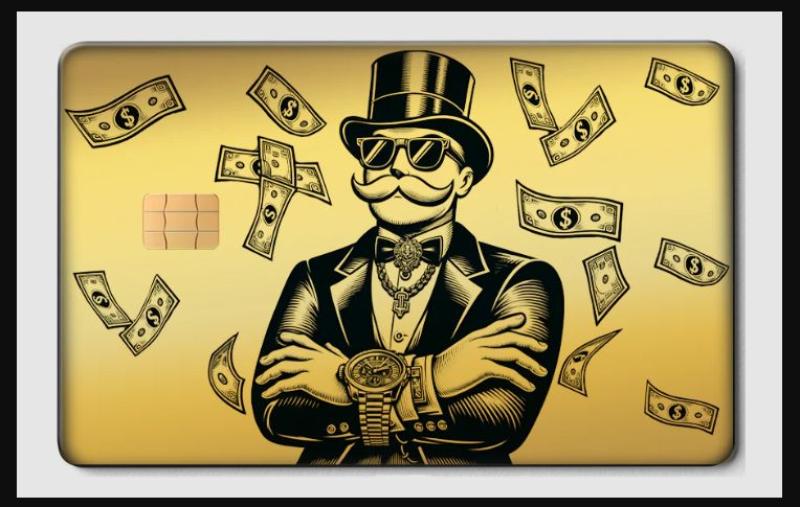
Trying to figure out that picture.  If Musk wore his watch like that when he was in charge of DOGE he would have done less damage.


Hal A. Lujah
Professor Participates
2.1  Hal A. Lujah  replied to  Hal A. Lujah @2    5 months ago

original


JohnRussell
Professor Principal
2.1.1  seeder  JohnRussell  replied to  Hal A. Lujah @2.1    5 months ago

very good


Thomas
Professor Guide
2.1.2  Thomas  replied to  Hal A. Lujah @2.1    5 months ago

I love that picture, because I don't.


Vic Eldred
Professor Principal
2.1.3  Vic Eldred  replied to  JohnRussell @2.1.1    5 months ago

Yup, nothing like a picture to bolster a losing argument.

I have to admit that I agree with TiG on this one. The real value of those shares comes on the day they are sold.

You must be aware that people can lose money when they sell stocks, right?


TᵢG
Professor Principal
2.1.4  TᵢG  replied to  Vic Eldred @2.1.3    5 months ago

JR knows how this works.   His point is that the system offers too many loopholes for the uber-wealthy.


Vic Eldred
Professor Principal
2.1.5  Vic Eldred  replied to  TᵢG @2.1.4    5 months ago

Loopholes on taxing investment?


TᵢG
Professor Principal
2.1.6  TᵢG  replied to  Vic Eldred @2.1.5    5 months ago

Loopholes allowing the use of cash without paying capital gains taxes.   The most common is borrowing using wealth as collateral.   Look up 'securities-backed lines of credit', margin loans, etc.


Vic Eldred
Professor Principal
2.1.7  Vic Eldred  replied to  TᵢG @2.1.6    5 months ago

IMO taxing anything associated with risk is immoral. It is also counterproductive if you want to increase revenues or grow the economy.


TᵢG
Professor Principal
2.1.8  TᵢG  replied to  Vic Eldred @2.1.7    5 months ago

So you do not recognize the problem of extreme cumulative advantage of concentrated capital.    You do not recognize that at the level of Musk and well-below, this tiny, tiny, minority of people have enormous control and enormous opportunity to expand that control.    

You do not see the similarity —in terms of damage to the people— between authoritarianism and plutocracy?


Thomas
Professor Guide
2.1.9  Thomas  replied to  TᵢG @2.1.8    5 months ago

I asked my editorial assistant to define and differentiate, compare and contrast, authoritarianism and plutocracy

This is it's response:

Authoritarianism is a system of rule defined by concentrated political power and weak limits on the ruler or ruling group.

Plutocracy is a system of rule defined by concentrated economic power, where the wealthy dominate political decision-making.

They are different concepts, but they can overlap very easily.

Concept Core Meaning Who Holds Power? What Is Controlled? Main Danger
Authoritarianism Rule by command, coercion, and limited accountability A dictator, party, military, executive, ruling clique Law, elections, speech, courts, police, bureaucracy Loss of liberty and self-government
Plutocracy Rule by wealth The rich, corporations, financial elites, donor class Policy, regulation, access, influence, public priorities Government serves wealth instead of the public

The simplest distinction is this:

Authoritarianism asks: who has political power, and are they constrained?

Plutocracy asks: who has economic power, and does that wealth control the political system?

A country can be authoritarian without being primarily plutocratic. For example, a military dictatorship may care more about control, ideology, or national security than about serving the rich.

A country can also be plutocratic without being openly authoritarian. A formal democracy can still become plutocratic if elections exist, speech is technically free, and courts still function, but real access and policy outcomes are dominated by billionaires, corporations, lobbyists, and donor networks.

The truly dangerous combination is authoritarian plutocracy: concentrated political power serving concentrated wealth, while democratic checks are weakened or hollowed out.

In that arrangement, wealth protects the ruler, the ruler protects wealth, and the public is left with the ritual of democracy but not much of the substance.


George
PhD Expert
3  George    5 months ago

[deleted][✘]


Hal A. Lujah
Professor Participates
3.1  Hal A. Lujah  replied to  George @3    5 months ago

I know, right?  Pffftttt.  Hundreds of millions struggling to afford gas, childcare, groceries, healthcare - but the dream of earning enough to buy another country should be the light at the end of everyone’s dark tunnel.


Sean Treacy
Professor Principal
4  Sean Treacy    5 months ago

Just think, you could take all that money and build a few miles of high speed rail track. 


Vic Eldred
Professor Principal
4.1  Vic Eldred  replied to  Sean Treacy @4    5 months ago

And I can finally get to Merced.


Who is online

Raven Wing


309 visitors