
It all started with an agritourism plan

By: Abby Bauer (HoardsDairyman)


Interesting that a type of cultural tourism is taking root in the heartland. Working dairy farms would be an ideal venue for this type of tourism.
 S E E D E D C O N T E N T
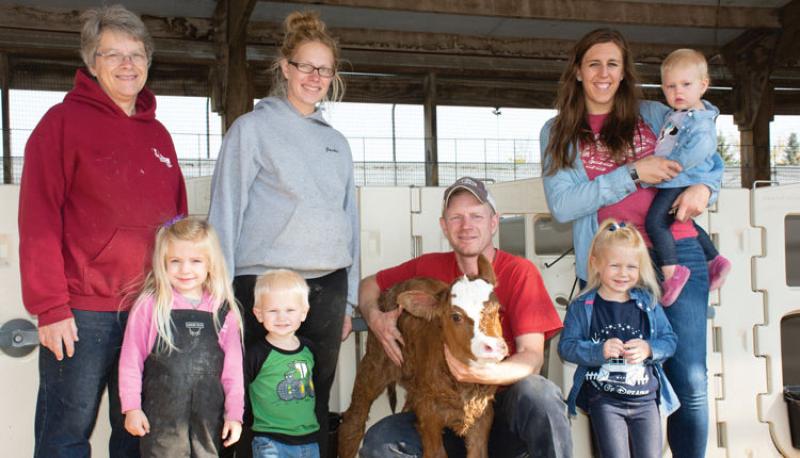
When Jacki Moegenburg was a junior at the University of Wisconsin-River Falls, she worked with one of her professors to put together a business plan for an agritourism venture on her family's dairy farm in West Bend, Wis. After graduating in December of 2013, she started to build the business using money she had saved, support from her family, and a passion to educate. The following year she hosted tour groups and held her first two weeks of "Farm Camp" in the summer of 2014. Today, Moegenburg works part-time on the dairy and manages Roden Barnyard Adventures, which consists of farm camps, farm tours, birthday parties on the farm, and winter sleigh rides.
Roden Echo Valley LLC participated in our Round Table article, titled "They added agritourism to their business model," along with three other farms from Indiana, Iowa, and New York. The full article can be found in the December 2020 issue of Hoard's Dairyman starting on page 706.
In addition to creating a business plan, the Rodens visited other dairies with agritourism businesses to get ideas prior to starting Roden Barnyard Adventures. The three other farms also took tours, attended workshops, and did the homework necessary to grow their agritourism ventures. Read their responses below.
What research or training did you do before starting your agritourism business?
Hansen Dairy, Hudson, Iowa: We officially began our business in 2005 and did a lot of learning on the fly. We took advantage of any workshops or trainings that we could, like through Iowa State University Extension.
We were designated as a "Silos and Smokestacks National Heritage Area" site early on. That organization is based in Waterloo, Iowa, and encompasses more than 100 tourist attractions in northeast Iowa that have a story to tell about agriculture. They helped us with planning, best practices, networking, and advertising.
Kuehnert Dairy Farm, Fort Wayne, Ind.: We started planning and researching the idea of agritourism on our farm in 2010. We officially began the Kuehnert Dairy Fall Festival in the fall of 2013.
We consulted and interviewed other working farms that had successful agritourism venues. Specifically, we have worked very closely with Kelsay Farms of Whiteland just outside of Indianapolis and Knollbrook Farms of Goshen. We chose these farms as our backbone in planning our agritourism because they are also working dairy farms that have had very successful agritourism venues for the past five to 10 years.
We still visit other farms across the U.S. that have agritourism events on their farms for additional ideas and brainstorming. We recommend contacting your local zoning and health departments early on in the planning process.
North Harbor Dairy, Sackets Harbor, N.Y.: Nancy founded Old McDonald's Farm in 1986. Agritourism was a pretty new concept then, so it was really just a wing and a prayer! The business didn't become financially successful for about 15 years, which, for most businesses, would not be feasible. But Nancy had the support of the farm and her husband to see it through. Now, we welcome over 30,000 visitors to Old McDonald's Farm each year.

Tags
Who is online
70 visitors
Maybe this approach would be a way to reintroduce agriculture into metropolitan areas?
No offense, but I’d rather take a bullet than tour a farm.
Ha!!
It might be kind of fun once...maybe?
Oh, and the success of this one...
North Harbor Dairy, Sackets Harbor, N.Y.: Nancy founded Old McDonald's Farm in 1986. Agritourism was a pretty new concept then, so it was really just a wing and a prayer! The business didn't become financially successful for about 15 years, which, for most businesses, would not be feasible. But Nancy had the support of the farm and her husband to see it through. Now, we welcome over 30,000 visitors to Old McDonald's Farm each year.
...must be due to the name. Who wouldn't want to see Old McDonald's Farm at least once?
My subdivision and all the surrounding ones were built on farm fields. Normally you’d never know, but when the weather is just right a stench of manure seeps out of the ground and makes me gag. That’s as close to a farm as I want to get.
Well, there are touristy farms, and then there are farms not meant for tourists to see. Our local dairy has cattle standing around in the mud, and since it's pretty much at the edge of town, on some days, the whole town can smell what comes out of a cow other than milk. I can't imagine touring it if a paycheck weren't involved, and I'm a country girl.
I have a very sensitive nose. The last time I was in Charleston SC I could barely walk down some streets - the ones where the horse carriages park and wait for patrons. No way in hell I could sit behind a stanky horse’s ass for a carriage ride.
Horse manure doesn't bother me much. Neither does cow manure, when it's out in a field and spread out a bit. But in a barnyard where it piles up and mixes with mud and never dries out - blech.