
Good Vaccine News

By: David Leonhardt (The New York Times)


So begins the rewriting of history. People will defend the revisionist reporting by stating, in indignant tones, 'the science has not changed'. And they would be correct, the science has not changed. But the science is so broad, nebulous, and uncertain that selected tidbits of science can support just about any claim.
What changes is the reporting on the science. The press has spent the past year provoking anxiety, fear, and panic with selected tidbits of science. Yes, the tidbits of science were correct. They were also carefully selected tidbits and not the complete story provided by science. We haven't been following the evidence or following the science. We've been following bits and pieces of evidence and science that allows us to believe what others want us to believe.
The good vaccine news today is the same news as when the vaccines were first being developed one year ago. The science has not changed. Only the reporting on the science is changing. We've had this good news all along, we just weren't aware of it.
 S E E D E D C O N T E N T
The news about the vaccines continues to be excellent — and the public discussion of it continues to be more negative than the facts warrant.
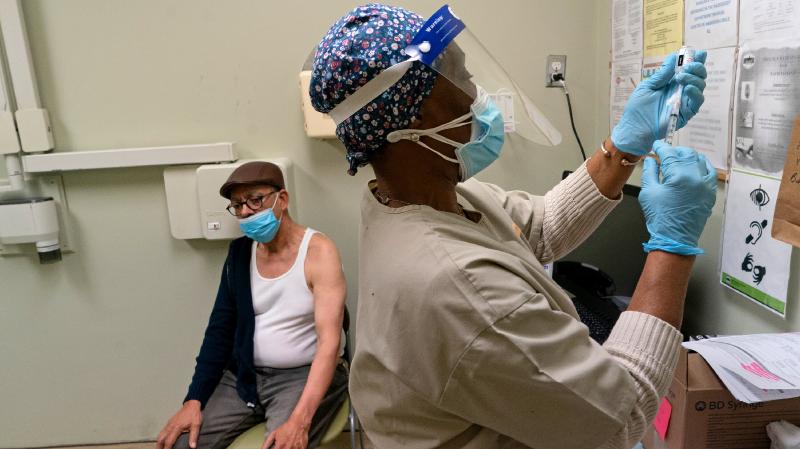
Here's the key fact: All five vaccines with public results have eliminated Covid-19 deaths. They have also drastically reduced hospitalizations. "They're all good trial results," Caitlin Rivers, an epidemiologist at Johns Hopkins University, told me. "It's great news."
Many people are instead focusing on relatively minor differences among the vaccine results and wrongly assuming that those differences mean that some vaccines won't prevent serious illnesses. It's still too early to be sure, because a few of the vaccine makers have released only a small amount of data. But the available data is very encouraging — including about the vaccines' effect on the virus's variants.
"The vaccines are poised to deliver what people so desperately want: an end, however protracted, to this pandemic," as Julia Marcus of Harvard Medical School recently wrote in The Atlantic.
Why is the public understanding more negative than it should be? Much of the confusion revolves around the meaning of the word "effective."
What do we care about?
In the official language of research science, a vaccine is typically considered effective only if it prevents people from coming down with any degree of illness. With a disease that's always or usually horrible, like ebola or rabies, that definition is also the most meaningful one.
But it's not the most meaningful definition for most coronavirus infections.
Whether you realize it or not, you have almost certainly had a coronavirus. Coronaviruses have been circulating for decades if not centuries, and they're often mild. The common cold can be a coronavirus. The world isn't going to eliminate coronaviruses — or this particular one, known as SARS-CoV-2 — anytime soon.
Yet we don't need to eliminate it for life to return to normal. We instead need to downgrade it from a deadly pandemic to a normal virus. Once that happens, adults can go back to work, and children back to school. Grandparents can nuzzle their grandchildren, and you can meet your friends at a restaurant.
As Dr. Ashish Jha, the dean of the Brown University School of Public Health, told me this weekend: "I don't actually care about infections. I care about hospitalizations and deaths and long-term complications."
The data
By those measures, all five of the vaccines — from Pfizer, Moderna, AstraZeneca, Novavax and Johnson & Johnson — look extremely good. Of the roughly 75,000 people who have received one of the five in a research trial, not a single person has died from Covid, and only a few people appear to have been hospitalized. None have remained hospitalized 28 days after receiving a shot.
To put that in perspective, it helps to think about what Covid has done so far to a representative group of 75,000 American adults: It has killed roughly 150 of them and sent several hundred more to the hospital. The vaccines reduce those numbers to zero and nearly zero, based on the research trials.
Zero isn't even the most relevant benchmark. A typical U.S. flu season kills between five and 15 out of every 75,000 adults and hospitalizes more than 100 of them.
I assume you would agree that any vaccine that transforms Covid into something much milder than a typical flu deserves to be called effective. But that is not the scientific definition. When you read that the Johnson & Johnson vaccine was 66 percent effective or that the Novavax vaccine was 89 percent effective, those numbers are referring to the prevention of all illness. They count mild symptoms as a failure.
"In terms of the severe outcomes, which is what we really care about, the news is fantastic," Dr. Aaron Richterman, an infectious-disease specialist at the University of Pennsylvania, said.
The variants
What about the highly contagious new virus variants that have emerged in Britain, Brazil and South Africa? The South African variant does appear to make the vaccines less effective at eliminating infections.
Fortunately, there is no evidence yet that it increases deaths among vaccinated people. Two of the five vaccines — from Johnson & Johnson and Novavax — have reported some results from South Africa, and none of the people there who received a vaccine died of Covid. "People are still not getting serious illness. They're still not dying," Dr. Rebecca Wurtz of the University of Minnesota School of Public Health told me.
The most likely reason, epidemiologists say, is that the vaccines still provide considerable protection against the variant, albeit not quite as much as against the original version. Some protection appears to be enough to turn this coronavirus into a fairly normal disease in the vast majority of cases.
"This variant is clearly making it a little tougher to get the most vigorous response that you would want to have," Dr. Francis Collins, director of the National Institutes of Health, said. "But still, for severe disease, it's looking really good."
What would an expert do?
The biggest caveat is the possibility that future data will be less heartening. Johnson & Johnson and Novavax, for example, have issued press releases about their data, but no independent group has yet released an analysis. It will also be important to see much more data about how the vaccines interact with the variants.
But don't confuse uncertainty with bad news. The available vaccine evidence is nearly as positive as it could conceivably be. And our overly negative interpretation of it is causing real problems.
Some people worry that schools cannot reopen even after teachers are vaccinated. Others are left with the mistaken impression that only the two vaccines with the highest official effectiveness rates — from Moderna and Pfizer — are worth getting.
In truth, so long as the data holds up, any of the five vaccines can save your life.
Last week, Dr. William Schaffner of Vanderbilt University told my colleague Denise Grady about a conversation he had with other experts. During it, they imagined that a close relative had to choose between getting the Johnson & Johnson vaccine now or waiting three weeks to get the Moderna or Pfizer vaccine. "All of us said, 'Get the one tomorrow,'" Schaffner said. "The virus is bad. You're risking three more weeks of exposure as opposed to getting protection tomorrow."

Tags
Who is online

65 visitors
Believe whatever you want to believe.
The science hasn't changed from the beginning of the pandemic. The year of anxiety, fear, and panic wasn't really warranted. Caution, yes. Panic, no.
The press has played us all for suckers just to make a buck.
Did we have a single vaccine a year ago?
No, we didn't.
A year ago, we couldn't even buy masks for hospital personnel in adequate numbers. A year ago (or a little less), nurses were wearing garbage bags as PPE.
So, now we have 2 vaccines, and more soon to come. That doesn't negate the number of deaths we've had over the past year, and are continuing to have right now. The situation right now is not nearly what it has been over the past year.
Fear and anxiety serve a purpose - to help us recognize unsafe situations and avoid them.
Actually we did have vaccines a year ago. What we didn't have were tests, trials, and data that demonstrated safety and efficacy of the vaccines. Those tests and trials to collect data were absolutely necessary; that part of deploying the vaccines could not have been skipped. The effort over the past year has not been to develop a vaccine but to determine if the vaccines were safe and effective as quickly as possible.
The good news was that we had vaccines that could be tested and those tests began almost a year ago. The science of vaccination hasn't changed one iota over the last year. The science reported in the seeded article could have been reported a year ago and would have been correct.
Which actually says more about how medicine was being practiced.
Fear and anxiety also sell newspapers.
So the current situation still is much different from what it's been over the past year, then, yes?
Acting like we could have planned in March 2020 as we might be able to safely behave in March 2021 (or a few months later) is silly. It's being obtuse, either willfully or otherwise. Acting like their was nothing to fear for the past year ignores the millions of deaths the virus has caused worldwide.
Why don't you tell us what you'd have done? Close hospitals? Work without PPE?
The conditions have changed but the science has not changed at all.
The science behind responding to a pandemic doesn't depend upon a specific virus or bacteria. That's why the guidelines for this pandemic are the same as the guidelines for the Spanish Flu pandemic in 1918. Same science. And the science is as appropriate today as it was 100 years ago.
Are you more or less concerned about smallpox since there's a vaccine for it, Nerm? If there were no vaccine, and we were currently in a smallpox pandemic or epidemic, would you be anxious about catching smallpox? Afraid your kids might catch it? Or would you assume that in a year, there would be a vaccine, and that that vaccine still a year in the making would protect you and your family right now?
Would it be silly to not worry, because you're relying on the protection of something not currently available? Just go about your day, right?
I have advocated all along to follow the guidelines and not be distracted by the razzle-dazzle reporting by the press. I have affirmed that the science behind the guidelines is sound and should be followed.
I have pointed out that masks, by themselves, accomplish little and that the fundamental science for pandemic response requires following all the steps in the guidelines. I have been following the recommendations of science; not the distractions promoted by the press.
I have been pointing out how the press has been bamboozling the public to make a buck. I have been pointing out that government advisors have deliberately spread confusion, misdirection, and distraction.
Believe whatever you want to believe. The guidelines were distributed to households last March. The science behind those guidelines hasn't changed one bit. The guidelines are scientifically valid and scientifically correct. Following the science means following the guidelines. Period.
Then you haven't
If you tell people that wearing a mask will protect them and control spread of the virus, then you are not following the science. Period.
If people want to protect themselves then follow all the guidelines. Only following one step in the guidelines provides little if any protection. Wearing a mask is less important than social distancing. The purpose of a mask is to enhance the protective benefit of social distancing.
All the razzle-dazzle about masks has distracted us and we've taken our eye off the ball. IMO, the press reporting on masks has killed far more people than it has saved.
Straw man. Nobody every said to rely totally on masks.
C'mon man.
If worn correctly, masks can cover what needs be...
Is that a codicil for expert advice?
Back atcha. The importance of social distancing has been stressed from the beginning. We literally shut down businesses, government offices, and schools to promote...
Wait for it...
Social distancing.
What 'science' told you that properly worn masks do not arrest particles and help to prevent spread?
So why have we been arguing about masks? Why have we been bantering scientific razzle-dazzle about masks?
Wearing masks hasn't eliminated the need to shut down businesses, government offices, and schools. So, what's the importance of wearing masks? As you indicated, the importance of masks is to enhance the protective benefit of social distancing. That's what the science has said all along.
There isn't any science that has indicates masks do not arrest particles and help prevent spread. But that is a distraction that uses razzle-dazzle about masks to create controversy.
The scientific recommendation is to follow all the guidelines and masks are only one component of the guidelines. The science isn't telling us to wear masks. The science is telling us to wear masks AND social distance AND avoid crowds AND wash hands AND sanitize surfaces. The science is telling us that skipping any one of those components of the guidelines will allow the virus to spread and increase risk of infection.
You realize that guidelines call for both social distancing AND masks when in public, yes? You know, those times when social distancing can't be maintained, while society still continues to function? You DO know that most people can't stay in their houses for a whole year without going into public, right, Nerm? They have to buy food, medicine, clothing, etc. They have to go to the doctor sometimes, and be examined by a healthcare provider who can't do his or her job from 6 feet away. They have to perhaps buy cars, and they need to maintain those cars, so they can go buy food and medicine, and go to the doctor.
All of that requires that they leave their homes on occasion. And when they are outside of their homes and around other people, masks provide some barrier to spread of the virus.
You get that, right?
The problem isn't masks. All along the problem has been stupid, selfish people who refuse to wear them, or people who wear them improperly. Not to mention refusing to follow social distancing guidelines and engage in more frequent hand washing.
Hell, I still see men walking out of public bathrooms without washing their hands (unmasked, of course). If they won't even do that, do you think they give a damn about the virus?
That's why we've done so poorly at slowing or stopping the spread. It seems a rather large number of people just suck.
Yes, and that's exactly what I've been hearing for the better part of a year... on regular, everyday, "mainstream" media.
So what the hell are you complaining about?
That's correct, the problem isn't masks. I encounter a lot of people who will not keep their distance because I am wearing a mask and they are wearing a mask. Masks don't eliminate the need to maintain distance. Yes, waiting for me to select an item off the shelf and move on is annoying and inconvenient. I have to wait for people to move on, too.
The message (as has been pointed out elsewhere) is that if you cannot social distance then wear a mask. Somehow that message has become if we are both wearing masks then its okay to not social distance.
IMO, we've done so poorly because people have no patience. People want what they want when they want it. Waiting for anything is too annoying and inconvenient. Waiting is a waste of time. We've been mislead by YOLO thinking when the reality of the pandemic is YODO; You Only Die Once.
Not so. The message has been that it's safer than if neither are wearing masks.
Think of it like safer sex. Condoms prevent most STD's and pregnancies, but not all. Admitting as much is in no way advising people that they shouldn't bother with condoms at all - that their only choices are abstinence or unprotected sex.
You're misinterpreting the message to support your unreasonable prejudice against science.
Okay, I didn't state it clearly enough. The message is being perceived as if we are both wearing masks it's okay to not social distance.
The guidelines haven't changed. But, IMO, news reporting highlighting controversial tidbits has influenced public perception of the guidelines.
You're blaming the messengers for how their message has been misinterpreted by their audience, yourself included.
I am blaming messengers who intentionally create controversy to serve some agenda other than following the certain science.
C'mon man.
Oh?
And who would those messengers be, Nerm?
Who's telling you that social distancing isn't important, and that what we really need to worry about are masks?
That is a magnificently stupid claim. It claims, unless you are redefining the phrase 'the science', that science has not advanced its understanding of coronavirus and its effects on human beings across the world.
The science of vaccination has not changed one iota. The science of controlling spread of infectious disease has not changed one iota. It really didn't matter what virus was spreading at a pandemic rate; the science of controlling spread has not changed at all.
The vaccines being deployed now were developed a year ago. That past year has involved collecting the necessary test and trial data to demonstrate safety and efficacy.
The seeded article could have been written a year ago and would have been correct. Because the science of vaccination has not changed one iota.
The claim that we have not learned anything in 2020 about the pandemic is too ridiculous to warrant any further commentary.
The correct phrase is 'the science of vaccination' has not changed. Since the science of vaccination has not changed one iota, the seeded article could have been written a year ago and would have been correct.
We've learned a lot about the SARS-Cov-2 virus. But what we have learned about that specific virus has not changed the fundamental science for responding to a pandemic. Or the fundamental science for vaccination.
The press has been reporting tidbits of information concerning the SARS-Cov-2 virus. And the reporting on those tidbits has provoked anxiety, fear, and panic. That reporting has also sold a lot of newspapers. But the fundamental science for responding to a pandemic and the fundamental science for vaccination hasn't changed at all.
Believe whatever you want to believe. But the fundamental science for pandemic response and vaccination hasn't changed at all. The good news is we had vaccines to test a year ago.
Then you are not making any real point at all. If you are going to qualify with 'fundamental' and implicitly define that word to mean 'mostly the same processes and underlying biology' then you have watered down your point to nothing.
To be super clear, the science required to deal with pandemics is based on biology which is based on chemistry which is based on physics. Anything we do with regards to coronavirus will, by that comparison, be 'fundamentally the same science' since the foundation on which it is based is vast and deep. Biology and its foundations has not changed so the fundamental science has not changed. This is a pointless wishy-washy games of semantics.
Bottom line, you are claiming that 2020 was largely non-productive in terms of what we learned about coronavirus and its treatment. How can anyone make such a ridiculous claim and not be embarrassed?
What have we learned?
Google is your friend. Here is one of many articles:
Yes, we've learned a lot about the SARS-Cov-2 virus, as I stated. But what we've learned about the SARS-Cov-2 virus hasn't changed the science for responding to a pandemic or the science for vaccination.
The razzle-dazzle specific to the virus has distracted us from the scientific basis for pandemic response and vaccination. That razzle-dazzle has sold a lot of newspapers. That razzle-dazzle has been used politically. But there hasn't been any groundbreaking discoveries that changes how to respond to a pandemic or how to use vaccines to control/end a pandemic.
The biggest breakthrough, IMO, has been that mRNA techniques allow rapid development of a vaccine. That technique is not specific to SARS-Cov-2 and could be a game changer going forward.
But we really haven't learned anything new about how to respond to a pandemic. The science behind pandemic response is sound; nothing has invalidated the guidelines for controlling spread of infectious disease. The reported razzle-dazzle has introduced confusion and distraction so that we have taken our eye off the ball.
We haven't learned anything new about the need for vaccines or what vaccines will accomplish. The scientific basis for herd immunity hasn't changed.
As I noted, your point is essentially nothing.
We have known about the need for vaccines and what they will accomplish for over a century. We have understood herd immunity for decades. That is not an argument that we have learned nothing new about coronavirus and its manifestation as a worldwide pandemic during the entire year of 2020.
Look, Nerm, if I followed your style of 'argument', I could claim that the fundamental science of quantum physics has not changed in a century. While that is arguably true depending on the meaning one imposes on 'fundamental', it misleadingly suggests that critical advancements in the field have not taken place ... and that is clearly wrong.
That is correct. And the scientific basis for what we know hasn't changed at all. The scientific basis for vaccination has been tested and validated over the last century (or longer). We know and understand the science of vaccination with certainty.
So why has the press focused attention on uncertain science? Uncertainty introduces controversy. We aren't guessing about vaccination; we know the benefits of vaccination and what vaccination will accomplish. There isn't anything controversial about the scientific basis for vaccination.
The seeded article could have been written a decade ago and would still have been correct. The scientific basis for pandemic response and vaccination is certain.
The seeded article is a beginning of the rewriting of history to gloss over how the press has influenced what we have experienced over the last year. The science hasn't changed one iota. Only the reporting has changed. The press is manipulating the presentation of science to make a buck.
You take basic facts and then amplify or diminish them to weave an irrational claim. You take the fact that, relative to all that is known as science, what we have learned about coronavirus is small and translate that into an absolute claim that we have not really learned anything. Then you take the fact that the media is driven to sensationalism and amplify that into anything they write is nothing but sensationalism.
Looks to me that you are working overtime to find new ways of getting things wrong.
Extreme inferences and extrapolations will cause you to get things wrong almost every time.
Where have I claimed that what we have learned about coronavirus is small? I am doing what the author of the seeded article is doing.
What I have said is that what we have learned about coronavirus has not altered the scientific basis for pandemic response and vaccination in any way.
Why doesn't the press focus attention on the science we know with certainty? Yes, we've learned a lot about SARS-Cov-2. Yes, there is a lot we still have to learn about SARS-Cov-2. But what we now know and don't know about SARS-Cov-2 hasn't changed the scientific basis for responding to a pandemic in any way. What we know, with certainty, about responding to a pandemic is not controversial.
The seeded article has shifted reporting onto the non-controversial scientific basis for vaccination. We've known what the seeded article is reporting before the SARS pandemic began. I am pointing out that shift in reporting. The press is beginning to rewrite the history of the press' role in how the pandemic has played out.
Which, as I have explained (and am now done explaining) is akin to saying that discovering the Higgs boson has not altered the scientific basis for quantum physics in any way.
Then they would not be able to cover anything. Anyone who equates science with certainty does not understand science.
Look, the author of the seeded article is saying that the scientific razzle-dazzle over vaccine efficacy has distracted us from what is being accomplished. We've been arguing over the razzle-dazzle and lost sight of the fact that the vaccines have prevented serious disease and death.
We've been suckered by the press. That's what the author is saying.
BTW, the discovery of the Higgs boson hasn't altered the scientific basis for quantum physics. The discovery supported a theoretical hypothesis; that's all. The discovery of the SARS-Cov-2 hasn't altered the scientific basis for pandemic response and vaccination, either.
Where? Quotes, please.
That was my point. It was a breakthrough discovery but it did not alter the scientific basis for quantum physics. Just like our 2020 progress on coronavirus and pandemics did not alter the scientific basis for understanding and dealing with infectious disease yet it was still substantial progress.
Why do I bother with you? I should not.
Crickets.
The fear mongering media output continues unabated...
Hey, I thought that the media was going to stop reporting all this once Biden became president, remember. Doesn't seem that way. I guess the MSM is doing what they do no matter who is president.