
Wildlife Farms In China Likely Source Of Pandemic, Say WHO Investigators

By: Michaeleen Doucleff (NPR. org)


The World Health Organization has agreed on a political conclusion that is acceptable to the Chinese government and is now using science to produce evidence that fits that political conclusion.
The scientific team sent to China is guessing. They don't know the source and they don't know if bats were even involved. But globalist politics demands that the Chinese government not be held responsible or accountable.
 S E E D E D C O N T E N T
A member of the World Health Organization investigative team says wildlife farms in southern China are the most likely source of the COVID-19 pandemic.
China shut down those wildlife farms in February 2020, says Peter Daszak, a disease ecologist with EcoHealth Alliance and a member of the WHO delegation that traveled to China this year. During that trip, Daszak says, the WHO team found new evidence that these wildlife farms were supplying vendors at the Huanan Seafood Wholesale Market in Wuhan with animals.
Daszak told NPR that the government response was a strong signal that the Chinese government thought those farms were the most probable pathway for a coronavirus in bats in southern China to reach humans in Wuhan.
Those wildlife farms, including ones in the Yunnan region, are part of a unique project that the Chinese government has been promoting for 20 years now.
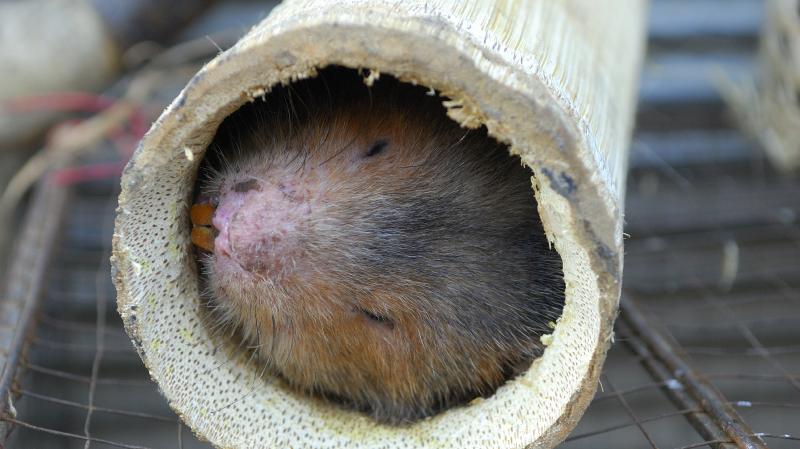
"They take exotic animals, like civets, porcupines, pangolins, raccoon dogs and bamboo rats, and they breed them in captivity," says Daszak.
The agency is expected to release the team's investigative findings in the next two weeks. In the meantime, Daszak gave NPR a highlight of what the team figured out.
"China promoted the farming of wildlife as a way to alleviate rural populations out of poverty," Daszak says. The farms helped the government meet ambitious goals of closing the rural-urban divide, as NPR reported last year.
"It was very successful," Daszak says. "In 2016, they had 14 million people employed in wildlife farms, and it was a $70 billion industry."
Then on Feb. 24, 2020, right when the outbreak in Wuhan was winding down, the Chinese government made a complete about-face about the farms.
"What China did then was very important," Daszak says. "They put out a declaration saying that they were going to stop the farming of wildlife for food."
The government shut down the farms. "They sent out instructions to the farmers about how to safely dispose of the animals — to bury, kill or burn them — in a way that didn't spread disease."
Why would the government do this? Because, Daszak thinks, these farms could be the spot of spillover, where the coronavirus jumped from a bat into another animal and then into people. "I do think that SARS-CoV-2 first got into people in South China. It's looking that way."
First off, many farms are located in or around a southern province, Yunnan, where virologists found a bat virus that's genetically 96% similar to SARS-CoV-2, the coronavirus that causes the disease COVID-19. Second, the farms breed animals that are known to carry coronaviruses, such as civet cats and pangolins.
Finally, during the WHO's mission to China, Daszak said the team found new evidence that these farms were supplying vendors at the Huanan Seafood Wholesale Market in Wuhan, where an early outbreak of COVID-19 occurred.
The market was shut down overnight on Dec. 31, 2019, after it was linked to cases of what was then described as a mysterious pneumonia-like illness.
"There was massive transmission going on at that market for sure," says Linfa Wang, a virologist who studies bat viruses at Duke-NUS Medical School in Singapore. He's also part of the WHO investigative team. Wang says that after the outbreak at the Huanan market, Chinese scientists went there and looked for the virus.
"In the live animal section, they had many positive samples," Wang says. "They even have two samples from which they could isolate live virus."
And so Daszak and others on the WHO team believe that the wildlife farms provided a perfect conduit between a coronavirus-infected bat in Yunnan (or neighboring Myanmar) and a Wuhan animal market.
"China closes that pathway down for a reason," Daszak says. "The reason was, back in February 2020, they believed this was the most likely pathway [for the coronavirus to spread to Wuhan]. And when the WHO report comes out ... we believe it's the most likely pathway too."
The next step, says Daszak, is to figure out specifically which animal carried the virus and at which of the many wildlife farms.

Tags
Who is online
84 visitors
China is a cheap source of pandemics, after all. That's a political win for the World Health Organization.
he World Health Organization has agreed on a political conclusion that is acceptable to the Chinese government and is now using science to produce evidence that fits that political conclusion.
Not a surprise whatsoever.
It's all an amazing coincidence the virus jumped from a bat that isn't native to Wuhan, on the doorstep of a shoddily run virus center in Wuhan that was studying viruses associated with those bats. Nothing to see here.
What is also not surprising is that the following statements:
DO NOT EXIST in the seeded article.
The market was shut down overnight on Dec. 31, 2019, after it was linked to cases of what was then described as a mysterious pneumonia-like illness.
So....why did the silence their medical experts who noticed that illness,and did nothing to contain it for far too long
But they do exist in the seeded article. The WHO has concluded that wildlife farms in southern China are the likely source of the virus. The WHO admits there isn't any direct evidence to support that conclusion. WHO is basing it's conclusion upon political actions taken by the Chinese government and not on scientific evidence.
The WHO has a vested political interest in announcing a conclusion. Otherwise the WHO loses creditability with political sources of funding. The WHO has drawn a conclusion that is acceptable to the Chinese government and also fulfills the WHO's political needs.
That is the meaning of hypothesis. The word likely is operative.
That is also the meaning of a political conclusion. In the absence of evidence, make an appeal based upon likely speculation.
Those sentences ARE NOT in the seeded article. Why do you claim they are when anyone can look and see that they aren't?
Neither are your sentences. But that's kinda the point of discussion, isn't it?
I haven't made any such claim. I'm not a professional journalist so I'm not expressing quotes that have been made up. And I am not Adam Schiff so I'm not claiming a parody is evidence.
I'm expressing a viewpoint. Isn't the News Talkers slogan to "Speak Your Mind"? That's in the banner at the top of the page, isn't it?
Show me where I claimed they are. Wow, you guys like to deflect with strawman arguments.
Allow me to directly quote you.
3.1.2 seeder Nerm_L replied to Ozzwald @ 3.1
But they do exist in the seeded article.
Wow, look up. I included your quote and a link to your quote.
Not when you are indicating certain quotes from your seeded article, when those quotes are not in that same seeded article.
Okay, you got me. That and $5 will get you a latte as long as you have $5.
But that doesn't change the fact that the World Health Organization arrived at a political conclusion acceptable to the Chinese government that isn't based upon direct scientific evidence.
You made a specious allegation in @3.1 that has as much evidentiary support as the WHO conclusion. Yes, I made an ill considered response to your specious allegation. That's my own stupidity. What's your excuse?
Well if you want to speculate that some high level operative (who is dealing in the political realm) in WHO drew a political conclusion then, as I noted @4, that is certainly possible.
But you want to make an allegation and for that you need some evidence. Got any?
From the seeded article:
"Daszak told NPR that the government response was a strong signal that the Chinese government thought those farms were the most probable pathway for a coronavirus in bats in southern China to reach humans in Wuhan."
The Chinese government has the resources and capability to trace the source of the virus. But that's not what the Chinese government did. The Chinese government pursued a political response for political purposes. As far as we know.
The World Health Organization has arrived at a conclusion that is politically acceptable to the Chinese government without any direct evidence to support that conclusion.
You are simply repeating your hypothesis without adding any new facts. Probable ... likely ... that language should connote hypothesis to you (if you understood science).
Bottom line, you have nothing here but speculation. And, as I noted, your speculation might be right, but don't try to make an argument that this is fact. It is not. You are simply speculating.
That is your opinion based on alternative facts
That is an allegation supported only by political bias. Perhaps the left needs to pay more attention to the Biden administration.
China has the resources and scientific capability to perform virology research on coronaviruses, sequence the genome of the SARS-Cov-2 virus, perform genetic testing to monitor spread of the virus, and develop a vaccine effective against the SARS-Cov-2 virus. China is a technically advanced country possessing scientific resources and scientific capability comparable to any other advanced country.
China has the resources and scientific capability to trace the source of the virus. Wildlife farms allow easy access to the animals since they are captive. The animals are also captive in markets. The wildlife farms also provide a ready supply of lab animals. The Chinese government promoted wildlife farming and it isn't unreasonable to expect that the Chinese government would support research on diseases related to the wildlife being farmed.
In the presence of these facts we are to suspend our disbelief and accept that the WHO is hypothesizing? No, the facts suggest that the WHO arrived at a political conclusion that is acceptable to the Chinese government. The WHO is playing politics and not performing science.
The facts do not show that the WHO has made a conclusive scientific finding; the facts continue to support that the WHO is engaged in a process of evaluation of hypothesis.
The facts you offer do not show that the WHO is engaged in a dishonest maneuver based upon a political deal. All that comes from your imagination.
So, as I noted in my first comment, your speculation (your imagined scenario) might turn out to be correct, but at this point you are just speculating (cynically).
What an ironic pair of sentences...
Remember this news item? The article was published 13 Aug 2020.
The WHO was still kicking the can on this issue while their inspection team was in Wuhan last January. And draft material released by the WHO certainly appears to be attempting to appease the Chinese government rather than formulate guidance based upon accepted science.
These two news reports provide evidence that shows China certainly possesses the scientific capability to trace the source of the SARS-Cov-2 virus and that the WHO does include political considerations in its deliberation.
Yes, the evidence is only circumstantial because neither the Chinese government or the WHO will publicly admit their political activities concerning the pandemic. But the circumstantial evidence certainly is not imaginary.
The 'evidence' is not even 'good' circumstantial. You offer facts that do not support your speculation.
How does this evidence your hypothesis that the WHO has made a political deal with China to help them deflect blame? The 'news item' has nothing to do with the WHO. So what is this 'draft material' released by the WHO that evidences their intent to appease through dishonesty?
Of course China has world-class scientists available to it. Not the question.
Of course the WHO factors in political considerations. But you are claiming that they are being dishonest. Well that might be the case, but I am not interested in wild speculation and facts that do not support your hypothesis.
Nerm, you are speculating well beyond the strength of the circumstantial evidence. Take a breath and just follow the facts. You might be right, but the facts to support your hypothesis are not yet available.
I have only claimed that the WHO arrived at a political conclusion that is acceptable to the Chinese government. The WHO is claiming a likelihood based upon political actions by the Chinese government.
That's not science, is it?
TiG, you are attempting to enhance, extend, and extrapolate my contention beyond what I stated. I haven't claimed WHO is trying to cover up anything or deflect blame.
The WHO is simply disseminating information provided by the Chinese government. The WHO provides a veneer of scientific authority for whatever the Chinese government is attempting to achieve politically. What I am pointing out is that the WHO is playing politics and not performing science.
The World Health Organization has become a political institution. The WHO did not utilize science to arrive at its conclusion. Disagreeing with the WHO's political conclusions is not denying science.
And I have repeatedly told you that while you might be correct, at this point you are simply speculating (cynically).
The WHO provides another example of science being politicized by scientists.
Keep in mind that cynicism and skepticism are critical aspects of the scientific process requiring peer review and replication. The demand for evidence is a cynical demand. In science, cynicism and skepticism are good things.
I am aware of your underlying intent. I knew from the start that this was yet another one of your attempts to present science as if it is all a result of politics.
Politics and corruption exists in any human endeavor; it is the nature of the beast. Science (the faithful application of the scientific method to acquire knowledge) is —at its core— apolitical and unbiased. The fact that there are external factors (e.g. businesses paying 'buyable' scientists for certain results) does not change the nature of science itself.
What is curious though is why you seek to discredit science.
Scientists politicizing science is what discredits science.
The scientific method is a powerful tool. So is a firearm. Both have become attractive tools for political activities because they are both powerful. But the scientific method cannot prevent misuse any more than a firearm can prevent misuse.
People carrying firearms can be called patriots. But, in reality, many are only misusing a powerful tool to pursue a political objective.
People using the scientific method can be called scientists. But, in reality, many are only misusing a powerful tool to pursue a political objective.
Are those defending firearms really defending the tool or are they defending their politics? Are those defending science really defending the tool or are they defending their politics?
As you have pointed out politics and corruption exists in any human endeavor. But the power of the tools used in any human endeavor attracts politics and corruption. Left unchecked, politics and corruption can overpower the intended purpose of the powerful tool and pervert the purpose of the tool.
Perhaps you should consider that I am presenting examples of scientists politicizing science. Perhaps you should consider that I have been warning that politics and corruption are creeping into science and a powerful tool is being misused to pursue political objectives. Perhaps you should consider applying a little more scientific cynicism and skepticism to what the media presents as science.
Examples of scientists politicizing science are appearing more often. That should be a warning because, as you have said, politics and corruption exists in any human endeavor.
Yeah, Nerm, when someone engages in a practice that goes against the principles of their discipline it discredits the discipline.
Yeah, Nerm, there are scientists who discredit the discipline. Human beings often do bad things.
And yeah Nerm, there are forces outside of science that abuse science for their own purposes.
All of this is known. This is how people operate. Science is not immune from the failings of human beings. You can take any discipline in existence and you will find corruption because ultimately people are involved and ultimately there will always be the bad apples in the bunch.
And then there are people who have an inexplicable desire to discredit science itself and will relentlessly argue (or imply) that the exceptions are the norm.
I think your quest has no redeeming qualities.
Your speculation could turn out to be true. But you are simply speculating. How surprising that your speculation presumes a band of scientists who will go against the scientific method and, essentially, falsify evidence.
[delete]
( I was quoting Nerm. )
Ah, my mistake. Looked like it was coming off of Sean.
Looks like it might as well have, LOL. See @4.2
The head of the WHO covered up a cholera epidemic. Scientists falsify evidence all the time. To imagine they are above politics and other human pressures and concerns is naivete of the highest order.
Yes there are scientists who falsify evidence; typically as part of a political/business initiative.
Do you ever read before you type? Read my opening (qualifying) sentence:
I start off by noting that these scientists might indeed be carrying out a political initiative. Do I need to break this down for you?
My point was that with no information, the seeder presumes an anti-science scenario. Locate the word 'presumes' in my comment @4 and read that sentence.
Chinese Scientists ! In China the CCP decides what they want the Scientists to do and say then they do it and say it or else. There will never be real proof where the virus came from because the CCP has controlled the evidence since day one. We'll never get to see what they don't want to be seen and what we are shown will support their narrative even if they have to create that evidence out of thin air.
A band of scientists who always seem to need further research because they are uncertain of prior results. There isn't any such thing as settled science.
As the seed points out, the WHO is presenting a conclusion without direct evidence. There isn't direct evidence of source or even if bats were involved. And the WHO is highlighting the need for research to produce evidence that supports their conclusion.
There's an old vaudeville joke that fits this circumstance. A guy is on his hands and knees searching for something under a street lamp. The guy says, "I dropped a dollar and I'm looking for it." People stop and begin helping him search. After many minutes someone asks if the guy's sure he dropped the dollar here. The guy says, "Oh no, I dropped it over there in the grass. But the light's better here."
Your comment simply repeats the cynicism of your editorial comments.
They formed a hypothesis based on evidence:
How do you miss evidence and where do you see 'conclusion'?
Seems to me that you are adding your own 'facts' to this story.
It is unfortunate that it first appeared in China, because of that we will likely never know it’s origins.
It is unfortunate that it first appeared in China, because of that we will likely never know it’s origins.
Ya think!
I know.
I know because the Russians, South Africans, Iranian scientists are all so much more forthcoming and transparent, lol.
If China's rural areas are that impoverished why don't they raise real farm animals like pigs, cows, and chickens? Makes no sense to raise wildlife for food
I think it's for zoo animals which would be far more profitable than livestock. Or maybe these are some of the animals they make their "Home Remedies" out of so they're really profitable. How much is a gram of Pangolin Powder worth ?
I dunno. I think it's disgusting to use wild animals like these as a food source.
That doesn't mean I disagree with hunting deer, rabbits, ducks, etc
They use Pangolin Powder as a medicine just like they use Rhino horn. I guess raising them on farms is better that hunting them to extinction in the wild.