
The public-private myth: Religion can't be kept behind closed doors

By: Jonny Thomson (Big Think)
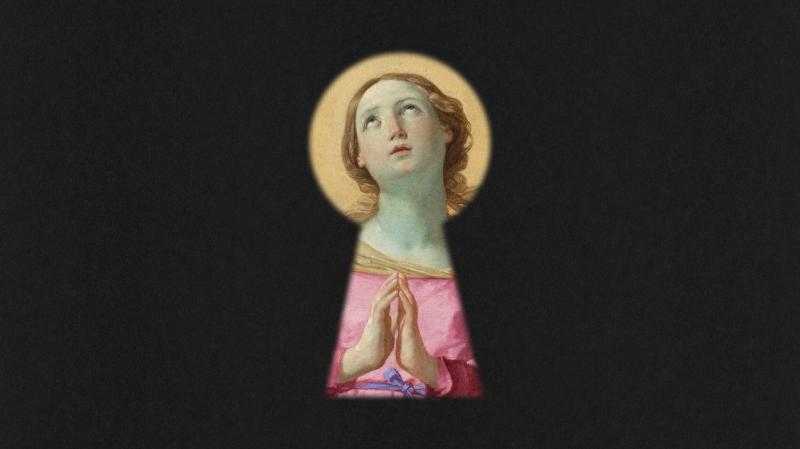


Look at the stars and ponder.
 S E E D E D C O N T E N T
Few people have heard of Sir Edward Coke, but most people reading this live under his rule. Coke served as the Attorney General of England in the early 17th century, which meant he would recommend laws to the Crown to implement. And in 1604, he gave us one of the bedrocks of the Common Law, used all around the world: "An Englishman's home is his castle."
Of course, today we might say an American's, a Canadian's, or an Australian's, but Coke's legal point was that what you did within your home, so long as it was within the law, was your business. The police cannot enter your home unwarranted. The sheriffs cannot bash your door down without good reason. What you did in private was up to you.
The distinction between the private and public spheres extends far beyond Coke's corner of jurisprudence. There exists a long philosophical tradition that divides what we do, say, and believe in public, and what happens behind closed doors. How you eat, talk, or have sex are matters for the home. How you raise your kids or spend your free time are private things. But one of the most prominent topics philosophers have often hoped to banish to the parlor room was religion. Philosophize in public, worship in private. Rationality in the marketplace, faith and emotion at home.
In this week's Mini Philosophy interview, philosopher Simon Critchley, author of On Mysticism, argues this needs to change.
The German divide
The idea that you can believe what you like at home but must reason like everyone else in public owes much of its popularity to Martin Luther and Immanuel Kant. Both wrestled with a similar anxiety: What happens when private religious feelings spill out into the street? Luther, who opened the doors to the Reformation and made the Bible readable by the masses, quickly became nervous when people began reading it too freely. The radical fringes — peasants, Anabaptists, visionaries — started claiming divine authority for political revolt. Luther recoiled, siding with princes and writing that rebellious peasants should be "struck down like rabid dogs."
Kant inherited this wariness and tried to offer a compromise for Protestantism. "What Kant gives us," Critchley says, "is this modern idea of religious experience as authorized privately, but as not being sanctioned publicly." In his 1784 essay What is Enlightenment?, Kant argues that "public reason" must be disciplined and rational, while "private reason" can hold whatever faith it likes — so long as it stays in its lane. As Critchley puts it, "Privately, you can believe whatever you like, but you have to respect that distinction between the public and the private."
It's a tidy solution: Religion can flourish quietly in the home but mustn't interrupt public life. The Enlightenment, in this view, is defined by sober rationality that keeps emotion and mysticism at arm's length. For Critchley, though, this isn't reason — it's repression. It's probably not even possible.
The Jamesian clawback
William James was a psychologist and philosopher, and he was brilliant at both. He was also one of the first thinkers to point out that we cannot neatly compartmentalize bits of our mind. We can't say, "I'll think like this in the morning and like this in the afternoon." You do not hang up your beliefs when you put on your work clothes. As Critchley tells me, it's an odd notion that "you can be a Buddhist or a Catholic or whatever, but that mustn't interfere in your life as a citizen."
James' pragmatism, which is a kind of fusion of his psychology and philosophy, makes room for the fact that how we think and what we believe affects us all the time. Even if we patronizingly sneer that faith is something soft, sentimental, or ultimately irrelevant, it cannot be brushed aside. It's an unignorable data point and a reality for most people.
According to both James and Critchley, feelings of transcendence, mystical visions, and sudden conversions cannot be easily dismissed as hallucinations or ephemera. They were events in people's lives. They mattered and need to be understood — not only as experiences in themselves but as radically transformative moments in many people's lives.
In his Varieties of Religious Experience, James gave an account of mysticism that was radical for his time (and perhaps still is). "He just tries to understand what's going on," Critchley says. "Things which he hasn't experienced himself, but he thinks are important, and so he tries to describe as best he can with understanding and empathy."
A poorer discipline
For a long time, mysticism has been painted as the embarrassing cousin at the philosophical dinner table. Critchley often refers to this as a form of "secular elitism," and it's seen especially in academia. In his experience, there is a "ferocious secularism in philosophy departments and a deep suspicion of people who avowed some religious faith. Even if some of them did quietly avow such faith, it was not seen as being acceptable."
Critchley wants to push back against that narrative. What we call mysticism was never meant to be cordoned off from the rest of life. It began in monasteries and convents and was woven into daily rituals, including prayer, silence, fasting, and writing. It makes no sense to talk about a "religious life" and a "public life" — there is just life, with its blurry borders and messy delineations.
The problem isn't just practical but also philosophical. Because, for Critchley, the modern split between reason and religion — between what counts as public knowledge and private feeling — has shrunk what we think philosophy can be. Philosophy is poorer for the divide.
"The secular mindset has narrowed what's accepted as something that you can talk about in civilized circles," Critchley says. "And I think that needs to be smashed apart and broken down."
Mysticism isn't an awkward non-philosophy. It's a way of thinking, feeling, and being. And when we dismiss it to behind closed doors or condescendingly laugh it off, we are also mocking and locking away a great many people who believe in it.

Tags
Who is online


222 visitors
Are we only allowed transcendent experiences in the privacy of our homes? Or do we simply need a new drug?
What is your point for posting this article? Give us some background on why you find it interesting (if that is the case), please.
The article focuses attention on elements of mysticism in one's identity and daily life. Essentially the argument is that people do have a conscious or subconscious mystical part of themselves that they cannot simply turn off. To be true to oneself it is necessary to acknowledge their own mysticism. Mysticism is typically considered as achieving a transcendental relationship with a conceptualized deity.
But the reality today is an increasing shift toward SBNR (spiritual but not religious) beliefs. As SBNR beliefs spread, there will be a tendency for those disparate beliefs to coalesce into a common belief. IMO the growing SBNR beliefs are beginning to include facets of paganism. SBNR beliefs are beginning to include an animism that is more nuanced than established pagan religions. Past pagan religions anthropomorphized nature and sought a transcendent relationship with nature. Today's SBNR is just as likely to appropriate and apply characteristics of nature onto humans; still with the goal of achieving a transcendent relationship with nature through a synergy.
Deity based religions are firmly rooted in causality with the religion's deity being the ultimate cause. The authority of deity based religion was challenged by seeking to understand causality in nature using reason. Today's growing SBNR beliefs seem to be looking for correlations rather than causality. Traits, behaviors, actions, etc. found in nature are correlated with human experience to create an animistic relationship with nature. These increasingly evident SBNR beliefs are establishing a similar metaphysical belief system comparable to mysticism.
The compelling circumstantial evidence for SBNR correlative mysticism is provided by expectations for a human/machine relationship with artificial intelligence and robotics. AI/robotics are expected to be self governed by a common ethics molded by SBNR beliefs. There really is a growing spiritual expectation that AI/robotics will serve as a benevolent superior entity that will overcome human ethical flaws. Even at this early stage of development, quasi-rituals of seeking the wisdom of an oracle are beginning to appear.
What is mystical about humans? Our lack of understanding what we (as yet) don't know. We compound the mythical with mystery when we can know more, but hesitate to participate in any aspect that will push us along a/the road to progress. We have an administration which is actively engaged in trying to RESET our nation to a backward standard that denies progress for many who need/will need it in the/their futures.
Another observation:
Do notice that deities are given (human) sex/gender designations. Even tend to be spoken of has having 'intimacy' and procreation with humanity (Bible too-Genesis), and they are given human emotions and feelings.
Even so we dumb ourselves down when some of our citizens support a 'push' of policies that govern us (and in other nations) horizontally and not vertically. That is, as people a nation might choose to move along a 'plane' rather than go (grow) upwards.
Talk about the 'hunt' for things transcendental, eh? The issue with 'human ethical flaw" can be hounded by AI's 'perfection' of governance—without emotional input. Humans are emotional, despite what some would like to belief and expect of themselves.
Don't humans hold mystical or spiritual beliefs to pursue a transcendental state?
Where does curiosity fall within the spectrum of human mysticism and/or spirituality? Humans could just exist within reality as it is which would obviate the need for mysticism or spirituality. But humans exhibit a compulsion to understand so humans can connect spiritual beliefs to reality. The importance of connecting spiritual beliefs to reality is an important aspect of human identity that cannot be set aside or left at home.
What does that have to do with anything in this discussion? Are you advocating that progress can only be achieved by destroying people's connection between spiritual beliefs and reality?
Yes, but the true issue with humanity is its lack of understanding of the surrounding world and universe. As discoveries lead to learning mysticism and mysteries recede, correspondingly.
As is evidenced by world religions and science, humanity has undertaken the arduous life-long and indefinite quest for knowledge and understanding of: The Unknowns which engulf us.
The problem with this is not all humanity is looking outside of themselves for mysticism or spirituality—though they do seek to solve the mysteries of this planet and its universe and beyond it.
We compound the mythical with mystery when we can know more, but hesitate to participate in any aspect that will push us along a/the road to progress. We have an administration which is actively engaged in trying to RESET our nation to a backward standard that denies progress for many who need/will need it in the/their futures.
What purpose does this understanding serve? What you are describing is an attempt to displace mysticism with learning. But it does not work that way because that is not the purpose of understanding.
The emerging SBNR movement is rejecting religion and science. People are turning away from understanding causality. People today are seeking to find interdependence, connections, and relationships with nature and reality. The age of reason is coming to an end.
People are increasingly searching for emotive synergies rather than objective causality.
I contend that all of humanity really is seeking a transcendental state through mystical or spiritual associations and correlations. Evidence suggest humans have been pursuing transcendence before written history. Mysticism and spirituality really does appear to have originated with our evolutionary predecessors. Modern humans did not invent mysticism or spirituality.
History shows that our learning and progress really never eliminates god. Humanity simply replaces its god.
You are attempting to narrow the discussion from the realm of humanity to the arena of our American society. What are you attempting to save in that society? A progress that has demonstrably failed? A mysticism and spirituality that serves your narrow purpose? How does your opposition to change within and by society differ from those you speak against?
Now it's my turn to write: I have no idea what (all) that is or why you pursue it in your comment. . . and the above quote is 'crafted' funkily. That is, it is hard to respond to that question as laid out.
Religion and mysticism are not confined to inside the home.
There are countless books, texts, videos and available online courses devoted to religion, and mysticism to a lesser degree.
Heck just visiting the Guttenberg Project or the Internet Archive will provide one with an endless amount of "public" information on the subject.
But they should be confined behind the tip of your nose in many cases. Discussing religion and mysticism in public is fine as long as it is with willing participants, but trying to force them on others should not be allowed.
I like to eat pork, crab and lobster, shave my beard, and wear mixed fabric clothing. I don't agree with slavery, pedophilia, women as 2nd class citizens, or that the Earth is flat and under a dome.
Give us an example of forcing one's religion on others.
Religious discrimination which minimizes and limits LGBTQ and non-religious people from working in education and other forms of employment.
That knife cuts both ways.
What religious discrimination 'cuts' mainstream religionists and from where is it coming? Please elaborate.
Gladly if it responds to my comments topic but first you need to “elaborate” by asking a question that isn’t gibberish.
Oh, you may not know what a "religionist" is. Okay, glad to help out. Here is a definition:
religionist
noun
One earnestly devoted or attached to a religion;
a religious zealot.
What religious discrimination 'cuts' (your word) minimizes and discriminates against religionists and from where is it coming? Please elaborate.
Still gibberish. “Cuts” what? Assemble a sentence that isn’t gibberish and we can talk.
You've seriously never had Mormons ringing your doorbell??????? Last time it happened I had a 150lbs Rottweiler and let him poke his head out. They didn't come back.
Okay. I call bull. Of course, you would start with the ad hominem attacks! I knew this would happen. Just had to 'let' it. Moving on.
I haven't. But then again, it's illegal for them to go door to door in my "neighborhood".
Banging on my front door every Saturday morning.
Bingo
Having people knock on your door isn't necessarily forcing their religion on you. Is it wasting your time? Perhaps, but so is any other type of door-to-door salesman, and that's all they are, peddlers of religion.
However, when they try and pass laws against the morning after pill or other restrictions on all women in their State regardless of religion based on one brand of faith that recognizes a fertilized egg as a "soul", then they're clearly "forcing one's religion on others".
When they try to pass laws to differentiate between a gay marriage and a hetero marriage because of their religious beliefs on gays, again they're "forcing one's religion on others".
We just have to face the facts, some Christians, largely those MAGAverse white rightwing conservative evangelical Christians with mountains of undeserved hubris, won't be happy until America is nothing but a Christian version of Iran.
Mine too. Hasn't stopped them, but it does seem to have slowed them down.
Thank god they didn't push things. That was a 150lb lap dog looking at them at the time.
No it is them TRYING to force their religion onto you.
Which is illegal in my area. The religious seem to always feel they have exceptions under the law.
Talking to the choir. Sing it!!!
Hallelujah brother!!!
Amen!!!!!!!
Get a "No Solicitation" sticker or plate for your front door (area).
Well now, . . . Allright! The Spirit has broken out on this thread! Somebody throw open the doors of this Church!
Did it years ago. Still get them though.
I tell the IGNORANT that violate the sign: RESPECT THE SIGN! (And close the door without listening to another word from them.) They don't come back for fear I will call them in next time, I'm guessing.
Normally I just look at them, then look at the sign, then look back at them, then reach over and wipe the sign with my finger, then look back at them again. By the time I've done this 3 times (more or less) they get the idea and leave.
Lately however I open the door and ask them which god. When they respond I just reply "wrong god, I don't talk about fake ones" and close the door on them.
The confused looks on their faces is worth the 30 seconds of annoyance they gave me.
The crusades
The witch trials
Shunning
Stoning
Throughout history there are many examples.
Here's a prime example of " forcing one's religion on others".
So, condoms are okay and are not being destroyed, but the other contraceptives which religious conservatives view as "abortifacients" are not only being denied to women in need, they're actually destroying millions of dollars of it. Sooooooooooo fucking stupid.
None of that exists in the modern world.
You mean you are fighting against certain things that happened long ago?
My advice is to enjoy life.
I don't want to be bothered by someone else's religion
I don't want to be bothered by someone else's sexuality, grievances, or snobbish elitism. But those have become mainstream attitudes that I'm not allowed to object to.
Then mind your own business and allow others that right. Mere tolerance of other's differences is not a personal imposition...
I'd love to mind my own business. But I'm not allowed to.
Emphatically.
Why are you not PERMITTED to mind your OWN business? Please elaborate on that and let us see if it has anything to do with us!
Have you looked at the advertising on this site? Have you watched any broadcast news lately?
The trite answer is I don't have to look, which is true. But that also means that I am forced to limit my participation if I want to mind my own business.
This site is not the 'minding of one's business' being mentioned. That mentioning is more along the lines of "live. . . and let live." Something some here refuse to allow Others to do apart from their judgement insistences of control over their lives.
Bullshit. Walk on.
You are expressing vague sentiments that are apparently intended to evoke some sort of transcendental attitude but actually says nothing.
Wouldn't minding my own business require having control over my own life? Having control over my own life would allow me to accept and reject attitudes, lifestyles, philosophies, beliefs, etc. Whatever I accept or reject is my business and no one else's. Live and let live requires a mutual minding of one's own business.
If you advocate a point of view on the public square then you are not minding your own business. Do I have a right to publicly object? Does my objection allow silencing your advocacy? (Isn't that what FFRF is about?)
When using acronyms it is proper to define them at least once in a discussion.
Freedom From Religion Foundation.
That, is superfluous. And, inaccurate. To "mind one's own business". . . does not equal non-participation. Basically, the phrase means one can talk about a thing; express opinions/judgements, and then leave it up to others to choose, 'listen,' accept or reject. Conservatives are acting on their opinions which have (dire) consequences which go beyond (out of their lane) other conservatives. That is, the acts of conservatives through legislative and governmental policies decrease liberty, prosperity, and freedom for (especially) liberals. And that is unacceptable.
If you offer a thought or support a view on social media it is a form of sharing. Nothing is subject to happen simply because of doing so. Most importantly, an exchange of ideas, thoughts, and experiences is the point of 'global' social media. (We can learn from each other: help each other understand odd, exotic, and material facts about others whereas before or in person they remain mysterious.)
Yes, you may Object!
Not sure what you mean by, "Does my objection allow silencing your advocacy."
I see you attempting to reconnect back to the topic, but not sure how the sentence above properly does that!
One example is the LBGTLKJHPOIHNOP{HPU(IOHJO{IN JPOIHJPO{IJOIJ community getting pissed if I ignore them and go about my day.
But you don't go about your day. . . you are all for throwing servicemembers that do not meet your ideology out of a 'job' and career! That is part of the problem. More for people like you and nothing for Others.
I do go about my day. I just have to tolerate the unhinged blathering and name calling.
I'm for them being removed from service for an inability to follow the regulations.
Regulations which conservatives put in place to harass and abuse servicemembers who do not fit your specific ideology (abuse or diminishment of Others). It is shameful. But, we know (by now) that MAGA supporters have given up on shame. If Democrats ever give up on shame. . . it will serve this country right. . . .
You misspelled "medical professionals".
Conservative "medical professionals" and psuedo-medical professionals —emphasis on conservative. For we have plenty examples of how dubious some conservatives can be when it comes to medicine and vaccine.
I'd agree with you but then we'd both be wrong.
Oh, before I forget....thanks for stepping up and proving the point I was making in 3.1.12.
Thank you for proving my point: That we must fight (like hell) for our freedoms, liberties, and privileges from 'warlike' MAGA supporters!
Funny that so many on the left agree with you.
Funny how the same people would define it a call for violence and insurrection if someone on the right said the same thing
No. Having to tolerate the unhinged blathering and name calling for ignoring the LBGTLKJHPOIHNOP{HPU(IOHJO{IN JPOIHJPO{IJOIJ community.
Yeah, I am being glib in quoting Trump. Sure, you knew this already. Moreover, distinctions matter. We fight against tyranny from the Right. The other side fights for selfish-interests and 'owning' Others.
The "community" does not care what hateful people think about us. I thought you knew. Thank you-for proving my point by the constant belligerence.
Your comments betray that statement.
Moving on. You may have the last 'word.'
When they say "I don't want to be bothered by someone else's sexuality, grievances, or snobbish elitism" what they are really saying is that they don't want to be complained to simply because they "refused to serve a gay person", "fired a gay person", "voted for a law to stop gays from being able to marry" or told a bunch of gay jokes and laughed in the break room at work not caring if they might make others uncomfortable around them. They don't want to be "bothered" with having to live in a society where they have to respect something they hate with a passion. It's like they were raised to despise redheads, so they refuse to live in a society where they're not allowed to punch redheads in the face. It also often stems from their own repressed sexual thoughts that their Church and parents and peers have beaten into them from childhood.
So perhaps we should try to have a little pity for these poorly educated sexually repressed religious bigots who don't want to be "bothered" to treat others with respect and dignity regardless of their race, religion, gender or sexual orientation. A very little pity, about the same pity and compassion they have shown towards the lgtbq community for the last century. Hopefully it won't take a few gay bashing bigots treated the same way Matthew Shepard was for them to get the point.
Your mind reading skills are failing you again. When I said I don't want to be bothered by it, I mean I don't want to be bothered. That simple. The only "hidden meaning" is in your head. But don't let that stop your fictional rants.
"I don't want to be bothered by someone else's sexuality, grievances, or snobbish elitism"
"They" are a much larger group than yourself, and "they" prove themselves by their long history of actions and words towards the lgtbq community. If you're not one of them, that's great, but "they" do exist and they speak and act and support Trump just like most of the other conservatives here.
I can always tell I hit the nail on the head when I get several "Nuh Uh!!"s in response. No explanation of how they are clearly not supporting that kind of discrimination against lgtbq or even pointing out that while many in the conservative religious communities do treats gays exactly as I pointed out, "they" personally support lgtbq rights.
So what.
Then take that up with "them".
Swing and a miss on this one.
To quote a fellow member here:
Bullshit, walk on.
I still don't want to be bothered by someone else's religion.
I agree but there is this pesky little thing called the First Amendment that protects it via the Establishment and Free Exercise clauses.
Which forces no “state” religion on anyone but protects free exercise of same.
Freedom FROM religion.
I am a believer, but I FULLY COMPREHEND that space in our society is being made for my beliefs and that of other MINORITY religions. The issue/problem materializes when ONE religion attempts to DOMINATE the spaces-in and out-of its scope. Having Jesus as my Lord, does not mean that minority religionists should defer to my beliefs in public policy. (I see an agenda playing out in this article on behalf of Christianity (Isn't it always Christianity that is the point in here?).
Worst, Judaism and Christianity, are being 'twinned' now more than ever as some kind of kindred "super" religion-singular for purposes by the Trump Administration. It is observable that other religions are left out of the formulation (never "mouthed" (supported) by this administration).