
What Are Figgy Pudding, Wassail and Other Foods in Christmas Songs?

By: Joseph Lamour (TODAY. com)


 S E E D E D C O N T E N T
Wassail might be "all over the town" this month, but what is it, exactly?
Every holiday season, carolers sing about drinking eggnog by the fire like Medieval people did, or indulging in a holiday punch or Christmas goose like any of a number of Victorian families, all of which many modern folk still enjoy.
However, some songs blaring over shopping mall speakers or the sound systems of holiday-themed bars make us wonder: What the heck is wassail? Why don't we still eat sugar plums and roasted chestnuts?
And, perhaps most importantly, what is figgy pudding and why does Bing Crosby want it so badly?
Figgy Pudding ('We Wish You a Merry Christmas')
Lyric: "Now, bring us some figgy pudding and bring it right here"
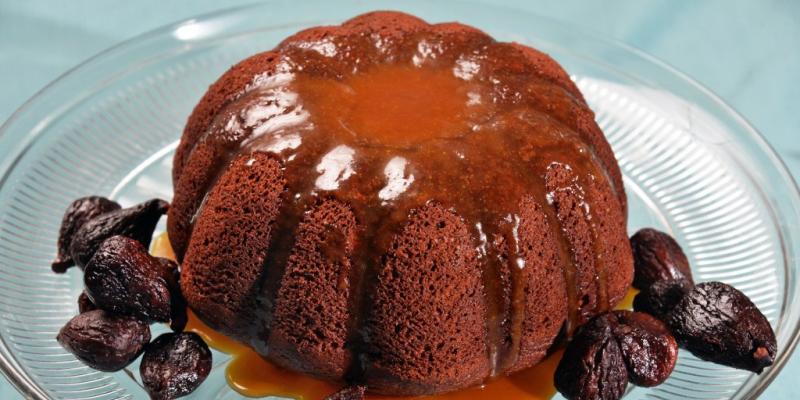
Merry modern revelers sing this song without knowing that "figgy pudding" historically did not contain figs, as it was a misinterpretation of a British holiday classic — plum pudding — which is not a pudding in the American sense, but a dense, boiled dessert.
A figgy pudding.Albany Times Union / Hearst Newspapers / Getty Images
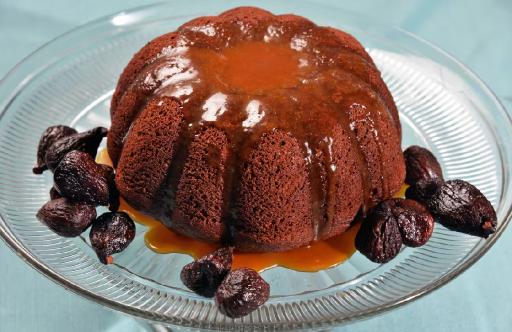
The dish that became figgy pudding was originally more on the savory side, with preserved, sweetened meat and boiled vegetables, but eventually included prunes. Also, the word "plum" eventually became a label for all dried fruits, confusing the issue further.
While stateside bakers don't traditionally prepare this complex treat for the holidays, save for brave souls like YouTubers Tyler Williams and Safiya Nygaard in 2022, it is still regularly sold in British stores.
A version of figgy pudding being sold at luxury department store Harrods features sultanas, raisins, demerara sugar, pitted plums, figs — unlike its historical predecessor — and a butterscotch sauce, for $24.
Sugar Plums (''Twas the Night Before Christmas')
Lyric: "While visions of sugar-plums danced in their heads"
Interestingly, the history of figgy pudding and sugar plums are related since they both use the word "plum" to refer to fruit or dessert.
Sugar plums. St. Louis Post-Dispatch / Tribune News Service / Getty
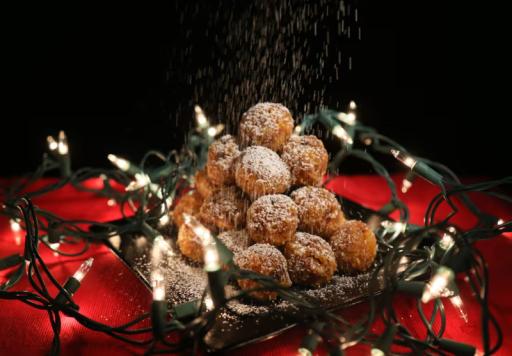
A sugar plum is a sugar-coated candy popular in Victorian times which often had a dried fruit like a cherry or fig or nut in the center. Not a plum at all, its name referred to its size and shape.
In 2024, YouTuber Max Miller of Tasting History made sugar plums the traditional way and discovered how time-consuming it is to roll a nut in layer after layer of warm sugar until it becomes candy-coated.
This might be why sugar plums live in the lyrics of this Christmas ditty and not actually in our modern tradition.
Cup of Cheer ('A Holly Jolly Christmas')
Lyric: "Have a cup of cheer"
While a cup that makes you cheerful these days may be a strong cocktail made by Sam Heughan, the term doesn't only mean adult beverages in vintage Christmas lyricism. A "cup of cheer" can also refer to hot cocoa.
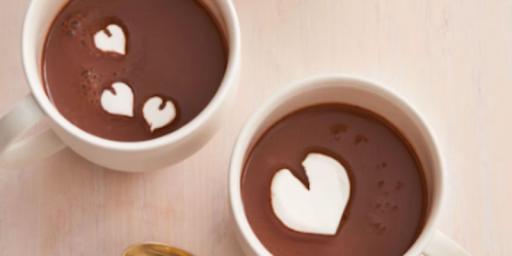
Get The Recipe
Martha Stewart's Favorite Hot Chocolate
Wassail ('Gloucestershire Wassail,' 'Here We Come A-Wassailing' and More)
Lyric: "Wassail! Wassail all over the town!"
The term wassail has an olde English history: The hot mulled punch, which often consists of cider, wine or ale with winter spices, comes from the words "waes hael" which means "be healthy."
Vintage photo of a Christmas wassail bowl and other Christmas treats.Getty
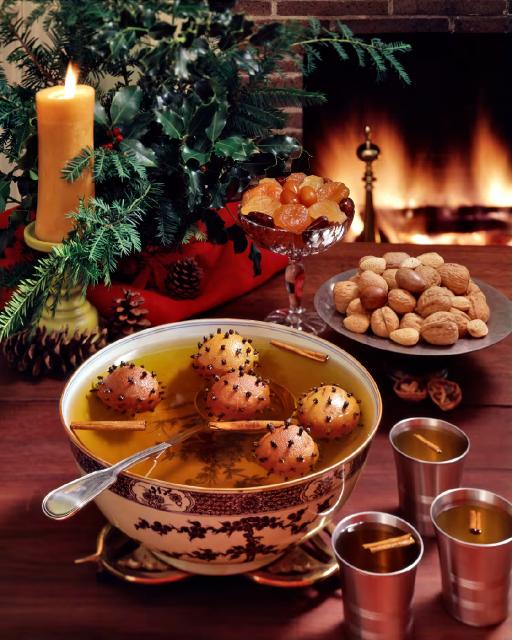
The term is also also a verb: Back in olden times, groups of revelers went door-to-door wassailing with a wassailing bowl, offering sips of drink from it for gifts at each home they visited. This tradition may seem familiar because it's actually where Christmas caroling comes from.
Roasted Chestnuts ('The Christmas Song')
Lyric: "Chestnuts roasting on an open fire"
The opener to Nat King Cole's classic rendition of "The Christmas Song" features a once-abundant treat enjoyed by early Americans during the holidays. In the 18th and 19th centuries, chestnuts were one of the most popular ingredients in early American food because of the preponderance of Chestnut trees speckling the East Coast at the time.
Roasted chestnuts. Ullstein Bild / Ullstein Bild / Getty Images
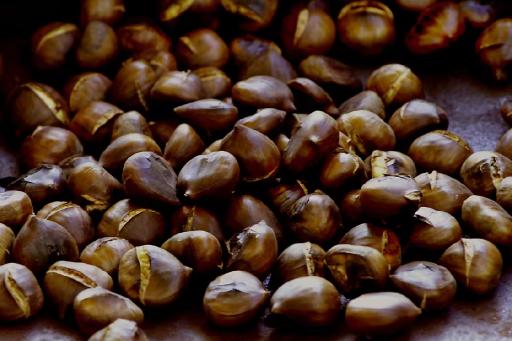
For this Christmas tradition, a roasted chestnut has a soft texture and some say it tastes mild and sweet with a fluffy or potato-like texture — though one social media user who isn't a fan claims they have a "mealy" texture.
Sadly, in 1904, a fungal disease tore through chestnut tree populations in the U.S., causing them to almost go extinct and fall out of favor as a traditional treat as a result, although countries like Turkey and Italy still feature the glossy brown nut during the holidays.
Joseph Lamour is the food reporter at TODAY.com and is based in Washington D.C.
Be a good human. Grossly derogatory comments, blatantly inflammatory comments, excessive trolling, mean-spirited taunting and insults, scamming, spamming, and off topic comments may be removed in compliance with the site's Terms of Service and the Code of Conduct. The moderators have the final word.

Some of these 'old' traditions are receiving renewed attention.
www.historytools.org /stories/how-the-victorians-reinvented-christmas
How the Victorians Reinvented Christmas - History Tools
by history tools 7-9 minutes
Introduction
Every year, as December rolls around, we engage in a beloved set of holiday rituals – decorating an evergreen tree, sending out stacks of greeting cards, gathering around the table for a turkey dinner. But while these traditions feel timeless, most of our modern Christmas customs have roots that are surprisingly recent. In fact, the Christmas we know today is largely a Victorian invention.
During the reign of Queen Victoria (1837-1901), British society underwent a dramatic transformation due to the Industrial Revolution. At the same time, Christmas began to evolve from a raucous, adult-centered holiday to one focused on domesticity, sentiment, and above all, children. Through a combination of royal influence, savvy marketing, and a desire to cultivate shared values in a rapidly changing world, the Victorians reinvented Christmas, creating the template for the holiday we still celebrate nearly two centuries later.
From 12 Days of Revelry to a Family-Centered Holiday
To understand how the Victorians reshaped Christmas, we first have to look at what the holiday was like before the 19th century. In medieval and early modern England, Christmas was a 12-day festival marked by feasting, drinking, games, and role reversals – a time when social norms were relaxed and the poor could demand food and money from the wealthy. The rowdy celebration of Christ‘s birth bore little resemblance to the Victorian vision of a proper, family-centered holiday.
In the 17th century, the Puritan government in England even went so far as to ban Christmas celebrations, considering them dangerously pagan and disorderly. Though the ban only lasted from 1647-1660, it disrupted many of the older Christmas traditions. By the early 19th century, "the observance of the season was in decline, with many of the traditions maintained in rural communities but tending to die out in towns and cities," writes historian Lucinda Hawksley in "Christmas: A Biography."
It was in this context that the Victorians essentially invented a new kind of Christmas, one heavily influenced by Germanic traditions and focused on the nuclear family. Queen Victoria‘s German-born husband, Prince Albert, is often credited with popularizing the Christmas tree in England, but he was far from the first to bring this custom across the Channel. However, when the Illustrated London News published an etching of the royal family decorating their tree at Windsor Castle in 1848, it sparked a craze among the British public to emulate them.
The Commercialization of Christmas
The Victorian Christmas boom was also driven by the rise of a new middle class with more disposable income and leisure time. The first commercially produced Christmas card appeared in 1843, when Sir Henry Cole commissioned an illustrated card and had 1,000 copies printed. The idea quickly caught on, and by the 1870s, the British public was buying 11.5 million Christmas cards per year, according to data from the Greeting Card Association.
Christmas shopping also took off in the Victorian era, as department stores and magazines began to promote gift-giving as an integral part of the holiday. "The wealth generated by the Industrial Revolution created a new ‘middle class‘ who had money to spend on the trappings of celebrations and on consumer goods," writes Sarah Durkin in "Unwrapping Christmas: Festive Traditions Through the Ages." Retailers encouraged this spending with enticing window displays and advertisements in popular periodicals.
Another iconic Victorian Christmas invention was the Christmas cracker, first created by London sweet maker Tom Smith in 1847. Inspired by French bonbons wrapped in tissue paper, Smith initially sold sugared almonds in a twist of paper with a love motto inside. He later added a "crack" caused by a small explosive charge, and by the late Victorian period, crackers filled with paper hats, jokes, and trinkets had become an essential part of Christmas celebrations.
Dickens and the Idealization of Christmas
Literature also played a crucial role in shaping the Victorian Christmas ideal. Charles Dickens‘ 1843 novella "A Christmas Carol" was a runaway bestseller that helped popularize a vision of Christmas as a time of goodwill, redemption, and concern for the poor. Dickens presented Christmas as "a family-centered festival of generosity, in contrast to the community-based and church-centered observations, the somber religious occasions, or the riotous revels of the past," writes Jeanette Piquet in "Charles Dickens and the Invention of Christmas."
Though Dickens was the most influential author to mythologize Victorian Christmas, he was not alone. Other writers like Washington Irving and William Sandys also penned stories and poems celebrating the nostalgic joys of the season, often harking back to imagined medieval traditions. Christmas-themed literature experienced an explosion in popularity, with magazines like Good Words and Household Words publishing highly anticipated Christmas editions every year.
The Victorian Christmas Table
The festive food and drink we associate with a traditional Christmas also have strong Victorian roots. Roast turkey became the preferred Christmas meat during this period, replacing beef and goose as the centerpiece of the middle-class holiday dinner. Plum pudding, which had previously been associated with the pre-Lenten Carnival, became rebranded as Christmas pudding, often served flambéed with brandy as a show-stopping finale to the meal.
Another lasting Victorian legacy is our image of Santa Claus, or Father Christmas, as a jolly, bearded man in red. This depiction was popularized through poems, illustrations, and advertising in the 19th century, most notably in Clement Clarke Moore‘s 1823 poem "A Visit From St. Nicholas" and Thomas Nast‘s illustrations for Harper‘s Weekly magazine. The character merged elements of older English folkloric figures like the mischievous Father Christmas and the Dutch gift-giver Sinterklaas.
A Divided Legacy
While the Victorian Christmas is often romanticized as a magical time of family togetherness and simple pleasures, it‘s important to remember that this idealized holiday was largely a middle- and upper-class phenomenon. For the poor, Christmas was still primarily a time of want, as Dickens vividly portrayed in his novels. The lavish celebration of Christmas was simply out of reach for most Victorian families.
Moreover, the Victorian Christmas helped link the holiday to consumerism and materialism – associations that remain strong to this day. "The festival‘s evolution into a shoppers‘ bonanza now seems irreversible," writes historian Judith Flanders in "A Biography of the Victorian Christmas." Some critics argue that in domesticating Christmas and making it safe for children, the Victorians robbed it of its wilder, more subversive pagan and religious roots.
Conclusion
Despite these critiques, there‘s no denying the enduring influence of the Victorian Christmas on our modern celebrations. Every time we send a Christmas card, pull a cracker, or gather around the tree, we‘re participating in traditions that the Victorians elevated to iconic status. These customs have proven remarkably resilient, surviving war, economic upheaval, and massive social change relatively intact.
So this year, as you go about your holiday shopping and preparations, take a moment to remember the Victorians who helped shape our idea of the perfect Christmas more than 150 years ago. Their vision of the holiday as a time to celebrate family, goodwill, and generosity – in whatever form that takes for you – is perhaps their greatest gift to us today.