
US sinking of Iranian ship raises questions of legality

By: Chris Boccia and Luis Martinez (ABC News)
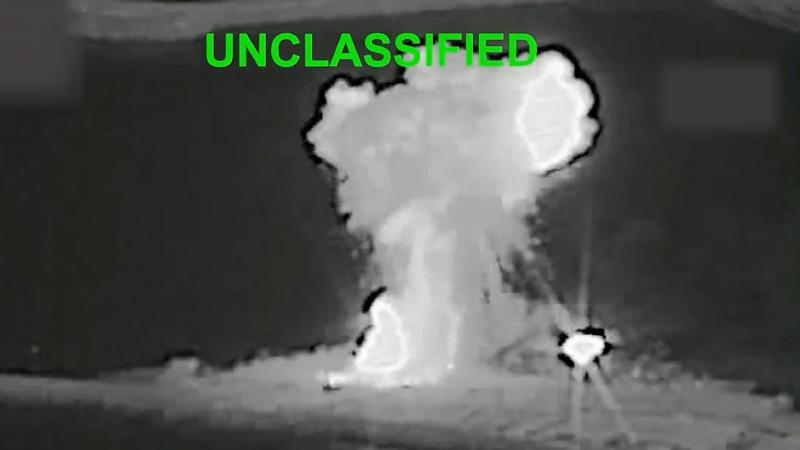


Let's ignore the questions raised about available munition stockpiles. Let's ignore that Iran also operates a number of diesel-electric submarines. Let's ignore that this is a greenlight for unrestricted warfare against the United States and Israel, too.
 S E E D E D C O N T E N T
March 6, 2026 -- The sinking of an Iranian warship Tuesday by a U.S. submarine thousands of miles from the war zone in international waters raises questions about whether the attack was legal under the rules of war.
Military law experts said the Iranian ship, which was in the Indian Ocean in international waters off Sri Lanka, would have been a lawful target had the U.S. declared war. The fact that it hasn't done so makes the issue a murky one.
Iranian Foreign Minister Abbas Araghchi called the attack an "atrocity."
"The U.S. will come to bitterly regret precedent it has set," he said.
Experts say the incident highlights the reason that a declaration of war by Congress is needed for the growing conflict, which has involved more than 12 countries, as Iran continues launching drones and missiles at countries beyond the Persian Gulf region.
The House of Representatives on Thursday voted against a war powers resolution. Similar legislation failed Wednesday in the Senate. Both votes largely followed party lines.
The submarine strike in international waters "underscores why Congress should have approved this in the first place," said Retired Lt. Col. Rachel Van Landingham, a former judge advocate general in the U.S. Air Force, "because this is a war [in which they're] going to go after the Iranian Navy," even when naval assets are outside the Middle East.
"The Iranian Navy is not small, right? It could be in places like outside of Sri Lanka and international water."
Under the laws of armed conflict, were the U.S. and Iran in a declared war, the warship would represent a lawful target, former U.S. government lawyers told ABC News.
The issue with the submarine's attacking the warship in international waters, Van Landingham said, was "political" in nature and not legal.
"When you're going to have such global implications -- that's one of the reasons the founding fathers said Congress gets to decide wars of choice," she said.
Brian Finucane, who was attorney-adviser at the State Department from 2011 to 2021, also said the submarine attack would have been lawful if the conflict was authorized.
According to Finucane, the U.S. would have an obligation under the Geneva Conventions to conduct search and rescue operations for survivors of the sinking.
A source familiar with Tuesday's operation said the submarine took measures to support life-saving efforts before and after the ship sank in line with international law.
The military's compliance with that international law was called into question when a second strike on an alleged drug boat killed survivors in international waters in the Caribbean Sea in September.
"The fundamental legal problems under both U.S. and international law" of the submarine engagement, Finucane said, "relate to the underlying use of force in this war against Iran."
Authorization by Congress for the war is required by law because the U.S. offensive against Iran is not a response to an imminent threat, experts said.
President Donald Trump and his administration have said Iran posed such a threat. Secretary Marco Rubio said the threat became more imminent because Israel planned to strike Iran and Iran would retaliate against Israel and the U.S.
While the president has called the conflict a "war," senior officials in his administration -- and top leadership in Congress -- have refrained from using the word.
Speaker of the House Mike Johnson said Wednesday the U.S. "is not at war now."
The Pentagon's top policy official, asked whether the U.S. was at war with Iran in a congressional hearing Thursday, would not use the term.
"I think we're in a military action at this point," said Undersecretary of Defense for Policy Elbridge Colby. "I will leave to Congress and lawyers from the administration, et cetera, to determine."
Ambiguity about the conflict's label from across the government comes as Pentagon officials say the conflict will only "accelerate" in intensity -- and potentially grow in scope.
The U.S. military mission is in a "throttle-up" posture, said Defense Secretary Pete Hegseth, who would not confine the campaign to a time limit.
"The only limits we have in this is President Trump's desire to achieve specific effects on behalf of the American people," Hegseth said.
Be a good human. Grossly derogatory comments, blatantly inflammatory comments, excessive trolling, mean-spirited taunting and insults, scamming, spamming, and off topic comments may be removed in compliance with the site's Terms of Service and the Code of Conduct. The moderators have the final word.

Tags
Who is online
97 visitors
Pete Hegseth has turned US military doctrine on its head to make political statements. The Naval doctrine had been to use over-the-horizon weapons to minimize risk to ships. The fact that the sinking of the Iranian frigate was captured with a periscope camera means the attacking submarine was extremely vulnerable to detection and attack. This attack signals that our submarines are now expendable assets for tactical results. These tactical wins may ultimately expose strategic vulnerabilities.
Iran does have diesel-electric and mini submarines. The US torpedoing of the Iranian frigate gives a greenlight for Iranians to engage in unrestricted warfare, too. Oil tankers in the region are also targets for torpedo attacks.
Didn’t realize Oil Tankers and the like were weapons of war.
They are legitimate targets of war. Especially when open, unrestricted warfare has been endorsed by military leadership.
Torpedoing a military frigate and an Oil Tanker are two vastly different things. One is intentionally targeting civilians. Is that now copacetic in “unrestricted” war?
And how did you discern unrestricted? We attack a military target and that makes it acceptable for our opposition to attack civilian targets? All I can say about that is …… wow!
Personally, after decades of unrestricted support of terrorism all over the world, I’m not losing sleep over this Iran thing. I do lose sleep over the thought of such nations possessing nucs. You should too.
It's a Geneva Conventions thing.
Frankly I'm more concerned about stateless terrorists possessing radiological dirty bombs.
What??
Terrorist nations “intentionally” target civilians by definition. We do not but God forbid we unintentionally kill civilians. The hypocrisy of how some define those two same actions, as somehow different, is very messed up. Very!
Are you advocating that the United States become a terrorist nation? If the United States begins justifying its own acts of terror by what others do then what's the point of complaining?
When does the excuse "others do it, so should we" become unnecessary? Just skip directly to acts of terror. The US is the biggest badass on the planet after all. We can do whatever we want.
Well as I am sure you must know-- ICE has intentionally killed civilians, (Both by shooting them but also by imprisioning people with vital medical needs that are refused by those in charge).
Yeah, I’m not advocating anything. Simply pointing out the hypocrisy of your position. We sink a terrorist nations warship so in your mind, that apparently opens up the door for them to attack anything civilian. Unrestricted, but the US is expected to remain “restricted” in attacking such civilian targets, even by mistake or get internationally admonished right?
Hard to put into words how messed up that position is.
Bullshit. Feel free to prove they are intentionally killing civilians.
You can’t. Not with facts anyways.
Nice off topic redirect by the way
Why is it hypocrisy to point out that Americans should strive to be better than terrorists? Pointing out that the US Navy adopting the tactics of unrestricted warfare does not fit with the high ideals of America doesn't mean I'm siding with terrorists.
We knew with absolute certainty that the Iranian frigate was unarmed and could not defend itself. The Iranian frigate was not a belligerent.
We also know that a submarine filming the action through a periscope placed the vessel at shallow depth in close proximity to the target. That marks a distinct shift in Naval doctrine prioritizing the safety of the vessel. Now the doctrine is to risk vessel safety to achieve tactical results.
Like it or not, SSN attack submarines are a defensive weapon in our nuclear deterrent arsenal. SSN attack submarines are a much, much more valuable asset than is an Iranian frigate. Especially an Iranian frigate we know is unarmed.
Political leadership wanted a "quiet kill" to influence Iranian leadership using coercing violence. How is that any different than sending someone wearing an explosive vest into a crowded bar? It's the same mindset.
I stopped reading right there. We are better. Many, many factors better. In this case, trying to equate sinking a terrorist nations war vessel, with somehow not being better, is messed up.
Nope, it’s not even close.
I could get into all the targets/Americans, civilian or otherwise, Iran and their proxies have wiped out or murdered the last few decades with little to no recourse but ….. I’m sure that would be a waste of time here.
This amplifies what I have been saying about the death of the Dena and Kelly's warning about illegal orders.
Every non com sailor and officer of the fleet knows the Laws of the Admiralty by heart. They are laws of life, death and salvage on the high sea.
Typically for these "warfare exercises" all of the officers involved from each country get together for training classes and some sort of formal dinner plus multiple other meals.
That means the Americans involved in the submarine, aircraft and oversight, met and shared a meal with the Iranians they torpedoed without warning a week later.
Not only did they torpedo them without warning, but they did also not notify anyone and just watched without rendering any assistance to the survivors.
All violations of the laws of the sea, especially when there is no declared war.
Hegseth said, "no more political correctness', we are going to prosecute this "the right way".
Then declare war, it's simply the difference between having a morale code and avoiding years in court paying for damages to those aboard the Dena which was carrying an
extra 50 people many of whom may have been civilians or family members. I guess we will, like all things find out more with time.
Iranians under the Shah were considered white brothers and sisters who thirsted for knowledge and blue jeans but after the Ayatollah took over, they reverted to being seen as
dirty Muslim people of color and that's how we are executing this non war.
Good thing we have reached Nirvana and are no longer a racist country anymore, right? /S
All this is predicated upon the reasoning that the United States still regards the rules of war. Obviously, if one looks at this through the lens of "does the United States regard the standard rules of war, or doesn't it," it looks like the latter takes the stage.
I truly am flabbergasted.
They interviewed a US District Court judge who hears Maritime cases. He was not happy. He said the submarine clearly violated a dozen US and international statutes.
I feel like I might want to cancel that cruise …
I feel like I might want to cancel that cruise …
There's also another factor here. And that is the fact that the current Iranian regime also doesn't feel obligated to "play by the rules". So now there's a strong possibility that they have "sleeper cells" inside the U.S.
(How sucessful they will be in launching a terror attack within the U.S. is not yet known).