
US Military Gives Update After American Attacks in Ecuador

By: Gabe Whisnant (Newsweek)


MEANWHILE, BACK AT THE RANCH ...
 S E E D E D C O N T E N T
March 6, 2026 -- The U.S. military said Friday it carried out targeted operations alongside Ecuadorian forces against "Designated Terrorist Organizations" in Ecuador, confirming American involvement in lethal actions requested by the Ecuadorian government. U.S. Southern Command said the operation was conducted in coordination with Ecuador's armed forces and described it as part of a broader push against what it calls narco-terrorism.
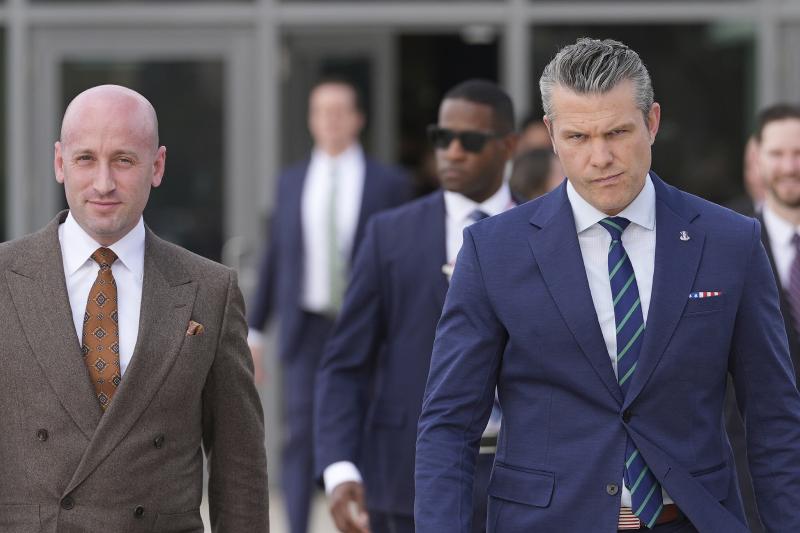
In a post on X, Defense Secretary Pete Hegseth said U.S. forces were striking narco‑terrorist targets on land in cooperation with Ecuador and suggested additional updates would follow from U.S. Southern Command. The Pentagon has not released operational details like the specific location or targets beyond those public statements.
Earlier U.S.-Ecuador joint mission announced with few details
The latest confirmation follows an earlier announcement this week that Ecuador and the United States had begun joint military operations against organized crime groups, with both governments initially providing few specifics on scope or location. In a statement late Tuesday, U.S. Southern Command said Ecuadorian and U.S. forces had launched operations in a "powerful example" of regional commitment to combat narco-terrorism. A brief accompanying video posted online showed a helicopter over men moving on the ground but did not identify the location.
Ecuador's military leadership also offered limited public detail. General Henry Delgado, head of Ecuador's Joint Command, said at a security forum in Quito that "certain operations" occurred Tuesday, without describing any actions on Ecuadorian soil.
President Daniel Noboa talks of new strategy to thwart organized crime
Ecuadorian President Daniel Noboa has said his government is entering a new phase in the fight against organized crime as the country faces persistent violence tied to drug trafficking and illegal mining. Noboa said military and police forces would be involved in what he described as "very important" operations and has pointed to cooperation with allied nations as part of that shift.
In February, Noboa ordered Ecuador's foreign ministry to seek cooperation agreements with "allied nations" that would allow the temporary incorporation of special forces to support Ecuadorian police and the armed forces, according to reports by the Associated Press (AP). Ecuador maintains security ties with the United States and other partners, and officials describe the country as a key logistical hub in the global cocaine trade, with shipments moving out through ports to Central America, the United States and Europe.
"We commend President Noboa, the Government of Ecuador, and the brave troops of Ecuador's defense and security forces for their partnership in the successful operation against a narco-terrorist supply complex today, disrupting their operations and logistics," assistant Defense Secretary Sean Parnell posted Friday on X. "At the request of Ecuador, the Department of War executed targeted action to advance our shared objective of dismantling narco-terrorist networks."
Wider regional push as Hegseth urges tougher anti-cartel stance
The Ecuador operation has unfolded as the Trump administration pushes Latin American partners to take a more aggressive approach against drug cartels. Speaking Thursday at U.S. Southern Command in Miami during what the Pentagon billed as the first "Americas Counter Cartel Conference," Hegseth warned the United States is prepared to "go on the offense alone" if regional governments do not effectively confront criminal organizations that threaten U.S. security and border enforcement.
The conference brought together defense officials from allied governments in the region, per AP reporting, and came as the Trump administration seeks to devote more military resources to Western Hemisphere security even while managing other overseas conflicts.
The Ecuador operation comes as the White House has paired an expanded military posture in the hemisphere with a tighter grip on regional energy flows, following the U.S. operation in Venezuela that captured then President Nicolas Maduro and brought him to the United States to face drug‑related charges.
In the weeks after Maduro's capture, U.S. officials said Washington would control Venezuelan oil sales and hold proceeds in U.S.-controlled accounts, while the Treasury issued licenses that allow certain oil‑sector maintenance and related transactions under restrictions, moves the administration has presented as part of its broader strategy in the region.
The U.S. last month provided intelligence to Mexican security forces that ultimately killed one of the country's most-wanted drug barons, Nemesio Oseguera Cervantes, known as El Mencho.
Analysts warn militarization carries risks without strong oversight
While Ecuador's government has publicly embraced expanded cooperation, analysts and regional experts have cautioned that a larger military role in anti-cartel campaigns can carry risks—particularly in countries where civilian oversight is weaker and security institutions have histories of abuses. Those critics argue that disrupting trafficking networks may require not only security operations but also stronger rule-of-law institutions, judicial capacity and governance reforms to produce lasting results.
The military actions in Central and South America are transpiring as the U.S. launched Operation Epic Fury against Iran. The joint strikes with Israel began last week and have targeted Iran's ballistic missile and nuclear sites along with other key capabilities.
Be a good human. Grossly derogatory comments, blatantly inflammatory comments, excessive trolling, mean-spirited taunting and insults, scamming, spamming, and off topic comments may be removed in compliance with the site's Terms of Service and the Code of Conduct. The moderators have the final word.

Tags
Who is online
97 visitors
What happens when these South American military crackdowns turn into repression? That seems to be the historical precedent in Central and South America. Or is the Trump Republican policy of the strong repressing the weak the new Trump Doctrine for the US? Wouldn't that be exceptional?
There was a time when US military operations in another country would have been front page news. Now it is ho-hum.
Lemme see...
South American crisis... check.
Middle East crisis... check.
Central American crisis... check.
Asian crisis... ... ... Well... we know what's next.