
Repsol agrees Venezuela deal to boost oil production and regain control of assets

By: Rafael Salido (Euronews via MSN)
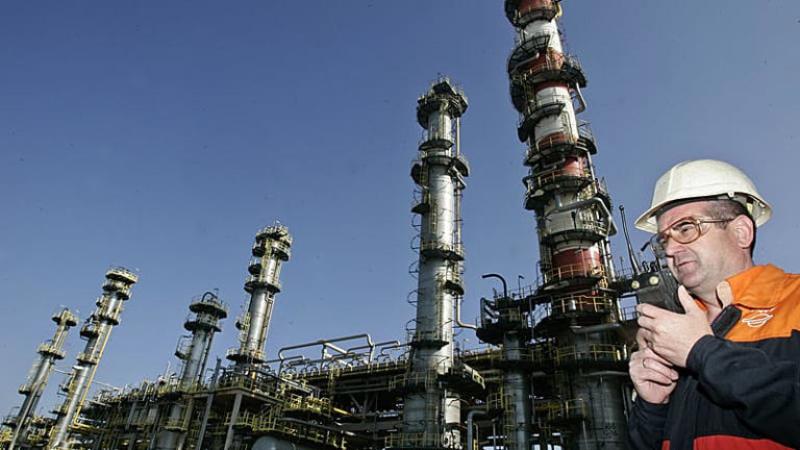

A bit of esoteric news that quite often slips under the radar. Repsol resuming operations in Venezuela opens the door for expanding the Brazilian Repsol-Sinopec joint venture. Sinopec is China's state owned oil enterprise and will obviously prioritize Chinese interests. Allowing China more direct access to unsanctioned Venezuelan oil eliminates the need to use a shadow fleet of tankers to skirt sanctions. China seems to benefit most when it can pursue its interests through more open competition.
 S E E D E D C O N T E N T

April 16, 2026 -- Spanish energy company Repsol confirmed that it is regaining operational control of its oil assets in Venezuela after reaching an agreement with the country’s government and state oil company PDVSA.
The deal is expected to include a mechanism to secure payments through oil shipments and could enable Repsol to significantly expand output, including plans to triple production within three years.
"This agreement underscores Repsol's commitment to Venezuela, where we have operated without interruption since 1993," said Repsol's Executive Managing Director of Exploration and Production, Francisco Gea, after the signing of the contract. "We have the assets and the technical, operational, and human capacities on the ground to increase our production in the country."
The agreement represents a significant turnaround in the company’s position in Venezuela after years of operational constraints linked to US sanctions on the country’s energy sector.
According to expectations, the new framework will allow Repsol to avoid the defaults it suffered in the past and to operate with greater financial security alongside the state-owned oil and gas company of Venezuela, PDVSA.
Although the agreement does not include a specific commitment to settle the nearly $4.55 billion (€3.86bn) that the Spanish company claims Caracas owes it for previous gas and crude supplies, it does seek to guarantee the collection of future production.
The understanding follows the capture of Nicolás Maduro in January and comes amid Washington’s efforts to revive Venezuela’s oil industry to boost the global supply of crude, under pressure from the war in the Middle East.
Since then, the US has begun to ease sanctions, including some restrictions through licensing arrangements issued by the US Treasury’s Office of Foreign Assets Control (OFAC), allowing selected international companies to resume or expand activity in the country.
Earlier this week, on Monday, the Spanish State Department announced the suspension of sanctions on Venezuela’s Central Bank, which will facilitate the Spanish company’s payments and collections in the country.
Tripling production from the third year onwards
In February, the Trump administration authorised Repsol and four other companies - Shell, BP, Eni and Chevron - to exploit oil and gas in Venezuela. Four of the five companies are European, a fact that underlines the interest in the Old Continent to regain a presence in the country with the world’s largest crude reserves.
Repsol owns 40% of the Venezuelan upstream oil and gas joint venture called Petroquiriquire, which produces some 45,000 barrels per day. The company plans to increase production by 50% in the first year and triple it in three," as long as the necessary conditions remain in place and using the proceeds generated in the country", the company's statement said.
The new political scenario, led by interim president Delcy Rodríguez, has been accompanied by legal reforms that reduce state control and ease the tax burden to attract foreign investment, in an attempt to restore activity to a deeply deteriorated strategic sector.
Be a good human. Grossly derogatory comments, blatantly inflammatory comments, excessive trolling, mean-spirited taunting and insults, scamming, spamming, and off topic comments may be removed in compliance with the site's Terms of Service and the Code of Conduct. The moderators have the final word.

Tags
Who is online
162 visitors
The trick with whack-a-mole use of power is to avoid creating more moles. The Trump administration's "Peace Through Strength" initiatives don't seem to be strengthening the United States.
meanwhile the duly elected Edmundo Gonzalez has been conveniently left behind in Spain.
Trump simply installed a puppet government he thinks he can control.
Another waste of US Navy power and money.