
America pumps more oil than any nation in history. Here’s why it still can’t ‘drill’ its way out of the Iran energy crisis

By: Brandon Weichert (National Security Journal via MSN)
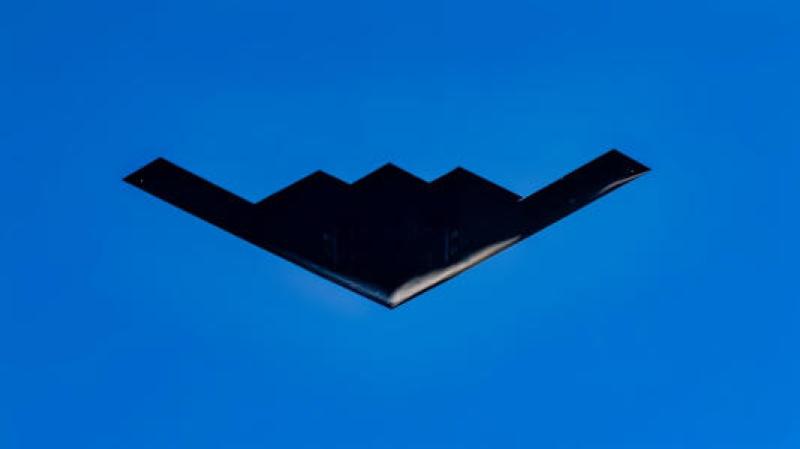


A primer on the fallacy of 'drill, baby, drill'.
 S E E D E D C O N T E N T
June 3, 2026 -- Summary and Key Points: It sounds impossible: the U.S. pumps more oil than any country ever has, and is a net exporter — yet it still imports millions of barrels of foreign crude every day, and record drilling can't change it. The reason is a structural mismatch that most commentators miss, one that has been hiding in plain sight for nearly half a century. As the Strait of Hormuz stays closed and America's reserves drain toward empty, that weakness is about to surface at the worst possible moment — and "drill, baby, drill" won't be the answer.
The Iran War Exposes America's Energy Problems
By the time Americans gather for Fourth of July celebrations this year, the 250th anniversary of the founding of the United States, one of the greatest energy crises in American history will be underway.
The emergency buffers that have shielded Americans from the worst consequences of global volatility in the energy markets will rapidly near exhaustion. The crisis is due to the closure of the Strait of Hormuz and the broader disruptions caused by the Iran War.
Oil reserves that cushioned supply disruptions. Although they continue to drain–with no replenishment coming- contrary to the popular belief that Americans can simply “drill, baby, drill” their way out of the crisis, the United States cannot pump its way out of this disaster of our own making.
America Produces Plenty of Oil–So Why Is There a Problem?
That reality surprises many Americans because the United States produces more oil than any country in history and remains a net petroleum exporter. Yet America still imports millions of barrels of foreign crude oil every day.
The reason is not a lack of resources. It is a structural mismatch between what America produces and what America can refine.
Most domestic production comes from regions such as the Permian Basin, Eagle Ford, and Bakken formations. These fields primarily produce light, sweet crude oil. Light crude is easier to refine and contains less sulfur.
Unfortunately, the oil firms that built much of America’s refining infrastructure process only heavier crude grades imported from abroad.
The Refining Bottleneck Nobody Talks About
This situation is where commentators get the story wrong.
They assume that if prices spike, American producers can simply increase output and flood the market with additional oil from North America. But producing more light crude does not automatically solve the refining bottleneck. America’s energy system is not optimized to maximize the use of its own resources. Instead, it evolved around the assumption that foreign heavy crude would always be available.
The age of America’s refinery network highlights the problem. For example, the last major refinery built with significant processing capacity was Marathon’s facility in Garyville, Louisiana, which entered service way back in 1977.
The United States has not built a truly large-scale refinery in nearly half a century. During those decades, America’s energy landscape changed dramatically, especially after the shale revolution unlocked enormous quantities of light crude.
However, the country’s refining infrastructure did not evolve at the same pace.
As a result, the United States became dependent on an arrangement that seemed perfectly rational in a stable world: import heavy crude, refine it in existing facilities, export some products, and profit from the difference. That model worked well enough until the Iran War shattered assumptions about energy security.
The Strait of Hormuz Exposed a Hidden Weakness
Iran blocked the Strait of Hormuz, disrupting roughly one-fifth of global oil supplies and nearly a fifth of global natural gas flows. Washington temporarily softened the blow by releasing large quantities of petroleum from the Strategic Petroleum Reserve (SPR). Those releases helped suppress immediate price spikes and prevented panic in the domestic energy market.
But the SPR was never intended to serve as a permanent replacement for global energy flows. It’s an emergency buffer, not a sustainable source of supply.
Now those buffers are running low.
Once reserve supplies have vanished, the underlying structural weakness becomes impossible to ignore. America may continue to produce record amounts of oil, but that production cannot fully offset the loss of foreign crude passing through the Strait of Hormuz. The physical infrastructure simply is not configured to replace those disrupted imports at the scale required.
Why Oil Companies Haven’t Fixed the Problem
The obvious question is why oil companies have not solved this problem already.
For that answer, look to economics, regulation, and corporate incentives. Building new refineries requires investments measured in the billions of dollars. Companies must navigate years of permitting battles, environmental reviews, local opposition, and regulatory uncertainty before construction even begins.
By the time a refinery becomes operational, market conditions may have changed dramatically.
What’s more, oil companies do not necessarily benefit from creating excess refining capacity. Their preferred environment is one where prices remain profitable but stable. Industry equilibrium generally exists when crude prices remain high enough to sustain margins without crushing consumer demand.
Massive investments designed to maximize domestic refining could eventually produce lower prices and reduced returns on investment. From a shareholder perspective, maintaining the status quo often appears safer than undertaking transformative projects.
The Political Risk Factor
Political uncertainty compounds the problem.
Refinery projects are long-term, massive investments expected to operate for decades. Yet many executives remain uncertain about the future of American energy policy. If governments impose stricter environmental regulations years after oil firms have built new facilities, companies risk incurring billions in stranded-asset losses. Faced with that uncertainty, executives frequently choose caution over expansion.
The result is a paradox. America solved its production problem through the shale revolution and now produces unprecedented volumes of crude oil. Yet it never solved its refining problem. The nation became an energy superpower without fully aligning its infrastructure with its resource base.
The Iran War Didn’t Create America’s Energy Vulnerability–It Revealed It
That is why the Iran War matters so profoundly.
This conflict with Iran did not create America’s energy vulnerability. It merely exposed it at the most inopportune time, in the most dangerous way. As long as the Strait of Hormuz remains closed and emergency reserves continue shrinking, the United States will discover that energy independence is not merely about how much oil comes out of the ground.
True energy independence–the kind that can survive the disruptions caused by the Iran War–comes from the industrial capacity to process, distribute, and utilize that oil at home.
America cannot simply pump its way out of the coming energy crisis, no matter how hard the politicians in Washington who got us into this mess try.
Brandon J. Weichert is the Senior National Security Editor at 19FortyFive.com. He also manages The Weichert Brief on Substack. Weichert hosts “National Security Talk” on Rumble, too. He is the author of four bestselling national security books, the most recent of which is A Disaster of Our Own Making: How the West Lost Ukraine (Encounter Books). Follow him via Twitter/X @WeTheBrandon.
Be a good human. Grossly derogatory comments, blatantly inflammatory comments, excessive trolling, mean-spirited taunting and insults, scamming, spamming, and off topic comments may be removed in compliance with the site's Terms of Service and the Code of Conduct. The moderators have the final word.

Tags
Who is online
86 visitors
The United States is the largest oil producer in history. And yet we're vulnerable to energy shortages.
The regulatory environment, NIMBY politics, and financialized economy has seriously weakened the national security of the United States. A war won't fix that.
Is that what the war with Iran was about? Oil?
Why don’t you tell us what it’s about?
Things That Never Happened for $500, Alex
Does it matter what the war is about? The consequences will be the same no matter how the justifications are bent and twisted.
The US simply does not have the refineries needed for energy independence. Wars won't fix that. Drilling more oil won't fix that. Donald Trump refuses to address that.
Since you still support Trump, explain to us all what you believe this war is about.
And, importantly, it is neither cost-effective nor sensible for the energy companies to invest in new sweet crude refineries.
It would be sensible if not for the regulatory hurdles and NIMBY lawsuits. A refinery would pay for itself pretty quickly. It's the 10 year cycle for permitting and legal challenges that make investing in new refineries undesirable.
Constructing a small 'teapot' refinery costs about the same as constructing a VLCC oil tanker. But regulatory hurdles for ship construction are minimal compared to building a refinery.
According to gemini
Energy companies see the writing on the wall. They recognize that refineries are not a good strategic investment.
A small 'teapot' refinery costs less than $200 million to build. It is the regulatory environment and litigation that consumes a decade or more. And the demand for aviation kerosene has seen a marked increase. Naphtha and light distillates, such as ethane, has also seen a marked increase in demand.
It is impossible to build an EV without petroleum distillates. The plastics, synthetic materials, and synthetic rubber needed for EV manufacturing are petroleum based materials. Those beloved EVs demand oil. There can be no EV future without oil.
Are you seriously trying to deny the long-term demand aspect of this??
I think trmp took a couple of pages out of GW Bush's book on to justify this war. First it was about regime change, then it was about nukes, now it's about opening up the Strait of Hormuz (which was open before he want off full cocked)
Trump gets ideas and just impulsively acts.
He has no concept of strategic planning. His method is to just act and then bully and lie to try to get his way.
He is entirely unfit to be PotUS; and incompetent buffoon.
It's not possible to get more light cuts out of a barrel of oil than is currently being obtained. Adoption of EVs will dramatically alter the economics of refining oil but cannot eliminate the refining of oil. EVs are dependent upon oil and that certainly will not change.
EVs are not going to lessen the demand for oil as much as is being hyped. What EVs will do is transform more of the oil into an industrial waste. Cracking oil to extract more naphtha, propane, ethane, butane, etc. from a barrel of oil is very energy intensive and will dramatically increase carbon emissions for oil refining. At present the industry is switching to natural gas to produce petrochemicals but, as we know, natural gas is a more potent greenhouse gas.
The best case numbers being used to promote a transition to EVs won't materialize. EVs may reduce emissions from oil but won't eliminate those emissions. The necessary transition from fuel to petrochemicals means oil will be with us far into the foreseeable future.
The point remains that energy companies are not willing to invest in new refineries because they cannot justify the cost based on future demand.
There is a reason that the most recent US refinery was built almost 50 years ago. Regulations are part of it, and expectations on future demand are part.
You can always try to take your case to the energy companies, but I doubt they will be persuaded.
The outlook for future demand in 1977 wasn't a decline in demand. In 1977 the US consumed 18 million barrels per day; today's consumption is at 21 million barrels per day. The real world numbers do not fit the narrative.
Regulatory requirements and NIMBY litigation are the primary reasons new refineries have not been built since 1977. The extended time frame for a refinery to enter production plus the political tropes about declining consumption (which hasn't materialized) scared off investors. The obstacles to bringing new refineries online has prompted a switch to natural gas. But oil is still needed for what natural gas cannot provide.
Not according to the energy companies.
A simple Google search will yield the answers for anyone truly interested in anything resembling the truth. And Oil ain’t top on the list. Iran has been BF’n the US and the rest of the non Anti-Semitic world for nearly 50 years. Not acknowledging that fact is simply dimwitted.
AI sez:
We’ve fought wars over oil. Iran ain’t one of them.
Thank God we have Trump and not the other hot mess that ran against him. I shudder to think how more fucked up things would be now. Not sure the union could have survived four more years of that bullshit. Open borders, a neutered military, a government weaponized against all citizens not of like mind with the admin’s preferred narratives, woke nonsense pushed at every turn …. I Could go on but I know it’s falling on delusionally deaf ears and I’m not really interested in wasting any more of my time.
Oh and I answered your question in another post. Or I should say AI did. I know how you love answers from AI.
Which God?
I'm sure Trump would certainly be making Baphomet happy if any God actually existed.
That's some seriously crazy shit right there. But you keep telling yourself whatever you have so that your inner-self, that part of you that actually knows how full of shit that comment is, doesn't reach out and slap the fuck out of you.
The Union is only on the brink because of the reckless dipshit felon that some knuckleheads elected President. Telling yourself lies isn't going to reduce inflation, cut gas prices, end another feckless war in the middle east or throw all those worthless violent January 6th felons back in jail.
So, you were listening to your own laughable drivel? It's not surprising that even you couldn't stand anymore of its tediously absurd presumption.
We had an agreement that Iran would not pursue a nuclear weapon. We had an agreement that Iran would enrich uranium to a high level. President Trump withdrew from that agreement in 2018.
This war is about Trump trying to fix what he broke during his first term.
You know the jpcoa was temporary and would have left Ian within easy each of a bomb, even if they had strictly had adhered to it, right?
The deal expired in 2025 and Iran claimed to have honored until it ended. So we would be exactly in the same spot, whether or not Trump withdrew from the JPCOA, except thanks to Trump's sanctions Iran has significantly fewer economic resources to expend in developing a bomb.
No, it wasn't. The agreement to not pursue a nuclear weapon was permanent. Only the moratorium on enrichment had a sunset date. Which could have been renegotiated. Iran did not restart high level uranium enrichment until after President Trump withdrew from the JCPOA in 2018.
President Trump is circling back to the JCPOA with an extended sunset date on enrichment. But now Trump has to fix the Strait of Hormuz in addition to the nuclear negotiations.
The US military won its war of kinetic strikes, target destruction, and killing adversaries. President Trump has lost his war to create peace. Unless, of course, Trump was planning a forever war all along.
Blatantly false. It expired in 2025 and left Iran from any nuclear restrictions. Ask Iran.
Remember, Iran claimed to follow the agreement after the US left. So your point makes no rational sense. Trump's withdrawal did not effect Iran's actions towards developing a bomb.
Blatantly true. The JCPOA brought Iran back into compliance with the non-proliferation treaty. The sunset dates would have required renegotiation; that was the leverage Iran wanted in future negotiations.
The JCPOA was a multilateral agreement; not a bilateral agreement with the US. Europe was trying to circumvent Trump's renewed sanctions by creating an alternate payment system to comply with the JCPOA. Trump's withdrawal from (and failure to comply with) the JCPOA gave permission to Iran to restart enrichment. That was built into the JCPOA.
Iran did comply with the agreement. President Trump failed to comply with the agreement. Trump really is responsible for the current mess. Trump screwed up in 2018 and now he's trying to fix what he broke.
Of course, no matter what Trump has done, you will thank God that he is the PotUS.
I'm beginning to believe that even if they found themselves in a concentration camp being shuffled off to a gas chamber for not being useful enough to the Trump regime, these MAGAites would still be singing his praises. "Well, he's right, I'm not able to work anymore and this will help the dear Leaders most recent quarter financial numbers look better, so dear Leader is only doing what's best for the country. Long live dear Leader Trump!"....
There seems to be no line that Trump can cross that would cause his supporters to face reality.
Lol. Now at least you admit it expired.
Hard not to when Iran publicly declared they did, of course.
The JCPOA was a multilateral agreement; not a bilateral agreement with the US
Yes, no kiding. That's the entire point. Iran "claimed" to have remained compliant after the US withdrew until the treaty expired in 2025.
the JCPOA gave permission to Iran to restart
Another false statement. The JPCOA never stopped Iran from enriching.
There seems to be no line that Trump can cross that would cause his supporters to face reality.,
As we watch Democrats justify electing a man with literally zero accomplishments, who wore an SS tattoo, who joined the army because he wanted to kill people, mistreats women and admits to wanting to rape.
Enjoy your glass house.
Europe could not remain compliant because of President Trump's renewed sanctions. Iran was to limit enrichment to levels allowed by the non-proliferation treaty in exchange for economic relief.
As a signatory on the UN Treaty on the Non-Proliferation of Nuclear Weapons , Iran could claim compliance. JCPOA was an add-on to the non-proliferation treaty to bring Iran into compliance. Under the non-proliferation treaty, Iran has a right to enrich uranium for peaceful uses. The IAEA certified that Iran was in compliance with the non-proliferation treaty up to 2018 when Trump withdrew from the JCPOA.
That's partially correct. The non-proliferation treaty allows uranium enrichment for power generation. The JCPOA was intended to bring Iran into compliance with Treaty on the Non-Proliferation of Nuclear Weapons . The JCPOA did create limits on the number of centrifuges that could be operated and the amount of enriched uranium that could be stored.
Donald Trump baited the MAGA base and they swallowed it hook, line, and sinker. Trump promised he was gonna kick some ass which was red meat for the base. Trump created the problem through either malicious intent or abject ignorance.
The US military did win its part of the war. But Donald Trump has lost his war to make a deal. Now he'll hide his screw up behind a phony victory parade.
You are comparing a Senate candidate to the sitting PotUS. Even if elected, Platner has a mere fraction of the influence and power of Trump.
Further, you presume all or most Ds approve of Platner.
So your example is yet another piece of bullshit. Another feeble attempt to deflect from Trump.
And you again engage in your pathetic little game of implying I am a D. Never have been and am not now. If in Maine, I would be voting for Collins because I care about ethics, rational thinking, etc. Even in consideration that the balance of power in the Senate is at stake — an important consideration given the failure of the Rs to stand up to Trump.
You, in contrast, continue to try to defend an abysmal human being who is clearly the worst PotUS in our lifetimes (and likely our history). So you have no legs to stand on.
Exactly. It's comparatively low stakes. One out of a 100 and the alternative is the most moderate member of the Senate.
And Democrats support the Nazi. To flip one Senate seat. Can't even muster principals on something so relatively unimportant.
er, you presume all or most Ds approve of Platner.
No, that's what polling, national Democratic leaders all the way down to the progressives on this state have made clear. They support the Nazi who admittedly brags about wanting to rape men.
Ask ChatGPT:
By all means, show proof a majority of Democrats don't in fact, support Platner. Fetterman is not "most Democrats. In fact NT progressives think he is MAGA .
For as long as you've been on this site, I've only seen you offer Democratic talking points that are indistinguishable from any other extreme partisan democrat. You can claim whatever you want, but your actions speak louder.
You have no legs to stand on. You can throw out examples of poor candidates all day long (plenty exist in both parties).
None of these compares to the power and influence of the presidency. And, importantly, none have actually done damage to this nation (and the world) as Trump has and continues to do.
Another lie from you. My criticism has been of Trump and supporters. That you cannot tell the difference between that and partisan commentary reflects poorly on you.
You continue to try to defend the worst PotUS in our lifetimes. Your comments have no credibility.
You said:
Which I questioned and received no cogent answer. So you don’t think this war is about Oil? Sounds like you don’t but it’s hard to determine based on your comments and responses
My comment was clear and concise. [deleted][✘]
Donald Trump has a history of rhetoric about Iran. Trump's opinion was that Ronald Reagan had mishandled the Persian Gulf 'tanker war' in 1987. Trump expressed the opinion that other countries were taking advantage of the US in 1987. [LINK] In 1987 Donald Trump also opined that the US should seize Iran's oil. But 40 years later the US does not need Iran's oil.
In 2026 President Trump has never indicated he attacked Iran over oil. In fact, Trump did not settle on a justification until the kinetic phase of Operation Epic Fury had stopped. Trump's final justifications for the war were primarily about his perceived flaws in the JCPOA (which it appears Trump is trying to reconstruct).
Iran has forced the 2026 war to be about oil by blockading the Strait of Hormuz. And President Trump hasn't really attempted to reopen the Strait. The US now competes with the Persian Gulf as an oil producer. And oil exports is one of the things Trump can use to obscure his failures with tariffs. So, in that respect, Trump is using the war to seize market share for oil since the Persian Gulf source has been severely restricted. (Trump apparently wants the Persian Gulf oil to stay off the market.)
More denial ….. wow. The main reasons this war started have been laid out numerous times here and again, “oil” doesn’t make the list. This is a fact not an opinion.
We are done here until you are ready to be less disingenuous but you have a great Sunday now ya hear!
What denial? Where did I say Trump started the 2026 war with Iran over oil? I explicitly stated "In 2026 President Trump has never indicated he attacked Iran over oil." Back up your claim.
Ignoring what I wrote is not an honest rebuttal.
Yet again, the pattern reply, running from a probative question while chanting trollish banter.
You claimed this:
Trump did take actions to better secure the borders.
What is delusional is that you (absurdly) claim that Biden had "a government weaponized against all citizens not of like mind with the admin’s preferred narratives" yet we are all experiencing exactly that with Trump ... blatantly.
[deleted][✘]
What original question? If you're talking about @1.1 , your question was intended to be a red herring. My original comment was about the regulatory environment, NIMBY politics, and financialized economy. Oil is not the problem. How is the war with Iran going to address those issues?
My response to you @1.1.3 was "The US simply does not have the refineries needed for energy independence. Wars won't fix that. Drilling more oil won't fix that. Donald Trump refuses to address that." You've failed to respond.
I have answered your original question. You're the one wanting to bring the Iran war into the discussion. Why? The facts are the "Drill, Baby, Drill" politics has been stupid all along and does not address the underlying problem. Those who fell for the "Drill, Baby, Drill" politics are chumps who have been suckered.
[✘]
I did not flag or ticket anything. And now you've jumped into lame meta discussion rather than respond to my comments.
That is the best assessment money can buy.
After Trump withdrew the US in 2018, Iran had no one else to fear and abandoned any ongoing commitments
I never said you did. I said I’m not playing your flag game. Which you are an active part of. Wittingly or unwittingly is the question.
There is no true debate here. There is only discussion channeled via reporting/ticketing to support the majority narrative. Ego strokers not so anonymous…… it’s a joke.
In the meantime review 1.1.37 “again” for the answer to your responses. If it’s still there.
That is one of the most naive assumptions that I’ve ever seen. [deleted] [✘] to [✘] think pre 2018 Iran was somehow going to follow through with what they had promised. They are a terrorist state that calls the US the great Satan and supports the complete destruction of Israel.
Guess we could have kicked the can down the road for another 47 years and hoped for the best. Maybe Iran and their murderous proxies would have been kinder, gentler psychopaths ……
In your opinion, did Trump fix the Iran problem? Did he improve the situation?
A ridiculously simplistic question to an incredibly complex geopolitical question. Was it fixed pre 2018?
Yes, in that something had to be done. It at least gives it a chance instead of waiting for one of those crackpots over there touching off a Nuc. It’s so easy to armchair quarterback this. Especially for the triggered. Trump does nothing and he’s wrong. Trump takes action and he’s wrong.
You guys gotta get over your Trumpaphobia.
A tacit admission that Trump did not fix the problem. All his bluster, all the blood and treasure spent, the further damage to US credibility, etc. and for what??
The answer is that Trump demonstrably did NOT fix the Iran problem that has persisted for 47 years. If you disagree then make an actual argument.
More claims with no facts.
Trump claimed that he obliterated their nuclear program last year. So was he lying last year or lying now when he claims that he had to bomb them this year or else they would have had a nuclear weapon in a matter of weeks?
Answer : he was lying both times. How can you not see this? He claimed regime change. He claimed unconditional surrender. He claimed destruction of their nuclear ambitions. He accomplished none of this and instead gave Iran an excuse to deploy its 'nuclear option' with the Strait of Hormuz with the obvious damage to the world economy. Trump is a moron. Stop supporting this idiot.
What, specifically, did Trump accomplish by the 2026 bombing?
You have no answer so you should do some research.
I know you and other Trump supporters will not read this nor will you even try to follow the links and learn what is happening in reality. But here is a compilation by ChatGPT when I asked it to list the multi-dimensional costs of the illegal Iran war and summarize the benefits:
So? Neither did Biden, Obama, Bush one or two, Clinton, Reagan or Carter. You did pontificate negatively on any of those like you do Trump? Providing further empirical evidence of the rampant TDS at play here.
It’s egregious, it’s tedious and boring.
Correct. No PotUS has fixed the Iran problem.
So do not make posts that suggest that Trump has fixed the Iran problem.
I have never made any posts suggesting any PotUS fixed the problem.
See?
Do you agree with Trump's 2026 bombing (not the 2025 bombings) of Iran given he did not accomplish regime change, did not stop their nuclear ambitions, and gave them an excuse to close the Strait of Hormuz all at the cost of blood, treasure and further degradation of the US reputation .... and still this illegal war lingers on?
Keep spinning. Where did I say Trump fixed the problem?
My original post in this seed questioned the allusion that our attack on Iran was about oil. Several people here including you have tried to make it about Trump. Nothing new there.
At best your comments about my posts are disingenuous. At worst they are lies.
Good, another tacit admission from you that Trump did NOT fix the problem.
So do you also recognize that the 2026 illegal war was and is a disaster that is net negative?
Classic …… another spinning non answer to my question.
Classic
Sparty, do you truly believe that merely making unsubstantiated claims like this persuades anyone?
You are deflecting and tossing out nonsense as you run from the questions.
This seed isn’t about me.
I believe it’s bullshit when people here never answer direct questions but expect everyone else to answer their questions.
A better word for it than bullshit?[✘]
Do you acknowledge that Trump did NOT fix the Iran problem?
Do you also recognize that the 2026 illegal Iran war was and is a disaster that is net negative?
Do you acknowledge that you are lying about me saying Trump fixed the problem?
Do you recognize that you are avoiding answering that question to clear up your lie.
[✘]
How many times do people have to agree that President Trump did not start the war with Iran over oil? How many times do you need to hear 'yes, no oil' for an answer?
Everyone and their brother knows President Trump attacked Iran because Benjamin Netanyahu told him to. Netanyahu does not care about oil or the global economy because Trump is his scapegoat. The only thing Netanyahu cares about is the next election (which happens in October this year). Trump is dancing on Netanyahu's string.
Really? You made the comment not me. Show me where you agreed it wasn’t about oil. If I missed that, I’ll gladly apologize.
[✘]
@1.1.36 -- "In 2026 President Trump has never indicated he attacked Iran over oil." Which I repeated in @1.1.38
And again your red herring alleging a 'war for oil' claim was addressed in @1.1.41.
Where did I claim the war with Iran was started over oil? Show me where I said that so I can retract it. You made a red herring claim that you can't seem to back up.
President Trump seems to have been caught off-guard by closure of the Strait of Hormuz. That, alone, proves Trump did not start the war over oil. Besides, as the seeded article explains, the amount of available oil is not the problem. A shortage of refined gasoline due to inadequate refinery capacity will also cause prices to rise at the pump.
You literally posted in response to:
Tacit: adjective - expressed or carried on without words or speech
He pointed out how you have 'tacitly' or 'without words' said Trump fixed things or improved things with the Iran war. In fact, you did actually use words to do so, though they are admittedly vague as are most comments from those trying to defend an illogical moronic position.
So yes, you're claiming he "fixed" something tacitly, even if by claiming that "something had to be done" which is your opinion, not fact. And it's frankly an opinion worthy of scorn as it completely ignores the reality of the situation we now find ourselves in as a country. Rising inflation, ballooning gas prices, our soldiers in harm's way in the middle east, again. Defending the shitty position Trump put us in with "Well, something had to be done" is frankly disgusting and what I would consider the true definition of deranged.
I have stated repeatedly that you tacitly acknowledge that Trump did NOT fix the problem. Surely you know what tacit agreement means.
You are still complaining, likely because you refuse to answer my question (since it would admit that Trump fucked up ... yet again):
Do you agree with Trump's 2026 bombing (not the 2025 bombings) of Iran given he did not accomplish regime change, did not stop their nuclear ambitions, and gave them an excuse to close the Strait of Hormuz all at the cost of blood, treasure and further degradation of the US reputation .... and still this illegal war lingers on?
Doubtful, but carry on.
You mean obliterating what was obliterated just months before? They have been screaming death to America for 50 fucking years, have they ever even ONE time attacked THE CONUS? Have they even come close? No. This was a war of CHOICE and trump lied about the whole thing. Remember when the right was screaming that Biden was depleting the strategic reserves? Have you checked where they are lately? You should.
Very few here have trump devotion syndrome.
Yet those who have it, have it bad. And almost like a sentient alien doppelganger, they're wildly seeking self-preservation by lashing out at anything that dares defy their alien overlord dear Leader Trump and their ultimate objective of global domination.
No, it did not, certainly not alone.
Instead, we ally ourselves with the crackpot Netanyahu who also thinks he is omnipotent. he isn't either.
So take a break already.
So take a break already.
Same as Bush, Clinton, Bush, Obama, Trump 1.0 and Biden?
Try getting over you blind devotion to Trump?
As is usual here, opinions do vary.
Correct. This has been known and publicized for years, yet few understand / know about it.
We have a refinery here south of our little city. They had an overpressure yesterday that they were bleeding off causing a rumbling across the area like a jet was flying over... all night long.
It seems to me that it’s probably also the nature of a global marketplace. When supplies run low on the other side of the world, the price goes up there. If I can sell my product for more money in China than I can in America, I’m going to do it. And so prices go up everywhere.
The Trump administration keeps saying that the Strait of Hormuz doesn’t matter because we don’t get our oil from there. It’s true that we don’t get our oil from there, but it still matters because of the global marketplace.