
Alien first contact: how the new rules differ from science fiction

By: Michael Garrett (The Conversation)
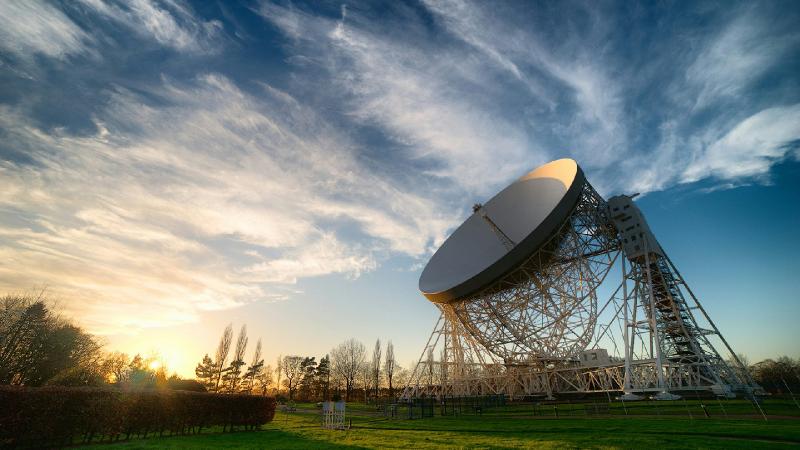


International agreement? Exercise caution? Protect researchers? This doesn't sound like Earth where a handful of people have more money than God.
 S E E D E D C O N T E N T
The moment of first contact with extraterrestrials is a staple of science fiction. It usually involves a frantic scientist having a Eureka moment, realising in a single dramatic instant that Earth is being visited by creatures from light-years away.
Aliens are in the public consciousness once again thanks to Steven Spielberg's latest film, Disclosure Day, which follows a whistleblower's attempts to reveal extraterrestrial visitations to the world.
In reality, the discovery of extraterrestrial intelligence is far more likely to emerge as a faint anomaly in astronomical data, followed by a slow, painstaking process of verification, peer review and intense international deliberation. There might be no single Eureka moment, and no lone scientist with the answer.
As our telescopes have advanced, so too has the complexity of the world we live in. That is why a committee of the International Academy of Astronautics (IAA) has just voted to accept a major overhaul of the "post-detection protocols" - the scientific code of conduct for what happens after we find evidence of life beyond Earth.
The IAA body that has approved the changes is the Search for Extraterrestrial Intelligence (Seti) Committee. Seti is the collective term for scientific projects dedicated to searching for signs of intelligent alien life in the universe.
The previous version of these principles was adopted way back in 2010. To put that in perspective, in 2010, the "fake news" era hadn't quite arrived, social media was in its infancy, and the broader idea of "technosignatures", looking for signs of alien technology such as waste heat from giant structures in space, was still largely on the fringes of mainstream astronomy.
Today, the field has exploded. We are no longer just listening out for artificial radio signals from a few select stars. Projects like Breakthrough Listen have globalised the search, and we now observe the entire electromagnetic spectrum for any sign of advanced technology.
If a sign of intelligent life is found, scientists should begin a quiet, rigorous attempt to prove themselves wrong.Anthony Holloway, Author provided (no reuse)
Furthermore, the information landscape has become a minefield. In an era of deepfakes and instant global connectivity, a single unverified claim could trigger global panic or widespread misinformation before scientists have even had a chance to check their data.
At the heart of the 2026 update is a commitment to scientific rigour. The new protocols make it clear: we do not shout "alien" the moment we see a strange blip in our data. If a researcher detects a candidate signal, which could be an artificial radio signal, or something else, such as a sign of alien technology, the first step isn't a post on social media; it's a quiet, rigorous attempt to prove themselves wrong. The discovery must be independently authenticated by multiple organisations using different instruments.
Only when a consensus is reached that the signal is truly credible is it brought to the world. This isn't about secrecy for secrecy's sake. There is no obligation to disclose verification efforts while they are ongoing, precisely to avoid embarrassing and damaging false alarms.
However, once a discovery is confirmed, the protocols demand full transparency. The data, the analysis methods, and the code used must be made open to the entire global scientific community and, indeed, the general public for replication.
Should we talk back?
One significant addition to the 2026 declaration is the focus on researcher safety. We've seen in recent years how scientists at the centre of high profile news stories can become targets for harassment or "doxxing", where malicious individuals post the scientist's personal details online. The new guidelines urge institutions to protect their researchers from negative professional repercussions and physical or digital harassment.
The protocols also address the "trash" of our own making: radio frequency interference (RFI). The radio frequency bands that Seti scientists use to listen for E.T. are increasingly polluted - from below by mobile networks, radar and poorly shielded electronics, and from above by the growth of satellite "mega-constellations" like Starlink.
The declaration calls for extraordinary international efforts to protect the frequencies where a signal is detected, ensuring our "communication channel" isn't drowned out by our own technology.
Scientists could detect advanced technology built by alien civilisations, such as large devices designed to harvest energy from stars.Droneandy
The most controversial part of Seti isn't the searching; it's the messaging. Known as Meti (Messaging Extraterrestrial Intelligence), the idea of intentionally sending signals to other worlds splits the community. As enshrined in the earlier declarations, the 2026 Declaration remains firm on one point: no response should be sent until there has been a broad, international consultation.
Deciding how to represent Earth to an alien civilisation is a choice that belongs to all of humanity, not a single institution or individual. These consultations must take place through the United Nations or other broadly representative global bodies.
The discovery of intelligent life beyond Earth would stand as one of the most transformative events in human history. To help manage the profound aftermath, the IAA SETI Committee is establishing a permanent Post-Detection Sub-Committee.
This body will not simply be a room full of astronomers; it will include international experts in ethics, law, social sciences and communications to advise on the complex, long term societal implications of contact.
The new protocols themselves are designed to be living documents, supplemented by a separate Code of Conduct and Best Practices Guidelines that will be periodically reexamined and updated to reflect the "best practice" of the day.
The revised declaration has recently been formally adopted by the IAA Board of Trustees and over the rest of the year it will be filed with other appropriate organisations for their endorsement.
The next goal will be to present the finished framework to the wider scientific community at the International Astronautical Congress in Turkey in August 2026. Beyond that, the Committee hope that the new protocols will also be reviewed and noted by the UN.
By establishing these rigorous rules now, we ensure that if, or when, that signal finally arrives, the world is prepared to listen, verify, and respond as one planet.
Be a good human. Grossly derogatory comments, blatantly inflammatory comments, excessive trolling, mean-spirited taunting and insults, scamming, spamming, and off topic comments may be removed in compliance with the site's Terms of Service and the Code of Conduct. The moderators have the final word.

Tags
Who is online
116 visitors
The obvious question: Isn't this a job for AI?
Send Musk out to greet them
On second thought...don't. I'm having a good day so I want to live
Our planet will NEVER be universally prepared to meet and greet extraterrestrial life. Even the greatest cooperative effort ever taken to unify the world is a failure - the UN. Has the world stopped the wars, the crime, the hatred? Humanity simply isn't capable of being a peaceful coexisting population - proven over centuries. I've often said that LIfe Imitates Art, when one observes advancements in society and technology first depicted in fiction and movies. But we're dreaming if anyone thinks we can ever be universally capable of meeting, welcoming and joining an extraterrestrial peaceful society. We're more apt to be ignored by it until we actually grow up.
Human nature is about consume and control. If we can't consume it or control it, it's a threat so we have to exterminate it. Our entire sense of subjective morality is based on what is helpful or harmful to humans. The idea that either the humans or the aliens would or could ever "live in peace" is indeed a fiction with good intentions but quite unlikely to ever play out in reality. Humans can barely keep from indiscriminately killing each other, the idea that we could come together as a species to work with an alien race is about as likely as the aliens looking like little fluffy bears with colorful representations of emotions on their adorable bellies.
Though, now that I think about it, if they did their research, they might just be able to pull off world domination without them having to fire a shot...
Yes, absolutely right. Since we're incapable of living in peace with each other there is no way we could possibly live with extraterrestrials. We would need to be "tamed" like animals. Think of The Day the Earth Stood Still, or be healed and fattened up To Serve Man.
Perhaps that's why, if there is a prime mover and there is other life out there, it put it well out of our reach, at least for now. Perhaps, as our knowledge progresses and human society changes and we finally develop faster than light travel, it will be as Gene Roddenberry once imagined and humans will have grown up and shed ourselves of the petty and childish 'deadly sins'. Sort of a universal litmus test requiring intellectual maturity to join the other life that may exist in the universe. Though, when you look at the direction the dumb shits are trying to take us, it may take longer to get there than many of us hoped. We're heading towards 'Idiocracy' instead of the 'Federation of Planets'.
I'm gonna wanna see their papers
I imagine the first species we come in contact with will be so hideous to us that we will attack them like they did in Star Ship Troopers
Oh, no...we're not hating on honeybees now, are we?
Not at all, just pointing out that beauty is in the eye of the bee holder...
I see what you did there. Clever