
A magpie can recognise you - and four other fun facts about Australia's most often-spotted bird

By: Graham Readfearn (the Guardian)
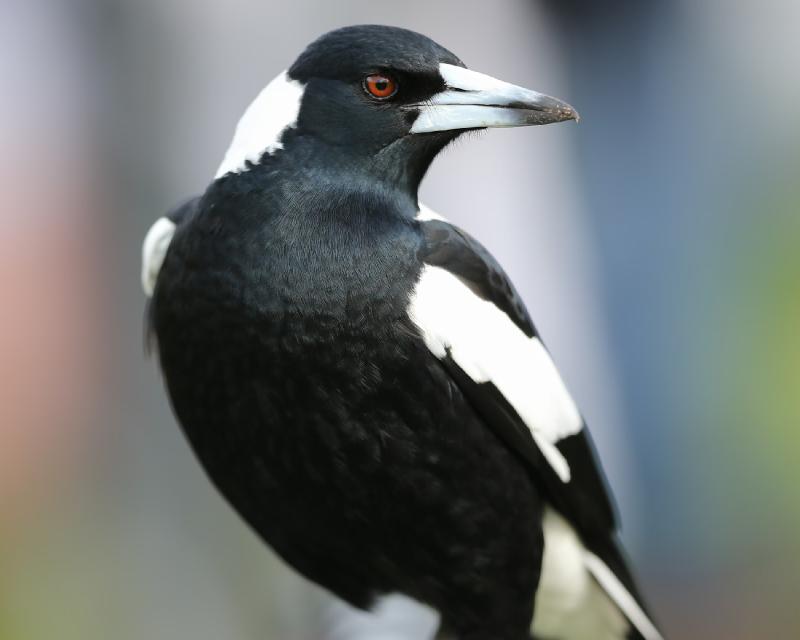


Some fun facts from Oz.
 S E E D E D C O N T E N T
The Australian magpie has again topped the charts in BirdLife Australia's Aussie Bird Count as the feathered friend most often spotted across the country.
Half of the 153,000 surveys submitted by 64,000 observers included the magpie, ahead of the rainbow lorikeet, which appeared on 42% of surveys and the noisy miner, making 34% of the counts.
But while the Australian magpie is an everyday feature for many of us, there's nothing boring about them.
'The birds are a global citizen': Indigenous groups in Australia and Alaska team up to track a feathered adventurer's epic journeyRead more
Here are five amazing things you might not know about Australia's most often seen bird.
Magpies can recognise human faces ... and voices
"They form relationships with people. They are nice to people who are nice to them," says emeritus Prof Gisela Kaplan, of the University of New England, who literally wrote the book on the Australian magpie's behaviour.
"They will recognise faces and will know which people belong to a property and they'll know their pets too," she says.
Magpies are thought to use this ability to help them differentiate between a threatening human and a friendly one. They can also recognise humans from their voice.
Magpies are amazing mimics
Kaplan has been studying magpies for about 30 years.
While lyrebirds have a reputation of being incredible mimics (they can make the sounds of car alarms and chainsaws as well as those of other species), Kaplan has compared their mimicry with magpies.
It is only the lyrebird male that mimics, and only during courtship. Whereas both male and female magpies can mimic other bird species and Kaplan says they do it more precisely and then intersperse those calls with their own.
But it doesn't stop there.
Kaplan says magpies can use their mimicry intelligently and she recalls one male magpie that tended to sit on a log in a New South Wales garden shared with a family dog and cat.
The magpie had learned to speak the name of the family dog. Whenever the cat would stalk the magpie, the bird called the dog, which came running, causing the cat to run away.
Magpies are intelligent and loyal
Prof Amanda Ridley is a behavioural ecologist at the University of Western Australia and has been studying the cognitive abilities of the state's unique sub-species of Australian magpie.
"I think it's fair to say they are an intelligent bird," she says.
Ridley and her colleagues have been setting an array of tests for magpies, such as learning which colour or shade of colour was associated with a food reward, or where a reward was likely to be in an array of holes set out in a shape (which would sometimes be turned upside down).
In one study, it was found that fledglings living in bigger groups tended to be able to solve puzzles faster than those living in smaller groups - regardless of the performance of their parent.
This might be because living in bigger groups requires an individual to recognise and remember more individuals - a skill they could translate to a puzzle.
Kaplan says as well as being "a very bright bird", magpies are also loyal. Groups of magpies will move long distances looking for a territory but once they find it - whether in the bush or your local park - they will stick around for many years.
She says magpies will become so familiar with the people in their territory that they are known to bring their fledglings along to their friendly neighbourhood humans.
"They'll bring them to the back porch and introduce them," she says. "It's a real honour when they do that. But we say [if that happens] don't feed the young ones."
Magpies will help each other out
And speaking of intelligence.
Researchers at the University of the Sunshine Coast designed a new harness for a GPS tracker to attach to Australian magpies to find out more about their habits.
One habit they hadn't accounted for was the ability of one magpie to find the weak point of the harness and then remove it from another magpie.
After successfully attaching the trackers to five magpies, researchers saw one magpie trying to remove her own tracker, before another magpie approached to help, pecking at the device. It was off within 10 minutes.
Most were removed within hours and the tag on a dominant male, the last one to be removed, was also gone three days later.
The only other example of this behaviour - known as "rescuing" - that the researchers could find in other birds was among Seychelles warblers, which have been observed removing sticky seeds from each other's feathers.
Magpies don't just randomly swoop
As loved and celebrated as Australian magpies might be, during the months of spring this passerine also becomes one of Australia's most feared.
Magpies are hyper-vigilant during breeding season as they protect their eggs from intruders, even if those intruders are unlikely to be climbing a tree.
But not all magpies swoop. In fact, only about 10% of magpies - and always males - swoop on humans.
It also appears magpies may have specialist targets. When researchers watched 48 aggressive magpies one Brisbane spring, they found 71% only attacked one type of intruder - pedestrian, cyclist or mail deliverer.
The 10% of the magpies that were recorded attacking the posties didn't attack any other type of intruder. In other words, the magpie world has postie specialists.
If the magpie recognises your face or voice (because they can) and knows you are not a threat, they won't swoop.
Remember the Golden Rule, be a good human. We're here to relax and chat, so let's keep it civil and fun. Please, remember to quote the person(s) you are replying to as a courtesy so everyone can follow the conversation. Grossly derogatory comments, blatantly inflammatory comments, excessive trolling, mean-spirited taunting and insults, scamming, spamming, and off topic comments may be removed in compliance with the site's Terms of Service and the Code of Conduct. The moderators have the final word and may remove comments at their judgement (or lack thereof).
Past performance does not guarantee future results. Comment at your own discretion. The owners of the site, the owner of this group, and the moderators are not responsible or liable for any stupid thing you do. You break it, you buy it. No shirt, no shoes, no service. Don't poke the bear. Mind the gap.

Tags
Who is online
112 visitors
Magpies are closely related to crows and ravens.
Australia has interesting birdlife. There are white ibises wandering around in the towns. Parrots. A wild life sanctuary we visited near Brisbane had an emu running along with a mob of hopping kangaroos, and they had a cassowary. One day in a rural area we heard a kookaburra. I've never heard anything like that before.
Emu and Kangaroos (© G.Gam)
The Ibis are affectionately known as bin chicken's..
I heard a Kooka laughing this morning.. they're great snake catcher's..
I don't know how to put a video up but if you google a Kookaburra laughing it will make your day..
Hearing the Kookaburra laughing was one of the most unusual experiences I have ever had.
Evening...yes a very unique laugh that any Aussie world wide knows and can instantly make you home sick..
Arvo... actually right at this moment I am listening to a Magpie warbling..
Yes they recognise people I have had Maggie's here for nearly 40 years and we have never been swooped even at nesting time..
I feed them each morning and they know me...if you try and attack them they will remember you and swoop.. mine even bring their babies and introduce them..
I went for a walk around the lagoon years ago..a Maggie was on the power lines..a girl in front of me got swooped, a guy behind me got swooped but I didn't..
I think it was one of the babies brought up around my area and moved to his own territory..he recognised me and didn't swoop..he was watching me and just ignored me..
Hell it a rite of passage here to be swooped..🤣