
How U.S. Farmers Use Brewer's Spent Grain as Livestock Feed

By: Suzanne Downing (AGDAILY)


 S E E D E D C O N T E N T
MSSOULA, Montana — Tom Andres swung open a weathered barn door, and the pen came alive.
Piglets moved in a wave of pink and mud, their hooves pressing into packed earth as high school students in chore boots shuffled them from one holding area to the next. It's sale day at the agricultural center near Big Sky High School in Missoula. The smell hits first, then the sound, then the steady rhythm of a working farm.
Andres paused, watching the animals.
"Each of those little pigs is worth $325," Andres said.
Behind the scenes, another force is at work. It's one that never makes it into the sale ring but helps sustain the entire system: a steady supply of nutrient-rich brewery industry byproduct known as brewer's spent grain (BSG).
Across the United States, brewers produce millions of tons of spent grain each year, making it the single largest byproduct of beer production. Increasingly, farmers, ranchers, and agricultural programs are repurposing that waste into livestock feed, creating localized systems that reduce landfill use, cut feed costs, and strengthen partnerships between industries.
But as producers in Montana show, the practice is far from simple. It requires labor, timing, logistics, and a clear understanding of animal nutrition to make it work.
For Montana students in Big Sky’s ag program, the value of brewer’s spent grain is tangible. (Image by Suzanne Downing, AGDAILY)
Set just beyond Big Sky High School, the Missoula Agriculture Center operates as one of the largest hands-on learning environments in Montana's Missoula County Public School system. Spread across roughly 100 acres, the center combines working farmland with agri-science labs, giving students from Big Sky, Sentinel, and Hellgate high schools access to real-world training in animal science, meat processing, construction, engineering, and greenhouse production.
Established more than 80 years ago, the program blends tradition with modern agricultural practices.
Feeding value in real time
Just as he has for more than two decades, Andres, senior ag teacher and Missoula FFA advisor, teaches students how to manage livestock in real-world conditions through Big Sky High's agricultural program. The students work with about 15 sows, producing roughly 80 piglets, along with cattle, sheep, and other animals.
Brewer's spent grain is part of that system.
"It's actually a really nice feeding material because it's high in protein and low in sugar," Andres said.
What remains after brewing is a wet mash of barley and grains still rich in fiber and protein. According to the Brewers Association, a trade group that promotes small and independent American brewers, BSG accounts for roughly 85 percent of a brewery's total byproducts. The U.S. produces more than 20 million barrels of craft beer each year — about 620 million gallons, or enough to fill nearly 1,000 Olympic-sized swimming pools. That process also generates an estimated 4.7 million metric tons of spent grain annually, much of which is reused as livestock feed or compost.
For livestock producers, that volume represents opportunity.
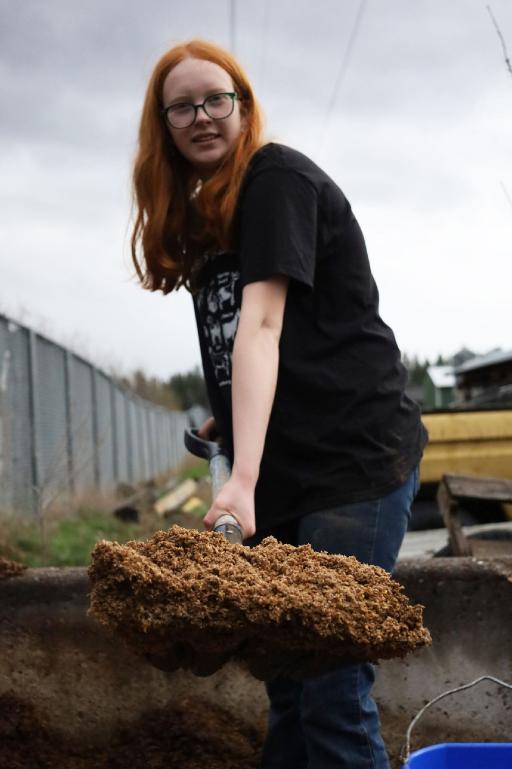
"They say it's about 20 percent protein," Andres said. "Protein is always the most expensive thing you can feed your animals, so it's free protein for us."
While livestock feed is an innovative use for brewer’s spent grain, researchers are exploring even more opportunities for the byproduct. (Image by Suzanne Downing, AGDAILY)
Greg Howard, owner at Great Burn Brewing in Missoula, sees the partnership as both practical and necessary.
"On average we brew two times a week, so roughly 1,000 pounds," Howard said. "We divert all of the spent grain waste to the high school ag program."
Without a local outlet, that material becomes a cost factor — and the fees can add up quickly.
"The biggest challenge is the cost of landfilling, transporting the material, and the remaining biological activity," Howard noted. "If the grains are not dumped right away, they will quickly start to decompose and generate a foul odor."
Instead, the brewery delivers the grain directly to the school, where his team dumps it into a designated concrete area near the fields. In return, the program provides half a hog each year to Howard and his staff who enjoy the harvest together.
"It's a win-win situation," Howard said.
From barley to byproduct
To understand why farmers are willing to build systems around BSG, it helps to start inside the brewery.
Beer begins with four ingredients: water, malted barley, hops, and yeast. The process starts with mashing, when crushed barley is soaked in hot water. Enzymes convert starches into fermentable sugars, creating a liquid called wort, the foundation of beer.
"Spent grains are the malted barley ingredient used in the brewing process," Howard said. "The water is called the wort and contains the sugars. Those sugars are used by yeast to ferment into alcohol."
Once the wort is separated, what remains is the byproduct: saturated grain.
There is a lot of interest in lower-cost supplemental feed sources that still provide usable protein and fiber. (Image by Suzanne Downing, AGDAILY)
That material — brewer's spent grain — is not waste in the traditional sense. It still contains fiber, protein, and nutrients, even after the sugars have been removed.
And there is a lot of it.
The United States now has more than 9,000 breweries, according to researchers at the Brewers Association.
In Montana alone, a state that consistently ranks among the highest in breweries per capita, there are roughly 100 operating breweries.
Each batch of beer can produce hundreds to thousands of pounds of spent grain. Scaled nationally, that adds up to millions of tons annually.
Much of that material already enters agricultural systems, particularly in regions with strong livestock industries. But transportation distance often determines whether spent grain becomes a resource or a disposal problem. Because the material is heavy, wet, and highly perishable, breweries located far from farms may still struggle to find practical outlets before spoilage begins.
Researchers and agricultural extension specialists have studied brewer's spent grain for decades, particularly as feed costs continue rising across the livestock industry. In some operations, feed can account for up to 70 percent of total production expenses, increasing interest in lower-cost supplemental feed sources that still provide usable protein and fiber.
What begins in stainless steel tanks as barley and water ends as a warm, dense feed source.
According to researchers at the University of Florida, mature cattle can consume 30 to 50 pounds of wet brewer's spent grain per day, and diets containing 15 percent to 30 percent spent grain have been linked to faster weight gain in some studies.
But this feed must be used quickly.
"It's still steaming when it shows up here," Andres said. "And once it degrades, nothing wants to eat it."
That short window, often just four to five days, defines the entire system.
If the grain isn't used in time, it begins to break down. At the school, excess material does not go to waste — it goes into a large composting system.
"Sometimes you end up with more than you can handle," Andres said. "We have a big composting system here."
Composting is a key piece of these Montana students’ agricultural education. (Image by Suzanne Downing, AGDAILY)
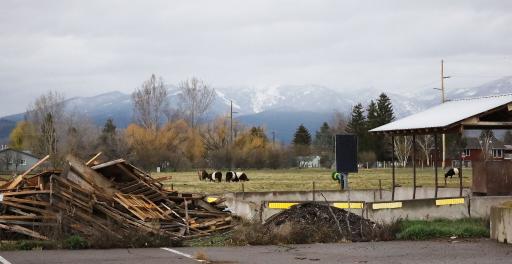
The students use this opportunity to understand a living system. In a designated area on the school grounds, they manage a compost operation, layering manure, bedding, and organic waste. It's hands-on, a little messy, and real. They see how the pile shrinks, settles, and transforms, and then they discover how waste becomes soil they can hold, measure, and return to the land.
That fallback reflects a broader reality. Even in systems designed around reuse, farmers still see overflow.
The same is true for breweries. Without farm partnerships, many must pay to dispose of grain.
"If they can't find a rancher to give it to, they have to pay to dump it," Andres added.
Those partnerships, however, are rarely one-size-fits-all. Relationships between brewery owners, ranchers, and agricultural programs often evolve into creative local exchanges shaped by trust, transportation costs, and proximity.
Whereas at Missoula's agricultural program, the brewery covers the cost of delivering spent grain in exchange for half a hog, other arrangements may involve composting agreements, livestock feed trades, or simple handshake deals between neighboring businesses. In many communities, the system works less like a formal supply chain and more like a collaborative network built around keeping usable material out of the landfill.
The long view: Lessons from John Stahl
Long before there was structure to these partnerships, farmers such as John Stahl were already experimenting with BSG.
On his 240-acre farm outside Missoula, the man affectionately known as "Farmer John" built a system around brewery byproducts that, for more than five years, helped sustain his livestock operation.
"There's a technique to moving these heavy barrels," Stahl said. "You have to use your body as leverage or you're going to have a bad back."
At its peak, the system reduced his feed costs by about 30 percent.
"They just love it," Stahl said.
But the work was relentless.
The man known as “Farmer John” used brewer’s spent grain on his 240-acre farm outside Missoula, Montana, but the work was difficult. (Image by Suzanne Downing, AGDAILY)
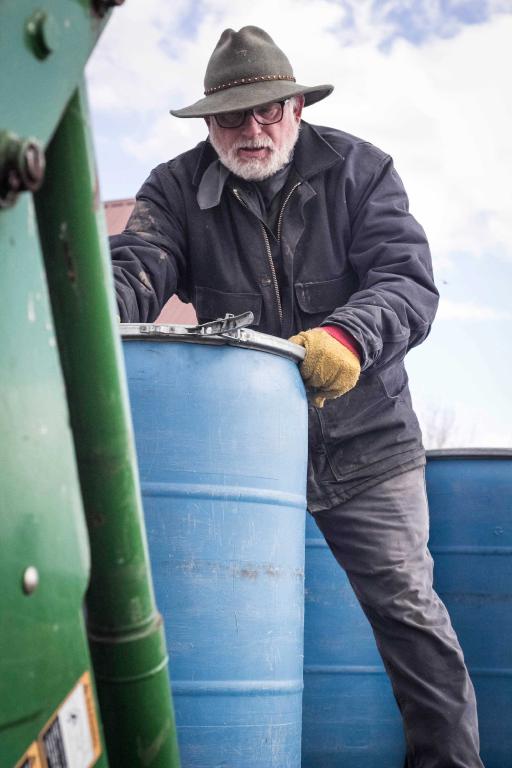
Because spent grain is heavy, wet, and perishable, each day required hauling, feeding, and cleaning barrels by hand to maintain sanitation. Stahl also learned that feeding required precision.
"I lost a $400 buck because he was hogging it," Stahl said. "You have to have a balanced diet."
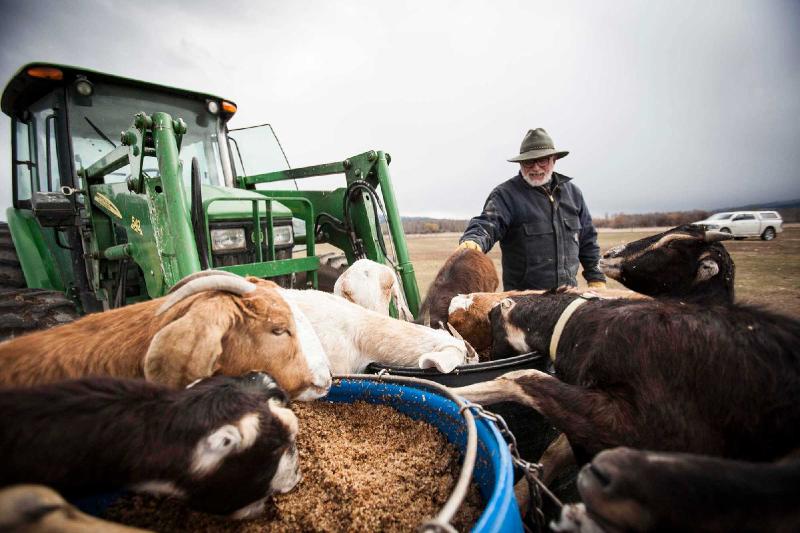
Brewer's spent grain is often fed to ruminants such as cattle, sheep, and goats, which can efficiently process the fibrous material through the rumen. Researchers at the University of Florida note that the feed's protein and fiber profile may make it especially beneficial for these types of animals.
Nutrition experts, however, echo Stahl's caution that brewer's spent grain works best as part of a balanced ration rather than as a standalone feed source. Because moisture levels and nutrient composition can vary between breweries and beer styles, producers often have to adjust feeding practices depending on the animals, season, and storage conditions.
That balancing act helps explain why some producers embrace the system while others eventually move away from it. The grain itself may be free, but managing consistency requires time, labor, and close observation.
John Stahl cautions that brewer’s spent grain is best used as part of a balanced ration rather than as a standalone feed source. (Image by Suzanne Downing, AGDAILY)
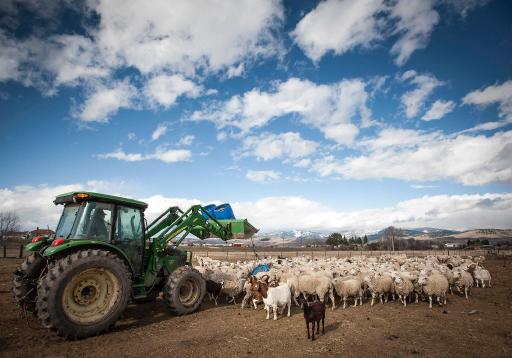
Stahl's operation reflects generations of agricultural adaptation. The land has been in his family for about 100 years, evolving from sugar beet production into a diversified livestock operation.
Still, for all his forward-thinking, Stahl was one of the farmers who decided that the demands of brewer's spent grain outweighed the benefits.
Today, he no longer feeds BSG to his animals, largely citing the physical labor and a few other factors.
"It was a lot of wear and tear on my vehicles too," Stahl said. "And a lot of expenses. It was mainly the time commitment every week of getting the grain, feeding, and cleaning the barrels."
His experience highlights a critical point. While the grain itself may be free, the system around it is not. And not every producer can make the system work.
At Turner Farms in Missoula, owner Erin Turner considered using brewer's spent grain but ultimately decided against it.
The Turner family raises pasture-based sheep, pigs, goats, laying hens, and beef cattle alongside a variety of seasonal crops, like tomatoes (often grown in hoop houses), onions, potatoes, carrots, beets, broccoli, kale, garlic, and pumpkins. They supply meat, eggs, vegetables and herbs directly to the Missoula community and run a seasonal u-pick pumpkin patch while prioritizing animal welfare, rotational grazing, and responsible land stewardship.
Those values made the idea of repurposing brewery grain especially appealing to Turner.
"We love the idea of using spent grains for our livestock," Turner said. "It aligns perfectly with our commitment to repurposing resources and reducing waste on the farm."
But consistency proved to be the barrier.
"The daily consistency required for pickup, especially during busy planting and harvest seasons, isn't something we can reliably guarantee," Turner added.
That requirement (to show up, on time, every time) often determines whether the system succeeds or fails. On smaller diversified farms such as Turner's, where livestock care is balanced alongside planting schedules, fencing, pasture rotation, and direct-to-consumer sales, adding another daily hauling system can become difficult to sustain long term.
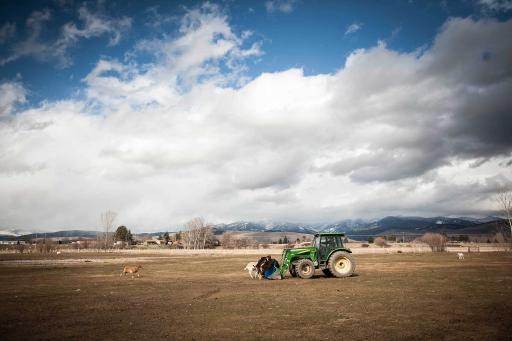
Brewer’s spent grain is often fed to ruminants such as cattle, sheep, and goats. (Image by Suzanne Downing, AGDAILY)
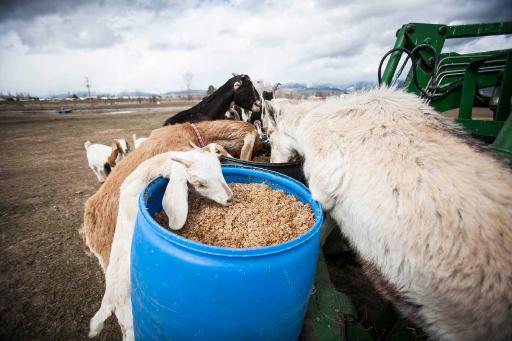
And not all farms can work out an open delivery system with brewery owners.
Two decades ago, using spent grain as livestock feed was largely informal. Today, while it maintains a community feel, it is gaining renewed attention as agriculture and food systems face pressure to reduce waste.
Food and Agriculture Organization researchers estimate that roughly one-third of all food produced globally is lost or wasted.
At the same time, feed remains one of the largest expenses in livestock production, accounting for as much as 60 percent to 70 percent of total costs in some operations, according to researchers at the U.S. Department of Agriculture.
That combination — waste on one side, cost on the other — continues driving renewed interest in systems like the one in Missoula.
"Most breweries have a relationship with local farmers," Howard said, adding that, "Farmers know that spent grains still have nutritional value."
Back to the barn
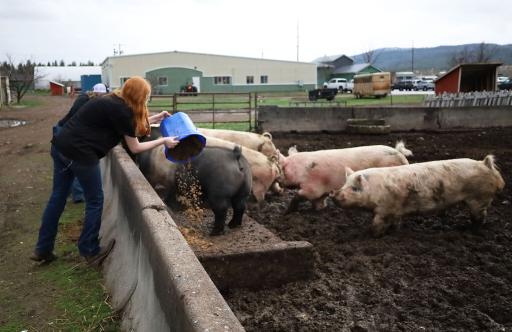
By late afternoon, the pigs at the Missoula Agricultural Center settle into a steady rhythm of feeding. Students lean on gates, watching as animals root through fresh piles of grain.
The work is messy, physical, and constant. But it also represents the evolution of a modern classroom experience.
"These kids do a lot of the work," Andres said. "They like to feed the grain because they get to drive the tractor."
At the ag center, students fold the system into their daily routine. Every week, they receive grain deliveries, haul feed to the animals, clean equipment, manage compost piles, and monitor livestock health. Through the process, students learn far more than basic animal care — they experience the realities behind modern food systems firsthand, balancing transportation schedules, waste management, physical labor, and the day-to-day demands required to keep an agricultural operation running.
The practice of using BSG in agriculture is legal across the United States and widely used, though storage and handling requirements can limit how farms and breweries participate.
Montana has about 100 active breweries and ranks among the highest in the U.S. in breweries per capita. (Image by Suzanne Downing, AGDAILY)
And the system is not perfect. It demands timing, labor, and careful management. It requires partnerships that hold up under pressure.
And in a world increasingly focused on efficiency and sustainability, the system offers something rare: a closed loop where waste becomes a resource.
Still, researchers are continuing to explore uses for brewer's spent grain beyond livestock feed. Across the food and agriculture industries, companies and universities are testing applications ranging from mushroom cultivation and compost enhancement to biofuels, pet food ingredients, and high-fiber flour products for human consumption.
But for students in Big Sky's ag program, the value remains immediate and tangible. They watch brewery byproducts move directly from grain tanks to feed troughs, compost piles, and eventually back into the soil beneath their boots.
Suzanne Downing is an outdoor writer and photographer in Montana with an environmental science journalism background. Her work can be found in Outdoors Unlimited, Bugle Magazine, Missoulian, Byline Magazine, Communique, MTPR online, UM Native News, National Wildlife Federation campaigns and more.
Remember the Golden Rule, be a good human. We're here to relax and chat, so let's keep it civil and fun. Please, remember to quote the person(s) you are replying to as a courtesy so everyone can follow the conversation. Grossly derogatory comments, blatantly inflammatory comments, excessive trolling, mean-spirited taunting and insults, scamming, spamming, and off topic comments may be removed in compliance with the site's Terms of Service and the Code of Conduct. The moderators have the final word and may remove comments at their judgement (or lack thereof).
Past performance does not guarantee future results. Comment at your own discretion. The owners of the site, the owner of this group, and the moderators are not responsible or liable for any stupid thing you do. You break it, you buy it. No shirt, no shoes, no service. Don't poke the bear. Mind the gap.

Tags
Who is online
74 visitors
Waste to resource. Just another day on the farm.
Morning...hmm sounds like you mob are virtually eating Vegemite and you didn't know it..
We have been using brewers yeast for over one hundred years to produce the black gold..you mob use brewers grain in your food chain..
See you're half Aussie, umm on second thoughts that could be a bit of a worry..🤣🦘
We may use brewers waste to make inferior food but I don't feel deprived. (Hold the lettuce, please.)
.
But which half?
Ripper a half decent hamburger..and not a pickle in sight..
Hope for you mob yet..😁
Next week; how to turn milk into cheese and where that whey ends up.
Whey Processing: Turning Cheesemaking Byproduct into Profit | Haskell