
Why Global Shippers Are Suspending U.S. Deliveries | TIME

By: Miranda Jeyaretnam (TIME)


 S E E D E D C O N T E N T
Shippers around the world have begun pausing some deliveries to the U.S. as a customs tax exemption for low-value goods will come to an end this Friday.
President Donald Trump issued a July 30 executive order to close the de minimis exemption, a customs tax rule that has allowed millions of cheap shipments everyday to flow into the U.S., for all countries, effective Aug. 29, as part of his broader protectionist trade campaign.
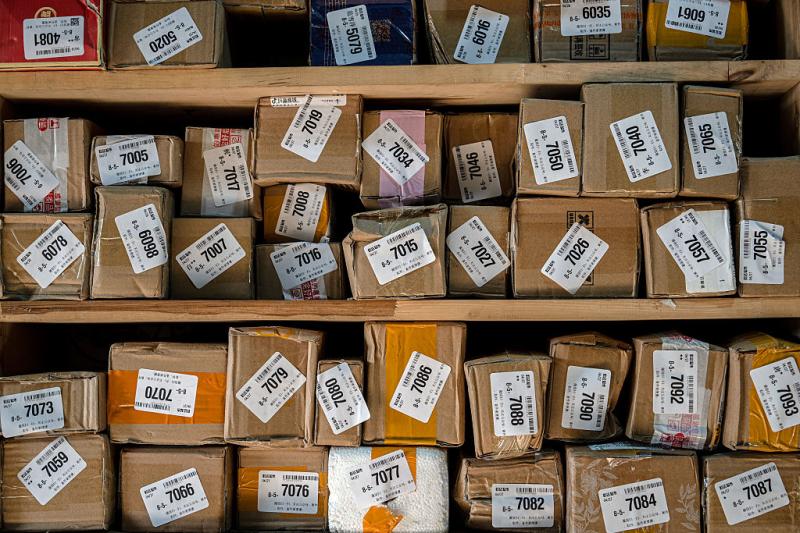
The exemption let parcels under $800 enter the U.S. without customs duties, making the shipments cheaper and faster for businesses and consumers. Already, global shippers from dozens of countries have suspended U.S. deliveries as they anticipate the end of the exemption—a move that experts say could lead to higher prices for U.S. consumers, shipping delays, and in the long term a shift in global supply chains.
While some speculate that the growing global response to the end of the de minimis exemption may persuade Trump to reverse course on yet another position, the "One Big Beautiful Bill," which was signed into law in July, requires the exemption to be permanently eliminated by July 2027.
At least 25 countries suspend deliveries
Postal services in a growing number of countries have announced pauses to their deliveries to the U.S. Shippers in Europe said they would suspend most shipments to the U.S. this week. Australia's postal service on Tuesday said it would be doing the same, as have postal services from India, New Zealand, Taiwan, and Japan. The United Nations' Universal Postal Union said on Tuesday that postal operators of 25 member countries have suspended services to the U.S.
"Key questions remain unresolved, particularly regarding how and by whom customs duties will be collected in the future, what additional data will be required, and how the data transmission to the U.S. Customs and Border Protection will be carried out," DHL said on Aug. 22, announcing that Deutsche Post and DHL Parcel Germany will pause deliveries to the U.S.
Ashley Dudarenok, who runs a China and Hong Kong-based consumer-research consultancy, tells TIME many shippers aren't equipped to handle the new duty collection requirements on the roughly four million packages that enter the U.S. duty-free per day.
It "creates a massive bottleneck," Dudarenok says, and the more that shippers suspend deliveries, the more there will be a "domino effect" as more shipments get pushed through private couriers like FedEx and UPS, leading to higher shipping costs.
Dudarenok points to Chinese shippers, for whom the de minimis exemption ended in May—although new rules were introduced as part of the U.S.-China trade truce that month that effectively lowered the duties applicable to low-value goods from China and Hong Kong. Chinese e-commerce exports to the U.S. fell 65% in terms of volume in the first fiscal quarter this year in light of Trump's tariff policies.
U.S. consumers will likely see higher prices very quickly, she says: "A $12 children's swimsuit from Temu now costs $31 after duties, nearly tripling the price. Imported goods are expected to become 12-22% more expensive across the board."
"The suspension of U.S. deliveries by major global shippers is a clear signal that the trade system is under serious stress," says Emil Stefanutti, CEO of Gaia Dynamics, an AI-powered trade compliance platform.
As postal services pause deliveries because they "decide they cannot reliably move parcels across borders," businesses around the world and those in the U.S. that manufacture overseas will be "left scrambling to manage expectations" from American consumers, he adds.
"Think of it like adding toll booths to a freeway that was built for free-flowing traffic," Stefanutti says. "The road still works, but suddenly congestion builds, delays spread, and everyone pays more to get where they are going."
Stefanutti says it's not just about rising costs due to the customs duties. Businesses must also contend with "mounting compliance expenses and clogged supply chains," while facing shipping delays due to customs brokers handling a "flood of filings" at times with outdated systems.
"For consumers, it means packages stalled in transit, surprise import charges, and rising checkout totals," he says.
"Unless new systems are built to handle the flood of filings, customs brokers and carriers will remain under strain for months, if not years," Stefanutti says. "E-commerce volumes aren't shrinking, yet the compliance load has suddenly multiplied. So while shoppers may feel sticker shock within weeks, the deeper structural pressure on trade and logistics is likely to persist well into the future."
'Could permanently reshape how Americans shop'
Sean Henry, CEO and co-founder of Stord, a third-party logistics provider focused on e-commerce and direct-to-consumer brands, says the change could lead to long-term shifts in U.S. consumer behavior.
As consumers see new line items for "import duties" and "customs fees" on their purchases, they may "rethink the way they've shopped for years," he says, pointing to additional trade policies, like high tariffs on countries that produce a bulk of the world's apparel and footwear. "While the exact fees will likely fluctuate as other factors come into play in the future, consumers should accept that this is the new standard."
In the long term, that could also benefit businesses that manufacture within the U.S. or sell locally-acquired secondhand products, which some have said is long overdue as the de minimis exemption has disproportionately benefitted fast fashion e-commerce giants like Shein and Temu.
"This is a complete restructuring of cross-border commerce that is going to level a playing field that has long been skewed," says Henry.
"Small U.S. manufacturers may actually benefit as imports become less competitive, but import-dependent businesses face major disruption," Dudarenok adds. The latter includes Amazon Haul, Etsy sellers, and Shopify merchants that rely on international suppliers.
"The convenience factor that drove the explosion from 134 million de minimis packages in 2015 to 1.36 billion in 2024 is disappearing," she says. "This could permanently reshape how Americans shop internationally."
Long-term shift towards regional supply chains
The end of de minimis, alongside Trump's broader tariffs on the rest of the world, could also lead to a long-term shift away from global supply chains, experts say.
Many companies, including Shein, are already shifting from direct-to-consumer shipping to bulk warehouse models, Dudarenok says. Others are opting to source within the U.S. or from countries facing lower tariffs and fewer restrictions, like Mexico and Canada.
"The reality is that cheap and fast always came with hidden costs, whether through labor exploitation, unsafe products, or environmental shortcuts," Stefanutti adds. "The de minimis exemption lets many of those gray areas persist. With that loophole closed, supply chains are being pushed to become more secure, more transparent, and more ethical."
Stord projects as much as a 75% drop in small-parcel shipment volume to the U.S. from 800-900 million packages annually down to around 200-300 million.
"It's accelerating the shift toward regional supply chains—companies are establishing U.S. warehouses and sourcing closer to home to avoid international shipping complications entirely," Dudarenok says, though doubts persist about the ability of the U.S. manufacturing sector to fill the gap.
At the same time, the U.S. market may lose its importance globally: Chinese exporters have redirected 28% more volume to Europe at the same time that U.S. shipments fell.
"If not for the tax loophole, sending these international parcels would be slow, costly, and inefficient," says Henry. For many postal services around the world, especially as the volume of international shipping has grown, "it's easier to stop serving the American market entirely rather than deal with the new customs requirements," he adds.
In any case, Dudarenok says, "The era of cheap, fast international shipping likely is over."
Trolling, taunting, spamming, and off topic comments may be removed at the discretion of group mods. NT members that are known plagiarists, repeat comments, or continue to disrupt/deflect the conversation risk having all of their comments deleted. Please remember to quote the person(s) to whom you are replying to preserve continuity of this seed. Any use of the phrase "Trump Derangement Syndrome" or the TDS acronym in a comment will be deleted. Any use of the term "Brandon", "Traitor Joe", or any variations thereof, when referring to President Biden, will be deleted. Right wing trolls can expect to have their irrelevant questions and comments deleted. Posting debunked lies will be subject to deletion. Use of the terms "leftist" or "lefty" will also be subject to deletion. ©

Tags
Who is online
126 visitors
I think its fair to say that a lot of low income Americans shop at Temu and similar.
I think it is fair to say this lady is full of shit.
And 12-22%? That would make that $12 swimsuit $14.64 at 22%.
Something isn't right here.................Even at the 145% it MAY have been, the price would be $17.40
ChatGPT explanation:
And the bottom, bottom line is that consumers will pay more.
Didn't argue that point.
Good.
And apparently you understand the impact this will have on low-income consumers (Trump loves the poorly educated).
This article was either written by a liberal or a worthless partisan hack, the math isn't mathing. there is no 200% tariffs. Who believes this bullshit?
I don't understand why shipments would be suspended two years before the news rules go into effect.
Because Trump issued an EO which causes the de minimis exemption in his 'BBB' to go into effect immediately. Instead of waiting for the law to go into effect, Trump made it immediate.
see @1.1.1
"In the long term, that could also benefit businesses that manufacture within the U.S. or sell locally-acquired secondhand products, which some have said is long overdue as the de minimis exemption has disproportionately benefitted fast fashion e-commerce giants like Shein and Temu."
"The reality is that cheap and fast always came with hidden costs, whether through labor exploitation, unsafe products, or environmental shortcuts," Stefanutti adds. "The de minimis exemption lets many of those gray areas persist. With that loophole closed, supply chains are being pushed to become more secure, more transparent, and more ethical."
Enough of the cheap foreign junk. It's doubtful that many Americans being affected by slightly higher costs.
The sky is falling the Sky is falling, ending this will cost the average family 11.33 a month. that is less than a pack of cigarettes in NY.