
When a judge reveals too much


This past Monday night a U.S. District Judge ruled that former White House Counsel Don McGahn had no such thing as "absolute immunity" from testifying at a congressional hearing. The Justice Department on Tuesday said it would appeal the ruling. That should begin the long appeal process that may take the ramifications of the immunity issue all the way to the SCOTUS with a legal resolution most likely taking place long after the impeachment proceedings are over.
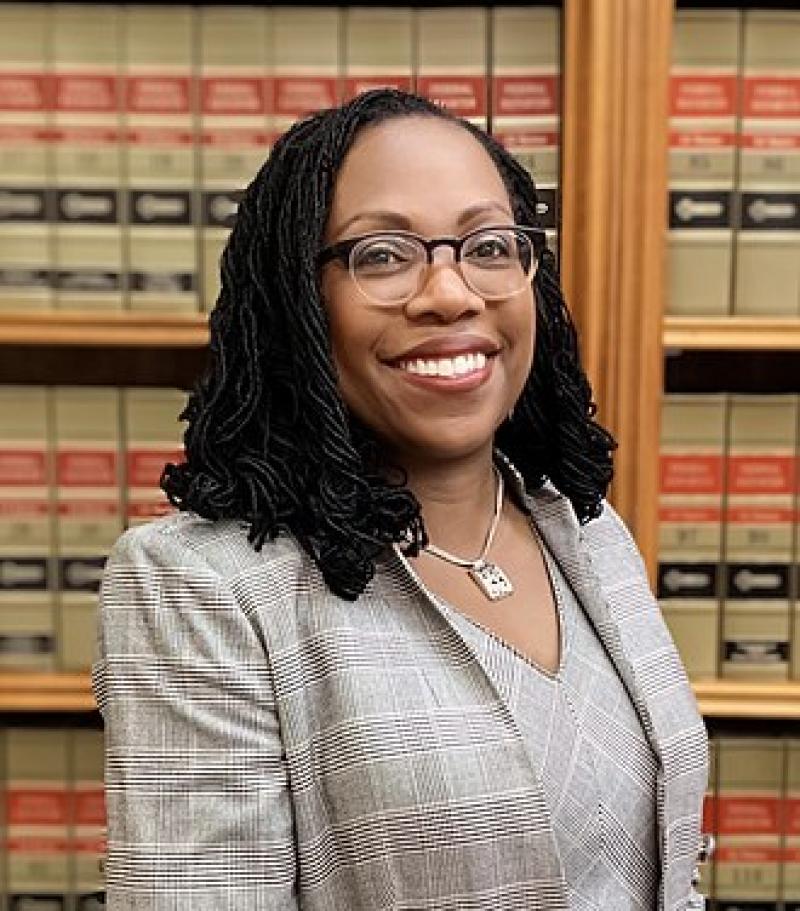
McGahn will most likely never testify. The larger legal issues will be settled by a higher Court with little relevance to the case at hand. What is interesting is how far the judge went in issuing her ruling. It may not come as a surprise to those who have been watching the District Court rulings in relation to this President that U.S. District Judge Ketanji Brown Jackson is an Obama appointee.
Here is a portion of what she wrote in her 120 page ruling:
"Stated simply, the primary takeaway from the past 250 years of recorded American history is that presidents are not kings. This means they do not have subjects bound by loyalty or blood, whose destiny they are entitled to control." (Page 115 of 120).
That sounds very personal & political! It sounds like a progressive/activist judge. Did I already mention that she was appointed by Obama?
There is no need for such language. Judge Jackson referenced other cases and even the Federalist 51. Decisions should be limited to the legal specifics of the case - not ideology or hatred for a President.
 Article is LOCKED by author/seeder
Tags
Who is online
273 visitors
Progressives have long ago poisoned the Judiciary.
Rules of civility apply
Let's see if you can answer a couple of simple questions before you lock the seed.
How are the two sentences in your quote from the 120 page ruling either personal or political?
Can you cite even one court ruling that does NOT make citations to other cases?
Don't you think that Federalist 51 is pertinent to the issues in the case? If not, why not?
Comparing the President to a "king" for simply invoking executive privilege is a clear evidence of bias. Anyone who won't admit it is biased as well.
Can you cite even one court ruling that does NOT make citations to other cases?
No. Why? Did I ever say she shouldn't? Or merely noting that she had?
I think someone is twisting words again.
Don't you think that Federalist 51 is pertinent to the issues in the case?
I think Federalist 65 would be the pertinent one, as a matter of fact it was prophetic:
"According to Alan Dershowitz, the problem Hamilton addresses (in Federalist 65) is that the accuser of wrongdoing as well as the judge of the accusation are both political bodies. Hamilton warned that the process of impeachment might become political, causing factions to polarize further away from each other in their defense or prosecution of the impeached individual. He rejects the notion that the Supreme Court should judge impeachment due to its small size. His recommendation is for the Senate to conduct impeachment proceedings as apolitically as possible."
Now I have a question for you. Regardless of how the courts eventually rule - doesn't the President have a constitutional right to invoke Executive Privilege?
One could argue that the President is not acting above the law because it in fact IS the law!
There is no 'absolute immunity' anywhere in the Constitution. There IS the power to hold the executive branch in check in the Constitution. Stop complaining about the Constitution and start asking yourself how you will feel when Warren or Bernie or down the road AOC are in power and the gop are powerless to do jack. No more Benghazi's, no more 'but her emails', and once AGAIN republicans will complain about the very things they started and set in motion. Now why would Trumpers expect and desire absolute power, where did that idea even come from, its definitely not American. That's right. It's a Russian value. Putin has been blowing in someones ear again and its getting passed on.
There IS the power to hold the executive branch in check in the Constitution.
Yes there IS! It's called the impeachment process, and the Founders intentionally made it difficult to accomplish, and expected it to be bi-partisan.
In Trump's case, the bi-partisan support is not there and that is why this whole silly clown show will fail.
It is was never designed to overturn the will of the people. Remember, the executive is co-equal branch of government alongside the legislative and judiciary.
So based on your standard, instead of the SCOTUS ruling on Trump's Muslim ban, we should have Impeached him back in 2017.
Nope, Trump will be the third to be impeached by the House in US history.
You know, the funny thing is that when the founders debated the Impeachment clause they never mentioned the 'will of the people'. NOT ONCE.
Therein lies the rub, Trump doesn't recognize that he is co-equal to ANYONE or ANYTHING.
And all three will have failed because they were PARTISAN undertakings in the House. The one case that never got to impeachment WOULD have gone on to a conviction was the case of Richard Nixon - and it would have been successful because it had bipartisan support. Nixon knew he had little support in the US Senate and resigned before the House could impeach him.
What surprises me is trump hasn't used the "Executive privilege card " yet like when Obama did when Holder was called to testify about the fast and furious operation and refused to testify.....
Ummm, the 'absolute immunity' claim is based solely on Executive privilege. Sheesh.
AGREED!!!
Don McGahn? He left the White House in August of 2018, what does he have to do with this impeachment inquiry or have to add to the testimony involving the inappropriate phone call to the Ukrainian president in July 2019?
McGahn testified for Mueller - is the House trying to renew the Mueller probe by demanding McGahn testify now? Either the House has the evidence needed to impeach the president or they don't .. if the Mueller probe is to be renewed by bringing McGahn before the committee to testify .. the president should be able to exercise his executive privilege to block said testimony .. ta da absolute testimonial immunity.. : )
Impeachment is a political process, since hearsay is being used in testimony .. alleged over hearing of a phone call can be testified about - why not just read McGahn's testimony already given into the record? - this whole process is a joke the phone call is not an impeachable offense - so find a way to slide unrelated testimony through the back door..? - Remember Mueller did not recommend any actions against the president be taken while in office....
...
Ooo damn'dit .. here all this time I thought Obama was king. I heard from a guy that overheard a phone call regarding Obama's subjects having to take a blood oath .... HA!
Hey Vic .. I must be missing something .. none of this makes sense to me. McGahn was subpoenaed for something not relating to this impeachment inquiry - it should be a moot point, it is a matter of he said, he said..
Peace
[Deleted]
I'll warn you once - Don't make it personal and don't insult anyone here.
The Bolton Subpoena
The Executive Branch has had the temerity to submit this claim of absolute immunity to judicial scrutiny and evaluation only twice. In Comm. of the Judiciary v. Miers , 558 F.Supp.2d 53 (DDC 2008), the court rejected it outright, declaring it "unprecedented" and "without any support in the case law." [The government did not appeal that ruling, fearing, perhaps, that an appeals court decision would affirm the obviously correct result of the district court and they'd have to throw out all those OLC memos …]
And yesterday, Judge Jackson of the DC district court again rejected the OLC position in a comprehensive, 118-page opinion upholding the congressional subpoena issued to former White House counsel Don McGahn to testify at the hearings surrounding the Mueller investigation:
[By the way, the judgment in this case should not be confused with the judgments in several other on-going cases where the President has raided even more outrageous immunity claims, arguing not only that he is absolutely immune from a state criminal investigation [see " The Fifth Avenue Immunity "], but that his immunity extends to his accountants and tax preparers. Those, too, have been summarily, and properly rejected by the courts.]
It is up to the courts to decide if the immunity claims are outrageous. Judge Jackson cites Comm. of the Judiciary v. Miers and others in making her decision. Her decision may not be the most important. As for the President - he at least has the right to invoke Executive Privilege and judges like Jackson have a solemn duty to make decisions based on the law