
How real is reverse discrimination?

By: JONATHAN TURLEY

 S E E D E D C O N T E N T
In 1976, Supreme Court Justice Thurgood Marshall lambasted the “illogic” of civil rights advocates insisting that laws against discrimination should protect only minorities from discrimination. The first African American justice and civil rights litigator declared that whites also deserved such protections. Today, as bizarre as it may seem, he could be denounced as enabling claims of “reverse discrimination.” Yet this debate could find its way back to the Supreme Court, given the array of controversies over the use of race as a threshold criteria for benefits or penalties.
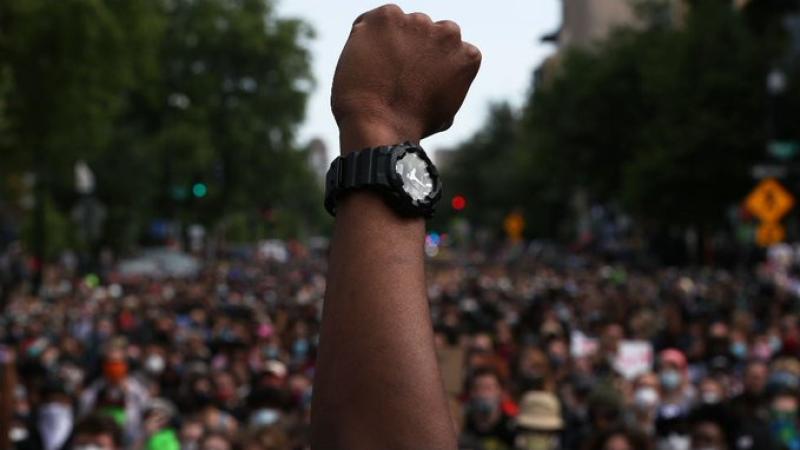
The Black Lives Matter movement was premised on the need to recognize the inequities and abuse of African Americans exclusively, rather than a broader position that “all lives matter.” The protests have convinced many of us about the importance of that recognition. But cities and states are turning to reforms where that racial exclusivity presents a potentially insurmountable barrier. Relying on threshold exclusions of all but one or two races could rekindle the debate over “reverse discrimination” and what constitutes discrimination versus affirmative action.
Marshall is an interesting figure at the crossroads of that debate. While ruling that whites are protected from racial discrimination under laws like Title VII, he supported affirmative action and dissented from the 1978 decision in the Allan Bakke case to reject reverse discrimination claims. He maintained that there was much to be done to correct the continuing depravations of racism since the Supreme Court “did not prohibit the most ingenious and pervasive forms of discrimination” against blacks. He stated, “I cannot believe that this same Constitution stands as a barrier.”
The question is where to draw that line and if “reverse discrimination” is real. That issue came up when Gary Garrels, a senior curator at the San Francisco Museum of Modern Art, resigned after he was denounced as a racist. The reason? While supporting diversity of the artists exhibited in the famed collection, Garrels said, “We will definitely still continue to collect white artists.” He reportedly also said a ban on acquiring art from white artists would be “reverse discrimination.” A petition calling for his firing said the terms “reverse discrimination” and “reverse racism” are offensive forms of “white supremacist and racist language.”
This instance highlights the limitations and the lingering debate over such distinctions. His colleagues had every right to express their views of his comments, and his decision to resign was a private decision. However, his objection to the use of race as an exclusive criteria to be in the collection captured the uncertainty between discrimination and diversification, a line that has occupied the Supreme Court for decades without a clear resolution in college admissions and other areas.
One possible case may arise in Seattle, where city council members have called to cut the police budget by 50 percent. Doing so would require firing a significant number of police officers, which is also popular. But that puts the city council in a quandary, as firing half of the department would start with the most junior officers, many of whom are minorities. Thus, defunding the police in the name of racial justice would lead to firing minority officers. One simple solution, according to city council member Lisa Herbold, is to fire the white officers.
Her proposal is striking in both its illegality and its popularity. In his 1976 opinion in the Santa Fe Trail Transportation Company case, Marshall ruled for two white employees fired after a theft. While a black employee also was held responsible, only the two white employees were fired. Marshall said that discriminating against them made a mockery of laws against discrimination. In 2009, the Supreme Court ruled against New Haven after white firefighters and a Hispanic firefighter challenged the city when it refused to certify results of promotion exams in order to promote black firefighters who did not perform as well. The Supreme Court held that the refusal to certify was unlawful discrimination.
While the Supreme Court has allowed race to be considered as a factor in some college admissions cases, it has struck down certain programs that crossed the line into discrimination. The position of many of the justices on this is summed up by Chief Justice John Roberts in a landmark 2007 decision in which he wrote, “The way to stop discrimination on the basis of race is to stop discriminaton on the basis of race.”
Of course, what is discrimination to some is affirmative action to others. The California Faculty Association has called for a wide array of reforms, including “free tuition for all Black, Native, and Indigenous students.” The California legislature is moving to undo “reverse discrimination” rules, and state senators voted to approve a ballot measure for the election this fall revoking Proposition 209, the 1996 state amendment banning any consideration of race or ethnicity in admissions decisions at public universities. Governor Gavin Newsom supports that revocation.
The California proposals could present another array of challenges over what are benefits to particular insular groups and what are penalties for those excluded. It is easier to benefit an insular group than it is to penalize other groups based on race. That line can become murky. Past cases have argued that state funds work as a zero sum game, where the increase of funds from one purpose means the reduction of available funds for other purposes. If the proposal is adopted to give free tuition for minority students, the loss of revenue would be considerable for state schools.
As the nation moves toward concrete reforms, these criteria will have to be addressed in the courts. The exclusive reference to one or two racial groups will be met with judicial suspicion under governing case law. That is why we need a civil debate not over whether to implement reforms but how to do so. It cannot happen if concerns raised by people like Garrels are denounced as dog whistles or white supremacy.
The translation of this important social movement into needed legislative reforms will not be easy if it relies on threshold benefits or penalties based on a single classification or exclusion. We must have that discussion now so we do not waste years in unsuccessful litigation instead of using our energy to forge something that passes constitutional muster.
Jonathan Turley is the Shapiro Professor of Public Interest Law at George Washington University.
 Article is LOCKED by author/seeder
Tags
Who is online
195 visitors
Does affirmative action really = discrimination of a different flavor?
Trump and his supporters are off topic
Actually, when budget cuts come down it's usually the most senior officers who are cut as they are making the most money and nearing retirement. They push out four or five nearing retirement they can retain ten or more rookies for the same price keeping their department numbers up and opening up room for advancement for some of the hard working younger but experienced officers on the force.
What a crock of shit. When the bald eagle was officially considered "endangered" in 1967 were there campaigns put out saying "Save the Birds!" or "All Birds Matter!"? No. they had campaigns specifically about protecting bald eagles. "Eagle lives mattered".
If pigeons started complaining about eagles having their own signs, should we really take them seriously? Pigeons are fucking everywhere and aren't in the least bit threatened, and yes, while their lives matter too, does anyone really need to point it out?
This seed is just more conservative bullshit cover intentionally being manufactured by a disgruntled Jonathan Turley who is being paid well to manufacture such a smokescreen.
There is no union I know of that cuts senior members first. Is that the excuse to be used?
We can call it Juniority!
They could offer the more senior officers a golden handshake to retire but if it came down to who gets laid off first I agree with you that senior members would never get laid off first.