
China Seeks to Use Access to Covid-19 Vaccines for Diplomacy - WSJ

By: Chao Deng (WSJ)

 S E E D E D C O N T E N T
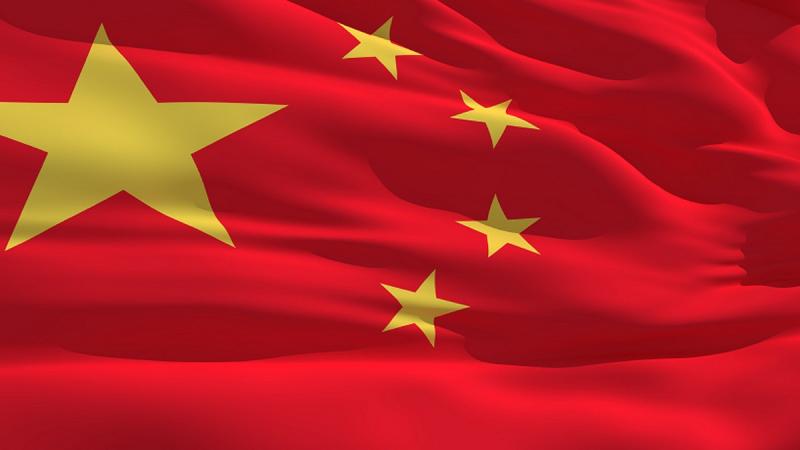
TAIPEI—With China closing in on a coronavirus vaccine, Beijing's top officials and some of its drugmakers have begun promising early access to countries of strategic interest as it seeks to shore up its global standing after a pandemic that has strained geopolitical ties.
China's Foreign Ministry has promised the Philippines priority access to a Chinese vaccine, while privately-owned Chinese firm Sinovac Biotech Ltd. has agreed to work with Brazil and Indonesia to produce hundreds of millions of doses of its vaccine candidate for local use.
Pakistan, one of China's closest allies in the developing world, would receive doses to distribute to roughly one-fifth of its population of 220 million, under a deal that allows China National Pharmaceutical Group, also known as Sinopharm, to conduct clinical trials there.
And Russia may produce a vaccine developed by China's military and China-based CanSino Biologics Inc., if the Russian health ministry approves.
Chinese state-owned and private drugmakers are responsible for three of the six global vaccine candidates in the final stages of human testing, among the more than two dozen candidates in clinical trials around the world, according to the World Health Organization. The other three in late-stage tests are being developed by companies based in the U.S., U.K. and Germany.
Beijing's offers to provide vaccine doses to countries come after it donated masks and medical supplies to countries earlier in the year. Chinese authorities had come under fire from the U.S. and other countries for not having acted more quickly to contain Covid-19, which exploded in the central Chinese city of Wuhan last year.
Global health experts expect China, Russia and other countries to attempt to turn any successful vaccine into a tool of diplomacy amid intense global demand.
Compared with the supply of masks, vaccines will be much more limited in the early days of production, said Thomas J. Bollyky, director of global health at the Council on Foreign Relations think tank. "It will be on another level," he said. "That is why vaccine nationalism starts to bite."
President Vladimir Putin announced that Russia has officially registered the world's first coronavirus vaccine. WSJ's Thomas Grove explains how Moscow reached this milestone faster than anyone else, and what we know about the drug. Photo: Alexander Zemlianichenko Jr/Associated Press
While Russia last week claimed to have developed the world's first Covid-19 vaccine, the announcement has been met with skepticism both inside and outside the country about whether its effort has adhered to regulatory standards. The WHO has said it would review Russia's claim. Even so, Russia says 20 countries, including Brazil, Indonesia and the United Arab Emirates, have requested access.
Russian private firm Petrovax, which is helping to test a vaccine from China's CanSino, said it would produce the vaccine in the Moscow region to sell in the country and to former Soviet nations.
The Trump administration has yet to indicate how forthcoming it will be with its own vaccine supply. Secretary for Health and Human Services Alex Azar said last week that the U.S., the hardest-hit country in the world by the pandemic, would share a vaccine with other countries only after its own needs have been met.
Having largely eliminated the coronavirus within its borders, China may have more flexibility to share a vaccine with other countries. The country may also be sharing its vaccines because the lack of Covid-19 cases have made it difficult to conduct effective clinical trials within China.
China is already one of the world's largest producers of vaccines, churning out hundreds of millions of doses annually, and its companies have been racing to ramp up capacity alongside vaccine development.
The Chinese drugmakers with vaccine front-runners all have their own manufacturing facilities; state-run China National Biotech Group Co. is able to pump out 200 million doses a year.
China's leadership, however, will need to strike a delicate balance between inoculating its own 1.4 billion people and potentially shipping hundreds of millions of doses abroad.
Beijing hasn't disclosed the details of many of the agreements it is reaching with other countries. Still, official Chinese statements suggest a willingness by China to blur humanitarian and foreign-policy objectives that include garnering support from countries on Chinese territorial claims in the South China Sea.
In some countries, accepting a vaccine from a Chinese drugmaker could help deepen diplomatic ties with Beijing at Washington's expense. Earlier this month, Malaysia's foreign minister spoke with both Chinese Foreign Minister Wang Yi and U.S. Secretary of State Michael Pompeo on ways to further vaccine collaboration.
Neither Beijing nor Washington has promised to help Malaysia gain early access to a vaccine, but both are seeking to strengthen ties with Kuala Lumpur amid tensions in the South China Sea, where the U.S. is trying to build resistance to Chinese claims on disputed waters.
A Chinese Foreign Ministry spokesman said in July that China would give priority to the Philippines, another country with claims in the South China Sea, after President Rodrigo Duterte made a direct plea to Mr. Xi to give his country access to its vaccines.
Given the high stakes, the Chinese government is likely to be involved in key discussions by both state-owned drugmakers and Chinese private pharmaceutical firms with foreign entities on sharing.
"It could get embarrassing if a vaccine doesn't work, or if there are safety problems later on, or if companies are unable to deliver the supply they promised," said John J. Donnelly, principal at California-based Vaccinology Consulting LLC.
It could take months before countries are able to use a Chinese vaccine, given that candidates are still in clinical trials and some may not prove to be successful.
China's Foreign Ministry, science ministry and customs administration didn't respond to requests for comment.
So far, vaccine purchases have largely been commercially driven, with the U.S. and other wealthy nations putting in multibillion-dollar orders. The U.S. government has signed up to buy hundreds of million of doses from Britain's AstraZeneca PLC, American drugmaker Moderna Inc. and Germany's BioNTech SE, which is working with Pfizer Inc. The European Union and U.K. government have also committed to buying from the same drugmakers.
Poorer countries are at risk of being left behind. Global health experts say they could turn to vaccines that aren't proven to be fully safe and effective in formal clinical trials.
China could also end up throwing many of these countries a lifeline. The country has sought to play a bigger role in helping developing countries control disease, having launched in 2017 a "Health Silk Road" extension to its Belt and Road Initiative global-infrastructure program.
In Bangladesh, China's Sinovac has paired up with Dhaka-based International Centre for Diarrhoeal Disease Research, which is helping it seek final approvals to start recruiting volunteers.
Elsewhere in Asia, Sinovac has struck a deal with Indonesian state-owned pharmaceutical holding company PT Bio Farma to make up to 250 million vaccine doses each year for the Indonesian public, according to China's official Xinhua News Agency. The deal comes as Sinovac conducts clinical trials in the country, and as Beijing touts the benefits of expanding Chinese infrastructure in the region.
Brazil could be one of the first countries to use a Chinese vaccine, in exchange for conducting local trials of Sinovac's vaccine. The Chinese firm promised to sell government-backed Instituto Butantan at least 60 million doses in the coming months, while the institute builds its own production plant, said Butantan's director, Dr. Dimas Covas. He added that neither country's government was involved in the agreement.
— Raffaele Huang, Anthony Harrup, Jeffrey Lewis, Saeed Shah and Thomas Grove contributed to this article.
Write to Chao Deng at Chao.Deng@wsj.com

Who is online
159 visitors