╌>

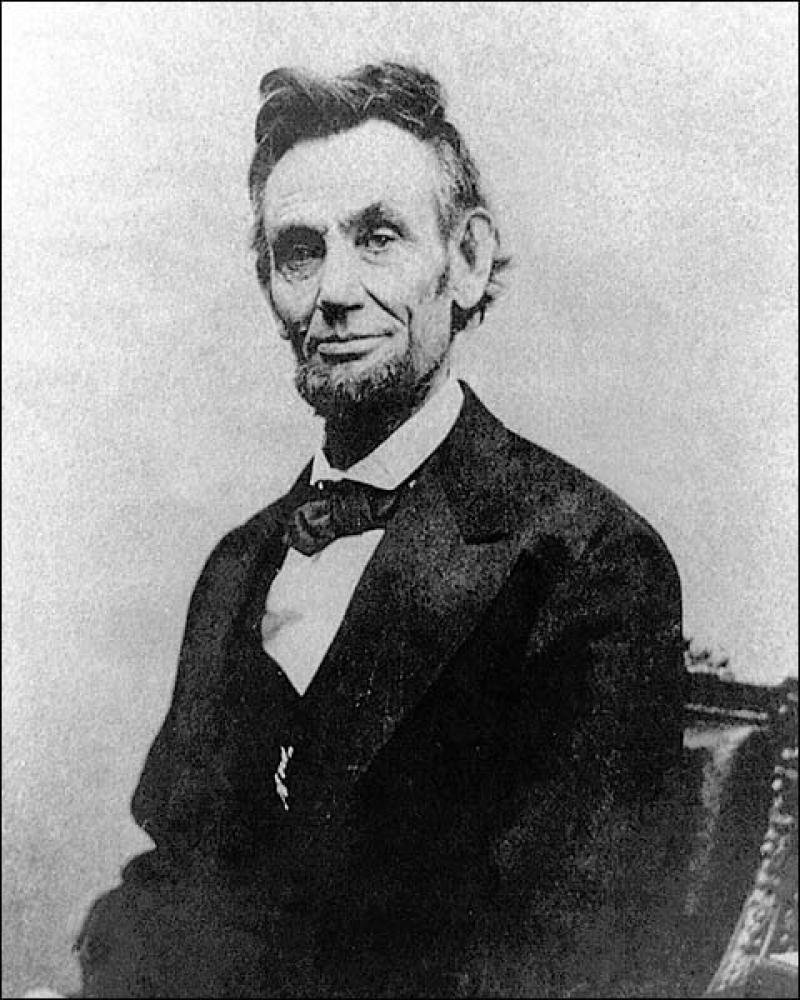
Abraham Lincoln On What Caused The Civil War

  
By:  John Russell  •  3 years ago  •  259 comments


Abraham Lincoln On What Caused The Civil War
 

Leave a comment to auto-join group NEWSMucks

NEWSMucks


...One-eighth of the whole population were colored slaves, not distributed generally over the Union, but localized in the Southern part of it. These slaves constituted a peculiar and powerful interest. All knew that this interest was, somehow, the cause of the war. To strengthen, perpetuate, and extend this interest was the object for which the insurgents would rend the Union, even by war; while the government claimed no right to do more than to restrict the territorial enlargement of it....

Abraham Lincoln , Second Inaugural Address



Article is LOCKED by author/seeder
 

Tags

jrGroupDiscuss - desc
[]
 
JohnRussell
Professor Principal
1  author  JohnRussell    3 years ago

...A few days ago, a caller on C-SPAN identified as “William in Lansford, Pa.,” asserted this to me: “The Civil War wasn’t about slavery. It was about the states fighting with one another about money.”

It was far from the first time I’ve heard such claims. It’s not hard to see why a candidate might avoid engaging too deeply with voters on this topic.

But the rest of us can arm ourselves with a few base-line facts. Far more than most historical events, the Civil War is debated among ordinary people as much as among historians. (Lincoln called it “a people’s war,” and it’s now a people’s history. I recently attended the annual Lincoln Forum in Gettysburg, Pa., where scholars shared the room with hundreds of superfans.) If we are to hold on to our history, we can prepare ourselves to respond calmly and with facts when someone makes a doubtful claim. Evidence shows what the war was about. It also shows why some people think it wasn’t about slavery — and why it matters a century and a half later.

The evidence is straightforward. Southern states rejected Lincoln’s 1860 election as a president from the antislavery Republican Party. South Carolina was the first of 11 states that tried to leave the Union, and Confederates fired the first shot of the Civil War there at Fort Sumter in Charleston Harbor.

Leaders of the would-be new republic named slavery as their cause. Alexander H. Stephens, the vice president of the Confederacy, gave a speech in 1861 in which he said “the assumption of the equality of races” was “an error” and “a sandy foundation” for the country he intended to leave.

More than 30 years of agitation over slavery preceded the war. Northern antislavery leaders denounced the South’s institution more and more loudly and finally organized through the new Republican Party to gain political power. Southern leaders, who once cast slavery as a tragic inheritance from colonial times, increasingly defended it as moral and good.

After the South’s defeat in 1865, these plain facts were obscured. Former Confederates cast their war heroes, like Robert E. Lee, as defenders of their home states rather than champions of slavery.

The United Daughters of the Confederacy campaigned for generations to downplay slavery’s role in the war. In a 1924 speech to the group’s annual convention, Hollins N. Randolph asserted that “Southern men” had “fought to the death” for “the liberty of the individual, for the home and for the great principle of local self-government.” Never mind that it was “the liberty of the individual” to own other human beings. The speech advocated raising money for a great Confederate monument that still exists at Stone Mountain, Ga.

Beyond the bombast, historians contested many facets of the long road to war. To give just one example from the immense scholarly record: T. Harry Williams, a 20th-century writer, put some blame for the war on Northern capitalists. He said they foresaw “fat rewards” in knocking proslavery aristocrats out of power and reshaping the economy to benefit their own factories and railroads. But really, such arguments amount to different interpretations of how the United States came to fight a war over slavery.

Today some people quote Lincoln — accurately — saying his main war aim was preserving the Union, not ending slavery. But these quotes cannot sustain any argument longer than a social media meme. Lincoln also said that slavery was “the cause of the war.” Preserving the Union ultimately required slavery’s destruction.

It seems that people question the historical record less because of doubt about the past than because of conflicts in the present. Some conservatives feel that progressives use slavery as a cudgel against their side in modern debates over race and equality.

The first Republican president saw slavery neither as a cudgel nor as something that he needed to obscure. In an 1864 letter, he described slavery as a “great wrong” and added that people of the North and South alike shared “complicity in that wrong.”

Complicity. Lincoln affirmed his country’s responsibility for failing to live up to its promise of equality. He still believed in the country and its promise.

Lincoln never claimed to be morally superior to his countrymen. He focused on an immoral system, which he worked to restrict and then to destroy. The end of slavery is now part of this country’s legacy. It’s also part of the legacy of Lincoln’s party, though Ms. Haley’s example shows it can be hard for Republican candidates to talk about it.


cjcold
Professor Quiet
1.1  cjcold  replied to  JohnRussell @1    3 years ago

Have read books about Lincoln. Slavery was a big part of it.


Tacos!
Professor Guide
2  Tacos!    3 years ago

It’s hard to believe this is controversial.


CB
Professor Guide
3  CB    3 years ago

I am going to post information (below) that in its own way will be an aid to understanding the "multi-headed hydra" that became the Civil War from the perspective and actions taken by President Andrew Jackson. This gives a 'fuller' understanding of the "logic" some were using as argument(s) to SUPPORT their keeping slaves and forbidding others to remove from them their human property.

1835 Andrew Jackson - US Post Office Censors Anti-Slavery mail

In 1835, the US Postal Department censored materials sent out by the Anti-Slavery Society of New York. The materials were part of a campaign to expose the "madness and cruelty of slave holders as an argument to rouse the Christian world against the SIN OF SLAVERY". Postmaster general Amos Kendall reported to President Jackson that it was his constitutional duty to stop these abolitionists from inciting violence and rebellion through "newspapers, pamphlets, tracts, and almanacs, containing exaggerated, and in some instances, false accounts of the treatment of slaves" (Postmaster General Report 1835).  President Andrew Jackson not only stood by his Postmaster General but urged Congress to pass legislation to step in and suppress what he called "lies" calculated "to produce all the horrors of a servile war" (Jackson SOTU 1835). He did not mince words calling the actions of the abolitionists, "repugnant to the principles of our national compact and to the dictates of humanity and religion." Today, it is easy for us to blame 'white supremacy’ but doing so would ignore the struggle to preserve our union even as slavery was tearing it apart. Jackson did not oppose the abolitionists because he supported slavery, but because he believed it was his duty to preserve the union. It may seem contradictory, but Andrew Jackson argued that to preserve the union, independent states must be allowed to protect slavery with state laws and the federal government was bound to stop other states from interfering. Back then, it was universally accepted that the people of one state had no more right to interfere with the interests of another state than they had the right to interfere in a foreign nation.

No matter how abhorrent slavery is, the right to own slaves was not prohibited by the constitution, and it was the duty of the United States to protect each of the states against ‘domestic violence’. It did not matter what Jackson's view of slavery was, he argued it was his constitutional obligation to treat each state equally and stop any discussion, either orally or by the distribution of printed papers that put the safety and peace of one state at risk, especially if such discussion was in violation of individual state laws .*  

1835 State of the Union Address

On December 1st, Jackson received a report from the Postmaster General who described the events in Charleston along with actions taken by some of the Southern state legislators to prohibit the circulation of “incendiary literature” within their borders. In his 1835, State of the Union Address, Jackson made no attempts to acknowledge the horrors of slavery, nor the cruelty of some slave masters, rather he condemned the actions of the Anti-Slavery Society as being "wicked" and "repugnant to the principles of our national compact and to the dictates of humanity and religion". There is no question here, Jackson was putting the peace, security, and union over the sin of slavery. Nowhere in these words did he condone slavery, but he recognized that it was a constitutionally protected right of the Southern states, and he understood full well that to interfere with this would lead to disunion . Above all else, Jackson believed in preserving our Union, just as Lincoln would 30 years later.* 

"In connection with these provisions in relation to the Post-Office Department, I must also invite your attention to the painful excitement produced in the South by attempts to circulate through the mails inflammatory appeals addressed to the passions of the slaves, in prints and in various sorts of publications, calculated to stimulate them to insurrection and to produce all the horrors of a servile war. There is doubtless no respectable portion of our countrymen who can be so far misled as to feel any other sentiment than that of indignant regret at conduct so destructive of the harmony and peace of the country, and so repugnant to the principles of our national compact and to the dictates of humanity and religion. Our happiness and prosperity essentially depend upon peace within our borders, and peace depends upon the maintenance in good faith of those compromises of the Constitution upon which the Union is founded. It is fortunate for the country that the good sense, the generous feeling, and the deep-rooted attachment of the people of the nonslaveholding States to the Union and to their fellow-citizens of the same blood in the South have given so strong and impressive a tone to the sentiments entertained against the proceedings of the misguided persons who have engaged in these unconstitutional and wicked attempts, and especially against the emissaries from foreign parts who have dared to interfere in this matter, as to authorize the hope that those attempts will no longer be persisted in. But if these expressions of the public will shall not be sufficient to effect so desirable a result, not a doubt can be entertained that the nonslaveholding States, so far from countenancing the slightest interference with the constitutional rights of the South, will be prompt to exercise their authority in suppressing so far as in them lies whatever is calculated to produce this evil."

Postmaster General Report of 1835 

It is important to note that this section of Jackson's report was for the most part a summary and agreement of one of his most trusted members of his cabinet, Amos Kendall the Postmaster General had written. Kendall, a lawyer himself presented his arguments on censoring the abolitionist material.  In his report, he laid out a logical argument why the Post Office Department was obligated to censor the mail. Kendall argued that because the constitution was silent about slavery, state laws were the supreme law of the land and the US Postal Service as a federal agency was obligated under the constitution to obey them. Here are his arguments: 

  1. It is universally accepted states are united only for certain purposes. There remain "interests" where the states remain as independent as the original colonies were. Slavery was one of those interests.
  2. The union neither gives any state the right to own slaves, nor took it away.
  3. No state has the right to interfere with right of slavery in another state anymore then they hvae the right to interfere in the internal affairs of a foreign nation.
  4. If the United States allowed papers to be distributed among the laboring population in another nation, calculated to produce discontent and rebellion, it would be just cause for war.
  5. The constitution of the United States provides that "the citizens of each State shall be entitled to all privileges and immunities of citizens in the several States," but this clause cannot put the privileges of one state over the immunities of another. Therefore, citizens of one state cannot distribute materials that are forbidden in that state especially if they put the peace and security of that state at risk.  
  6. The US Constitution does not appear to have any power over slavery.
  7. Some Southern states have passed laws forbidding the circulation of anti-slavery materials citing the safety of their people.
  8. The constitutionality of these laws has not been challenged by the United States, nor can they because they relate to a subject that the federal government has no authority under the constitution.
  9. Therefore, the state laws censoring anti-slavery materials are for all intents and purposes the supreme laws of the land on the subject.
  10. The constitution makes it the duty of the United States "to protect each of the States against invasion; and against domestic violence".  For Southern states, the greatest fear of domestic violence is that of a slave revolt.
  11. State censorship laws have been enacted to prevent domestic violence stemming from a slave revolt.
  12. The United States has no rights through their officers or departments to knowingly participate in "the very mischief which the constitution commands them to repress".
  13. It would be an abuse of power for the United States Post Office to circulate papers calculated to produce domestic violence in contradiction of the laws of the state    


* (Emphasis CB.) 

The above presidential and cabinet level "discussion" and actions gives us "sight" into the minds of some of the relevant officials during President Jackson's administration about states' rights and control over their borders and what they perceived as their "people."


Nerm_L
Professor Expert
4  Nerm_L    3 years ago

The one and only cause of the Civil War in the US was the Democratic Party defending, protecting, and trying to expand the institution of chattel slavery.  The Democratic Party was created to represent the interests of slave owners and slave traders.  Andrew Jackson was one of the largest owners of black slaves in the history of the United States.  Andrew Jackson was also the first Democrat elected to be President.

Chattel slavery was so important to the politics of the Democratic Party that threats of abolition caused the party to rebel and establish its own government.  Slavery was only a divisive issue in the US because the Democratic Party protected the institution of chattel slavery.  

The Democratic Party is responsible for the Civil War in the United States.  The Democratic Party is the cause of the Civil War in the United States.  Yes, the Democratic Party that caused the Civil War is the same Democratic Party dividing the country today. 


JBB
Professor Principal
4.1  JBB  replied to  Nerm_L @4    3 years ago

original

One Hundred Sixty Years Ago Democrats Were The Conservatives!


Nerm_L
Professor Expert
4.1.1  Nerm_L  replied to  JBB @4.1    3 years ago
One Hundred Sixty Years Ago Democrats Were The Conservatives!

Democrats practiced racial politics one hundred sixty years ago to divide the country.  Democrats are still dividing the country with racial politics.


Thrawn 31
Professor Participates
4.1.4  Thrawn 31  replied to  JBB @4.1    2 years ago

160 years later they are not. 


cjcold
Professor Quiet
4.1.5  cjcold  replied to  Nerm_L @4.1.1    2 years ago

Instead of being disingenuous and getting hung up over the terms republican and democrat, you should be honest and use the terms conservative and liberal.

It was conservatives that fought for slavery and liberals who freed the slaves.

But you already knew that. 


Perrie Halpern R.A.
Professor Guide
4.2  Perrie Halpern R.A.  replied to  Nerm_L @4    3 years ago

Nerm,

I have some bad news for you, but neither the people who call themselves Democrats nor the people who call themselves Republicans from back then would recognize either party today. 

So your post is hardly correct.


CB
Professor Guide
4.2.1  CB  replied to  Perrie Halpern R.A. @4.2    3 years ago

These people know this. But, they like to drone on and on with their so-called, "talking points" because there is a sucker born every day who will not bother to EDUCATE himself or herself because ignorance is a sort of 'bliss.' Additionally, those repeat the 'point' do so as a form of Coping. To admit to themselves that the parties have switched political poles would be for the republican party to officially and openly admit to racists existing and worse operating within its constituents. 

To be clear, these are my thoughts alone shared with you.


Vic Eldred
Professor Principal
4.2.2  Vic Eldred  replied to  CB @4.2.1    3 years ago
To admit to themselves that the parties have switched political poles

I don't think that is what Perrie was saying.


CB
Professor Guide
4.2.3  CB  replied to  Vic Eldred @4.2.2    3 years ago

Well, if you have time to "elaborate" do so properly. Share "your thoughts" on what Perrie is saying. Then, let's see if I agree with your thoughts or if we can set the record straight through  farther discussion.


Vic Eldred
Professor Principal
4.2.4  Vic Eldred  replied to  CB @4.2.3    3 years ago
Share "your thoughts" on what Perrie is saying.

I think she is saying that both political parties have changed dramatically over the decades. Neither resembles the party of abolition or slavery.


CB
Professor Guide
4.2.5  CB  replied to  Vic Eldred @4.2.4    3 years ago

No. That is not what Perrie is saying-I feel pretty sure of it. That said, I don't speak for her. So, dear Perrie if you wish to take this farther. . . .


Nerm_L
Professor Expert
4.2.6  Nerm_L  replied to  Perrie Halpern R.A. @4.2    3 years ago
I have some bad news for you, but neither the people who call themselves Democrats nor the people who call themselves Republicans from back then would recognize either party today.  So your post is hardly correct.

Are you sure the early Democrats would not recognize today's politics of racial benevolence?  Those early Democrats argued that Black people were oppressed by nature; establishing a natural disadvantage that Black people could not overcome to better themselves.  The natural disadvantage of Black people required benevolent guidance, nurturing, and care by the white population.  The chattel slavery provided institutionalized benevolent guidance, nurturing, and care.

Today's politics of racial benevolence isn't that different.  Today's Democrats argue that Black people are oppressed by social disadvantages that Black people cannot overcome.  It's really the same oppression and same disadvantage.  And the remedy advocated by today's Democrats still hinges upon institutionalized benevolent guidance, nurturing, and care by the white population.  


JohnRussell
Professor Principal
4.2.7  author  JohnRussell  replied to  Nerm_L @4.2.6    3 years ago

According to this NBC poll from the summer , 82 percent of black Americans continue to support affirmative action, with 71% of them strongly supporting it. 

Poll: Support increases for affirmative action programs (nbcnews.com)

Your conceit is that you think you know what is better for blacks then they do for themselves. 

Guess what? That is exactly what the slaveowners thought. 

The nature of the two major political parties in America flipped between 1948 and 1972 or so. The Democrats became more pro black and the republicans became less. The GOP candidate in 1964 was a leader against the Civil Rights Bill. Their presidential candidate !

William F Buckley , a demi god in mid century conservative Republican  thought, wrote a magazine article in the late 50's declaring that blacks were not ready to govern themselves, this during a period when blacks sought equal voting rights.

Do you want me to go on and on ?  


Nerm_L
Professor Expert
4.2.8  Nerm_L  replied to  JohnRussell @4.2.7    3 years ago
According to this NBC poll from the summer , 82 percent of black Americans continue to support affirmative action, with 71% of them strongly supporting it. 

Poll: Support increases for affirmative action programs (nbcnews.com)

Your conceit is that you think you know what is better for blacks then they do for themselves. 

Guess what? That is exactly what the slaveowners thought. 

How does affirmative action differ from the racial benevolence of the plantation?  Are Black people providing affirmative action for Black people?  Affirmative action relies entirely upon the institutionalized benevolence of the white population.

Thank a Democrat for the two centuries of racial stereotyping.  If Black people cannot move past a legacy of slavery then Democrats are responsible for that.


CB
Professor Guide
4.2.9  CB  replied to  Nerm_L @4.2.6    3 years ago

There you go again; 'laboring' to change the discussion wholesale. Running with a tired and 'frustrated' analysis that leaves and dismisses whole components of the overall black 'condition' in this country just to craft and hold on to a weak alternative view is ignorance personified.


CB
Professor Guide
4.2.10  CB  replied to  Nerm_L @4.2.8    3 years ago

Again, you are striving to change the topic away from Lincoln onto 'other' matters. Somebody should "see the man" and stop it.


Nerm_L
Professor Expert
4.2.11  Nerm_L  replied to  CB @4.2.10    3 years ago
Again, you are striving to change the topic away from Lincoln onto 'other' matters. Somebody should "see the man" and stop it.

Abraham Lincoln was not defending, protecting, and attempting to expand the institution of chattel slavery.  Abraham Lincoln was not a Democrat.  Abraham Lincoln was the first Republican elected President.  

The one and only cause of the American Civil War was the Democratic Party refusing to give up slavery.  Slavery gave the Democratic Party political power over the country.  Democrats divided the country and instigated a rebellion to protect the institution of chattel slavery.  

Slavery, by itself, did not cause the Civil War.  Democrats started the Civil War to protect their institution of slavery.  The Democratic Party represented slave owners and slave traders so the Democratic Party was not going to allow curbs on slavery.

The Democratic Party caused the American Civil War.  The Democratic Party chose to rebel and divide the country rather than give up slavery. 


cjcold
Professor Quiet
4.2.12  cjcold  replied to  Nerm_L @4.2.6    2 years ago

Your views on race relations are equally as convoluted as your views on anthropogenic global warming (eg. it's not fossil fuels it's population).


Tacos!
Professor Guide
4.3  Tacos!  replied to  Nerm_L @4    3 years ago

The Democratic Party is the same organization, but that’s where the connection ends. The assertion that the people or policies of the modern Democratic Party are in any way related to supporting slavery is gaslighting in the extreme. 

People, places, and institutions evolve over time. Once upon a time, Los Angeles was a Catholic mission. Then a collection of cattle ranches. Then citrus orchards. Today, it’s a sprawling city. While it’s technically the same location, it would be ludicrous to characterize it as the same kind of place. Likewise, it’s similarly ludicrous to characterize the modern Democratic Party as sharing values with the Confederacy.

Modern conservatives love to engage in this political whataboutism. “Oh, you think were bad because were anti-this or that? What about how those evil Democrats supported slavery?” It’s gaslighting, and you know it.


JBB
Professor Principal
4.3.1  JBB  replied to  Tacos! @4.3    3 years ago

Every single one of us who lived through segregation, the Civil Rights Movement, integration, Strom Thurmond's Dixiecrats, George Wallace's American Party, Nixon's Southern Strategy, Lee Atwater, Karl Rove and Trumpism KNOWS Nerm is bullshitting!

We are a dying breed, but we know what we saw, heard, lived...


Thrawn 31
Professor Participates
4.4  Thrawn 31  replied to  Nerm_L @4    3 years ago

And then 1960 happened. 


GregTx
Professor Participates
4.4.1  GregTx  replied to  Thrawn 31 @4.4    3 years ago

And?..


Nerm_L
Professor Expert
4.4.2  Nerm_L  replied to  Thrawn 31 @4.4    2 years ago
And then 1960 happened. 

Slavery ended in 1865 and not in 1960.  A number of people are claiming that slavery is still relevant.  So, if slavery is still relevant then the history of the Democratic Party in defending slavery and causing the Civil War is still relevant.  

The Democratic Party was the party of slavery, Jim Crow, and segregation.  The Republican Party was the party of abolition and civil rights.  Hiram Revels was a Republican, not a Democrat.


JohnRussell
Professor Principal
5  author  JohnRussell    3 years ago
Andrew Jackson was one of the largest owners of black slaves in the history of the United States.

and Trump's favorite president.


Nerm_L
Professor Expert
5.1  Nerm_L  replied to  JohnRussell @5    3 years ago
and Trump's favorite president.

Donald Trump has not trapped the Black population in slavery.  It is Joe Biden that wants Black people to be defined by slavery.  Biden blames slavery while ignoring the true history of the Democratic Party.  

Nikki Haley is a woman of color that doesn't want to be defined by slavery.  Democrats are using dirty politics to keep Haley in her place in society.  According to Democrats, Haley must be defined by slavery because she is a woman of color.


JohnRussell
Professor Principal
5.1.1  author  JohnRussell  replied to  Nerm_L @5.1    3 years ago

holy smokes


Vic Eldred
Professor Principal
5.1.2  Vic Eldred  replied to  Nerm_L @5.1    3 years ago
Biden blames slavery while ignoring the true history of the Democratic Party.  

He plays to blacks. All of his statements on race are disgraceful in one way or another. 

Let me see if I understand the point of this article: Candidate Haley (the moderate's choice in the GOP primary) said the Civil War was over various rights and the radical left implies that she doesn't think slavery was one of them?    

What horrible souls they are. They were trained to play on race even if it means sacrificing one of the few Republican candidates they didn't hate. Last seen, they got caught condemning what turned out to be a Native American for "wearing black face."


JohnRussell
Professor Principal
5.1.3  author  JohnRussell  replied to  Vic Eldred @5.1.2    3 years ago

Haley doesn't want to lose her home state of South Carolina to Trump by 20 points. That's the reason she said what she did the other day.


Vic Eldred
Professor Principal
5.1.4  Vic Eldred  replied to  JohnRussell @5.1.3    3 years ago
Haley doesn't want to lose her home state of South Carolina to Trump by 20 points.

The state that elected her and Tim Scott?


That's the reason she said what she did the other day.

What exactly did she say that was incorrect? 


The man you have pictured above initially went to war over secession. There is only one other thing I would like to know: the identity of the man who asked why "slavery" wasn't explicitly mentioned.


JohnRussell
Professor Principal
5.1.5  author  JohnRussell  replied to  Vic Eldred @5.1.4    3 years ago

I think Trump planted him.

The reason the man asked the question, which he has since explained, is that this was not the first time Haley has hemmed and hawed over slavery and the confederacy. 


Vic Eldred
Professor Principal
5.1.6  Vic Eldred  replied to  JohnRussell @5.1.5    3 years ago
I think Trump planted him.

I guess Trump is omnipresent.  You also seem to think that he is obsessed with the subject of slavery.


The reason the man asked the question, which he has since explained, is that this was not the first time Haley has hemmed and hawed over slavery and the confederacy. 

I didn't know about her hemming and hawing. What I do know, again, is that Lincoln went to war because of secession. Later, (as you yourself indicated by his 2nd inaugural address) Lincoln listed the ending of slavery as one of the reasons that bloody war was fought.


JohnRussell
Professor Principal
5.1.7  author  JohnRussell  replied to  Vic Eldred @5.1.6    3 years ago

What caused the secession ? 


Vic Eldred
Professor Principal
5.1.8  Vic Eldred  replied to  JohnRussell @5.1.7    3 years ago

It is irrelevant.

On November 6th, 1860, with the election of Lincoln, southern states left the union. That was the initial reason for the war. Lincoln wanted the union preserved. 

I know to you, here in 2023, it was all about racism or slavery. It wasn't that simple.

Here:

My paramount object in this struggle is to save the Union, and is not either to save or to destroy slavery.  If I could save the Union without freeing any slave I would do it,  and if I could save it by freeing all the slaves I would do it; and if I could save it by freeing some and leaving others alone I would also do that. What I do about slavery, and the colored race, I do because I believe it helps to save the Union; and what I forbear, I forbear because I do not believe it would help to save the Union. I shall do less whenever I shall believe what I am doing hurts the cause, and I shall do more whenever I shall believe doing more will help the cause. I shall try to correct errors when shown to be errors; and I shall adopt new views so fast as they shall appear to be true views.

american civil war - What is the context of Lincoln saying: "if I could save the union without freeing any slave I would do it" - History Stack Exchange


charger 383
Professor Silent
5.1.9  charger 383  replied to  JohnRussell @5.1.7    3 years ago

People who would not tend to their own business


JohnRussell
Professor Principal
5.1.10  author  JohnRussell  replied to  Vic Eldred @5.1.8    3 years ago
I know to you, here in 2023, it was all about racism or slavery. It wasn't that simple.

Have you ever read anything about the Civil War era?

Its not a 2023 conclusion, it was the conclusion in 1860.  I could bury you with material about that, but it would be a waste of time. 

One thing for you. Alexander Stephens, the vice president of the confederacy, said in his famous cornerstone speech that slavery was the reason for secession. 


JohnRussell
Professor Principal
5.1.11  author  JohnRussell  replied to  Vic Eldred @5.1.8    3 years ago
My paramount object in this struggle is to save the Union, and is not either to save or to destroy slavery.  If I could save the Union without freeing any slave I would do it,

for christs sake, Lincoln didnt secede and bomb Ft Sumter, the south did.  Are you out to get embarrassed here yet again ? 


Vic Eldred
Professor Principal
5.1.12  Vic Eldred  replied to  JohnRussell @5.1.10    3 years ago

Again, Lincoln's own words:

My paramount object in this struggle is to save the Union, and is not either to save or to destroy slavery. 


Vic Eldred
Professor Principal
5.1.13  Vic Eldred  replied to  JohnRussell @5.1.11    3 years ago

It looks like it is you who once again left me something to wave around for a while.


JohnRussell
Professor Principal
5.1.14  author  JohnRussell  replied to  Vic Eldred @5.1.12    3 years ago

Lincoln did not CAUSE the civil war? what is wrong with you? 


JohnRussell
Professor Principal
5.1.15  author  JohnRussell  replied to  Vic Eldred @5.1.13    3 years ago

you are incompetent on this topic


Vic Eldred
Professor Principal
5.1.16  Vic Eldred  replied to  JohnRussell @5.1.14    3 years ago

Oh, I see, you are dancing. Secession caused the war. The southern states left the union.

Lincoln did not let them simply leave, did he?


CB
Professor Guide
5.1.17  CB  replied to  Vic Eldred @5.1.4    3 years ago
the identity of the man who asked why "slavery" wasn't explicitly mentioned.

Do you need to rifle through his background looking for some ancillary reason to DISCOUNT, DIMINISH, DISTRACT from Haley's bad showing.  That is, you want to know so you can do "damage control" by making the asker the 'story.'

Consider this: Haley was twice governor of South Carolina, she should know her history and/or for that matter get better talking points (which include slavery) so she won't flub the question (next time for their will be a next time) when asked. Case in point: It has been proven through the record that her talking point about the civil war has been something she has "settled" on for several election cycles in her past.

Coincidentally, I observe that you put the word, slavery in quotes. You can elaborate on that if it signifies anything you want us to know.


Vic Eldred
Professor Principal
5.1.18  Vic Eldred  replied to  JohnRussell @5.1.15    3 years ago
you are incompetent on this topic

Says those who feel the kicking.


Vic Eldred
Professor Principal
5.1.19  Vic Eldred  replied to  CB @5.1.17    3 years ago
Do you need to rifle through his background looking for some ancillary reason to DISCOUNT, DIMINISH, DISTRACT from Haley's bad showing.

I simply want to find out if he was a concerned citizen or an activist. That was a very pointed question.


Case in point: It has been proven through the record that her talking point about the civil war has been something she has "settled" on for several election cycles in her past.

Ok, give us a link to the record of which you are referring to.


JohnRussell
Professor Principal
5.1.21  author  JohnRussell  replied to  JohnRussell @5.1.20    3 years ago

Lincoln never recognized the Confederacy. It doesnt mean he started the war. Secession started the war. When Lincoln would not abandon US Fts in the south , the south attacked Ft Sumter. 


CB
Professor Guide
5.1.22  CB  replied to  Vic Eldred @5.1.6    3 years ago

The question asked by the questioner was this: “What was the cause of the United States Civil War?”

In Haley's answer (and post commentary) not only does she not mention slavery. . . she does not mention secession either.


Vic Eldred
Professor Principal
5.1.23  Vic Eldred  replied to  JohnRussell @5.1.20    3 years ago

Thank you, John, we all know about Fort Sumter.  You want to make the point that the south fired the first shot?

That is fine John, but Lincoln didn't fight that war because the south fired on/laid siege to a fort in their midst. He fought it because he had no intention of letting them leave the union.


JohnRussell
Professor Principal
5.1.24  author  JohnRussell  replied to  Vic Eldred @5.1.23    3 years ago

So now Lincoln is to blame for the war because he opposed secession? LOL. 

What caused secession Vic ? 


Vic Eldred
Professor Principal
5.1.25  Vic Eldred  replied to  JohnRussell @5.1.21    3 years ago

Please stop John. You said the war was over slavery and implied that Haley was dismissing slavery. You were wrong on both counts.

Now you are on to who started the war.  Just admit that you were wrong.


Vic Eldred
Professor Principal
5.1.26  Vic Eldred  replied to  JohnRussell @5.1.24    3 years ago
What caused secession Vic ? 

Neither side went to war over fucking slavery. It was over secession.  Learn your history.


afrayedknot
Senior Silent
5.1.27  afrayedknot  replied to  Vic Eldred @5.1.8    3 years ago

“It is irrelevant.”

Welcome to your world.

Some are blessed with self awareness…and alas…too many are not. 


JohnRussell
Professor Principal
5.1.28  author  JohnRussell  replied to  Vic Eldred @5.1.25    3 years ago
You said the war was over slavery

You are a ridiculous person.  The fucking south said the war was over slavery.  Do you ever read anything? 


CB
Professor Guide
5.1.29  CB  replied to  Vic Eldred @5.1.8    3 years ago

You can't be serious. That you are willing to stand here and quote Lincoln pondering on the issue of slavery and saving the Union intermingled together and then you pull "saving the union" out as the only consideration speaks volumes about an obvious blind spot. Remove the blinders and 'look' again at the quote.


Vic Eldred
Professor Principal
5.1.30  Vic Eldred  replied to  CB @5.1.22    3 years ago

Why not post what she said?

Might it encompass all of that?


Vic Eldred
Professor Principal
5.1.31  Vic Eldred  replied to  afrayedknot @5.1.27    3 years ago

Still on the phone?


afrayedknot
Senior Silent
5.1.32  afrayedknot  replied to  Vic Eldred @5.1.31    3 years ago

…ignoring spam…


JohnRussell
Professor Principal
5.1.33  author  JohnRussell  replied to  JohnRussell @5.1.28    3 years ago

Did Alexander Stevens say that slavery caused secession? Searching for: Alexander Stephens slavery secession Generating answers for you…

Yes, Alexander H. Stephens, the acting Vice President of the Confederate States of America, delivered a speech known as the Cornerstone Speech on March 21, 1861, in which he defended slavery as a fundamental and just result of the supposed inferiority of the black race, explained the fundamental differences between the constitutions of the Confederate States and that of the United States, enumerated contrasts between Union and Confederate ideologies, and laid out the Confederacy’s rationale for seceding 1. Stephens used the word “cornerstone” to describe the “great truth” of white supremacy and black subordination upon which secession and the Confederacy were based 1. He declared that disagreements over the enslavement of African Americans were the “immediate cause” of secession and that the Confederate constitution had resolved such issues 1. After the war, Stephens attempted to downplay the importance of slavery as the cause of Confederacy’s secession

1.
I hope this helps!
Learn more
1 en.wikipedia.org
2 teachingamericanhistory.org


Vic Eldred
Professor Principal
5.1.34  Vic Eldred  replied to  JohnRussell @5.1.28    3 years ago
You are a ridiculous person. 

I could flag that, if only I could stop laughing.


The fucking south said the war was over slavery.

But your article is about what Lincoln said caused the Civil War and you used a quote from his 2nd inauguration when Lincoln was then including the end of slavery to justify the carnage and loss of life. By that time John, Lincoln saw the light that only something as noble as ending slavery could make such loss of life worth the cost.


Do you ever read anything? 

History being the most important to me.


Vic Eldred
Professor Principal
5.1.35  Vic Eldred  replied to  afrayedknot @5.1.32    3 years ago
ignoring spam

I don't think so. It is called cancelling.  I'll do something on it this week.


JohnRussell
Professor Principal
5.1.36  author  JohnRussell  replied to  Vic Eldred @5.1.34    3 years ago
History being the most important to me.

Well you need to do a better job at it.

Do you know what the Secession Commissioners were ? 


CB
Professor Guide
5.1.37  CB  replied to  Vic Eldred @5.1.12    3 years ago

Lincoln is making an argument (to recalcitrant Southern state officials/leaders) or explanation for why his presidential duties require him to hold the union together as a leader and to that end (like Andrew Jackson's argument and conclusions at 3 above), he would do nothing to 'break' the union apart all the way up to keeping slavery in the southern states. However, the Southern states did not accept his argument/explanation so the statement becomes moot. As the southern states seceded anyhow. 

Lincoln offered the Southern states what they wanted (to keep their slaves just not try to branch out to other new territories with slavery) and the southern states spurned the offer. I bet they wish they had taken Lincoln up on that offer after all was said and done about it!


CB
Professor Guide
5.1.38  CB  replied to  Vic Eldred @5.1.19    3 years ago
The voter who asked the question declined to share his name when asked by The Washington Post. He later told reporters that he had asked the question because he saw her answer such a question when she was running for governor of South Carolina and he was curious if she would provide the same response in New Hampshire .

It wouldn't matter if the VOTER was dressed in a tu-tu or bearskin he was acceptable to be in the venue. A voter asked a question of a candidate and the candidate flubbed it. I am pretty sure there was no posted sign asking specific types of questioners and questions are off-limits. Therefore, she took the risk by picking him to receive a question from and failed when she short-changed her answer.


afrayedknot
Senior Silent
5.1.39  afrayedknot  replied to  Vic Eldred @5.1.35    3 years ago

“It is called cancelling.  I'll do something on it this week.”

As predictable as that ‘something’ will be…a preemptive retort:

“I believe that truth is one of the most powerful tools we possess against victimization, exploitation, and fear.”      ~ J. Varney


JohnRussell
Professor Principal
5.1.40  author  JohnRussell  replied to  Vic Eldred @5.1.26    3 years ago

What caused secession Vic? 


devangelical
Professor Principal
5.1.41  devangelical  replied to  Vic Eldred @5.1.26    3 years ago
It was over secession.  Learn your history.

what was the south's reason for secession? learn your history.


JohnRussell
Professor Principal
5.1.42  author  JohnRussell  replied to  JohnRussell @5.1.36    3 years ago

   In all, some fifty-two southern men represented the Deep South as secession commissioners in the weeks leading to the Civil War (19).  Together, they represented the breadth of the moderate and radical political factions within the Democratic and Whig parties. All spoke fervently and relentlessly on the issue of preserving the purity of the white race and protecting southern civilization from political despotism, blackness, and Republicanism—all of which formed a singular entity in the southern mind. Alabama and Mississippi dispatched the first wave of commissioners, which Dew outlines in his second chapter. These men went as far north as Maryland; some went even to South Carolina, if only to urge on the issue of immediate secession in a state not wanting for radicalism or secessionist sentiment. The initial flurry of commissioners spanned four days, December 17th to the 20th, 1860.

            When South Carolina formally severed ties with the Union on 20 December 1860, it moved quickly to improve its political and geographic isolation.

In December 1860 that a southern confederation was hardly a foregone conclusion: “South Carolina’s headlong rush to secede required some explanation and justification, particularly in light of the state’s well-deserved reputation as the most radical of all the slaveholding states” (49). Dew concentrates his focus on Alabama’s commissioners in chapter four. Stephen Fowler Hale bore the special distinction of winning Kentucky for the cause of secession, a mission he failed for reasons beyond his own competency. Nonetheless, Hale’s mission to Kentucky serves to reinforce Dew’s broader agenda, which is to show how southerners viewed the issue of secession as racially charged and expressly for the preservation of racial purity and superiority 

Apostles of Disunion: Southern Secession Commissioners and the Causes of the Civil War. By Charles B. Dew. Charlottesville: University Press of Virginia, 2001. Pp. vii, 124, $22.95 (hbk), ISBN 0-8139-2036-1


JohnRussell
Professor Principal
5.1.43  author  JohnRussell  replied to  JohnRussell @5.1.42    3 years ago
In December 1860, Hale, who was  Alabama 's commissioner to  State of Kentucky  at the time, wrote to that state's governor of Alabama's justification for secession. In it, he voiced support for the  Dred Scott  decision, condemned the Republican Party, and stated that the state's secession, which would perpetuate slavery, was the only way to prevent prospective freedmen, whom Hale referred to as "half-civilized Africans", from raping southern "wives and daughters":
Stephen F. Hale - Wikiwand


CB
Professor Guide
5.1.44  CB  replied to  Vic Eldred @5.1.30    3 years ago

I gave you a link to a protracted article at 5.1.13. Please don't ask me to do more (for you). 


Tacos!
Professor Guide
5.1.45  Tacos!  replied to  Vic Eldred @5.1.2    3 years ago
He plays to blacks.

Sure. Actually, he plays to many groups. Blacks, women, LGBT, and more. That’s what a politician should do - take an interest in the various concerns of a diverse constituency. 

Trump only seems to play to conservative, racist white people.

“They let — I think the real number is 15, 16 million people into our country. When they do that, we got a lot of work to do. They’re poisoning the blood of our country,” - Trump 12/16/2023


Tacos!
Professor Guide
5.1.46  Tacos!  replied to  Vic Eldred @5.1.6    3 years ago
What I do know, again, is that Lincoln went to war because ofsecession.

Uh huh. And why was there secession? Slavery. The South seceded to protect slavery.


afrayedknot
Senior Silent
5.1.49  afrayedknot  replied to  Tacos! @5.1.45    3 years ago

“Trump only seems to play to conservative, racist white people.”

The bottom line, the lowest common denominator, preaching to the choir, razing the bar…


CB
Professor Guide
5.1.53  CB  replied to  Tacos! @5.1.46    3 years ago

He won't look that deep into the matter, because he is trained to stop at the "talking point" that condemns the former democratic party while praising the former republican party. It's a sad, pathetic, alternative narrative that trades on partial facts while leaving out social truths (about slaves and other marginalized people's conditions) . . . and we have to train ourselves to deal with such intentional blind treatment of history. That is, we have to find appropriate means of 'bursting their blinding bubbles.


Sean Treacy
Professor Principal
5.1.54  Sean Treacy  replied to  Tacos! @5.1.45    3 years ago
ump only seems to play to conservative, racist white people.

Funny how  Trump's increasing support is coming from minorities while the only group he's lost support in his white males.  And his support among actual conservatives has always been transactional at best. Of course, |"conservative" is now used to simply mean Trump supporter. It bears no relationship to what it meant 10 years ago. 

At the end of the day, people love their comforting, simplistic  narratives.  That Trump only appeals to white racists being one of them.  


bugsy
Professor Participates
5.1.55  bugsy  replied to  Tacos! @5.1.45    3 years ago
Trump only seems to play to conservative, racist white people.

Sorry but the vast majority of racist whites are liberal.

You can spin it any way you want, but the truth has been there for all to see.

Most of them are still pissed that Lincoln freed their ancestor's slaves and are backing the racist Joe Biden today.


CB
Professor Guide
5.1.56  CB  replied to  Vic Eldred @5.1.8    3 years ago
If I could save the Union without freeing any slave I would do it,  and if I could save it by freeing all the slaves I would do it

And so Lincoln did free all the slaves. 

By the way, I don't think JR has every stated that the civil war was "all" about racism or slavery. That is you taking liberties with his sentences to imply something that is not in question. 


JohnRussell
Professor Principal
5.1.57  author  JohnRussell  replied to  bugsy @5.1.55    3 years ago
Sorry but the vast majority of racist whites are liberal.

jrSmiley_88_smiley_image.gif


TᵢG
Professor Principal
5.1.58  TᵢG  replied to  bugsy @5.1.55    3 years ago
Sorry but the vast majority of racist whites are liberal.

Where do you get that?:  

PSDT_04.09.19_race-02-06.png?w=600

Hard to get stats on this, but I found the above.

Do you have anything whatsoever to back up your claim?


CB
Professor Guide
5.1.59  CB  replied to  CB @5.1.56    3 years ago

Let's get some history in:

August 20, 1862: The Prayer of Twenty Millions 
- Horace Greely.

To ABRAHAM LINCOLN, President of the United States

DEAR SIR: I do not intrude to tell you–for you must know already–that a great proportion of those who triumphed in you election, and of all who desire the unqualified suppression of the Rebellion now desolating our country, are sorely disappointed and deeply pained by the policy you seem to be pursuing with regard to the slaves of the Rebels. I write only to set succinctly and unmistakably before you what we require, what we think we have a right to expect, and of what we complain.

I. We require of you, as the first servant of the Republic, charged especially and preeminently with this duty, that you EXECUTE THE LAWS. Most emphatically do we demand that such laws as have been recently enacted, which therefore may fairly be presumed to embody the present will and to be dictated by the present needs of the Republic, and which, after due consideration have received your personal sanction, shall by you be carried into full effect, and that you publicly and decisively instruct your subordinates that such laws exist, that they are binding on all functionaries and citizens, and that they are to be obeyed to the letter.

II. We think you are strangely and disastrously remiss in the discharge of your official and imperative duty with regard to the emancipating provisions of the new Confiscation Act. Those provisions were designed to fight Slavery with Liberty. They prescribe that men loyal to the Union, and willing to shed their blood in her behalf, shall no longer be held, with the Nations consent, in bondage to persistent, malignant traitors, who for twenty years have been plotting and for sixteen months have been fighting to divide and destroy our country. Why these traitors should be treated with tenderness by you, to the prejudice of the dearest rights of loyal men, We cannot conceive.

III. We think you are unduly influenced by the counsels, the representations, the menaces, of certain fossil politicians hailing from the Border Slave States. Knowing well that the heartily, unconditionally loyal portion of the White citizens of those States do not expect nor desire chat Slavery shall be upheld to the prejudice of the Union–(for the truth of which we appeal not only to every Republican residing in those States, but to such eminent loyalists as H. Winter Davis, Parson Brownlow, the Union Central Committee of Baltimore, and to The Nashville Union)–we ask you to consider that Slavery is everywhere the inciting cause and sustaining base of treason: the most slaveholding sections of Maryland and Delaware being this day, though under the Union flag, in full sympathy with the Rebellion, while the Free-Labor portions of Tennessee and of Texas, though writhing under the bloody heel of Treason, are unconquerably loyal to the Union. So emphatically is this the case, that a most intelligent Union banker of Baltimore recently avowed his confident belief that a majority of the present Legislature of Maryland, though elected as and still professing to be Unionists, are at heart desirous of the triumph of the Jeff. Davis conspiracy; and when asked how they could be won back to loyalty, replied “only by the complete Abolition of Slavery.” It seems to us the most obvious truth, that whatever strengthens or fortifies Slavery in the Border States strengthens also Treason, and drives home the wedge intended to divide the Union. Had you from the first refused to recognize in those States, as here, any other than unconditional loyalty–that which stands for the Union, whatever may become of Slavery, those States would have been, and would be, far more helpful and less troublesome to the defenders of the Union than they have been, or now are.

IV. We think timid counsels in such a crisis calculated to prove perilous, and probably disastrous. It is the duty of a Government so wantonly, wickedly assailed by Rebellion as ours has been to oppose force to force in a defiant, dauntless spirit. It cannot afford to temporize with traitors nor with semi-traitors. It must not bribe them to behave themselves, nor make cheat fair promises in the hope of disarming their causeless hostility. Representing a brave and high-spirited people, it can afford to forfeit anything else better than its own self-respect, or their admiring confidence. For our Government even to seek, after war has been made on it, to dispel the affected apprehensions of armed traitors that their cherished privileges may be assailed by it, is to invite insult and encourage hopes of its own downfall. The rush to arms of Ohio, Indiana, Illinois, is the true answer at once to the Rebel raids of John Morgan and the traitorous sophistries of Beriah Magoffin.

V. We complain that the Union cause has suffered, and is now suffering immensely, from mistaken deference to Rebel Slavery. Had you, Sir, in your Inaugural Address, unmistakably given notice that, in case the Rebellion already commenced were persisted in, and your efforts to preserve the Union and enforce the laws should be resisted by armed force, you would recognize no loyal person as rightfully held in Slavery by a traitor, we believe the Rebellion would therein have received a staggering if not fatal blow. At that moment, according to the returns of the most recent elections, the Unionists were a large majority of the voters of the Slave States. But they were composed in good part of the aged, the feeble, the wealthy, the timid–the young, the reckless, the aspiring, the adventurous, had already been largely lured by the gamblers and negro-traders, the politicians by trade and the conspirators by instinct, into the toils of Treason. Had you then proclaimed that Rebellion would strike the shackles from the slaves of every traitor, the wealthy and the cautious would have been supplied with a powerful inducement to remain loyal. As it was, every coward in the South soon became a traitor from fear; for Loyalty was perilous, while Treason seemed comparatively safe. Hence the boasted unanimity of the South–a unanimity based on Rebel terrorism and the fact that immunity and safety were found on that side, danger and probable death on ours. The Rebels from the first have been eager to confiscate, imprison, scourge and kill: we have fought wolves with the devices of sheep. The result is just what might have been expected. Tens of thousands are fighting in the Rebel ranks to-day whose, original bias and natural leanings would have led them into ours.

VI. We complain that the Confiscation Act which you approved is habitually disregarded by your Generals, and that no word of rebuke for them from you has yet reached the public ear. Fremont’s Proclamation and Hunter’s Order favoring Emancipation were promptly annulled by you; while Halleck’s No. 3, forbidding fugitives from Slavery to Rebels to come within his lines–an order as unmilitary as inhuman, and which received the hearty approbation of every traitor in America–with scores of like tendency, have never provoked even your own remonstrance. We complain that the officers of your Armies have habitually repelled rather than invited approach of slaves who would have gladly taken the risks of escaping from their Rebel masters to our camps, bringing intelligence often of inestimable value to the Union cause. We complain that those who have thus escaped to us, avowing a willingness to do for us whatever might be required, have been brutally and madly repulsed, and often surrendered to be scourged, maimed and tortured by the ruffian traitors, who pretend to own them. We complain that a large proportion of our regular Army Officers, with many of the Volunteers, evince far more solicitude to uphold Slavery than to put down the Rebellion. And finally, we complain that you, Mr. President, elected as a Republican, knowing well what an abomination Slavery is, and how emphatically it is the core and essence of this atrocious Rebellion, seem never to interfere with these atrocities, and never give a direction to your Military subordinates, which does not appear to have been conceived in the interest of Slavery rather than of Freedom.

VII. Let me call your attention to the recent tragedy in New Orleans, whereof the facts are obtained entirely through Pro-Slavery channels. A considerable body of resolute, able-bodied men, held in Slavery by two Rebel sugar-planters in defiance of the Confiscation Act which you have approved, left plantations thirty miles distant and made their way to the great mart of the South-West, which they knew to be the indisputed possession of the Union forces. They made their way safely and quietly through thirty miles of Rebel territory, expecting to find freedom under the protection of our flag. Whether they had or had not heard of the passage of the Confiscation Act, they reasoned logically that we could not kill them for deserting the service of their lifelong oppressors, who had through treason become our implacable enemies. They came to us for liberty and protection, for which they were willing render their best service: they met with hostility, captivity, and murder. The barking of the base curse of Slavery in this quarter deceives no one–not even themselves. They say, indeed, that the negroes had no right to appear in New Orleans armed (with their implements of daily labor in the cane-field); but no one doubts that they would gladly have laid these down if assured that they should be free. They were set upon and maimed, captured and killed, because they sought the benefit of that act of Congress which they may not specifically have heard of, but which was none the less the law of the land which they had a clear right to the benefit of–which it was somebody’s duty to publish far and wide, in order that so many as possible should be impelled to desist from serving Rebels and the Rebellion and come over to the side of the Union, They sought their liberty in strict accordance with the law of the land–they were butchered or re-enslaved for so doing by the help of Union soldiers enlisted to fight against slaveholding Treason. It was somebody’s fault that they were so murdered–if others shall hereafter stuffer in like manner, in default of explicit and public directions to your generals that they are to recognize and obey the Confiscation Act, the world will lay the blame on you. Whether you will choose to hear it through future History and ‘at the bar of God, I will not judge. I can only hope.

VIII. On the face of this wide earth, Mr. President, there is not one disinterested, determined, intelligent champion of the Union cause who does not feel that all attempts to put down the Rebellion and at the same time uphold its inciting cause are preposterous and futile–that the Rebellion, if crushed out tomorrow, would be renewed within a year if Slavery were left in full vigor–that Army officers who remain to this day devoted to Slavery can at best be but half-way loyal to the Union–and that every hour of deference to Slavery is an hour of added and deepened peril to the Union, I appeal to the testimony of your Ambassadors in Europe. It is freely at your service, not at mine. Ask them to tell you candidly whether the seeming subserviency of your policy to the slaveholding, slavery-upholding interest, is not the perplexity, the despair of statesmen of all parties, and be admonished by the general answer.

IX. I close as I began with the statement that what an immense majority of the Loyal Millions of your countrymen require of you is a frank, declared, unqualified, ungrudging execution of the laws of the land, more especially of the Confiscation Act. That Act gives freedom to the slaves of Rebels coming within our lines, or whom those lines may at any time inclose–we ask you to render it due obedience by publicly requiring all your subordinates to recognize and obey it. The rebels are everywhere using the late anti-negro riots in the North, as they have long used your officers’ treatment of negroes in the South, to convince the slaves that they have nothing to hope from a Union success-that we mean in that case to sell them into a bitter bondage to defray the cost of war. Let them impress this as a truth on the great mass of their ignorant and credulous bondsmen, and the Union will never be restored-never. We cannot conquer Ten Millions of People united in solid phalanx against us, powerfully aided by the Northern sympathizers and European allies. We must have scouts, guides, spies, cooks, teamsters, diggers and choppers from the Blacks of the South, whether we allow them to fight for us or not, or we shall be baffled and repelled. As one of the millions who would gladly have avoided this struggle at any sacrifice but that Principle and Honor, but who now feel that the triumph of the Union is dispensable not only to the existence of our country to the well being of mankind, I entreat you to render a hearty and unequivocal obedience to the law of the land.

Yours, Horace Greeley New York, August 19, 1862


Lincoln responded immediately and succinctly:

EXECUTIVE MANSION, WASHINGTON, August 22, 1862.

HON. HORACE GREELEY,

DEAR SIR: I have just read yours of the 19th, addressed to myself through the New York Tribune. If there be in it any statements, or assumptions of fact, which I may know to be erroneous, I do not, now and here, controvert them. If there be in it any inferences which I may believe to be falsely drawn, I do not, now and here, argue against them. If there be perceptible in it an impatient and dictatorial tone, I waive it in deference to an old friend, whose heart I have always supposed to be right. As to the policy I ’seem to be pursuing,’ as you say, I have not meant to leave any one in doubt. I would save the Union. I would save it the shortest way under the Constitution. The sooner the national authority can be restored, the nearer the Union will be ’the Union as it was.’ If there be those who would not save the Union unless they could at the same time save slavery, I do not agree with them. If there be those who would not save the Union unless they could at the same time destroy slavery, I do not agree with them. My paramount object in this struggle is to save the Union, and is not either to save or to destroy slavery. If I could save the Union without freeing any slave, I would do it; if I could save it by freeing all the slaves, I would do it; and if I could save it by freeing some and leaving others alone, I would also do that. What I do about slavery and the colored race, I do because I believe it helps to save the Union: and what I forbear, I forbear because I do not believe it would help to save the Union. I shall do less whenever I shall believe what I am doing hurts the cause, and I shall do more whenever I shall believe doing more will help the cause. I shall try to correct errors when shown to be errors, and I shall adopt new views so fast as they shall appear to be true views. I have here stated my purpose according to my view of official duty; and I intend no modification of my oft expressed personal wish that all men everywhere could be free.

Yours,

A. LINCOLN.


Basically Lincoln tells Greeley to buzz off.  At the time of the letter Lincoln had the Emancipation Proclamation waiting in his desk for publication, the date of publication to be after a major Union victory.  However, Lincoln was not going to be rushed by Greeley, who Lincoln seems to have viewed as largely an annoying flake.  (Lincoln was right on that score.  Just before the beginning of the War Greeley had been in favor of letting the Confederate states secede in peace.  His views changed frequently on numerous topics over the years.)  Lincoln did use his reply to start a defense of the Emancipation Proclamation.  Lincoln knew that making the War for the Union into a War for the Union and to end slavery would be controversial in the North, so he took pains in his reply to emphasize that if he freed the slaves it was being done to preserve the Union.  Note that Lincoln states that he will adopt new views as soon as they seem to be true views.  A keen observer would have taken the hint that a shift on emancipation was in the wind.  As usual when he put pen to paper, Lincoln had a mastery of words and argument that ever served him well.


JohnRussell
Professor Principal
5.1.60  author  JohnRussell  replied to  TᵢG @5.1.58    3 years ago

They try to talk themselves into their nonsense. Disinformation is a major major issue in this country. 


JohnRussell
Professor Principal
5.1.61  author  JohnRussell  replied to  TᵢG @5.1.58    3 years ago

I personally know about a dozen people I consider to be racist to one degree or another. NONE of them are liberals. 


bugsy
Professor Participates
5.1.62  bugsy  replied to  TᵢG @5.1.58    3 years ago

Your chart backed up my claim.

Most white liberals think that they are saviors for blacks, and that everybody else is the discriimator. They believe that blacks can't get ahead without white help. Hell, ask any white liberal if blacks need help getting IDs. You will find that most do.

Here is a very good video to prove my point, even though you already did.


bugsy
Professor Participates
5.1.63  bugsy  replied to  JohnRussell @5.1.61    3 years ago
I personally know about a dozen people I consider to be racist to one degree or another.

John, you have made it VERY clear that if anyone does not toe your line of reasoning considering race, then they are racist.

[deleted]


JohnRussell
Professor Principal
5.1.64  author  JohnRussell  replied to  bugsy @5.1.62    3 years ago

Right wing racists use the n word as easy as breathing. You would have to spend half your life searching for a liberal who uses the n word. 


bugsy
Professor Participates
5.1.65  bugsy  replied to  JohnRussell @5.1.60    3 years ago

Then maybe you can tell me how many whites in the video above are conservative. After all, the video of them was shot in Berkley, hardly a bastion of conservatism.


JohnRussell
Professor Principal
5.1.66  author  JohnRussell  replied to  bugsy @5.1.63    3 years ago

take a hike


JohnRussell
Professor Principal
5.1.67  author  JohnRussell  replied to  bugsy @5.1.65    3 years ago

didnt even bother watching it


bugsy
Professor Participates
5.1.68  bugsy  replied to  JohnRussell @5.1.64    3 years ago

Maybe this will wake you up concerning who really uses the n word.

Hell, even blacks call each other the n word


bugsy
Professor Participates
5.1.69  bugsy  replied to  JohnRussell @5.1.67    3 years ago

Of course not. You know you would be proven wrong once again.


bugsy
Professor Participates
5.1.70  bugsy  replied to  JohnRussell @5.1.66    3 years ago
take a hike

[deleted]


JohnRussell
Professor Principal
5.1.71  author  JohnRussell  replied to  bugsy @5.1.68    3 years ago

Your example is two white trans women calling Clarence Thomas names. LOL, too funny. 


JohnRussell
Professor Principal
5.1.72  author  JohnRussell  replied to  bugsy @5.1.69    3 years ago

You have never proven anyone wrong in all the years you've been on Newstalkers. 


CB
Professor Guide
5.1.73  CB  replied to  bugsy @5.1.62    3 years ago

Blacks (marginalized) have gotten ahead with whites (majority and liberal) because we the help is crucial to our well-being and aspirations in this country. We are proud and grateful for liberal whites who have stood up against their own tribe (tribes of other whites) who would/will/still won't life a finger to help marginalized people get equality, equity, inclusion, or accesses to success in this country. That is, conservatives (MAGAs and the like) would rather talk bs for centuries than be beneficial to the goal of a free United States for all.

I know you think your feeble 'challenge' to blacks and other marginalized people is to pretend like we don't need the help of others, but that's BULL-SHIT. Even conservatives (MAGAs) need assistance from anywhere they can get it, including the manufacturing of lies and perpetuation of the same.


TᵢG
Professor Principal
5.1.74  TᵢG  replied to  bugsy @5.1.62    3 years ago
Your chart backed up my claim.

'My' (actually Pew Research) chart says that Ds are more likely to recognize barriers based on race than are Rs.   It does not say the Ds are more racist than Rs.   Do you for example believe that education opportunities are identical regardless of race?    Do you believe that racial discrimination is no longer a problem?

Do you believe that your video is a statistically sound survey?    If so, you should become aware of the fact that people with agendas will create videos like these to push their positions.

Deal with credible sources like Pew and —importantly— attempt to interpret the findings with objectivity rather than simply declare (absurdly) that your claim was supported.


bugsy
Professor Participates
5.1.75  bugsy  replied to  CB @5.1.73    3 years ago
We are proud and grateful for liberal whites

[deleted]


CB
Professor Guide
5.1.76  CB  replied to  bugsy @5.1.68    3 years ago

So now the discussion has moved on to the "N" word. 


JohnRussell
Professor Principal
5.1.77  author  JohnRussell  replied to  bugsy @5.1.70    3 years ago

Streamer uses N-word in front of Black security guard—and gets decked in the head

'You hit me in the head!'

samira-sadeque.png?auto=compress&fit=fit&fm=jpg&h=96&w=96  

Samira Sadeque


IRL


Posted on May 26, 2021   Updated on Jun 1, 2021, 10:27 am CDT

A streamer   documented himself using the N-word in front of a Black security guard, going on to laugh about it, and repeating the slur. In apparent response, the guard hit him, according to a video of the incident.

The incident took place in New Orleans, according to a  tweet  associated with his user account on the streaming platform IP2 Always Win, which has a lot of right-wing content and is where videos of the incident were shared widely. 


TᵢG
Professor Principal
5.1.78  TᵢG  replied to  bugsy @5.1.69    3 years ago

You cannot prove someone wrong with a man-on-the-street YouTube.   Anyone can make a YouTube video like this to argue any point they dream up.

Use credible sources like Pew Research instead.


bugsy
Professor Participates
5.1.79  bugsy  replied to  TᵢG @5.1.74    3 years ago

Delusional

White liberals ARE the barrier for blacks doing better for themselves, but of course they will say someone else is the barrier.

Your little chart is just as accurate as my video, with the exception that my video shows WHITE LIBERALS saying exactly what I claimed.

Your little chart could also have been originated by someone with an agenda.

Many polls are subjective depending on the audience they are trying to reach.

My claim is supported by the views of actual white liberals, not by unknown people in an anonymously made survey.


bugsy
Professor Participates
5.1.80  bugsy  replied to  CB @5.1.76    3 years ago

Ask JR abut it. He initiated it.


CB
Professor Guide
5.1.81  CB  replied to  bugsy @5.1.75    3 years ago

Well, if it feels this free being used. . .just keep on using me until I'm used up. One thing for sure, I can see 'clearly' enough to not let MAGAs use me. But, you should get back to the topic of Lincoln/civil war. 


TᵢG
Professor Principal
5.1.82  TᵢG  replied to  bugsy @5.1.79    3 years ago
Your little chart could also have been originated by someone with an agenda.

You are claiming that Pew Research is not a credible source for statistics?    That it is no more credible than a man-on-the-street YouTube?

My claim is supported by the views of actual white liberals, not by unknown people in an anonymously made survey.

Un-friggin-believable.   You actually compare (much less give credibility to) a man-on-the-street YouTube vs. Pew Research.   You must think NT readers are quite stupid.


CB
Professor Guide
5.1.83  CB  replied to  bugsy @5.1.80    3 years ago

Well, you are right and he is the seeder, so I guess it is 'okay.' 


JohnRussell
Professor Principal
5.1.84  author  JohnRussell  replied to  bugsy @5.1.79    3 years ago

I'd bet my left nut that woman voted for trump. 


JohnRussell
Professor Principal
5.1.85  author  JohnRussell  replied to  JohnRussell @5.1.84    3 years ago


JohnRussell
Professor Principal
5.1.86  author  JohnRussell  replied to  TᵢG @5.1.82    3 years ago
Your little chart is just as accurate as my video, with the exception that my video shows WHITE LIBERALS saying exactly what I claimed.

[deleted]


JohnRussell
Professor Principal
5.1.87  author  JohnRussell  replied to  JohnRussell @5.1.85    3 years ago


TᵢG
Professor Principal
5.1.88  TᵢG  replied to  JohnRussell @5.1.86    3 years ago

There is no reasoning with those who deem findings from Pew Research to be 'a little chart' that is no more accurate (statistically) than a non-quantitative, tiny sampled and no doubt specifically-crafted-to-show-a-desired-result man-on-the-street YouTube video.


JohnRussell
Professor Principal
5.1.89  author  JohnRussell  replied to  TᵢG @5.1.88    3 years ago

No there isnt. 


Thrawn 31
Professor Participates
5.1.90  Thrawn 31  replied to  bugsy @5.1.55    3 years ago

..... for real?


Kavika
Professor Expert
5.1.91  Kavika   replied to  bugsy @5.1.55    3 years ago
Sorry but the vast majority of racist whites are liberal.

Do you have some stats to back that up or is this just RW hysteria?

You can spin it any way you want, but the truth has been there for all to see.

Oh, glasses are needed by the author of that comment. LOL It's difficult to see through all the smoke that is being blown.

Most of them are still pissed that Lincoln freed their ancestor's slaves and are backing the racist Joe Biden today.

LOL, that is the most backassward comment I've seen in a long time. The engineer just wrecked the train in a failure unparalleled in modern times....LMAO

it-takes-skill


Sean Treacy
Professor Principal
5.1.92  Sean Treacy  replied to  JohnRussell @5.1.64    3 years ago
ou would have to spend half your life searching for a liberal who uses the n word. 

Lol. You must live in a very different Chicago than the one I know.  Because the white people I know from Chicago who would use that word have Union bumper stickers on their car and share the same  asinine anti-Trump memes we see on this site on their social media pages.   


JohnRussell
Professor Principal
5.1.93  author  JohnRussell  replied to  Sean Treacy @5.1.92    3 years ago

Really? By all means tell us what neighborhoods in Chicago that you think are filled with white liberals who use the n word ? 


Sean Treacy
Professor Principal
5.1.94  Sean Treacy  replied to  JohnRussell @5.1.93    3 years ago

The southwest side, the northwest side.. You ever met someone in a union? 


JohnRussell
Professor Principal
5.1.95  author  JohnRussell  replied to  Sean Treacy @5.1.94    3 years ago

Do you know what Mt Greenwood is?  It is a neighborhood filled with tradesmen, firemen and cops. Every year the neighborhood hosts the citywide softball tournament for the trades unions. This is a neighborhood where high school seniors are told not to waste their time going to college but rather to get apprenticed to a trade union. 

Mt Greenwood is an overwhelmingly white neighborhood that has a long reputation as being home to a lot of racists. 

Trump won the ward both times he ran. 

I dont know where you get the idea that tradesmen in white neighborhoods in Chicago are liberals who use the n word.  I would have to see proof of that, not some speculation from an outsider.


Thomas
Professor Guide
5.1.96  Thomas  replied to  afrayedknot @5.1.49    3 years ago
...razing the bar…

I like that turn of fraze....(the spelling was intentional)


devangelical
Professor Principal
5.1.97  devangelical  replied to  Tessylo @5.1.52    2 years ago

LOL, unwoke american history...


cjcold
Professor Quiet
5.1.98  cjcold  replied to  JohnRussell @5.1.1    2 years ago

Guess Nerm doesn't know she is of India descent.


Drinker of the Wry
Senior Guide
5.1.99  Drinker of the Wry  replied to  cjcold @5.1.98    2 years ago

What makes you think that?


Krishna
Professor Guide
5.1.100  Krishna  replied to  Drinker of the Wry @5.1.99    2 years ago
What makes you think that?

Both of Haley's parents were Sikh immigrants from India. (Sikhism is a religion that's similar to Hinduism but is a distinct religion).  Later in life she became a Methodist. 


Drinker of the Wry
Senior Guide
5.1.101  Drinker of the Wry  replied to  Krishna @5.1.100    2 years ago

Yes indeed.


Drinker of the Wry
Senior Guide
6  Drinker of the Wry    2 years ago

History isn’t as straight forward as some here think.  I’ll add some facts to provide more context and improve the picture:

Was the Republican Party anti-slavery? 

1. Yes, they felt slavery was immoral and wanted to stop the spread to any new western territories.  But as a party, they were abolitionists, they were more moderate. They thought that by confining slavery within its present boundaries, the institution eventually end.  They had no proposed legislation to end it immediately.  If you read their plank in 1860 or Lincolns words as he campaigned and in hist Inaugural address you will see that the constitutional sanctity of slavery within the South, and some, including Lincoln willing to support a constitutional amendment forever guaranteeing against congressional interference with slavery in the states. They also acknowledged the the fugitive slave clause of the Constitution and its enforcement by proper laws. Republicans, therefore, separated themselves from abolitionists who agitated for a quicker, immediate, end to slavery, and the adoption of measures, such as the emancipation of slaves in the nation's capital, which would render slavery insecure in its present boundaries.

2.  What did Lincoln think about slavery before the war?

He thought that it was morally and politically wrong and should not be allowed to spread. He also said in a speech in 1859, “I say that we must not interfere with the institution of slavery in the states where it exists, because the Constitution forbids it and the general welfare doesn’t require us to do so”. In his 7 th and last debate with Douglas, he said, “…I have never sought to apply these principals to the old States for the purpose of abolishing slavery in those States.  It is nothing but a miserable perversion of what I have said, to assume that I have declared Missouri, or any other slave state shall emancipate her slaves, I have said no such thing”.

3. Would Lincoln have allowed slavery to continue if the South had laid down its arms?

His think was changing by this point in the war and he was drafting the Emancipation Proclamation but still wrote this:

“I would save the Union. I would save it the shortest way under the Constitution. The sooner the national authority can be restored; the nearer the Union will be "the Union as it was." If there be those who would not save the Union, unless they could at the same time save slavery, I do not agree with them. If there be those who would not save the Union unless they could at the same time destroy slavery, I do not agree with them. My paramount object in this struggle is to save the Union, and is not either to save or to destroy slavery . If I could save the Union without freeing any slave I would do it, and if I could save it by freeing all the slaves I would do it; and if I could save it by freeing some and leaving others alone I would also do that. What I do about slavery, and the colored race, I do because I believe it helps to save the Union; and what I forbear, I forbear because I do not believe it would help to save the Union. I shall do less whenever I shall believe what I am doing hurts the cause, and I shall do more whenever I shall believe doing more will help the cause. I shall try to correct errors when shown to be errors; and I shall adopt new views so fast as they shall appear to be true views.

I personally think the Lincoln was our greatest president.  There are many more facts you can read about how both Lincoln’s thinking and that of the collective North, evolved as the war progressed.  My point isn’t to tarnish Lincoln at all, but to show complexities and context of how he and others thought at the time.  Yes, the South seceded because they feared the North would impose emancipation over time.  But it’s clear that Lincoln went to war to preserve the Union but changed his think over time and issued his Emancipation Proclamation in 1863 as the nation approached it’s third year of war.


JohnRussell
Professor Principal
6.1  author  JohnRussell  replied to  Drinker of the Wry @6    2 years ago
But it’s clear that Lincoln went to war to preserve the Union but changed his think over time and issued his Emancipation Proclamation in 1863 as the nation approached it’s third year of war.

This gets crazier all the time here. The South seceded because Lincoln won the 1860 election. They didnt secede because they thought Lincoln WOULDN'T try and end slavery (because he wanted to preserve the Union) they seceded because they though he and the abolitionists would. 

You guys act like slavery wasnt an issue until well into the war. Slavery had been front and center in America for AT LEAST ten years prior to the war. There is all sorts of testimony from southerners saying slavery was the cause of the war. Denying it makes about as much sense as defending confederate monuments does. 


Drinker of the Wry
Senior Guide
6.1.1  Drinker of the Wry  replied to  JohnRussell @6.1    2 years ago
The South seceded because Lincoln won the 1860 election.

I’ve never said anything different.

They didnt secede because they thought Lincoln WOULDN'T try and end slavery (because he wanted to preserve the Union) they seceded because they though he and the abolitionists would. 

I think that I’ve shown that they were wrong.  Lincoln nor the party didn’t run on abolition.  His 1st Inaugural Address also made that clear.

You guys act like slavery wasnt an issue until well into the war.

I don’t know who you guys are.  I know that slavery had been a growing issue since the 1830’s.  What changed during the war was emancipation.

There is all sorts of testimony from southerners saying slavery was the cause of the war. Denying it makes about as much sense as defending confederate monuments does. 

Absolutely, denying that is as crazy as denying Lincoln own words.


CB
Professor Guide
6.1.2  CB  replied to  JohnRussell @6.1    2 years ago

They are planning a 'dumb' game of what Lincoln said and did versus what the Southern states said and did. It's a partial telling of the truth at best. Where have we seen (dealt overlong) with MAGAs giving a/their (alternative) versions of the truth before? (MAGAs is "mountainous" with ideological 'truths' it seeks to capitalize on with the uninformed citizenry.)


Drinker of the Wry
Senior Guide
6.1.3  Drinker of the Wry  replied to  CB @6.1.2    2 years ago

I don’t know what you think that I wrote that was “dumb “, nor why you think it’s a game.  Please be specific to wrote I wrote or the references I cited.

Why does anything that I wrote remind you of MAGA.


Split Personality
Professor Participates
6.1.4  Split Personality  replied to  JohnRussell @6.1    2 years ago
Slavery had been front and center in America for AT LEAST ten years prior to the war.

It went back to Andrew Jackson's Presidency and he knowingly kicked that can down the road.

As to the topic of Niki Haley and her "recalcitrance" about the Civil War, she is simply repeating the core values she learned in grade school, middle school and high school in South Carolina.

My kids were all military brats and the five years in SC were eye opening in as much as the locals still think like victims, they still teach the Lost Cause and its moral superiority to "the North".


Split Personality
Professor Participates
6.1.5  Split Personality  replied to  Drinker of the Wry @6.1.3    2 years ago

Why do think it was directed at you specifically?


Drinker of the Wry
Senior Guide
6.1.6  Drinker of the Wry  replied to  Split Personality @6.1.5    2 years ago

6.1 was a reply to me and 6.1.2 was a reply to 6.1 


Split Personality
Professor Participates
6.1.8  Split Personality  replied to  Drinker of the Wry @6.1.6    2 years ago

Yes, he replied to JR, not you.

I do wish the two of you would leave each other alone though,

It's gotten very old over the years...


JohnRussell
Professor Principal
6.1.9  author  JohnRussell  replied to  Split Personality @6.1.4    2 years ago
It went back to Andrew Jackson's Presidency and he knowingly kicked that can down the road.

No doubt, but it crescendoed with the Kansas situation, John Brown, the Dred Scott decision, and the rise of Lincoln through the Lincoln -Douglas debates, which were all in the 1850's. 


Drinker of the Wry
Senior Guide
6.1.10  Drinker of the Wry  replied to  Split Personality @6.1.8    2 years ago

I wish that he would explain what he writes.


Drinker of the Wry
Senior Guide
6.1.11  Drinker of the Wry  replied to  JohnRussell @6.1.9    2 years ago

I sent you a link to the Douglas debates because you’ve either forgotten what Lincoln said or you’ve never read them


Drinker of the Wry
Senior Guide
6.1.12  Drinker of the Wry  replied to  CB @6.1.2    2 years ago

[deleted]


JohnRussell
Professor Principal
6.1.13  author  JohnRussell  replied to  Drinker of the Wry @6.1.11    2 years ago

Pretty much all you do is go at every topic sideways, like you think you have some special insights. I dont care , in the present context, what Lincoln said in the debates. He didnt start the Civil War, the south did. Just to be contrary I guess you keep focusing on what Lincoln did or said, and not at all on what southerners did or said. The vice president of the Confederacy SAID in a speech in March of 1861 that preserving slavery was the cause of the war. 

I'm not interested in going down your rabbit holes. 


Drinker of the Wry
Senior Guide
6.1.14  Drinker of the Wry  replied to  JohnRussell @6.1.13    2 years ago
Pretty much all you do is go at every topic sideways, like you think you have some special insights.

Which of my comments were “sideways” and what does that mean?

I dont care , in the present context, what Lincoln said in the debates.

Thanks, very telling on you attitude towards history.

Just to be contrary I guess you keep focusing on what Lincoln did or said, and not at all on what southerners did or say.

Wrong, my first comment on this topic acknowledged that the South seceded over slavery.

I'm not interested in going down your rabbit holes. 

Of course not, you don’t want to admit to telling only half of the story.


JohnRussell
Professor Principal
6.1.15  author  JohnRussell  replied to  Drinker of the Wry @6.1.14    2 years ago

Tell us what you think the other half of the story is then. 

This all started with Nikki Haley babbling something or other in answer to the question "what caused the Civil War". 

Secession caused the Civil War, and the south seceded because Lincoln won the 1860 election. If you know anything about history then you know that. The reason why Lincoln's winning led the south to secede is because they thought he was going to try and end slavery. There is an endless supply of documentary evidence about this. 


Drinker of the Wry
Senior Guide
6.1.16  Drinker of the Wry  replied to  JohnRussell @6.1.15    2 years ago
Tell us what you think the other half of the story is then.

I have with every comment that I've made on this topic.  Maybe you reply without reading them.

Secession caused the Civil War, and the south seceded because Lincoln won the 1860 election. 

 Yes, I've said that consistently.  For you to bring it up again seems to indicate that you reply without reading my comments.


Drinker of the Wry
Senior Guide
6.1.17  Drinker of the Wry  replied to  Drinker of the Wry @6.1.12    2 years ago

Amazing.


Sparty On
Professor Guide
6.1.18  Sparty On  replied to  Drinker of the Wry @6.1.17    2 years ago

Yes, like me, it appears you are easily amazed. jrSmiley_9_smiley_image.gif

Well presented position Wry.    It’s just that some seem to have a need to pound 160 year old news, so it somehow fits into their current preferred narratives.


Drinker of the Wry
Senior Guide
6.1.20  Drinker of the Wry  replied to  Sparty On @6.1.18    2 years ago
 It’s just that some seem to have a need to pound 160 year old news, so it somehow fits into their current preferred narratives.

Some here are guilty of presentism.


cjcold
Professor Quiet
6.1.21  cjcold  replied to  JohnRussell @6.1    2 years ago

Far right wingers just get crazier every day.


Sparty On
Professor Guide
6.1.22  Sparty On  replied to  Drinker of the Wry @6.1.20    2 years ago

New word …. Cateloged ….. 


Drinker of the Wry
Senior Guide
6.1.23  Drinker of the Wry  replied to  cjcold @6.1.21    2 years ago
Far right wingers just get crazier every day.

You know that old trees just grow stronger
And old rivers grow wilder every day
Ah, but, but old people, they just grow lonesome
Waiting for someone to say
"Hello in There. Hello."

Hello in there, cjcold, hello!


cjcold
Professor Quiet
6.1.24  cjcold  replied to  Drinker of the Wry @6.1.23    2 years ago

Wow! You just proved my point! 

Sad how far right wingers can't think.


Drinker of the Wry
Senior Guide
6.1.25  Drinker of the Wry  replied to  cjcold @6.1.24    2 years ago

Wow indeed, I’m sorry that I made you feel sad.


Drinker of the Wry
Senior Guide
7  Drinker of the Wry    2 years ago

April 15, 1861- President Lincoln issues a public declaration that an insurrection exists and calls for 75,000 militia to stop the rebellion. As a result of this call for volunteers, Virginia, Arkansas, North Carolina, and Tennessee secede from the Union in the following weeks. Lincoln will respond on May 3 with an additional call for 43,000+ volunteers to serve for three years, expanding the size of the Regular Army.

Abraham Lincoln, Proclamation, April 15, 1861

By the President of the United States

A proclamation

To the People of the United States of America.

Whereas the laws of the United States have been, for some time past, and at the present and now, are opposed, and the execution thereof obstructed, in the states of South Carolina, Georgia, Alabama, Florida, Mississippi, Louisiana, and Texas, by combinations too powerful to be suppressed by the ordinary course of judicial proceedings, or by the powers vested in the Marshals by law, therefore, I, as Abraham Lincoln President of the United States, in virtue of the power in me vested by the Constitution and the laws, have thought fit to call out forth, and hereby do call out forth the militia of the several states, of the Union, to the aggregate number of seventyfive thousand, in order to suppress said combinations, and to cause the laws to be duly executed. The details, for this object, will be made known immediately communicated to the State authorities, through the War Department.

I appeal to all loyal citizens to favor, facilitate, and aid this effort to maintain the honor, the integrity, and the existence of our National Union and the perpetuity of popular government; and to redress its injurious [in]sults, and injuries wrongs, already too long endured.

I deem it proper to say that the first service assigned to the forces hereby called forth will probably be to repossess the forts, places and property, which have been seized from the government; Union; and, in every event, the utmost care will be observed, consistly with the objects aforesaid, to avoid any devastation; any destruction of, or interference with, property, or any disturbance of peaceful citizens, in any part of the country--

And I hereby command the persons composing the combinations aforesaid to disperse, and retire peaceably to their respective abodes, within twenty days from this date--

Deeming that the present condition of public affairs presents an extraordinary occasion, I do hereby in virtue of the power in me vested by the Constitution, I do hereby convene both Houses of Congress,-- Senators and Representatives are therefore summoned to assemble at their respective chambers, at 12. o,clock, noon, on Thursday the fourth day of July, A. D. 1861 next, then and there to consider, and determine, such measures as, in their wisdom, the public safety, and interest, may seem to demand.

By the President of the United States

A Proclamation

Whereas &c

In witness whereof, I have hereunto set my hand and caused the seal of the United States to be affixed. Done at the city of Washington, this 15th day of April in the year of our Lord ... and of the Indepencence of the United States the

By the President

Sec State.

He also called for a special session of Congress on 4 July 1861

And this issue embraces more than the fate of these United States. It presents to the whole family of man the question whether a constitutional republic, or democracy--a government of the people by the same people--can or can not maintain its territorial integrity against its own domestic foes. It presents the question whether discontented individuals, too few in numbers to control administration according to organic law in any case, can always, upon the pretenses made in this case, or on any other pretenses, or arbitrarily without any pretense, break up their government, and thus practically put an end to free government upon the earth. It forces us to ask, Is there in all republics this inherent and fatal weakness? Must a government of necessity be too strong for the liberties of its own people, or too weak to maintain its own existence?

So viewing the issue, no choice was left but to call out the war power of the Government and so to resist force employed for its destruction by force for its preservation.

It is now recommended that you give the legal means for making this contest a short and a decisive one; that you place at the control of the Government for the work at least 400,000 men and $400,000,000. That number of men is about one-tenth of those of proper ages within the regions where apparently all are willing to engage, and the sum is less than a twenty-third part of the money value owned by the men who seem ready to devote the whole. A debt of $600,000,000 now is a less sum per head than was the debt of our Revolution when we came out of that struggle, and the money value in the country now bears even a greater proportion to what it was then than does the population. Surely each man has as strong a motive now to preserve our liberties as each had then to establish them .

His goal was to have Congress validate going to war and to expand the Army.  He talked about secession and the need for the Union, he forgot to mention slavery.


CB
Professor Guide
7.1  CB  replied to  Drinker of the Wry @7    2 years ago
 Lincoln did use his reply to start a defense of the Emancipation Proclamation.  Lincoln knew that making the War for the Union into a War for the Union and to end slavery would be controversial in the North, so he took pains in his reply to emphasize that if he freed the slaves it was being done to preserve the Union .  Note that Lincoln states that he will adopt new views as soon as they seem to be true views.  A keen observer would have taken the hint that a shift on emancipation was in the wind.  As usual when he put pen to paper, Lincoln had a mastery of words and argument that ever served him well.  

In other words, Lincoln questioned the political wherewithal to ASK men to go to war against their fellows ("tribesman") over Black slaves. Why the hell do this have to be s-p-e-l-l-e-d  out to other adults who can't take history at its 'word' I don't know. Exception: Being contrarians.


Drinker of the Wry
Senior Guide
7.1.1  Drinker of the Wry  replied to  CB @7.1    2 years ago

Lincoln views changed as the war continued.

I not sure what you think you’ve spelled out but the red font is colorful.


CB
Professor Guide
7.1.2  CB  replied to  Drinker of the Wry @7.1.1    2 years ago

Well. . . that happened (yet again).  :(


JohnRussell
Professor Principal
7.2  author  JohnRussell  replied to  Drinker of the Wry @7    2 years ago
CAN YOU TELL ME WHICH STATES NAMED SLAVERY IN THEIR CAUSE OF SECESSION?

TVH

Dear TVH,

Although they mentioned other causes and sometimes used veiled references to defense of “life and property,” none of the secessionists was shy about making some reference to slavery as a primary cause for their dissolution of ties with a United States government that had, in their eyes, fallen under the domination of the “Black Republicans,” as a careful look through   their respective ordinances of secession   will reveal.

The attitudes of the time can be found in more detail in the rhetoric that accompanied the breaks. At the very onset, on December 20, 1860, South Carolina declared that President-elect Abraham Lincoln’s “opinions and purposes are hostile to slavery.”

On January 7, 1861, the ordinance signed in Montgomery that “it is the desire and purpose of the people of Alabama to meet the Slaveholding States of the South, who may approve such purpose, in order to frame a provisional as well as permanent government upon the principles of the Constitution of the United States.”

On February 2, 1861, Texas declared its decision to be “based upon the unnatural feeling of hostility to these Southern States and their beneficent and patriarchal system of African slavery, proclaiming the debasing doctrine of equality of all men, irrespective of race or color—a doctrine at war with nature, in opposition to the experience of mankind, and in violation of the plainest revelations of the Divine Law.”

On March 9, 1861, Arkansas’s George B. Smoote added a resolution: “Resolved, that the platform on the party known as the Black Republican Party contains unconstitutional dogmas, dangerous in their tendency and highly derogatory to the rights of slave states, and among them the insulting, injurious and untruthful enunciation of the right of the African race of their country to social and political equality with the whites.”

On April 17, 1861 latecomer Virginia, provoked by Lincoln’s raising troops to suppress the already seceded states, declared “Lincoln’s opinions and purposes are hostile to slavery” as it cut ties with Washington. Tennessee was the 11th and last, its population divided on secession (eastern Tennesseans generally opposed it), but not on the slave issue.

Such is the underlying motive behind “States’ Rights” and the “heritage” symbolized then as well as now by the Confederate battle flag—and, for that matter, the national “Stars and Bars.”

Which States Referred to Slavery in Their Cause of Secession? (historynet.com)


JohnRussell
Professor Principal
7.3  author  JohnRussell  replied to  Drinker of the Wry @7    2 years ago
He talked about secession and the need for the Union, he forgot to mention slavery.

The seceding states mentioned slavery, usually explicitly, as the reason for secession. Something some of you are apparently in denial about. 


cjcold
Professor Quiet
7.3.1  cjcold  replied to  JohnRussell @7.3    2 years ago

MAGA seems to want to go back to the days of yore when conservative American WASP males had all the power. 

Back when women and folk of color couldn't even vote.

Back when religious fanatics ruled the day. 

MAGA should realize those ignorant days are long gone.

Some folk actually evolve.


Drinker of the Wry
Senior Guide
7.3.3  Drinker of the Wry  replied to  cjcold @7.3.1    2 years ago
MAGA seems to want to go back to the days of yore when conservative American WASP males had all the power. 

When was that cj?


cjcold
Professor Quiet
7.3.4  cjcold  replied to  Texan1211 @7.3.2    2 years ago

I always do the research. It is far right wingers who parrot the party fascist line that I laugh at. 


Drinker of the Wry
Senior Guide
8  Drinker of the Wry    2 years ago
The seceding states mentioned slavery, usually explicitly, as the reason for secession

Absolutely.  

Something some of you are apparently in denial about. 

I have never denied that.  The South went to war because in valued slavery over the union and Lincoln went to war because he valued the union more than anything else.


JohnRussell
Professor Principal
8.1  author  JohnRussell  replied to  Drinker of the Wry @8    2 years ago

Lincoln didnt start the war. 


Drinker of the Wry
Senior Guide
8.1.1  Drinker of the Wry  replied to  JohnRussell @8.1    2 years ago

No he didn't.

Abraham Lincoln Explains His War Aims

In this open letter to Horace Greeley, President Lincoln maintained that the central cause of the Civil War was to keep the country united and not to free the slaves . Greeley was a reformer, abolitionist, and editor of the   New York Tribune , an influential newspaper in the North. Days earlier Greeley had written an editorial criticizing Lincoln for not enforcing the Confiscation Acts of 1861 and 1862. These acts declared that slaves in Confederate territories were contraband (confiscated property) of war and that any slaves who ran into Union lines should not be returned to their rebel owners. A month later, on September 22, 1862, Lincoln issued the preliminary Emancipation Proclamation announcing that if the Confederacy did not stop fighting and rejoin the union by January 1, 1863, all slaves in Confederate states would be freed.

Hon. Horace Greeley                                                Executive Mansion
Dear Sir                                                                  Washington, August 22, 1862

As to the policy I "seem to be pursuing" as you say, I have not meant to leave any one in doubt…

My paramount object in this struggle is to save the Union, and is not either to save or to destroy slavery. If I could save the Union without freeing any slave I would do it, and if I could save it by freeing all the slaves I would do it; and if I could save it by freeing some and leaving others alone I would also do that….

I have here stated my purpose according to my view of   official   duty; and I intend no modification of my oft-expressed   personal   wish that all men everywhere could be free. Yours,

A. LINCOLN

SOURCE   | Abraham Lincoln to Horace Greeley, August 22, 1862,   Collected Works of Abraham Lincoln , edited by Roy P. Basler, Volume 5, 388 – 389.
CREATOR   | Abraham Lincoln
ITEM TYPE   | Newspaper/Magazine
CITE THIS DOCUMENT   | Abraham Lincoln, “Abraham Lincoln Explains His War Aims,”   SHEC: Resources for Teachers , accessed January 2, 2024,   .


JohnRussell
Professor Principal
8.1.2  author  JohnRussell  replied to  Drinker of the Wry @8.1.1    2 years ago

Lincolns initial war aims are irrelevant to what Nikki Haley was asked and said the other day.  I have no idea why you keep insisting on going down this side track. 


Drinker of the Wry
Senior Guide
8.1.3  Drinker of the Wry  replied to  JohnRussell @8.1.2    2 years ago

       Lincolns initial war aims are irrelevant to what          Nikki Haley was asked and said the other day.


Yes, that was a real gobbledygook answer.  I’ve never link that answer with Lincoln’s initial

I have no idea why you keep insisting on going down this side track. 

I find history interesting and few here seem to know much about this period.


Sparty On
Professor Guide
8.1.4  Sparty On  replied to  JohnRussell @8.1.2    2 years ago

Haley admitted she misspoke (a daily occurrence with Biden) and clarified her position days ago.    But then again you know that.


Sparty On
Professor Guide
8.1.6  Sparty On  replied to  Texan1211 @8.1.5    2 years ago

It’s the world we live in today.

Sad


JohnRussell
Professor Principal
8.1.7  author  JohnRussell  replied to  Drinker of the Wry @8.1.3    2 years ago
I find history interesting and few here seem to know much about this period.

I would call it you trying to change the topic. 


Drinker of the Wry
Senior Guide
8.1.8  Drinker of the Wry  replied to  JohnRussell @8.1.7    2 years ago
I would call it you trying to change the topic

How so as the topic is Abraham Lincoln On What Caused The Civil War?


JohnRussell
Professor Principal
8.1.9  author  JohnRussell  replied to  Drinker of the Wry @8.1.3    2 years ago
President Lincoln maintained that the central cause of the Civil War was to keep the country united and not to free the slaves

The issue is not what was the cause of the war  ( a principle, aim, or movement that, because of a deep commitment, one is prepared to defend or advocate:)

but rather, what caused the war (a person or thing that gives rise to an action, phenomenon, or condition:)


GregTx
Professor Participates
8.1.10  GregTx  replied to  JohnRussell @8.1.9    2 years ago

Wouldn't the cause of the war and what caused the war be the same?.....

Nevermind, I see you're applying different definitions..


JohnRussell
Professor Principal
8.1.11  author  JohnRussell  replied to  GregTx @8.1.10    2 years ago
I have here stated my purpose according to my view of   official   duty;

purpose and cause are synonymous in this context. 

You are right, there is more than one definition of "cause". 


Drinker of the Wry
Senior Guide
8.1.12  Drinker of the Wry  replied to  JohnRussell @8.1.11    2 years ago
purpose and cause are synonymous in this context

I didn’t think that you were into context.


JohnRussell
Professor Principal
8.1.13  author  JohnRussell  replied to  Drinker of the Wry @8.1.12    2 years ago

I'm into whatever makes sense. 


Drinker of the Wry
Senior Guide
8.1.14  Drinker of the Wry  replied to  JohnRussell @8.1.9    2 years ago

You sound like Claudine Gay on the Hill.


Drinker of the Wry
Senior Guide
8.1.15  Drinker of the Wry  replied to  JohnRussell @8.1.13    2 years ago

Since when?


JohnRussell
Professor Principal
8.1.16  author  JohnRussell  replied to  Drinker of the Wry @8.1.15    2 years ago

You misinterpreted what Lincoln said. 

You'll live. 


Drinker of the Wry
Senior Guide
8.1.17  Drinker of the Wry  replied to  JohnRussell @8.1.16    2 years ago

Show me where. 


Drinker of the Wry
Senior Guide
8.1.18  Drinker of the Wry  replied to  JohnRussell @8.1.9    2 years ago

Exactly, depends on what the definition of is, is.


CB
Professor Guide
8.1.19  CB  replied to  JohnRussell @8.1.11    2 years ago

This is what Kellyanne Conway meant about "alternative facts" when she mentioned it at the start of Trump's campaign. That is, if you look at any issue long enough you can read into it what you want out of it. For example: The sky we all see as a clear day could be alternatively described as 'dusty' and full of (invisible to the eye) molecules scattered about within it. Of course, no one asked or desired such minutia about a "clear day" but those who choose not to understand the verbiage: "clear sky" will argue the 'case' for the air being dirty and even possibly focus all their tine and attention on how "poisonous" the air above us is to humans or animals.


JohnRussell
Professor Principal
8.1.20  author  JohnRussell  replied to  Drinker of the Wry @8.1.17    2 years ago
My paramount object in this struggle is to save the Union, and is not either to save or to destroy slavery.... ... I have here stated my purpose ...

The cause is the purpose.  The purpose is the cause. 

"she devoted her life to the cause of deaf people" · "I'm raising money for a good cause" cause - Search (bing.com)


CB
Professor Guide
8.1.21  CB  replied to  JohnRussell @8.1.20    2 years ago

Jefferson Davis' Message to the C.S.A. Congress, April 29, 1861*

The people of the Southern states, whose almost exclusive occupation was agriculture, early perceived a tendency in the Northern states to render a common government subservient to their own purposes by imposing burdens on commerce as protection to their manufacturing and shipping interests. Long and angry controversies grew out of these attempts, often successful, to benefit one section of the country at the expense of the other, and the danger of disruption arising from this cause was enhanced by the fact that the Northern population was increasing by emigration and other causes more than the population of the South.

By degrees, as the Northern states gained preponderance in the national Congress, self-interest taught their people to yield ready assent to any plausible advocacy 
of their right as majority to govern the minority. Without control, they learn to listen with impatience to the suggestion of any constitutional impediment to the exercise 
of their will, and so utterly have the principles of the Constitution been corrupted in the Northern mind that, in the Inaugural Address delivered by President Lincoln 
in March last, he asserts a maxim which he plainly deems to be undeniable—that the theory of the Constitution requires, in all cases, that the majority shall govern. And, in another memorable instance, the same chief magistrate did not hesitate to liken the relations between states and the United States to those which exist between the county and the state in which it is situated and by which it was created. This is the lamentable and fundamental error in which rests the policy that has culminated in his declaration of war against these Confederate States. In addition to the long-continued and deep-seated resentment felt by the Southern states at the persistent abuse of the powers they had delegated to the Congress for the purpose of enriching the manufacturing and shipping classes of the North at the expense of the South, there has existed for nearly half a century another subject of discord, involving interests of such transcendent magnitude as at all times to create the apprehension in the minds of many devoted lovers of the Union that its permanence was impossible. When the several states delegated certain powers to the United States Congress, a large portion of the laboring population were imported into the colonies by the 
mother country.

In twelve out of the thirteen states, Negro slavery existed, and the right of property existing in slaves was protected by law; this property was recognized in the Constitution, and provision was made against its loss by the escape of the slave. The increase in the number of slaves by foreign importation from Africa was also secured by a clause forbidding Congress to prohibit the slave trade anterior to a certain date, and in no clause can there be found any delegation of power to the Congress to authorize it in any manner to legislate to the prejudice, detriment, or discouragement of the owners of that species of property, or excluding it from the protection of the government. The climate and soil of the Northern states soon proved unpropitious to the continuance of slave labor, while the reverse being the case in the South, made unrestricted free intercourse between the two sections unfriendly.

The Northern states consulted their own interests by selling their slaves to the South and prohibiting slavery between their limits. The South were willing purchasers 
of property suitable to their wants, and paid the price of the acquisition without harboring a suspicion that their quiet possession was to be disturbed by those who were 
not only in want of constitutional authority but, by good faith as vendors, from disquieting a title emanating from themselves.

As soon, however, as the Northern states that prohibited African slavery within their limits had reached a number sufficient to give their representation a controlling vote in the Congress, a persistent and organized system of hostile measures against the rights of the owners of slaves in the Southern states was inaugurated and gradually extended. A series of measures was devised and prosecuted for the purpose of rendering insecure the tenure of property in slaves.

Fanatical organizations, supplied with money by voluntary subscriptions, were assiduously engaged in exciting among the slaves a spirit of discontent and revolt. Means were furnished for their escape from their owners and agents secretly employed to entice them to abscond. The constitutional provision for their rendition to their owners was first evaded, then openly denounced as a violation of conscientious obligation and religious duty. Men were taught that it was a merit to elude, disobey, and violently oppose the execution of the laws enacted to secure the performance of the promise contained in the constitutional compact. Often, owners of slaves were mobbed and even murdered in open day solely for applying to a magistrate for the arrest of a fugitive slave.

The dogmas of the voluntary organization soon obtained control of the legislatures of many of the Northern states, and laws were passed for the punishment, by 
ruinous fines and long-continued imprisonment in [jails] and penitentiaries, of citizens of the Southern states who should dare ask of the officers of the law for the recovery of their property. Emboldened by success, on the theater of agitation and aggression, against the clearly expressed constitutional rights of the Congress, senators and representatives were sent to the common councils of the nation, whose chief title to this distinction consisted in the display of a spirit of ultra fanaticism, and whose business was not to promote the general welfare or ensure domestic tranquillity but to awaken the bitterest hatred against the citizens of sister states by violent denunciations of their institutions. The transactions of public affairs was impeded by the repeated efforts to usurp powers not delegated by the Constitution, for the purpose of impairing the security of property in slaves, and reducing those states which held slaves to a condition of inferiority.

Finally, a great party* *was organized for the purpose of obtaining the administration of the government, with the avowed object of using its power for the total exclusion 
of the slave states from all participation in the benefits of the public domain acquired by all the states in common, whether by conquest or purchase, surrounded them 
entirely by states in which slavery should be prohibited, thus rendering the property in slaves so insecure as to be comparatively worthless, and thereby annihilating in 
effect property worth thousands of millions of dollars.

This party, thus organized, succeeded in the month of November last in the election of its candidate for the presidency of the United States.

In the meantime, under the mild and genial climate of the Southern states, and the increasing care for the well-being and comfort of the laboring classes, dictated 
alike by interest and humanity, the African slaves had augmented in number from about 600,000, at the date of the adoption of the constitutional compact, to upward of 
4 million. In a moral and social condition, they had been elevated from brutal savages into docile, intelligent, and civilized agricultural laborers, and supplied not only with bodily comforts but with careful religious instruction, under the supervision of a superior race. Their labor had been so directed as not only to allow a gradual and marked amelioration of their own condition but to convert hundreds of thousands of square miles of the wilderness into cultivated lands covered with a prosperous people. Towns and cities had sprung into existence, and it rapidly increased in wealth and population under the social system of the South.

The white population of the Southern slave holding states had augmented from about 1,250,000, at the date of the adoption of the Constitution, to more than 
8,500,000 in 1860, and the productions of the South in cotton, rice, sugar, and tobacco, for the full development and continuance of which the labor of African slaves was and is indispensable, had swollen to an amount which formed nearly three-fourths of the export of the whole United States, and had become absolutely necessary to the wants of civilized man. With interests of such overwhelming magnitude imperiled, the people of the Southern states were driven by the conduct of the North to the adoption of some course of action to avoid the dangers with which they were openly menaced. With this view, the legislatures of the several states invited the people to select delegates to conventions to be held for the purpose of determining for themselves what measures were best to be adopted to meet so alarming a crisis in their history.

Here it may be proper to observe that, from a period as early as 1798, there had existed in all of the states of the Union a party almost uninterruptedly in the majority based upon the creed that each state was, in the last resort, the sole judge as well of its wrongs as of the mode and measures of redress. Indeed, it is obvious that under the law of nations this principle is an axiom as applied to the relations of independent sovereign states, such as those which had united themselves under the constitutional compact.

The Democratic Party of the United States repeated, in its successful canvass in 1836, the deduction made in numerous previous political contests that it would faithfully abide by and uphold the principles laid down in the Kentucky and Virginia legislatures of 1799, and that it adopts those principles as constituting one of the main foundations of its political creed. The principles thus emphatically announced embrace that to which I have already adverted—the right of each state to judge of and redress the wrongs of which it complains. Their principles were maintained by overwhelming majorities of the people of all the states of the Union at different elections, especially in the election of Mr. Jefferson in 1805, Mr. Madison in 1809, and Mr. Pierce in 1852. In the exercise of a right so ancient, so well established and so necessary for self-preservation, the people of the Confederate States, in their conventions, determined that the wrongs which they had suffered and the evils with which they were menaced required that they should revoke the delegation of powers to the Federal government which they had ratified in their several conventions.

They consequently passed ordinances resuming all their rights as sovereign and independent states, and dissolved their connection with the other states of the Union.
Having done this, they proceeded to form a new compact among themselves by new Articles of Confederation, which have been also ratified by conventions of the several states, with an approach to unanimity far exceeding that of the conventions which adopted the constitution of 1787. They have organized their new government in all its departments. The functions of the executive, legislative, and judicial magistrates are performed in accordance with the will of the people as displayed not merely in a cheerful acquiescence but in the enthusiastic support of the government thus established by themselves; and but for the interference of the government of the United States, this legitimate exercise of a people to self government has been manifested in every possible form.

* Excerpt from a 6 page document.

**The Republican Party created in 1854.


Drinker of the Wry
Senior Guide
8.1.22  Drinker of the Wry  replied to  JohnRussell @8.1.20    2 years ago

Sure, make fun of Lincoln’s prose. 


cjcold
Professor Quiet
9  cjcold    2 years ago

And the far-right fascists keep trying to subvert reality.


CB
Professor Guide
10  CB    2 years ago

The civil war was caused by Lincoln becoming president and holding to a policy of no expansion of slavery beyond its present (at the time) states.  Douglas, a pro-slavery democrat, running for president against Lincoln argued "popular sovereignty" which he hoped would allow slavery constitutional permission to expand into outside new territories. Douglas lost his bid for the presidency against and immediately talk/action towards secession begin in the South.


CB
Professor Guide
10.1  CB  replied to  CB @10    2 years ago

Directly and indirectly, Abraham Lincoln was involved with slavery being the cause of the Civil War between the states. 


Drinker of the Wry
Senior Guide
10.1.1  Drinker of the Wry  replied to  CB @10.1    2 years ago

Directly and indirectly, Abraham Lincoln was involved with preserving the union as his sacred duty.


CB
Professor Guide
10.1.2  CB  replied to  Drinker of the Wry @10.1.1    2 years ago

Yes. Preservation of the union occurred over a singular issue of the time: A newly minted republican president, not willing to permit expansion of slavery to the Northwest territories. 


Drinker of the Wry
Senior Guide
10.1.3  Drinker of the Wry  replied to  CB @10.1.2    2 years ago

Yes, the Republican Party was formed out of opposition to the expansion of slavery to the new territories.


CB
Professor Guide
10.1.4  CB  replied to  Drinker of the Wry @10.1.3    2 years ago

And when Lincoln won the presidency for his anti-slavery expansion political party over Senator Douglas, a pro-slavery candidate, the southern slave states began secession processes.


Drinker of the Wry
Senior Guide
11  Drinker of the Wry    2 years ago
And when Lincoln won for his anti-slavery expansion political party the presidency over Senator Douglas, a pro-slavery candidate, the southern slave states began secession processes.

And over John Breckinridge and John Bell.  Lincoln only got 40% of the popular vote in this fourway race but won the electoral college vote.


CB
Professor Guide
11.1  CB  replied to  Drinker of the Wry @11    2 years ago

Since you add trivial, try this: Tell us, if you can what the South was seeking to preserve by seceding from the Union.


Drinker of the Wry
Senior Guide
11.1.1  Drinker of the Wry  replied to  CB @11.1    2 years ago

Not sure why you find a four-way race trivial.

Tell us what the South was seeking to preserve by seceding from the Union.

I written slavery many times.


CB
Professor Guide
11.1.2  CB  replied to  Drinker of the Wry @11.1.1    2 years ago
I written slavery many times.

That and its future expansion (somehow). 


Sparty On
Professor Guide
11.1.3  Sparty On  replied to  Drinker of the Wry @11.1.1    2 years ago

It was so much more complex than just slavery only.    

Slavery was a means to an end in the south.   The labor that drove two of their main products.    Tobacco and cotton.    Economics is most always overlooked by our friends on the left because it doesn’t hit on the emotional component at play.    People are also quick to forget that the North was only marginally better back then.    Operating sweat shops with terrible hours, child labor and meager pay.    Not much better than slavery but certainly better.    That said industry there grew by using paid labor, so slavery per se wasn’t needed.    

The slavery debate had been going for decades at that point, nearly a hundred years and then the Dred Scott decision pushed it over the top.

Viola ….. civil war ….


JohnRussell
Professor Principal
11.1.4  author  JohnRussell  replied to  Sparty On @11.1.3    2 years ago
The labor that drove two of their main products.    Tobacco and cotton.    Economics is most always overlooked by our friends on the left because it doesn’t hit on the emotional component at play.

There were a lot of white people in the south. Why didnt they pick the cotton ? 


Drinker of the Wry
Senior Guide
11.1.5  Drinker of the Wry  replied to  JohnRussell @11.1.4    2 years ago

There a lot of white people in the south. Why didnt they pick the cotton ? 

They did after the war along with Black people until the price fell below what the small farmers could sustain.


Sparty On
Professor Guide
11.1.6  Sparty On  replied to  JohnRussell @11.1.4    2 years ago

You’d have to ask them that John.    I’ve never met one.


CB
Professor Guide
11.1.7  CB  replied to  Sparty On @11.1.3    2 years ago

The economics, an effect, are higher or lower based on some material issue: Slavery was kept from expanding into the Northwest territories due to the election of the new republican President Abraham Lincoln and specifically a defeat of democratic party presidential candidate Senator Douglas Johnson, was the direct (and indirect) cause of the South beginning to secede.


JohnRussell
Professor Principal
11.1.9  author  JohnRussell  replied to  Drinker of the Wry @11.1.5    2 years ago
They did after the war

There were no slaves after the war. 


GregTx
Professor Participates
11.1.10  GregTx  replied to  JohnRussell @11.1.9    2 years ago

Certainly not legal ones anyway....


Drinker of the Wry
Senior Guide
11.1.12  Drinker of the Wry  replied to  JohnRussell @11.1.9    2 years ago

No, sharecroppers were free people.  Convict leasing, not so much.


GregTx
Professor Participates
11.1.14  GregTx  replied to  JohnRussell @11.1.9    2 years ago

512


Drinker of the Wry
Senior Guide
11.1.15  Drinker of the Wry  replied to  CB @11.1.7    2 years ago
defeat of democratic party presidential candidate Senator Douglas Johnson

Douglas Johnson?

John Breckenridge was the South’s favorite, he took most of the Southern states and DE.

Bell took TN, KT, and VA.

Stephen Douglass only too IL.

You might enjoy reading about the history of that time.


Sparty On
Professor Guide
11.1.16  Sparty On  replied to  GregTx @11.1.14    2 years ago

White and children….. oh the humanity!


JohnRussell
Professor Principal
11.1.17  author  JohnRussell  replied to  Drinker of the Wry @11.1.12    2 years ago

There is something wrong with you people. I am asking why whites werent the cotton pickers BEFORE slavery ended. 


CB
Professor Guide
11.1.18  CB  replied to  Drinker of the Wry @11.1.15    2 years ago

Senator D. Johnson, argued for "popular sovereignty" as the way for pro-slavery expansion to federal lands against Lincoln's argument that the founders gave the federal government control over federal territories and thus control over slavery's borders. This is his significance to this discussion.


GregTx
Professor Participates
11.1.19  GregTx  replied to  JohnRussell @11.1.17    2 years ago

Perhaps there's something wrong with you. Do you seriously think no poor white people picked cotton until after 1865?....


bugsy
Professor Participates
11.1.20  bugsy  replied to  JohnRussell @11.1.17    2 years ago

Not really sure you are asking right leaning posters this.

You should be asking democrats here why their ancestors did not pick their own cotton.

They have the family history and should know why.


CB
Professor Guide
11.1.21  CB  replied to  JohnRussell @11.1.4    2 years ago

No proper sunscreen.    jrSmiley_10_smiley_image.gif   /s

Okay, seriously. . . The whites considered the imported Africans better at handling the sun and its rays for long periods of time and of course, they were savages so who cared what became of them after 'use'? One slave ' breaks ,' ' cracks ,' or ' spoils ' cast it aside and with a new one.


JohnRussell
Professor Principal
11.1.22  author  JohnRussell  replied to  bugsy @11.1.20    2 years ago

lol 2


bugsy
Professor Participates
11.1.23  bugsy  replied to  CB @11.1.21    2 years ago
No proper sunscreen

I actually snickered at that one.


JohnRussell
Professor Principal
11.1.24  author  JohnRussell  replied to  GregTx @11.1.19    2 years ago

Someone here said the south needed slaves for their economy (cotton picking). Why?  Of course "some" whites also picked cotton. 

Why did the south NEED slaves? 


GregTx
Professor Participates
11.1.25  GregTx  replied to  JohnRussell @11.1.24    2 years ago

Every state that allowed slavery did so for profit...


CB
Professor Guide
11.1.26  CB  replied to  GregTx @11.1.25    2 years ago

Slave profit derived from: Field work , domestic work , and oh that 'sweet' sex that made those beautiful mulatto children! jrSmiley_9_smiley_image.gif


JohnRussell
Professor Principal
11.1.27  author  JohnRussell  replied to  GregTx @11.1.25    2 years ago
an underclass of white people grew in the Deep South. By the 1840s and 1850s, the global demand for cotton had skyrocketed, and slaveholders from the Upper South had sold over 800,000 African Americans to Lower South states. This influx of slaves reduced the need for white laborers, whose ranks also grew due to white immigration, particularly from Ireland. As she vividly describes, these whites were landless, jobless or underemployed, and illiterate, and faced involuntary servitude, a hostile legal system, illness, starvation, harassment, and the constant threat of violence—the result of the policies designed to expand the wealth and power of the white slaveholding master class while preserving slavery at all costs in a de facto police state.
Poor Whites and Slavery in the Antebellum South: An Interview with Historian Keri Leigh Merritt | History News Network

Oh, so whites could have picked cotton, but they would have had to be paid. The "masters" wanted free labor. 


Drinker of the Wry
Senior Guide
11.1.28  Drinker of the Wry  replied to  CB @11.1.18    2 years ago
Senator D. Johnson, argued for "popular sovereignty" as the way for pro-slavery expansion to federal lands against Lincoln's argument that the founders gave the federal government control over federal territories and thus control over slavery's borders. and specifically a defeat of democratic party presidential candidate Senator Douglas Johnson, was the direct (and indirect) cause of the South beginning to secede.  11.1.7

But he wasn’t a Presidential candidate.


JohnRussell
Professor Principal
11.1.30  author  JohnRussell  replied to  Texan1211 @11.1.29    2 years ago

I'm sorry white southerners were like that. 


JohnRussell
Professor Principal
11.1.31  author  JohnRussell  replied to  Texan1211 @11.1.29    2 years ago

I'm sorry white southerners were like that. 


Sean Treacy
Professor Principal
11.1.32  Sean Treacy  replied to  CB @11.1.18    2 years ago

Who is Senator D. Johnson? 


Drinker of the Wry
Senior Guide
11.1.34  Drinker of the Wry  replied to  JohnRussell @11.1.27    2 years ago
The "masters" wanted free labor. 

Duh,  Not really free labor.


CB
Professor Guide
11.1.36  CB  replied to  Drinker of the Wry @11.1.28    2 years ago

Name the four candidates for president in 1860, please.


Drinker of the Wry
Senior Guide
11.1.37  Drinker of the Wry  replied to  CB @11.1.36    2 years ago

I’ve already done that and you called it trivial.


CB
Professor Guide
11.1.38  CB  replied to  Drinker of the Wry @11.1.37    2 years ago

Oops!

CORRECTION: Stephen A. Douglas, is who I am referring to all this time since 11.1.18! Just reread the thread and replace Johnson with Douglas. Thank you!


JohnRussell
Professor Principal
11.1.39  author  JohnRussell  replied to  Drinker of the Wry @11.1.34    2 years ago

Nice to see you are willing to take the part of the slaveowners. 


CB
Professor Guide
11.1.40  CB  replied to  Sean Treacy @11.1.32    2 years ago

See 11.1.38.  Sorry for the mistaken name mix-up.  The democratic party presidential candidate I am referring to is Stephen A Douglas.


Drinker of the Wry
Senior Guide
11.1.41  Drinker of the Wry  replied to  CB @11.1.40    2 years ago

Stephen Douglas was the least consequential of Lincoln’s three opponents.


Drinker of the Wry
Senior Guide
11.1.42  Drinker of the Wry  replied to  CB @11.1.38    2 years ago

If you really want to understand those times, I recommend that you start with, Battle Cry of Freedom by James McPherson.  

He does a great job of integrating the political, social, and military events from our War with Mexico to the end of our Civil War.  He provides special attention to the major events preceding the war; Dred Scott decision, the Lincoln-Douglas debates, and John Brown's raid on Harper's Ferry.  He deep dives into the slavery expansion issue, origins of the Republican Party, the causes of secession, internal dissent and anti-war opposition in the North and the South.

It’s fast moving and pretty easy reading.


Drinker of the Wry
Senior Guide
11.1.43  Drinker of the Wry  replied to  JohnRussell @11.1.39    2 years ago
Nice to see you are willing to take the part of the slaveowners. 

Take their part?  What do you think that means?


JohnRussell
Professor Principal
11.1.44  author  JohnRussell  replied to  Drinker of the Wry @11.1.43    2 years ago

I know what it means, look it up on the internets. 


Drinker of the Wry
Senior Guide
11.1.45  Drinker of the Wry  replied to  JohnRussell @11.1.44    2 years ago

Internets,  did Gore invent more than one?

I’m a life long, damn yankee. 


CB
Professor Guide
11.1.46  CB  replied to  Drinker of the Wry @11.1.41    2 years ago

That is NOT the point! Try to be sincere about this or move on to another commenter with your 'narration.'


GregTx
Professor Participates
11.1.47  GregTx  replied to  Drinker of the Wry @11.1.45    2 years ago


Drinker of the Wry
Senior Guide
11.1.48  Drinker of the Wry  replied to  CB @11.1.46    2 years ago
That is NOT the point!

In 10.1.4 and 11.1.7 and 11.1.18 you indicated that Lincoln beating Douglas was a significant victory but it was Lincoln beating Bell and Breckenridge that was much more significant.  His task was made easier with the anti-Republican vote being split three ways.

Try to be sincere

Nothing insincere about what I’ve written and n the his thread.


CB
Professor Guide
11.1.49  CB  replied to  Drinker of the Wry @11.1.42    2 years ago

Address at Cooper Union

by Abraham Lincoln

February 27, 1860

Excerpt : (The original is a good, protracted read that gets into greater details and nuance.)

The sum of the whole is that of our thirty-nine fathers who framed the original Constitution, twenty-one—a clear majority of the whole—certainly understood that no proper division of local from federal authority, nor any part of the Constitution, forbade the federal government to control slavery in the federal territories; while all the rest probably had the same understanding. Such, unquestionably, was the understanding of our fathers who framed the original Constitution; and the text affirms that they understood the question “better than we.”

But, so far, I have been considering the understanding of the question manifested by the framers of the original Constitution. In and by the original instrument, a mode was provided for amending it; and, as I have already stated, the present frame of “the government under which we live” consists of that original, and twelve amendatory articles framed and adopted since. Those who now insist that federal control of slavery in federal territories violates the Constitution, point us to the provisions which they suppose it thus violates; and, as I understand, that all fix upon provisions in these amendatory articles, and not in the original instrument. The Supreme Court, in the Dred Scott case, plant themselves upon the fifth amendment, which provides that no person shall be deprived of “life, liberty, or property without due process of law”; while Senator Douglas and his peculiar adherents plant themselves upon the tenth amendment, providing that “the powers not delegated to the United States by the Constitution” “are reserved to the states respectively, or to the people.”

Now, it so happens that these amendments were framed by the first Congress which sat under the Constitution—the identical Congress which passed the act already mentioned, enforcing the prohibition of slavery in the Northwestern Territory. Not only was it the same Congress, but they were the identical, same individual men who, at the same session, and at the same time within the session, had under consideration, and in progress toward maturity, these constitutional amendments, and this act prohibiting slavery in all the territory the nation then owned. The constitutional amendments were introduced before, and passed after the act enforcing the ordinance of ’87; so that, during the whole pendency of the act to enforce the ordinance, the constitutional amendments were also pending.

The seventy-six members of that Congress, including sixteen of the framers of the original Constitution, as before stated, were preeminently our fathers who framed that part of “the government under which we live,” which is now claimed as forbidding the federal government to control slavery in the federal territories.

. . . . 

But you say you are conservative—eminently conservative —while we are revolutionary, destructive, or something of the sort. What is conservatism? Is it not adherence to the old and tried, against the new and untried? We stick to, contend for, the identical old policy on the point in controversy which was adopted by “our fathers who framed the government under which we live”; while you with one accord reject, and scout, and spit upon that old policy, and insist upon substituting something new. True, you disagree among yourselves as to what that substitute shall be. You are divided on new propositions and plans, but you are unanimous in rejecting and denouncing the old policy of the fathers. Some of you are for reviving the foreign slave trade; some for a congressional slave-code for the territories; some for Congress forbidding the territories to prohibit slavery within their limits; some for maintaining slavery in the territories through the judiciary; some for the “gur-reat pur-rinciple” that “if one man would enslave another, no third man should object,” fantastically called “popular sovereignty”; but never a man among you is in favor of federal prohibition of slavery in federal territories, according to the practice of “our fathers who framed the government under which we live.” Not one of all your various plans can show a precedent or an advocate in the century within which our government originated. Consider, then, whether your claim of conservatism for yourselves, and your charge or destructiveness against us, are based on the most clear and stable foundations.

Again, you say we have made the slavery question more prominent than it formerly was. We deny it. We admit that it is more prominent, but we deny that we made it so. It was not we, but you, who discarded the old policy of the fathers. We resisted, and still resist, your innovation; and thence comes the greater prominence of the question. Would you have that question reduced to its former proportions? Go back to that old policy. What has been will be again, under the same conditions. If you would have the peace of the old times, readopt the precepts and policy of the old times. You charge that we stir up insurrections among your slaves. We deny it; and what is your proof? Harper’s Ferry! John Brown!! John Brown was no Republican; and you have failed to implicate a single Republican in his Harper’s Ferry enterprise. If any member of our party is guilty in that matter, you know it or you do not know it. If you do know it, you are inexcusable for not designating the man and proving the fact. If you do not know it, you are inexcusable for asserting it, and especially for persisting in the assertion after you have tried and failed to make the proof. You need to be told that persisting in a charge which one does not know to be true is simply malicious slander.

. . . .

A few words now to Republicans. It is exceedingly desirable that all parts of this great confederacy shall be at peace, and in harmony, one with another. Let us Republicans do our part to have it so. Even though much provoked, let us do nothing through passion and ill temper. Even though the southern people will not so much as listen to us, let us calmly consider their demands, and yield to them if, in our deliberate view of our duty, we possibly can. Judging by all they say and do, and by the subject and nature of their controversy with us, let us determine, if we can, what will satisfy them.

Will they be satisfied if the territories be unconditionally surrendered to them? We know they will not. In all their present complaints against us, the territories are scarcely mentioned. Invasions and insurrections are the rage now. Will it satisfy them, if, in the future, we have nothing to do with invasions and insurrections? We know it will not. We so know, because we know we never had anything to do with invasions and insurrections; and yet this total abstaining does not exempt us from the charge and the denunciation.

The question recurs, what will satisfy them? Simply this: We must not only let them alone, but we must somehow, convince them that we do let them alone. This, we know by experience, is no easy task. We have been so trying to convince them from the very beginning of our organization, but with no success. In all our platforms and speeches we have constantly protested our purpose to let them alone; but this has had no tendency to convince them. Alike unavailing to convince them, is the fact that they have never detected a man of us in any attempt to disturb them.

These natural, and apparently adequate means all failing, what will convince them? This, and this only: cease to call slavery wrong, and join them in calling it right. And this must be done thoroughly—done in acts as well as in words. Silence will not be tolerated—we must place ourselves avowedly with them. Senator Douglas’ new sedition law must be enacted and enforced, suppressing all declarations that slavery is wrong, whether made in politics, in presses, in pulpits, or in private. 14  We must arrest and return their fugitive slaves with greedy pleasure. We must pull down our free state constitutions. The whole atmosphere must be disinfected from all taint of opposition to slavery before they will cease to believe that all their troubles proceed from us.

I am quite aware they do not state their case precisely in this way. Most of them would probably say to us, “Let us alone, do nothing to us, and say what you please about slavery.” But we do let them alone—have never disturbed them—so that, after all, it is what we say which dissatisfies them. They will continue to accuse us of doing, until we cease saying.

I am also aware they have not, as yet, in terms, demanded the overthrow of our free-state constitutions. Yet those constitutions declare the wrong of slavery with more solemn emphasis than do all other sayings against it; and when all these other sayings shall have been silenced, the overthrow of these constitutions will be demanded, and nothing be left to resist the demand. It is nothing to the contrary that they do not demand the whole of this just now. Demanding what they do, and for the reason they do, they can voluntarily stop nowhere short of this consummation. Holding, as they do, that slavery is morally right and socially elevating, they cannot cease to demand a full national recognition of it as a legal right, and a social blessing.

Nor can we justifiably withhold this, on any ground save our conviction that slavery is wrong. If slavery is right, all words, acts, laws, and constitutions against it are themselves wrong, and should be silenced and swept away. If it is right, we cannot justly object to its nationality—its universality; if it is wrong, they cannot justly insist upon its extension—its enlargement. All they ask, we could readily grant, if we thought slavery right; all we ask, they could as readily grant, if they thought it wrong. Their thinking it right, and our thinking it wrong, is the precise fact upon which depends the whole controversy. Thinking it right, as they do, they are not to blame for desiring its full recognition as being right; but, thinking it wrong, as we do, can we yield to them? Can we cast our votes with their view, and against our own? In view of our moral, social, and political responsibilities, can we do this?

Wrong as we think slavery is, we can yet afford to let it alone where it is , because that much is due to the necessity arising from its actual presence in the nation; but can we, while our votes will prevent it, allow it to spread into the national territories, and to overrun us here in these free states? If our sense of duty forbids this, then let us stand by our duty, fearlessly and effectively. Let us be diverted by none of those sophistical contrivances wherewith we are so industriously plied and belabored—contrivances such as groping for some middle ground between the right and the wrong, vain as the search for a man who should be neither a living man nor a dead man—such as a policy of “don’t care” on a question about which all true men do care—such as Union appeals beseeching true Union men to yield to disunionists, reversing the divine rule, and calling not the sinners but the righteous to repentance—such as invocations to Washington, imploring men to unsay what Washington said, and undo what Washington did.

Neither let us be slandered from our duty by false accusations against us, nor frightened from it by menaces of destruction to the government nor of dungeons to ourselves. LET US HAVE FAITH THAT RIGHT MAKES MIGHT, AND IN THAT FAITH, LET US, TO THE END, DARE TO DO OUR DUTY AS WE UNDERSTAND IT.


CB: The republican candidate, Abraham Lincoln, was elected as president that same fall. . .and South Carolina, the first nation to secede, passed its first resolution to secede, withdrew it, but on December 20th of the same year seceded and kept to it.


Drinker of the Wry
Senior Guide
11.1.50  Drinker of the Wry  replied to  CB @11.1.49    2 years ago

I didn’t see your point.


CB
Professor Guide
11.1.51  CB  replied to  Drinker of the Wry @11.1.50    2 years ago

I trust you read the protracted article. Sheesh! I can only post so much. :)  Oh, and look again at 11.1.49 as I 'finished' up late on its commenting after the 'buzzer.'



Drinker of the Wry
Senior Guide
11.1.52  Drinker of the Wry  replied to  CB @11.1.51    2 years ago

Yes, several times.  It validates points that I’ve made here.


CB
Professor Guide
11.1.53  CB  replied to  Drinker of the Wry @11.1.52    2 years ago

Then, you can stop whatever it is you are doing now. Thank you for sharing!


Drinker of the Wry
Senior Guide
11.1.54  Drinker of the Wry  replied to  CB @11.1.53    2 years ago
Then, you can stop whatever it is you are doing now.

Sorry for my misunderstanding, thought that you wanted to discuss history.


mocowgirl
Professor Silent
12  mocowgirl    2 years ago

Because of this discussion, I did some research and found a Yale course on youtube about the Civil War.

I am beginning at the 11th video, but will probably watch most of the series as time allows just because I am curious what college students are being taught about our country's civil war because of the possible influence it will have on avoiding another one.  Hopefully, they'll learn from the past so they won't have to repeat it.


JohnRussell
Professor Principal
12.1  author  JohnRussell  replied to  mocowgirl @12    2 years ago

That professor's name is David Blight. He is a foremost historian of the civil war era. 


Who is online


81 visitors