
NASA calls Voyager 2, and the spacecraft answers from interstellar space

By: ERIC BERGER (Ars Technica)
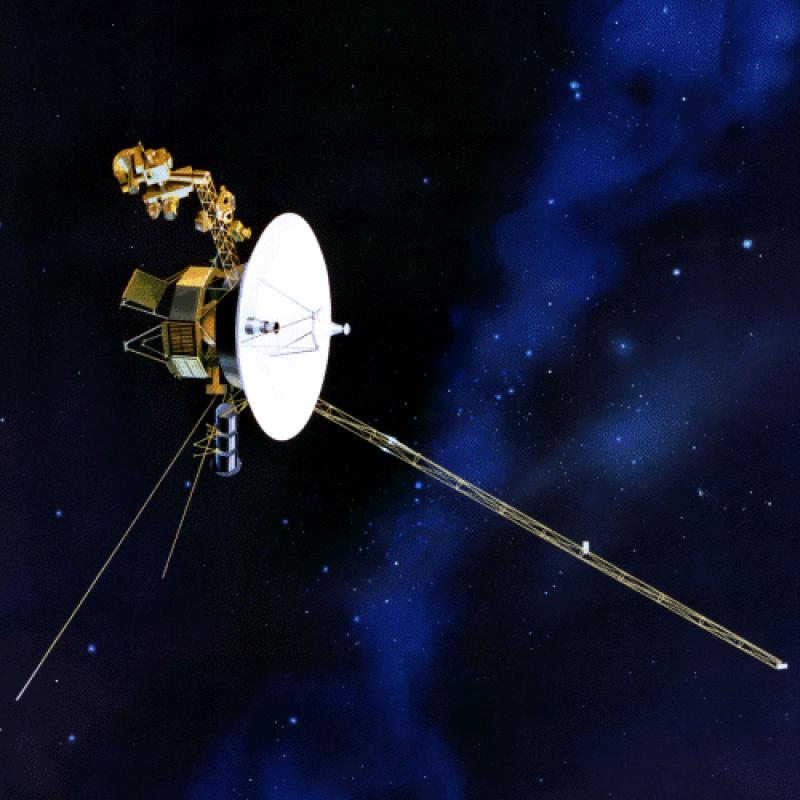

The spacecraft is so far south it can only talk to one Earth-bound antenna.
Launched forty-three years ago.
One hundred twenty-five times as far away as the Sun.
Was out of touch since March.

 S E E D E D C O N T E N T
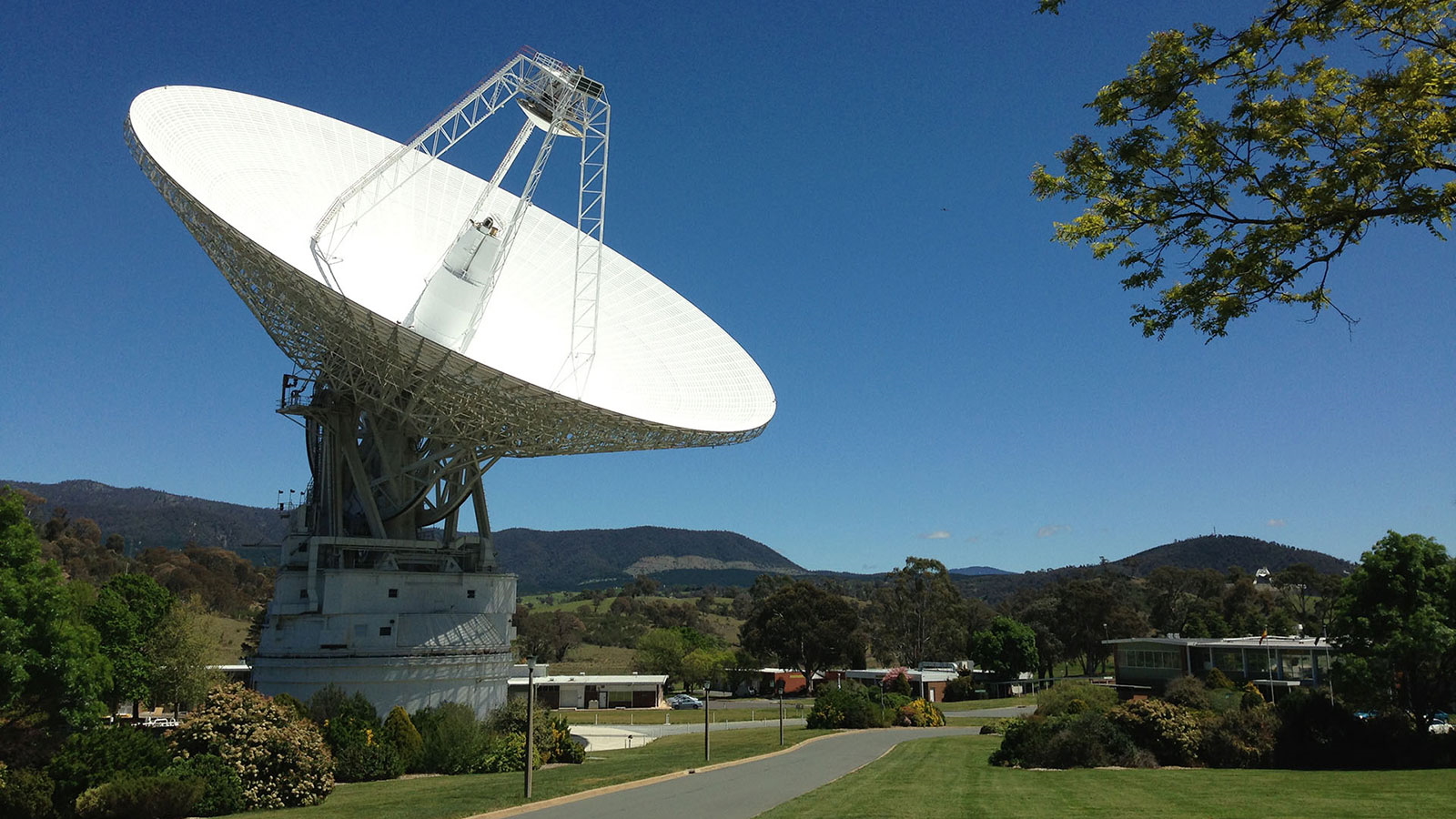
NASA
The Voyager 2 spacecraft has been gone from Earth for more than 43 years , and it now lies 125 astronomical units from our planet. That is 125 times the distance between the Earth and Sun.
Understandably, this distance makes it rather difficult for NASA to communicate with its far-flung spacecraft—there is a time delay of more than 17 hours. However, with Voyager 2, there is another complication in talking to the spacecraft.
After flying by Jupiter, Saturn, and Uranus, Voyager 2 made its final planetary flyby in August 1989 past Neptune. Scientists were also interested in flying by Neptune's intriguing moon Triton, so they commanded Voyager 2 to do so on its way beyond Neptune, flying over the north pole of Triton. This trajectory carried it along a southward path relative to the plane of the Solar System, and it has kept on booking it south.
This has consequences for communicating with NASA's Deep Space Network on Earth, which consists of three large radio antenna facilities around the world, in California, Spain, and Australia. Typically, this geographical spread allows for all of NASA's spacecraft still active to have the capability to communicate with at least one of these facilities at all times.
But because Voyager 2 has dipped so far south of the plane of the Solar System, it can now only communicate by line of sight with the 70-meter-wide antenna in Canberra, Australia. Because this facility is about five decades old, it needed to undergo refurbishment and upgrade work beginning in March, and it had been offline since that time. This work is expected to conclude in February, so NASA has been unable to send signals to Voyager 2 since that time.
Last week, to test new hardware recently installed on the large dish, Voyager mission managers were able to send a series of signals to the spacecraft for the first time since March. Voyager 2 replied that it had, indeed, received the signals and executed NASA's commands, the space agency says.
That's good for NASA and science in general, as Voyager 2 (along with Voyager 1) is now venturing beyond the Solar System, into interstellar space. Out in the great black beyond, Voyager 2 will continue to return data about the speed, density, temperature, and pressure of charged particles in the interstellar medium.

Tags
Who is online
111 visitors
Can a machine be "heroic"?
Lol I'd have to go with no, but dayum they've been on an impressive voyage especially considering how old they are.
It makes it all the way to a Star Trek movie doesn't it? V-ger, lol
That's fabulous!
Awesome and impressive. Does NASA still have contact with Voyager 1?
Thanks. I should have thought of that. Only one cup of coffee today.
My pleasure.
Nice. I had to laugh at one of the comments.
Haha
I was hoping for some kind of graphic to show where it is.
It's way, way south (below the ecliptic). The url I gave in 3.1 is pretty good.
Thanks. Interesting. I was reading how it had to go through a shock zone.
When I was a kid, we learned that there was nothing out there.
That's still true... but the "nothing" is kinda full.
I didn't know the sun created something like a bubble around our solar system.
Every time they've said, "That's it... that's the limit of the Sun's influence!".... we've found something even farther.
I remember the discovery of the Van Allen Belts...
Isn't "South" relative?
It's conventional. I don't know how it got started.