
Why Canada’s Vaccine Leadership Matters More than Ever

By: Anna Blakney and Pieter Cullis - The Tyee


 S E E D E D C O N T E N T
As the world marked World Immunization Week last month, attention turned once again to the lifesaving power of vaccines.
Amid headlines about rising cases of measles , falling vaccination rates and growing vaccine hesitancy , a quieter revolution is underway — one that could fundamentally reshape how we respond to global health threats, including pandemics and cancer.
This revolution is being powered by RNA technology — and Canada is uniquely positioned to lead it.
While the swift development of COVID-19 vaccines appeared to be a sudden scientific triumph, it was built on six decades of foundational work . Much of that work happened in Canada. Messenger RNA, or mRNA, are large, negatively charged molecules that are easily degraded and repelled by our cells.
To coax our cells to internalize them, scientists developed a way to encapsulate them in “ fat bubbles ” or lipid nanoparticles, which were invented by Pieter Cullis and collaborators. Cullis, a co-author of this article, is a professor in biochemistry and molecular biology at the University of British Columbia.
Once inside a patients’ cells, the mRNA gives the cell instructions to translate a viral protein that triggers an immune response.
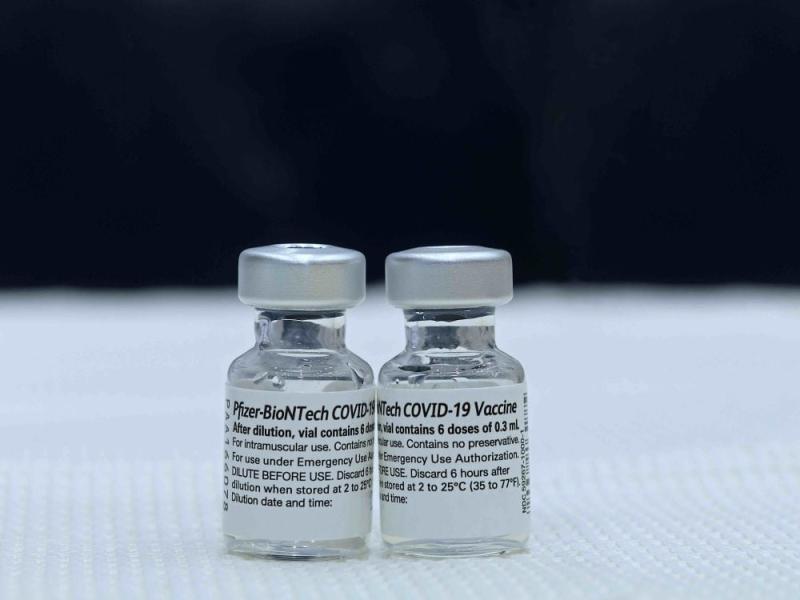
Both the Pfizer/BioNTech and Moderna vaccines — which relied on these fat bubbles — were found to be highly efficacious (more than 94 per cent) and safe, both in initial trials and continuous monitoring over time . They were estimated to have saved nearly 10 million lives in 2021 alone.
That’s just the beginning. Research teams across the country are now building on this homegrown innovation to expand the potential of RNA vaccines beyond infectious diseases.
Smaller doses, and a more robust immune response
At the University of British Columbia, the Blakney Lab is focused on developing vaccines and therapies using self-amplifying RNA, or saRNA, a technology that offers several advantages over conventional mRNA.
Because saRNA replicates itself once inside a patient’s cells, much smaller doses are needed to produce a robust immune response.
Now, this replication process may sound like something out of a science fiction film, but similar to mRNA vaccines, this technology has been developed over decades and has been thoroughly clinically validated .
The saRNA technology reduces manufacturing costs and makes vaccine production more scalable during global emergencies. Notably, the lower dose can also minimize side effects , potentially reducing the risk of getting a sore arm or having to miss a day of work after vaccination.
Recent pre-clinical studies have shown that saRNA vaccines can offer longer-lasting immunity with smaller doses, and multiple clinical trials are now underway to evaluate their use for influenza, Zika virus and even cancer.
A public health imperative, and an economic opportunity
Expanding Canada’s domestic RNA vaccine capacity is more than just a scientific priority; it’s a public health imperative and economic opportunity. During the COVID-19 pandemic, global supply chain breakdowns exposed the risks of relying on international sources for essential vaccine ingredients and production. Investing in local infrastructure allows for faster and more flexible responses to future outbreaks.
But it’s not just about pandemic readiness. One of the most exciting frontiers for RNA technology is the development of personalized cancer vaccines . These vaccines train the immune system to recognize and attack mutations specific to an individual’s tumour.
In early clinical trials, mRNA-based cancer vaccines — such as those developed by Moderna and BioNTech — have shown promising results, dramatically reducing recurrence rates in melanoma and pancreatic cancer patients.
Canada’s scientific ecosystem is primed to contribute meaningfully to this next generation of therapies. Strengthening our biotech infrastructure could create high-quality jobs, stimulate economic growth and reinforce Canada’s place as a leader in the global bioeconomy.
Why infrastructure and access matters
The COVID-19 pandemic showed us how rapidly science can enable positive public health outcomes — and how easily inequities can widen if infrastructure and access aren’t prioritized.
Despite being home to world-class researchers, Canada lacked the manufacturing capacity to produce its own mRNA vaccines. That gap is now being addressed through substantial recent investments from the government of Canada, but sustaining momentum will require long-term commitment from policymakers and funders.
Equity must also remain at the forefront. Communities in rural, remote and Indigenous regions often face barriers to accessing vaccines — not because of hesitancy, but due to logistical challenges and under-resourced health systems. The Public Health Agency of Canada has emphasized the importance of building trust and tailoring solutions in partnership with these communities.
Vaccine confidence remains another challenge. Post-pandemic surveys reveal that misinformation continues to shape public perceptions , even about long-established vaccines like MMR.
Addressing this requires proactive science communication, sustained public education and rebuilding trusted relationships between communities and health systems.
With decades of research leadership, a strong innovation ecosystem and new investments in RNA infrastructure, Canada has the tools to lead the next chapter of mRNA technology development.
Whether it’s fighting the next virus or personalizing cancer therapies for individual patients, RNA technologies hold transformative promise. Seizing this opportunity will require sustained support, policy alignment and a focus on equitable access.
By investing in RNA innovation today, Canada can deliver not just vaccines, but a healthier, more resilient future for all.
Immunity and Society is a new series from the Conversation Canada that presents new vaccine discoveries and immune-based innovations that are changing how we understand and protect human health. Through a partnership with the Bridge Research Consortium , these articles — written by academics in Canada at the forefront of immunology and biomanufacturing — explore the latest developments and their social impacts.
The administrator of this group reserves the right, along with the site moderators, to moderate all and any postings to this group, including the right to enforce the ToS, the CoC, and also including anything that the administrator deems within his sole discretion to be offensive, including and not limited to off topic or 'no value' comments, with the power to delete in exercising those rights.
It would be best, therefore, to be civil in posting on this group.
By now it should be well known that the administrator is unable to open certain sources, videos and pictures. If he cannot, he will ask that they be described and explained. If the poster refuses to comply, their comment will be deleted. Instagrams are banned.
Tags
Who is online
112 visitors
This is the kind of stuff Canada does best and gets deserved kudos for.
Medical breakthoughs are not unknown in Canada. A couple of exmples never to be forgotten are that Banting and Best invented insulin, and Dr. Wilder Penfield revolutionized brain surgery.
Immunology was one of my favorite biology courses in undergrad. Back in the 90s, this was mentioned in our text as a sort of "this is what's in the future of this field." Prompting the patient's own immune system to tackle cancer cells while avoiding harm to healthy cells would be leaps and bounds better than traditional treatment options.
Yes, transgenic research. Not transgender mice. /S
I was already 241 years old.
Well, you don't look a day over 190, so you must be doing something right.
I haven't insulted a woman for 189 years which likely accounts for that.
Morning Sandy...
They are doing that sort of thing now..
The big mover and shaker is Car T cell therapy..and they are having great success with it...
One of my patients has a daughter who went through CAR-T therapy, and has now been in remission from her leukemia for several years.
The Brits sent their worst to America and their best to Australia and Canada and maybe even New Zealand.
Ouch!
Also, wasn't Australia a prison colony?
Not that North America wasn't. If Ancestry.com is to be believed, a few of my ancestors were shipped here from Sweden for either petty crimes or desertion.
Morning Hull... absolutely...their loss our gain...
Yeah the Kiwi's are in there but we like to keep them on their side of the ditch..🤣
Absolutely we are a convict settlement and that is our claim to fame...lot of people and countries don't grasp that but we love it...
You lucky buggar having convict heritage...I went back through my family hoping to find some, but totally disappointed there aren't any..fair spewing about that...
It's this guy, according to Ancestry. Lots of Swedes were sent here to work off sentences for petty crimes, and he was one of them.
Interesting