
This historical page-turner asks: did the Chinese discover America?

By: Mal Warwick

 S E E D E D C O N T E N T

This historical page-turner asks: did the Chinese discover America?
Dive into a captivating historical page-turner that combines art theft with rich tales of 15th-century voyages and discoveries.
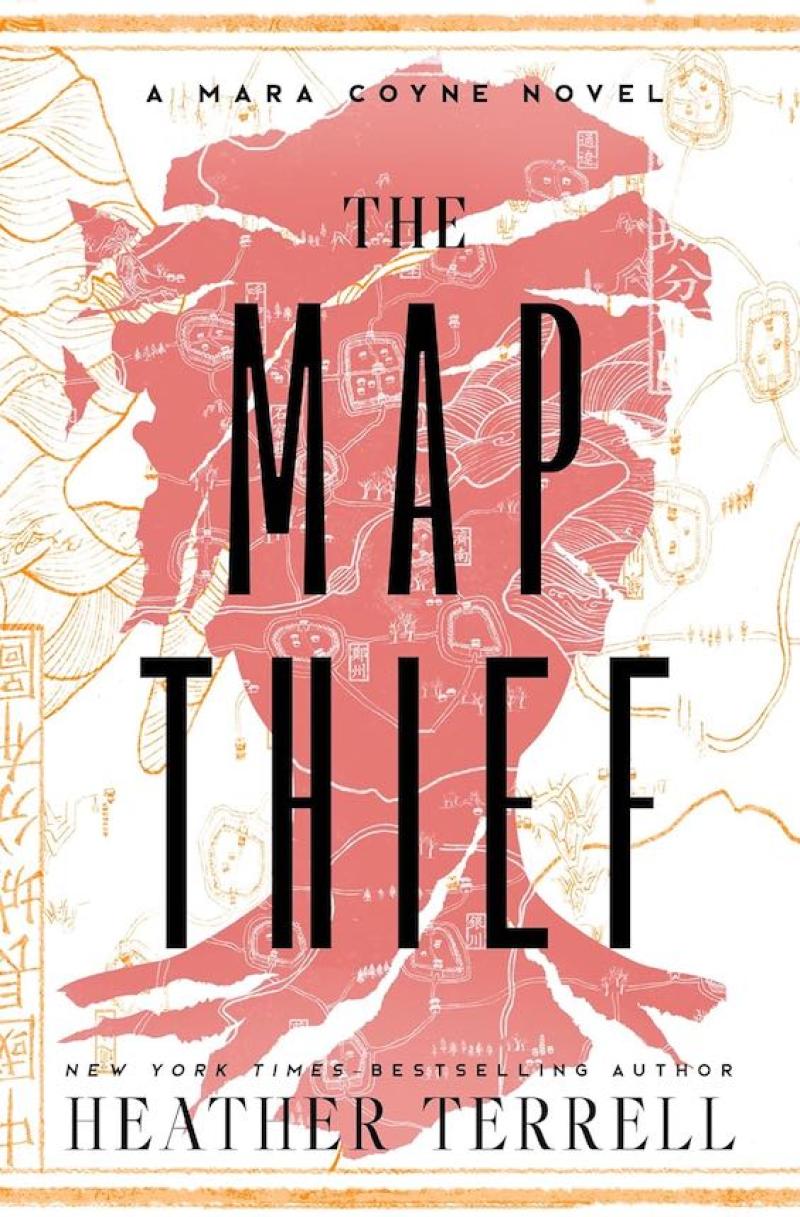
Mara Coyne is a non-practicing lawyer who specializes in recovering stolen art. Her firm consists of her business partner, a former director of the FBI Art Crime Unit we know only as Joe, and a handful of art historians and technical support staff. But their reputation is global. So it's no surprise when Richard Tobias, an American billionaire art collector and Republican kingmaker. turns to her to recover an ancient map lost from an archaeological dig in China. The assignment leads Mara to team up on a global quest to find the map. The archaeologist who discovered it outside Xian insists on going with her. But their frantic, intercontinental travels form just one of three timelines in a complex story that weaves together the 15th-century Chinese and Portuguese voyages of discovery with Mara's quest. Heather Terrell's historical page-turner, The Map Thief , is a triumph of the storyteller's art.
The historical background to the novel
At the dawn of the 21st century, a British writer named Gavin Menzies published a book entitled 1421: The Year China Discovered America . It caused a furor but historians almost universally rejected the thesis. There was no existing physical or documentary evidence to support the claim. But Menzies's book did bring to a wider audience the facts about a series of massive expeditions undertaken early in the 15th century by a Chinese admiral named Zheng He (1371-1433). Zheng was a Muslim and a eunuch who served in the court of the Ming Emperor known as Yongle.
In the first of his expeditions in 1405, Zheng led an armada of 62 ships and 27,800 men. It was a massive force an order of magnitude larger than anything Europeans sent across the ocean a few years later. But the six succeeding Chinese fleets from 1408 to 1433 were much larger still. And they roamed throughout the South China Sea and the Indian Ocean as far as the east coast of Africa. However, their success in establishing trade relations with nations throughout the region came to naught when Emperor Yongle was deposed. His successor ordered the ships burned and all contact with the outside world ceased upon pain of death. China remained closed to outsiders for centuries to come.
The Map Thief by Heather Terrell (2025) 336 pages ★★★★★

No historical evidence exists to confirm Admiral Zheng He’s visit to North America. His seven voyages focused on Asia, the Middle East, and the east coast of Africa. Image: Cambridge University Press – DiploFoundation
China's voyages of discovery overlapped with Portugal's
Zheng He's first voyage began in 1405. Nearly 20 years later, Portugal's Prince Henry the Navigator (1394-1460) dispatched the first of numerous expeditions down the west coast of Africa in search of a new trade route to India. But it was not until 1498, nearly 40 years after Prince Henry's death, that Vasco da Gama (1460-1524) reached Calicut on the southwest coast of India. Meanwhile, China's gargantuan fleets had long since been disbanded.
In The Map Thief , we follow a Muslim eunuch mapmaker named Zhi on Admiral Zheng's expeditions. The young man rises to the post of chief mapmaker for the fleet and is the author of the map stolen centuries later in China. Interspersed with passages about his and Mara Coyne's travels, we also follow the story of a Portuguese mapmaker who accompanies Vasco da Gama on his fateful first voyage around the Cape of Good Hope.
As the story unfolds, it becomes clear that public disclosure of the stolen map will alter the way world history is written. The stakes are geopolitical in scope.
Of course, all three threads of Terrell's historical page-turner converge in an explosive climax. And there are many surprises along the way.
About the author

Heather Terrell. Image: Soho Press
Attorney and author Heather Terrell has written some of her 19 historical novels under the pen name Marie Benedict. She studied art history at Boston College and earned a law degree from Boston University's School of Law. She worked as a litigator for 10 years in New York City.
Terrell was born in 1968 and attended high school in Pittsburgh. She lives there now with her husband and their two children.
The Code of Conduct and Terms of Service must be complied with.
Any comment posted about politics or religion not relevant to the seeds/articles that are posted will be deleted.
The administrator reserves the right to delete any comment he considers to be offensive, off topic or of no value.
Videos or images or links to sources that the Administrator cannot open must be described or explained when requested or they will be deleted.

Tags
Who is online
102 visitors
Looks like an interesting read, if you're into history.
IMO the Chinese did not discover America as the discovery of the entire North American continent far predates the existence of the country of China
But I have seen a documentary on this subject and it was very interesting
Perhaps the book is actually disguised fiction.
There's a lot of evidence here in California that this is true. There's a wrecked junk in the River near Sacramento. The wood in the hull dates to 1410 and there was rice in the hold.
Wow!! So it could be true.
The "discovery" of America was a European thing. They were broadly looking for new sources of wealth and trade. They werent exploring for the fun of it.
When they say "Columbus discovered America" they are talking just about Europe, and in that sense it is true.
Whatever "they" say....
IMO, we could all agree the Chinese "discovered" America and Europeans would still disagree. The "discovering" was more of an economic thing than an adventure thing for them..
Actually, I doubt that the Chinese "discovered" America, because the voyages described as being in the book seem limited to be as far as the east coast of Africa, and no mention is made of crossing the Pacific.
Not to discount anyone else's opinion, but I find I couldn't care less about who discovered what first. What's the point? That it somehow makes the nation of whoever somehow more worthy than the rest?
Thank you for adding to the variety of opinions about it.
No problem.