
What's the Future of Classic Film Appreciation?

By: Christian Blauvelt, Kristen Lopez (IndieWire)

 S E E D E D C O N T E N T

What's the Future of Classic Film Appreciation?
The discourse around film history — veered away from nuance and toward snap judgments or stopped altogether — is bad, but there are signs of hope.

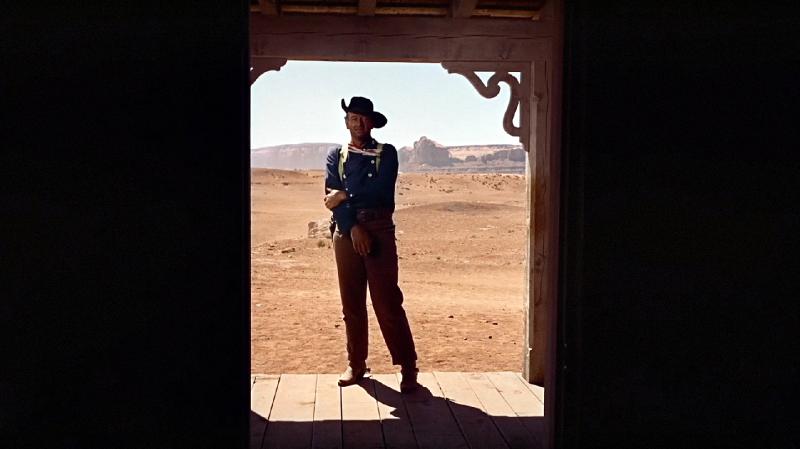
'The Searchers' 'Everett Collection
Quick: How many films can you find on Netflix from before 1980? Gems can be uncovered there — shout-out to Youssef Chahine's 1958 Egyptian classic, "Cairo Station" — but the burden is on those cinephiles already interested enough to seek them out.
Lovers of film history aren't born, they're made. Discussions with other film fans, nights out at your university rep cinema, and serendipitous discoveries on Turner Classic Movies, certainly help. Many of us owe our parents for exposing us to classic film at an early age. Still, we've reached a point where movies from Hollywood's Golden Age, as well as concurrent world cinema titles, are more accessible than ever, but risk falling further into obscurity.
There was a time when you couldn't see even towering classics, such as "Rear Window" and "Vertigo," other than at the odd repertory showing. Now, those films are just a click away. But will a cinephilic culture continue to surround them? And if it does, does it matter if that culture continues to shrink as long as it's enthusiastic?
Jonathan Rosenbaum titled an anthology of his essays "Goodbye Cinema, Hello Cinephilia," referring to his dismal assessment of contemporary filmmaking. But in the realm of film history appreciation, the reverse seems to be true: more pre-1960 films are being saved and restored than ever before. It remains an open question how many people will continue to watch them over time.
Here are the steps that must take place to create a robust future for classic film appreciation.
Easy Access Is Essential
Cinephiles get so excited about the ability to access a range of classic movies that they often forget who gets alienated in the process. Of course, the Criterion Channel is loaded with extraordinary restorations curated by a talented team. But if you were to drop the average layperson looking to learn more about film history into its offerings — let alone the classic film titles available on Amazon Prime or Kanopy — they might get lost in the sheer amount of choices available.
That's why the approach of MUBI, in offering up a "film of the day," has been so uniquely powerful. Of course, the site has a huge library too, but if you're not sure what to watch the "film of the day" guarantees you won't spend all your time scrolling, you'll spend it watching — and discovering. Le Cinema Club, which makes one film available for viewing for free every Friday, is also an incredible resource.
This kind of programming basically replicates the model of linear TV. And that puts Turner Classic Movies in a unique position: Just switch to TCM and you don't have to make any choices at all. They've been made for you by a team of experts, led by SVP of Programming Charlie Tabesh. If you're a neophyte when it comes to film history, you'll almost undoubtedly find something for you here.
"It's like someone has stepped into the kitchen and made an amazing dinner for you, and you don't even have to ask for it — it's there ready for you to enjoy," said TCM general manager Pola Changnon. "There's a serendipity to sitting down and being like, 'Oh my god, I didn't even know I wanted this movie and I want this movie.'"
Expand the Canon to Unsung Artists of the Past
Much of the traditional classic film canon doesn't show the voices, experiences, and perspectives of women and people of color. You'd be justified in thinking classic film doesn't speak to you because it wasn't ever trying to speak to you. That's a fair perspective, but it's also an incomplete one. Women and artists of color were always there, just not often given the opportunities to live up to their potential in Hollywood.
But take a closer look at Black actors working in the 30s and 40s, such as Rex Ingram, Theresa Harris, Clarence Muse, and, of course, the first Black Oscar winner, Hattie McDaniel. Yes, they were frequently given very little to do in the movies in which they were cast — often as servants or in some other subservient capacity. But the ways they found to express themselves and subvert those roles is inspiring and worthy of a closer look.
For some, the idea of expanding the canon to be more inclusive just means declaring a new release by a director who's a woman or a person of color "a new classic," as if the only way to diversify the canon is looking forward. That only reinforces the whitewashing that decades-worth of cultural gatekeepers have put in place.
But there have been positive developments to build on in the time ahead: Kino Lorber has established itself as the absolute leader in diverse, film-historical Blu-Ray releases, such as its 2015 Pioneers of African-American Cinema box set, and the later Pioneers: First Women Filmmakers set. Turner Classic Movies recently made Paul Robeson its star of the month, celebrating his remarkable achievements as a Black male lead in unique and uncompromising movies, such as "Body and Soul" (1925) and "The Emperor Jones" (1933).

Nina Mae McKinney, subject of an upcoming Film Forum retrospective, in 1929Courtesy Everett Collection
Criticize the systems that led to these actors being able to work so little — and recognize what aspects of those systems remain today — but don't act like those actors weren't there. It's on us to remember them.
It's OK: We Can Deemphasize the Canon When Necessary
When HBO Max pulled "Gone With the Wind" from the newly launched service in the summer of 2020, it didn't mean that the movie had been "canceled": The streamer soon added it back to the service, this time with a richly contextual introduction that grapples with the the film's racism, while celebrating the craft of its filmmaking.
"Gone With the Wind" can cede a good bit of the cultural real estate that it has hoarded for the past 82 years. And the thing is, that's going to happen whether canonmakers try to kick it out or not.
"When film studies coalesced as an academic discipline in the 1970s, it had about 70 years of film history to contend with," said Jeffrey Sconce, professor of screen cultures at Northwestern University. "In the American context, that meant around half of a 'film history' class could explore the 'classics' of the studio era. Now we're at 120 or so years and the 'classical' era is an even more remote sliver of total film history. If you're doing a survey in world cinema, classical Hollywood might rate only a single screening." Sconce teaches a class focused entirely on Hollywood's studio system to distinguish that it's just a small slice of global film history.
But as the history of film expands, there will be a flattening of values. "Some films, like 'Citizen Kane' and 'Casablanca,' continue to live on because of previous critical momentum," Sconce said. "But as more people become less conversant in the language of classical Hollywood, the qualities that make these films 'exceptional' will most likely become increasingly obscure. For example, compare 'The Day the Earth Stood Still' and 'Plan Nine from Outer Space.' Older cinephiles can certainly argue why the first is a 'classic' and the second is 'trash,' but I suspect future audiences will see less separation between the two."
Racist and Sexist Films Must Be Called Out
And locking away problematic movies shuts those conversations down. "When you think about it, the two biggest box office films of the first half of the 20th century were both racist movies, 'The Birth of a Nation,' and 'Gone with the Wind,'" Film Forum's director of repertory programming Bruce Goldstein said. "There's a reason for that, because that was [white] America's mindset. And I think we have to know that."

Stepin Fetchit’s mannerisms and delivery, as well as the subservient roles he played to comic effect, have been so routinely criticized that stereotypical Black characters are sometimes referred to as “a Stepin Fetchit-type.” But a lot of the discourse on someone like Fetchit has centered on criticizing Black performers like him rather than the white hegemonic systems that pushed them into those roles.©20thCentFox/Courtesy Everett Collection
Films have power and they can absolutely shift public opinion, at times even creating and reinforcing stereotypes. "The Birth of a Nation" is widely regarded as having caused the revival of the Ku Klux Klan in 1915. Yet these movies were so popular because America was a deeply racist nation. They reflected the national attitude of white people. And that needs to be addressed head-on, not covered up. "You don't ever profit by shutting doors to difficult conversations," Changnon said. When there's a film with racist or sexist material under consideration, Changnon added, "I'm like, yes, we can put that on TCM and we'll talk about it in a way that acknowledges some of the challenges or limitations of movies that came from a different time. And some of this stuff is still happening in our world. Let's talk about that, too."
Algorithm Is the Enemy of Context
Algorithms aren't the digital boogeymen some make them out to be, but their choices can't compare to hand-picked titles by an actual human. It's curation that enables some of the more difficult conversations to happen, and most importantly, recognizes nuance. "'The Searchers,' for example, is difficult to teach because it's an anti-racist film that is nevertheless suffused with racism," Sconce said. "But those contradictions are what make it worth examining. I think any film can still be screened if you do the necessary historical work to contextualize it."
The Criterion Channel has done a particularly good job of grouping movies by theme as well as by director or studio or era. And TCM is consciously trying to create links between past and present with selections that connect thematically. "Algorithms are important, I totally believe that," Changnon said. "I'm served up things over time in streamers that are correct, but they might not always be as driven by the curious human brain. And the human brain is a pretty incredible thing, especially around movies, because you can leap from decade to decade, but the themes might be the same. Which might not be obvious to an algorithm."
Employing curators costs money, the return on which may not be readily apparent to the corporate behemoths that own certain streamers. But curation is valuable quality control that instills brand loyalty in customers — just look at the passionate audiences for TCM and Criterion — as well as retention.
Studios Must Make Libraries Accessible — Or Else
On this front, so far so good. The studios that have large libraries of historic films have become increasingly committed to making these libraries available. They see it as their heritage. But that was not always the case.
Goldstein, who began programming repertory films at Film Forum in the late 1980s, recalled the challenges he faced early on. "We had very little access to the Hollywood archives," he said. Film studies as a discipline was still very new, the idea of film restoration only in its infancy, and many of the legacy studios were more interested in selling off their assets than preserving them (think of MGM's pivot toward being a resort brand). But Goldstein credits Martin Scorsese and the Film Foundation for making the studios realize the artistic and financial value of their holdings. "There is value to having these prints," he said. "And, there's also clip rights, stock footage potential, plus they love when we play these prints. They love it now. And I couldn't get the studios on the phone 35 years ago."

For months, Rialto Pictures’ re-release of “La Piscine” averaged well over $100,000 a week cumulatively on just three or four art house theaters (maxing out at 10 screens) around the country. It was a particular success at Film Forum, where Goldstein said receipts went up 500% following a New York Times piece on the runaway success of the film.Sipa USA via AP
But acquisitions of studio libraries continue — just look at Amazon's hoped-for purchase of MGM — and that always means fears arise that we could enter a future where classic titles only play on the streamer owned by that company.
And in some cases that does seem to be true. Disney had licensed select titles to TCM for years as part of a Leonard Maltin-curated night each year called "Treasures from the Disney Vault." That ended as soon as Disney+ launched.
TCM is mostly unconcerned, though, especially as they're also represented in HBO's new streaming service, HBO Max. "Anytime a studio and historical library owning studio develops a streaming service that's a concern for us because we don't want these titles to go away, in terms of what we're able to access," Changnon said. "But so far we're able to get what we need, in part because we're the place that those movies will be consumed. There's a reality that we've created an audience for this; we've created an expectation for these movies over the years where those other streaming services have different areas of focus. For the studios it's great to be able to drive revenue against these libraries."
There was handwringing a couple years ago about archive 20th Century Fox titles no longer being available to repertory cinemas following Disney's acquisition. IndieWire's Tom Brueggemann questioned the validity of that worry at the time. And little has changed since. Bruce Goldstein praised Disney: "We're showing Elia Kazan's 'Pinky' [at Film Forum]. I actually have a very good relationship with Disney."
The biggest problem could be for ordinary consumers — classic film aficionados wanting to watch archive titles at home. If the owners of libraries limit their titles to their own streaming services, it could mean film history lovers having to subscribe to many different platforms and spending a good bit of money. Many, if not most, are already doing this.
Libraries Will Continue to Have Financial Value — For Streamers and Theaters
Streaming sites need content. Amazon Prime wanted MGM — and the United Artists library — to acquire nearly 5,000 archive titles that can serve the function of keeping users glued to their screens, at least until one of their original titles then fires up or the user is reminded to buy something through the site. Dwell time means engagement means revenue. After decades of a highly selective home video release strategy that saw many of their premium titles unavailable, Disney threw up almost every one of their animated films upon the launch of Disney+. The goal is to keep you occupied for hours and to keep you coming back.
The studio once prized rarity and exclusive availability windows by keeping so many of its titles "locked in the vault" (thinking the titles' value would go up), but now, most of those beloved movies are just the cost of a subscription away. The problem with Disney+ is that, especially for its pre-1970 titles, they're all just thrown onto the service with zero curation and usually require the user to actively type the title into a search box.

Walt Disney bought the rights to the 1940 “Swiss Family Robinson” just so that he could withdraw it permanently from the market and make his own version in 1960. When Disney+ launched, the 1940 version, unseen for decades, was part of the launch content.Everett Collection / Everett Collection
Most legacy studios with major libraries already had preservation budgets, but this new impulse toward volume means those budgets aren't going away as long as the current streaming model exists. Warner Archives overseer Daphne Dentz, the senior vice president of emerging formats, mastering, and content, explained their current process. "We are preserving our entire library," she said. "It doesn't matter what movie or television show, we will have a digital copy of that within the next many years. Nothing will ever be lost once it becomes digital. I think that we are in a moment in time where we want to restore everything in the library, and every title may not get a full 4k restoration, but it will definitely get a new HD master. And then as soon as that's available, it's gonna be in the marketplace."
Restorations Will Keep Getting Better
These days, if there are enough celluloid assets of a movie, that movie has no excuse ever to become lost. What a startling turnaround from all those grim statistics proffered by the Film Foundation and the Library of Congress that 75-90% of all silent films have been lost. When those films were lost, the technology just didn't exist to digitize them, let alone digitize them cheaply.
Now that technology exists. "We work on many, many classic films this year alone," Bob Bailey, the vice president of operations and sales for motion picture imaging at Warner Bros., said. "In 2021, we'll probably do 70 or 80. We believe that new technologies will keep emerging into perpetuity, whether it's 32K TVs or movies streamed onto your glasses. Does the Marx Brothers' 'A Day at the Races' have 8K of data in it? I would argue it does not. Our job is to make sure it looks the best it can in whatever format we have to make sure people enjoy this great movie."
The time required and monetary cost of these restorations keeps coming down too. "When I first started at Warner Brothers 15 plus years ago, it could take up to a year to finish a restoration," Bailey says. "Now we can do them much, much faster. And if you can do it faster, then it should cost less." There's no reason to think that trending direction is going to change.
Filmmaker Sean Baker, a connoisseur of film history and with a vast DVD collection, concurred. "We're in a golden age of film restoration, because now we're able to see these classic films look better than they ever have before," said the "Red Rocket" director, who particularly praises the releases of Severin Films and Vinegar Syndrome. "Actually they might even look better than when they were first released, because they're now obviously scanning original negatives, if they can be found, at 4K and seeing all the little details. Right now, it is an incredible time to be discovering older cinema."
Studios Must Find Partners Who Care About Restoration
And that's actually part of the reason those titles will remain accessible. Goldstein founded Rialto Pictures in part to create advertising campaigns for repertory titles that the studios would never invest in. Likewise, Criterion and Kino Lorber package archive titles and remaster them, while creating new art, commentaries, and extras. That's something the studios would not do themselves either. "The studios have become a little bit more willing to deal with the likes of my company and others who are showing that we care about these films," Richard Lorber, the founder and head of Kino Lorber, said. "The studios don't have the patience to bother with the packaging, and extras, and commentaries. It's not part of their business model if they can't sell 100,000 units, have titles out the door into every Walmart and Redbox outlet."
The studios benefit from this arrangement with boutique home entertainment distributors too. "They get the benefit of having the restored materials we create and the extras that we create," Lorber said. "They can use those in their expanded international business, they can use them in their domestic and digital businesses. So we're providing a service as well as generating income. I think the last thing Amazon wants to do is go into competition with Kino Lorber. They were already getting more than their pounds of flesh from us because they're one of our biggest customers."

Quentin Tarantino has owned the New Beverly Cinema in Los Angeles since 2007. It has shown many of his favorite films — always on celluloid — since.Hubert Boesl/picture-alliance/dpa/AP Images
Filmmakers, Tell Us Your Influences
Today's drive toward more and more film preservation and restoration has been catalyzed by top filmmakers singing the praises of movies that influenced their own classics. Scorsese certainly stands out with the Film Foundation. But it's difficult to find a filmmaker who doesn't cite older work as formative, from Paul Thomas Anderson to Guillermo del Toro to Edgar Wright. And movie lovers have shown a real interest in learning about their favorite filmmakers' favorite films.
That's part of why Blu-ray and streaming extras exist, according to Lorber. "Cinephiles are interested in hearing how the contemporary filmmakers that they revere have themselves been influenced by the classics before them," said Lorber. "And Quentin Tarantino is the poster child for one of these people, a leader of cinema committed to introducing audiences to a whole new world of classic cinema and traditions of cinema history."
And rising filmmakers need to know about the classics to fuel their own visions.
"There's a certain amount of rules that come with the craft of filmmaking," Baker said. "Filmmakers won't know whether or not something has been done before, unless they are studying the history of cinema."
He's always been inspired by the way Scorsese's shared his influences. "I love to check these out, to see what led to his style, how his aesthetic grew from the films that he grew up with and connected with," Baker said. "It's inspiring to know that Scorsese wasn't just born a genius filmmaker, he has films that made him and filmmakers that molded him."
[Editor's note: Both of the authors of this article have done work for Turner Classic Movies in the past.]
Discussion of politics and/or religion will be limited to the plots and themes of the movies or TV movies and series themselves and any religious comments or proselytizing or commentary concerning current politics not in reference to the movies or TV movies and series themselves will be deleted along with all CoC and ToS violations. As well, anything posted that the administer of this group deems to be offensive, off topic or of no value will be deleted. Videos and images that the administrator cannot open must be described in text or they will be deleted. Instagrams are not permitted.

Tags
Who is online
115 visitors
Other members have been posting short novels as seeds. so why can't I?
I liked this one. Well done.
I did learn quite a bit about the movies that I wasn't really aware of before, so it was a beneficial article.
I'd been wondering if I should seed the entire Encyclopedia Britannica-- it would be nice to have all that information so readily available!
Back in Toronto I had a great library, and I had the complete set of the Encyclopedia Britannica, with the annual additions up to date. But that was before computers and google or bing.
Americans are unaware of many things, among them the passage of time. Gone with the Wind came out before WWII. America was a highly segregated society. That's simple historical fact. The movie was shot in that context. Anachronisms are stupid.
The seed focuses a lot on racism. It's even in Casablanca. When Ilsa Lund came into Rick's Cafe for the first time, she asked "Who's the BOY on the piano?"
Seventy-five years ago, America was blatantly racist. The Civil Rights Movement, in the 60s and 70s, got rid of the most egregious aspects, but the rot was just below the surface.
It has surfaced. Big time.
I know, right? The construction costs on all those segregated bathrooms is going to be astronomical.
I will never forget that when I was 16 years old and my parents took me on a Miami Beach Christmas vacation for the first time, being in a department store and for the first time in my life seeing side-by-side drinking fountains with the crappy one having a sign over it "COLORED ONLY". Are we going to start seeing that again? On that very first day I had boarded a bus and went to sit at the back, which was always my favourite spot, and the driver shouted at me to come sit up front. I didn't want to and the driver said he's not moving the bus until I did. So I had to. That day was my introduction to the American uncivil rights situation.
You're too young to remember pre-MLK America. I'm not.
Do you remember "Whites only" water fountains?
Not at all. But apparently that level of racism has "surfaced", so it won't be long now.
I remember the first time I saw one. I was taking a bus down Rte 1. We had a short break in Raleigh.
Of course I had read about the and seen pictures-- but actually seeing one was still a bit of a shock.
What is your stand on separating artistic work from the racist aspect contained within some of them?
Do we hail the artistic achievement; while footnoting the racism or do we resort to the censorship that HBO Max resorted to?
The greatest silent film ever made is arguably "Birth of a Nation," in which the Klan was portrayed as the heroes.
Any thoughts?
There has NEVER been a time, a chronological era, when the history of the United States was not inextricably entwined with racism. It is tragically unfortunate and disturbing, but true. In the past few decades there have been efforts to address this problem.
In Gone With The Wind the black characters are uniformly portrayed as either hysterical, loudmouthed, or submissive. In my opinion GWTW is nonetheless a great movie, because of the artistic and cinematic qualities and not because of the content.
Have you ever seen the Spike Lee film "Bamboozled" ?
History is history, and it's wrong to try to change it, or even ignore it. Remember what Santayana said.
... and no one knows who coined "History is written by the victors"... but it's also appropriate.
Gone With The Wind was both the product of and beneficiary of The Lost Cause myth. In the mid 1930's it was totally commonplace to see blacks stereotyped in novels and in Hollywood movies. And that was pretty much the case until Sidney Poitier came along.
Good point. I recall watching the 2001 Oscars when Sidney Poitier won a Best Actor Oscar, and Denzell Washington saying then that Poitier was his hero.
Many years ago I took an course called "RTVMP" ("Radio, Television, and Motion Pictures").
Of course it was just a course in "media" . . .
Anyway, we learned that a poll of Americans as to what they considered to be "the best motion picture of all times". Casablance and Gone With the Wind were tied for first place.
(FWIW, this poll was conducted in the sixties , during the height of the Civil Rights Movement)
Personallly I had always thought that Casablanca was indeed the best film ever made (although there were a few close "runners up"). In fact I was surprised that so many people were intelligent enough to realize that!
I had never seen Gone With the Wind and didn't intend to-- I had thought it was merely a film glorifying the Olde South-- which didn't interest me)
I'm in total agreement with you on Casablanca still being the best movie. I have posted seeds on my movie group on NV and here in which I indicate that, and gave my reasons for my choice. IMO it is more than JUST a movie.
I was surpised when I read that many of the actors in the film were actually refugees-- who had escaped Nazi Germany.
I'm sure some of the emotions expressed in the film weren't acting-- they actually felt them!
(Buzz if you can't access that site linked to above I'm sure you have seen other with that information)
It's google, which is blocked here, but I've read the story about the refugee actors in Casablanca elsewhere, and in fact long ago I think I turned you onto it. Of particular note was that when in the movie the band at Rick's was playing The Marseillaise the tears running down Yvonne's cheeks while she was singing it were real, they weren't eye-dropped. There were really deep emotions from the actors, which is one of the reasons I said that IMO it was MORE than just a movie.