
How did ancient people escape the summer heat

By: No Author Indicated

 S E E D E D C O N T E N T

According to the Chinese solar terms, it's Minor Heat now, when most parts of China are going to experience the hottest days of the year. During the scorching summer, we modern people can enjoy cold drinks in an air-conditioned room to escape the heat. But how did ancient people cool down without these modern-day technologies?
Icehouse and ice ticket
 |
|
Ancient people collect natural ice in winter. [File photo] |
As early as Pre-Qin Dynasty (2100-221 BC), people used natural ice to keep food fresh and make cold drinks. According to the record in the Confucian classic Zhou Rites , the Zhou royal court had a specialized department called the "ice administration" which had 80 employees. The department collected natural ice blocks each December, and then transported them to the ice house for storage.
Some senior officials were awarded ice cubes by the Zhou royal court, which was a big honor during that time. The system of granting ice lasted until the Ming (1368-1644) and Qing (1644-1911) dynasties. During the Qing Dynasty, "ice tickets" were distributed to officials instead of sending the ice directly to them.
Ice container
 |
|
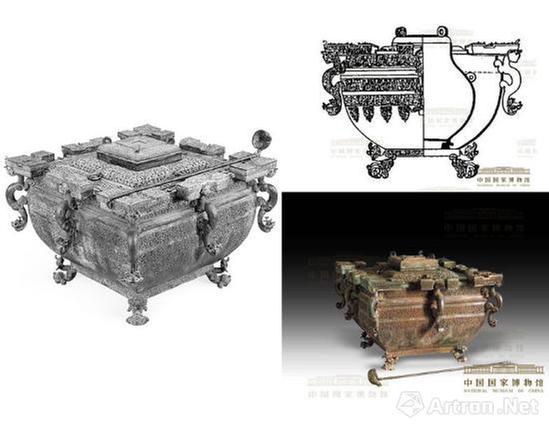
Ancient refrigerator [Photo/artron.net] |
The most commonly used cooling utensil is called "Jian", which is a big container filled with ice. It was made of ceramic in early Chinese history, and was later made of copper. The "Jian" can be seen as an ancient refrigerator, which can be used to make cold drinks. Put the vessel holding food inside the "Jian", close the lid, and the drinks would become cold after a while.
Hiding food in the well
 |
|
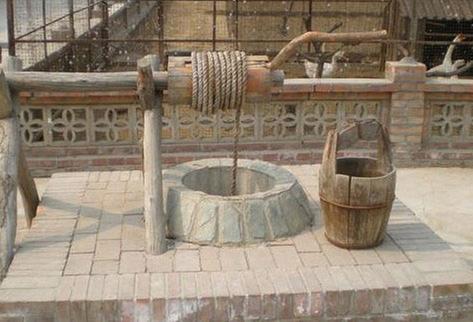
A well [Photo/gmw.cn] |
During the Qin (221-207 BC) and Han (202 BC-AD 220) dynasties, for common people, the most common way to cool off is by using their wells. Some families put an urn in the well as a cold closet, or put food in a basket and lowered the basket into the well with a rope. Actually, ancient people don't need cold beverages, as well water was the best drink in summer.
Herbal drinks
 |
|
[File photo] |
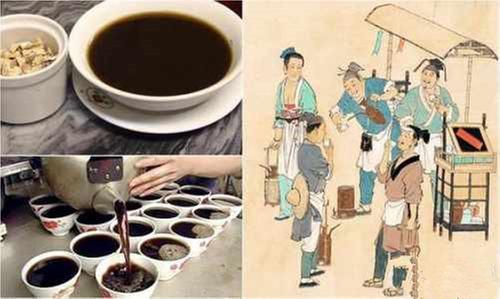
During the Qing Dynasty, taking Chinese herbal medicine was popular in Beijing. According to historical records, during the scorching summer, some people preferred to drink ice water, some boiled perilla leaves, and liquorice as summer soup to keep off the heat. Ancient people also loved to make lotus seed soup in summer which was said to have the benefit of strengthening the body.
Bed-mat for summer
 |
|
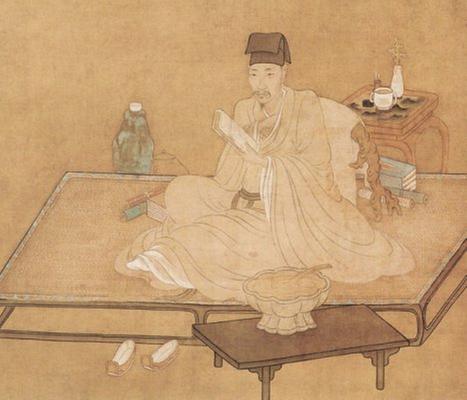
The painting shows a scholar reading on bed-mat. [File photo] |
Ancient people wove vines, reeds, or bamboo into bed-mats for summer which are cool to sleep on.
Porcelain pillow
 |
|
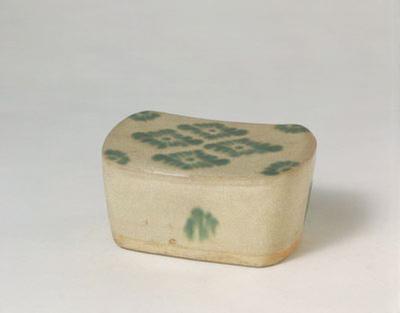
A porcelain pillow [Photo/The Palace Museum] |
The surface of a porcelain pillow is a layer of glaze, which feels pleasantly cool. It is said that the Emperor Qianlong in Qing Dynasty liked his porcelain pillow a lot.
Dragon fur curtain
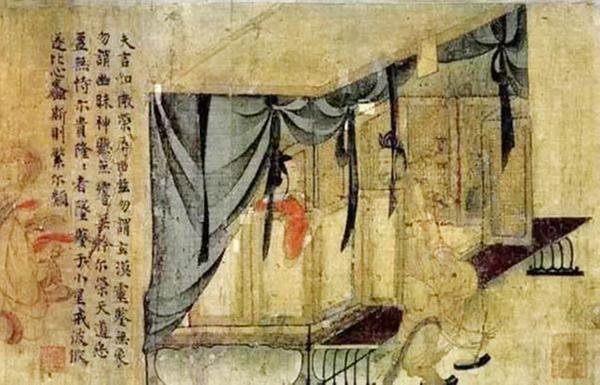
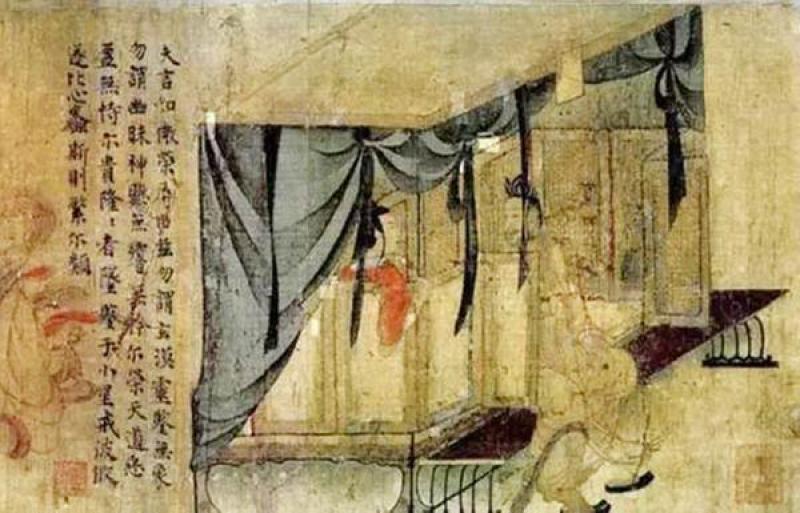
The painting shows dragon fur curtains surrounding a bed [Photo/youngchina.cn]
The painting shows dragon fur curtains surrounding a bed [Photo/youngchina.cn]The dragon fur curtain was used during ancient times to block the hot waves in the summer, and keep interiors pleasantly cool. It was not really made of dragon fur, since there are no such creatures as dragons, so some say it was made of the skin of large boas. Surrounded by large and cold boa skins, the place would feel like an air-conditioned room. However, the skin was precious and difficult to obtain, so only the royal court was able to use it.
Bamboo lady
 |
|
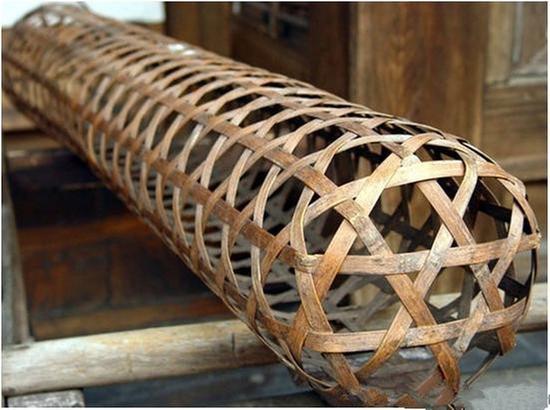
A bamboo lady [File photo] |
Ancient people in the southern parts of China preferred to use a cylinder-shaped bamboo ware, which is hollow in the middle and has grid mesh on the surface. It uses the principle of cross ventilation to cool people down, and can be hugged, or used to hold up your feet.
Fan
 |
|
Fan was commonly used in ancient times [Photo/Artron.net] |
Last but not least, the most commonly used tool to cool down in the summer is the humble fan, and is still used nowadays. Fans were made of different materials, such as bird's feathers, bamboo, or fur.
The administrator of this group reserves the right, along with the site moderators, to moderate all and any postings to this group, including the right to enforce the ToS, the CoC, and also including anything that the administrator deems within his sole discretion to be offensive, including and not limited to off topic or 'no value' comments, with the power to delete in exercising those rights.
It would be best, therefore, to be civil in posting on this group.
By now it should be well known that I am unable to open certain sources, videos and pictures. If I cannot, I will ask that they be described and explained. If the poster refuses to comply, their comment will be deleted. Instagrams are banned.

Tags
Who is online
104 visitors
I don't know how anyone can get to sleep with their head on a porcelain pillow.
The painting shows dragon fur curtains surrounding a bed [Photo/youngchina.cn]The dragon fur curtain was used during ancient times to block the hot waves in the summer, and keep interiors pleasantly cool.
I can't speak to how they kept cool in ancient times, but that sounds a bit like what someone who grew up in New Mexico told me about how her ancestors kept cool in summer. I guess they used to put a wet towel up as a curtain over an open window.
That may be primitive, but I can imagine that it might cool a bit.
I can see it working for them, where they don't have the humidity of the east coast.
I wonder if the temperatures were cooler in ancient times?
Adding to the fact that Chongqing, where I live, is known as one of The Three Furnaces of China. the humidity here DOES add to the feel of the heat about 5 C more than the actual temperature. Because of my age and health vulnerability I rarely leave my air conditioning. It will be at least a week before it cools enough.
According to what I've read about those days here in the SouthWest, sleeping porches were also used. People would wet a sheet and sleep under that wet sheet and as the water evaporated the sheet would be cooler. There are still many houses here in Arizona that do not have air conditioning, instead they use what is called a swamp cooler. A swamp cooler is a simple device that has four pads (1 to each side of the unit) with a fan to draw air in thru the pads into the house and a simple water pump to keep the pads wet. In the low humidity we have, this can keep a house at a nice cool temperature.
I say that is the key. It is why you can tolerate 100 degrees in Yuma, and we can't tolerate 95 degrees in Boston.
Never heard of a "swamp cooler" before - interesting.
Ya don't want one either unless you've got plenty of monies for roof repair 'cause those damn things do some serious leaking.
depends on the mounting , roof or window .
i have a small portable one made by coleman , must have been made in the 40s or 50s at least . found it helping a friend do a garage clean out 20 years ago , was missing the plug , asked what he wanted to do with it , he said dump , i asked if i could take it , he said help yourself . rewired it took it outside filled it with water , plugged it in and hoped for the best , it still worked . it cools down an average sized room fast and is one hell of a conversation starter when people come over .
But that were in the daze when things were made - they lasted.
Got two neighbors here in NM - in the 14 years they've lived with their Swamp Cooler, they've both replaced them twice.
They were Lennox.
Yes, swamp cooler or evaporative cooler (same thing) is much cheaper to run and air conditioning as the only electric usage is a blower fan and a small water pump. So it costs maybe 10% of what it costs to run the AC.
As it uses evaporation for cooling, it only works well in low humidity areas. Once the humidity gets up into the 40's, it's almost useless. A side effect of a swamp cooler is that wood will tend to swell due to the higher humidity in the house so doors and windows will be harder to open. Such is life in the SouthWest...
Don't need one anyway - got good air conditioning.
“Swamp coolers” are useful in hot areas where there’s low humidity. They do cool things down but they increase humidity.
However in hot places with high humidity I think they shouldn’t be used ( because they increase the already high humidity).
Although I’ve never lived for any significant period of time in areas that are low humidity in the summer so I’ve never used one.
They are useless in high humidity because they need for the water vapor to evaporate and it's rather difficult to evaporate when the humidity is high. They start to lose their effectiveness when the humidity goes over 25% and are almost useless when above 35%. I've lived here for many years and spent several of the first years living with such cooling. While it was great when it worked, it really sucked in August which is the stormy season (monsoon season) where humidity is elevated for several days at a time.
Back to the aritcle, then since the "swamp cooler" principle can work, then assuming that the ancient Chinese living in low humidity areas could have a means of air conditioning by hanging wet whatever at their windows.
Don't think any of the tribes/nations had any "linens" or "windows" to hang wet stuff from
That one I've taken note of myself. It may have something to do with why bedrooms are always at the top floors in a dwelling. Iv'e been able to simply leave windows open on the third floor, rather than using the A/C.
People would limit strenuous activity to the cooler parts of the day, such as early mornings or late evenings,
That has been my summer schedule. Amazing how logical it all was.
Everything you listed seems like common sense.
Proof of the adage "Where there is a will, there is a way."
But heat rises, Vic. Bedrooms at the top may be best for winter.
Arvo yes it does but you also get the breezes the higher you go.. especially when it's humid...
Hence up Qld they build houses on stilts...they get the breeze and also keep away from termites and other pests...they look nice but a buggar to maintain..
Although we're surrounded by mountains, they're distant enough that we can still get the breeze.
Correct
Yes heat rises. But the thing to remember is that many the best strategies to cope excessive heat may vary between very hot places with high humidity and those with very low humidity.
Bedrooms are on the top floor because they are usually not used during the day. Why take up first floor footprint with rooms you don't use? Why put the kitchen and living room above the bedroom? Heat rises.
It matters what side of the house a third-floor room faces. On one side I can leave windows open. On the other, which gets direct sunlight I keep the shades down.
However, there are lots of single-floor or single-floor and basement houses, but of course you don't put your front door, or kitchen door, at the bedroom area.
In the Mojave Desert back in the day the railroad workers used to sleep in submarines. These were small buildings with galvanized steel sheeting covered in burlap with water trickling down over it. Kind of like living in a big swamp cooler.
Any port in a storm.
Morning..to beat the heat here especially in the Outback one town Coober Pedy is virtually underground..they dig "dug outs" and live there..
Temperatures in the summer kick around 45c and they dig for opal there..
So rather than live on top they dig into the ground where it is a constant 25c...
Need a house extension?? No worries just start digging..
Opal one of of the hundreds of colours that can be found there..some worth hundreds of thousands of dollars especially black opal..
Dug out living space - fascinating. Opals are beautiful.
Many people are not aware of this but there are semi- precious “gems” under Manhattan! Yes there are actually Garnets embedded in the underground rocks!
However there’s no point in trying to mine them because they are mostly the size of a pin head!
Morning Krishna..they actually use garnet for sand blasting..it is an extremely hard stone..
When I worked at Alcoa they had to sand blast the towers etc due to rust and repaint them..
The site was covered in red garnet and looked kind of weird...
My birthstone is garnet. I had an antique gold ring with a garnet that I gave to my present wife as an engagement ring. It was actually small for me but fit her finger nicely.
Story idea.
C.H.U.D. Comes to Coober Pedy
"You're On Our Turf Now!"
.
Shona: not is it only good for sandblasting, but it’s good (as part of another group of rocks) that can be a base allowing for the construction of huge skyscrapers!
NYC is famous for its high skyscrapers. As technology has advanced many other cities also built those, but NYC was early. Why? Because they didn’t have to wait for all those advances— the naturally occurring bedrock was so strong.
I can't open wikipedia. Please explain what it says. It is just a reference to CHUD and Coober Pedy?
An American horror science fiction film about under ground beings coming up top..don't think it's my cup of tea..
Ah, The Attack of the Killer Worms. LOL
I have read about Coober Pedy and I find it very interesting. Would love to see it. Troglodyte living with modern conveniences. I have read it's so dry they have to truck in water.
Morning Wheel..no there is a pipeline that runs from Oodnadatta 25 kilometres away for their water supply...it comes from the Great Artesian Basin...
Yes it's pretty hostile country and you wouldn't want to be drunk...lots of mines to fall down..
Not my photos..
You're getting into my area here. I was a HVA/C guy for 45 years. This is something I've always had an interest in.
Studebaker made one of the first car "A/C" units. It was swamp cooler that fit in the window on the passenger side.
Cool rags, cool sheets, shady side sitting, (on the North side in the Northern hemisphere), Thick walls, ventilation clearance under the house. High ceilings and windows. Heat rises, let it.
Keep the curtains drawn.
Here in N.C. the humidity is hellish. A good de humidifier can really give relief without being as expensive to operate as an A/C unit.
Thanks for the expertise.
And if all else fails stick your feet in a bucket of cold water.. instant relief..
Is that where the expression "cold feet" comes from?