
Yes, you do need to clean your water bottle. Here's why and how.

By: Global News

 S E E D E D C O N T E N T

Yes, you do need to clean your water bottle. Here's why and how.
NEW YORK (AP) — You keep your trusty reusable bottle filled with only clear, delicious water. Do you still need to wash it?
Experts say reusable bottles get grubby no matter what liquid they're filled with, and it's important to clean them regularly.
Water bottles pick up germs from our mouths when we take a sip, and from our hands when we touch the straw or lid. They're covered in tiny, tough-to-reach nooks and crannies which can become breeding grounds for mold, bacteria and other microbes if left un-scrubbed.
"It seems like something mundane, but it is extremely important," said nurse practitioner Michele Knepper, who works at the University of Pittsburgh Medical Center.
Unclean water bottles can cause stomach aches and itchy throats and even exacerbate allergies and asthma.
Experts disagree on when and how you should wash them, but they're all in agreement on one thing: Give your water bottle a tender loving clean, because something is better than nothing at all.
"Is it that big of a deal? No. But it's also not difficult to just wash your water bottle," said Dr. Mike Ren, a family medicine physician at Baylor College of Medicine.
Experts say the gunk doesn't care what your water bottle is made of. Reusable metal, plastic and glass bottles all grow germy, but plastic bottles are more likely to get scratches or dings on the inside where microbial life can cozy up.
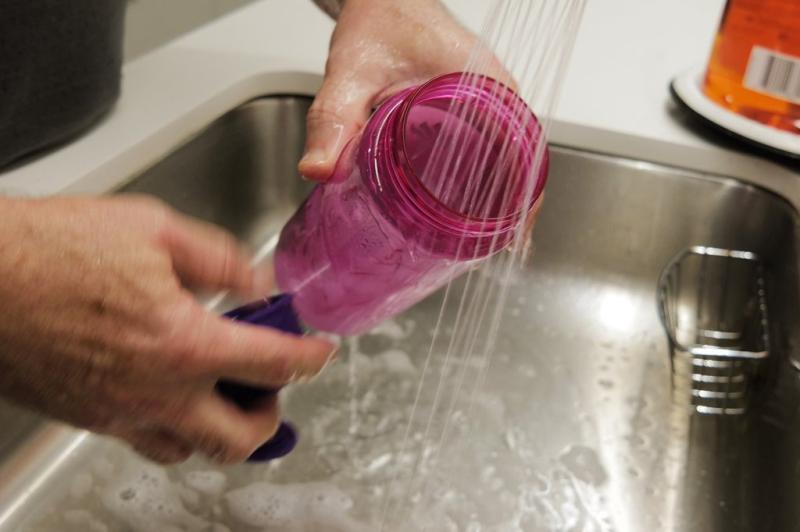
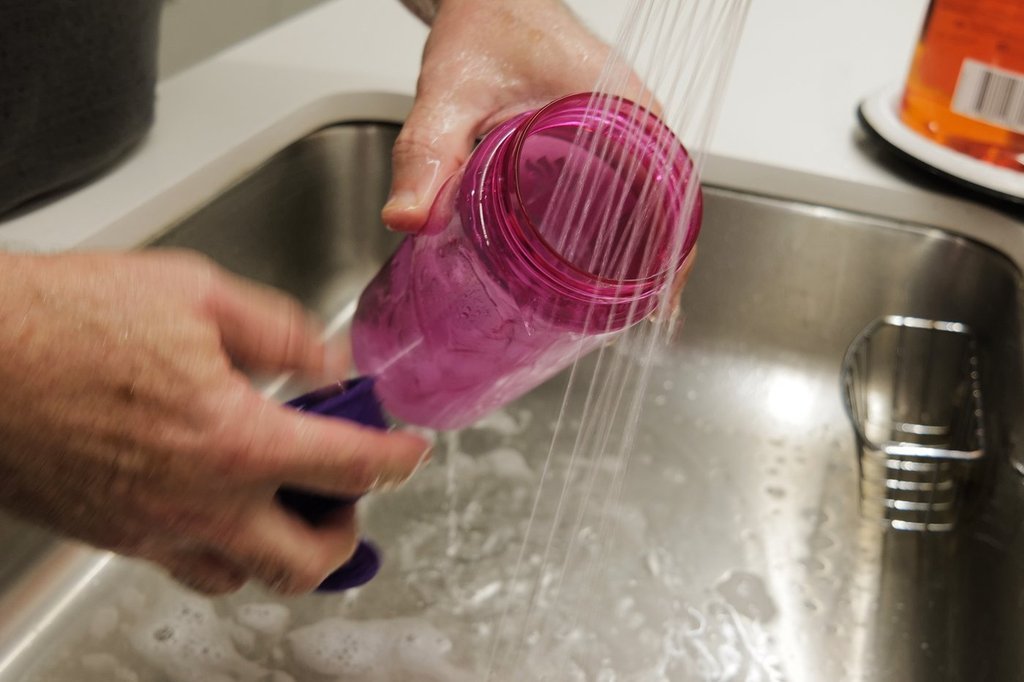
The best cleaning routine is a simple one: Use a sponge or bottle brush to scrub inside and out with warm, soapy water, rinse it out and let it dry so it's ready for the next refill. A narrow or pipe cleaner-shaped tool can be useful to get into straws and tight crevices.
For a deeper wash, scientists recommend popping the bottle in the dishwasher if it's safe to do so, or dissolving a denture or retainer-cleaning tablet in the bottle overnight. Scrubbing with a warm water solution of vinegar or baking soda works too.
Many experts recommend doing a simple, soapy water clean every day and a deeper clean once a week. If daily cleaning feels a little extra, Ren said to try to get to it at least every other week or so while maintaining other good habits like rinsing the mouthpiece over the sink during each refill.
But if you fill your reusable bottle with other beverages like protein shakes or exercise drinks, it really is important to clean every day. Sugary drinks leave a residue that bacteria love to snack on.
Do you need to dump the water in your bottle every day?
Is it okay to leave water in a reusable bottle overnight? Experts disagree.
Some say to dump the dregs out every refill, while others recommend emptying every few hours. Ren says it's likely okay to leave some inside overnight, but to empty old water at least every few days.
"Guidelines are guidelines," Ren said. "Everyone's going to do it a little bit differently."
If there's visible mold on the bottle or the liquid inside has a weird smell, don't drink it. Avoid refilling disposable plastic water bottles since chemicals can leach into the water, and they're even more full of cracks and crevices that can harbor germs.
Water bottle cleaning routines may not all look the same — but it's important to keep up the habit, said Ivy Sun, a hospitality expert at Georgia Southern University who has studied water bottle contamination. She washes her and her kids' bottles with soapy water every day.
"This is just a very small step that we do, but it can largely help with our health," Sun said.
The administrator of this group reserves the right, along with the site moderators, to moderate all and any postings to this group, including the right to enforce the ToS, the CoC, and also including anything that the administrator deems within his sole discretion to be offensive, including but not limited to political and/or off topic comments, with the power to delete in exercising that right.
It would be best, therefore, to be civil in posting on this group and not contravene the CoC, the ToS, and to not post comments that are political, insulting, taunting, trolling or offensive.
By now it should be well known that I am unable to open certain sources, videos and pictures. If I cannot, I will ask that they be described and explained. If the poster refuses to comply, their comment will be deleted. Instagrams are banned.

Tags
Who is online
101 visitors
This is news to me, and I'll bet it is for a lot of others as well. I have to admit that I have kept water in plastic bottles, and have never cleaned out my thermos bottle (which, by the way, I happened to have bought at a Target store in Baltimore almost 18 years ago when I was there for my son's wedding.)
How is this not common sense?
I guess the general feeling must be, as it had always been with me, that only putting clean water in it would not require it to be cleaned.
All that back wash, bacteria around the top. I think the TV show House put it best when it comes to reusing water bottles:
My thermos has a cup, so my lips don't touch the bottle. The cup is easy to wash, but I can understand that there can be a buildup of bacteria in the bottle.
Recently another issue has come to light. The discussion of whether or not plastic "sheds" micro-particles that get absorbed by our bodies.
Recently another issue has come to light. The discussion of whether or not plastic "sheds" micro-particles that get absorbed by our bodies.
From AI:
Little did we know that almost 60 years ago. From the movie The Graduate...
Coo Coo Ka Choo Mrs. Robinson!!!