╌>

 The Supreme Court’s Shadow Docket: What It Is and Why It Matters

  
Via:  Buzz of the Orient  •  11 months ago  •  0 comments

By:    Cecelia Smith-Schoenwalder - US News Decsion Points

 The Supreme Court’s Shadow Docket: What It Is and Why It Matters
 

Leave a comment to auto-join group Confucius

Confucius


S E E D E D   C O N T E N T


  The Supreme Court’s Shadow Docket: What It Is and Why It Matters

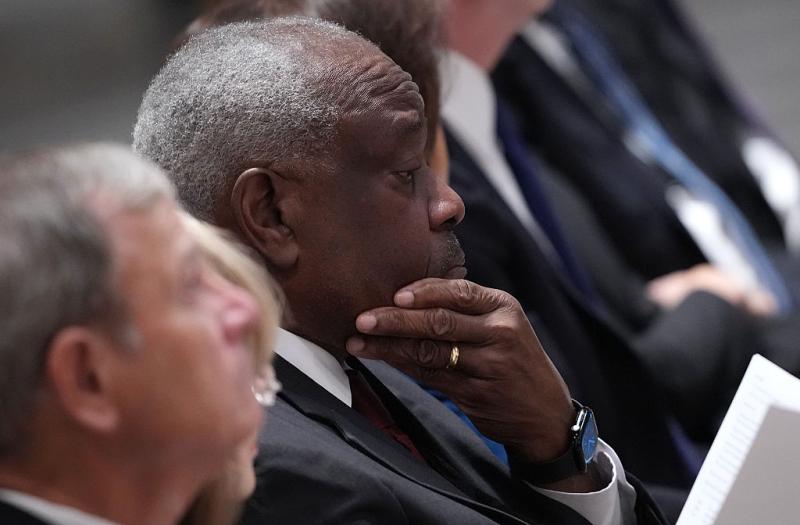
Supreme Court Justice Clarence Thomas attends the funeral service of former Vice President Dick Cheney.

(Andrew Harnik/Getty Images)

Hi there. Cecelia Smith-Schoenwalder here, filling in for Olivier. He’ll be back next week.

The term sounds daunting, like it's lurking and waiting to strike – “the shadow docket.”

You’ve probably heard the label by now, but it’s going to keep coming up. So let’s break down what it is and why it matters.

Where Does the Name Come From?

Let’s start with the basics. The term was coined by a professor at the University of Chicago Law School in 2015, though the procedure goes back decades. 

Professor William Baude  described  the Supreme Court’s shadow docket as “a range of orders and summary decisions that defy its normal procedural regularity.” Such cases, he argued, deserved more attention.


The Supreme Court decisions you’ve heard about were likely from the court’s merits docket, including cases like Brown v. Board of Education, Roe v. Wade and Citizens United v. Federal Election Commission. Those were considered under normal proceedings, meaning they had a scheduled public hearing as well as oral arguments. After the justices’ review, which can take months, the court provides a signed written opinion and dissenting arguments. 

The shadow docket, on the other hand, enables the high court to decide on urgent, major issues quickly by bypassing full briefings and oral arguments. It’s also known as the emergency docket. Though the decisions are provisional – meant as placeholders until a full hearing – they can sometimes be in effect for a year or more.

When litigants apply for an expedited process, five of the justices must agree to hear the appeal. Litigants must demonstrate that without such an approval, they would suffer “irreparable harm.” 

It’s a faster process but also a less transparent one. Decisions can come in the dead of night without disclosing which justices weighed in. They can come even without a reasoning for the ruling.

Why Does the Shadow Docket Matter?

The shadow docket has traditionally been used for more  obscure procedural decisions , but the number and scope of cases has surged since January, when President Donald Trump took office.

The Supreme Court considered 44 matters on its emergency docket in 2024, according to SCOTUSblog. This term, the court has more than 100 such cases.

“Of course, the easiest explanation is the number of applications involving challenges to President Donald Trump’s actions,” legal scholar Erwin Chemerinsky  wrote in SCOTUSblog . 

From 2000 to 2016 – during the George W. Bush and Obama administrations – the federal government sought emergency injunctive relief from the Supreme Court  a total of eight times , and the high court granted four of those requests. The first Trump administration asked for emergency relief 41 times in four years, with the court granting 28 of those requests either fully or partially.

And over the last several months, the Supreme Court and its 6-3 conservative majority issued  23 decisions  on the Trump administration’s shadow docket applications, with the federal government prevailing in the vast majority of rulings.

Noteworthy wins for the Trump administration under the Supreme Court’s shadow docket include:

  • Trump v. Orr  – Held that the State Department  can require U.S. passports  to reflect the sex noted on the holder’s birth certificate and halt the issuance of passports with an “X” sex identifier.

Although most emergency docket applications are seeking  temporary  relief from lower court orders, legal scholars say the rulings raise a wide range of concerns about the degree to which the emergency docket sets nationwide legal precedent and expands executive power. Additionally, the lack of explanation for the rulings can mean that judges at all levels might not have  substantial guidance  for future cases.

“Our emergency docket should never be used, as it has been this year, to permit what our own precedent bars,” Justice Elena Kagan  wrote  in a dissent for Trump v. Slaughter. “Still more, it should not be used, as it also has been, to transfer government authority from Congress to the President, and thus to reshape the Nation’s separation of powers.”


Red Box Rules

The administrator of this group reserves the right, along with the site moderators, to moderate all and any postings to this group, including the right to enforce the ToS, the CoC, and also including anything that the administrator deems within his sole discretion to be offensive, including and not limited to off topic or 'no value' comments, with the power to delete in exercising those rights. 

It would be best, therefore, to be civil in posting on this group.

By now it should be well known that I am unable to open certain sources, videos and pictures.  If I cannot, I will ask that they be described and explained.  If the poster refuses to comply, their comment will be deleted. Instagrams are banned.


Tags

jrGroupDiscuss - desc

Who is online


68 visitors